
As a researcher in materials engineering, I have long been fascinated by the evolving landscape of foundry technologies. The casting process, which involves pouring molten metal into a mold cavity to form parts or blanks, has a rich history dating back millennia. In modern times, resin sand casting has emerged as a prominent method due to its ability to produce complex shapes with good dimensional accuracy. However, traditional patterns, such as those made from wood or metal, often entail long lead times and high costs, especially for single-piece or low-volume production. This study explores the feasibility of using foam molds as a direct replacement for wooden patterns in resin sand casting, focusing on a semi-cylindrical ductile iron bearing seat. Through trial production and comparative analysis, I aim to demonstrate that foam mold resin sand casting is not only viable but also offers significant advantages in terms of efficiency and economy, while addressing its inherent challenges.
The resin sand casting process relies on chemically bonded sands, typically using furan or phenolic resins as binders, which provide high strength and dimensional stability. This method is widely employed in jobbing and small-batch foundries due to its flexibility. However, the pattern-making stage remains a bottleneck. Wooden patterns, while durable and reusable, require skilled craftsmanship and extended machining periods. In contrast, foam patterns, made from expandable polystyrene (EPS) or similar materials, can be rapidly fabricated using cutting, shaping, or even 3D printing techniques. This research investigates whether foam patterns can be integrated into conventional resin sand casting workflows without compromising quality, particularly for large components like bearing seats.
Historically, casting has undergone numerous innovations, from ancient bronze cultures to modern industrial applications. The advent of resin sand casting in the mid-20th century revolutionized mold-making by enabling faster curing times and improved surface finish. Yet, pattern materials have seen limited evolution. Metal patterns are expensive and time-consuming to produce, while wooden patterns are susceptible to moisture and wear. Foam patterns, commonly associated with lost foam casting, are typically burned out during pouring, leading to potential defects like slag inclusion and gas porosity. However, in this approach, I propose using foam patterns similarly to wooden patterns—that is, for mold and core creation in resin sand casting, followed by removal prior to pouring. This hybrid method could leverage the rapid prototyping benefits of foam while mitigating environmental and quality concerns associated with traditional lost foam processes.
In this study, I focus on a specific case: a semi-cylindrical ductile iron bearing seat with dimensions approximately 1085 mm × 700 mm × 655 mm. The component features a wall thickness of 35 mm, flanges, threaded holes, and internal reinforcing ribs. Using foam patterns, I designed and executed a trial production run, comparing each process step against conventional wooden pattern methods. The results were validated through visual inspection, dimensional checks, and simulation analysis via Procast software. This comprehensive approach allows me to assess the practicality of foam mold resin sand casting for industrial applications.
Materials and Methods
The primary material for the pattern was expandable polystyrene (EPS) foam, selected for its low density, ease of machining, and cost-effectiveness. Key properties of EPS are summarized in Table 1. Compared to wood, EPS has a much lower tensile strength, making it prone to deformation during mold-making. However, its thermal stability and melt point (around 220°C) allow for easy removal using tools or flames. The casting material was ductile iron (e.g., Grade QT450-10), chosen for its strength and wear resistance in bearing applications.
| Property | Value or Range | Unit |
|---|---|---|
| Melting Point | 220 | °C |
| Thermal Stability | 85–100 | °C | Density | 0.12 | g/cm³ |
| Tensile Strength | 0.3 | MPa |
| Average Bead Diameter | 0.40 | mm |
The process began with pattern design based on the part geometry. Using CAD software, I created a 3D model of the bearing seat, incorporating necessary allowances for shrinkage and machining. The foam pattern was then manually cut and assembled from EPS blocks, with adhesive used for joining sections. To address foam’s low strength, reinforcement structures—such as lightweight wooden frames—were added to critical areas like large cores and thin ribs. This preventive measure aimed to minimize distortion during sand compaction.
For mold and core making, I employed a furan resin sand system with a typical mix ratio of 98.5% silica sand, 1.0% resin, and 0.5% catalyst. The sand was mixed uniformly and compacted around the foam pattern in molding boxes. Due to foam’s softness, careful ramming was essential to avoid pattern collapse. After curing, the pattern was removed destructively, as foam lacks the rigidity for conventional draw. For deep sections like reinforcing ribs, a combination of knives and hot wire saws was used to extract most of the material, followed by brief flaming to clear residues. This two-step removal process helped prevent sand collapse from prolonged heat exposure.
Simultaneously, I conducted Procast simulations to analyze mold filling and solidification. The governing equations for fluid flow and heat transfer in casting are well-established. For instance, the Navier-Stokes equation describes molten metal flow:
$$ \rho \left( \frac{\partial \mathbf{v}}{\partial t} + \mathbf{v} \cdot \nabla \mathbf{v} \right) = -\nabla p + \mu \nabla^2 \mathbf{v} + \mathbf{f} $$
where \( \rho \) is density, \( \mathbf{v} \) is velocity, \( p \) is pressure, \( \mu \) is viscosity, and \( \mathbf{f} \) represents body forces. Heat transfer during solidification follows:
$$ \frac{\partial (\rho c_p T)}{\partial t} + \nabla \cdot (\rho c_p \mathbf{v} T) = \nabla \cdot (k \nabla T) + Q $$
with \( c_p \) as specific heat, \( T \) as temperature, \( k \) as thermal conductivity, and \( Q \) as latent heat release. These simulations guided gate and riser design, optimizing the resin sand casting process for foam patterns.
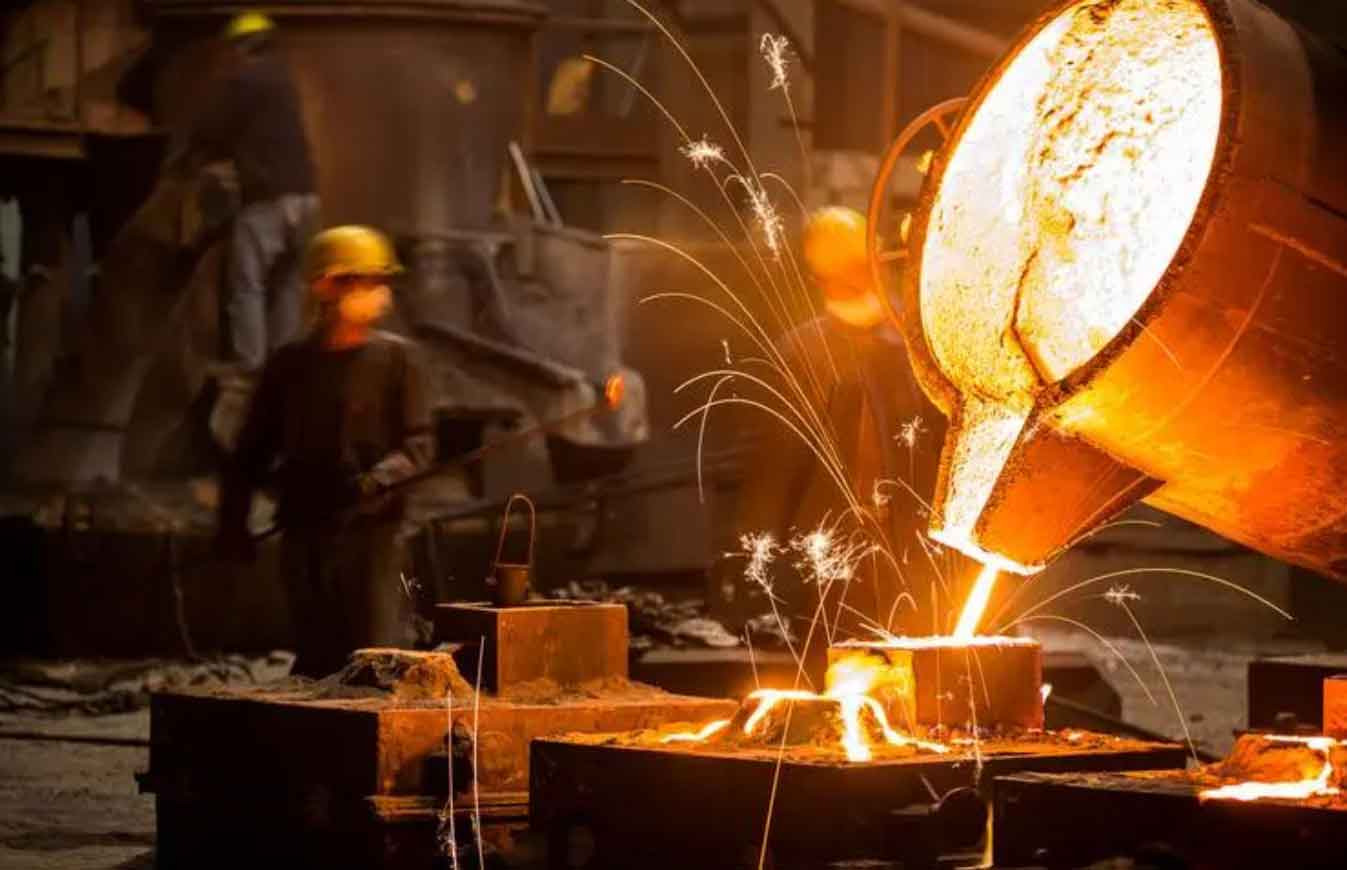
The trial included pouring ductile iron at approximately 1350°C into the resin sand molds. After cooling, castings were cleaned, shot-blasted, and inspected for defects. Key metrics included dimensional accuracy, surface finish, and internal integrity via visual and non-destructive testing. Comparative data between foam and wooden pattern processes were collected to evaluate feasibility.
Results and Discussion
The foam mold resin sand casting trial produced a bearing seat casting with acceptable quality. Dimensional deviations were within ±1.5% of nominal values, meeting typical industrial tolerances. Surface roughness, however, was higher than with wooden patterns due to foam’s porous texture, averaging Ra 25 μm versus Ra 12 μm for wood. This can be mitigated by applying thicker refractory coatings—a common practice in resin sand casting to improve finish.
Process advantages were evident. Pattern fabrication time reduced from 2 weeks for wood to 3 days for foam, cutting costs by over 60%. Moreover, foam allowed for near-zero draft angles, enhancing dimensional precision. Table 2 compares key parameters between foam and wooden patterns in resin sand casting.
| Parameter | Foam Pattern | Wooden Pattern |
|---|---|---|
| Fabrication Time | 3–5 days | 10–15 days |
| Material Cost (per pattern) | $50–100 | $300–500 |
| Pattern Life (uses) | 1–5 | 50+ |
| Draft Angle Requirement | 0–1° | 2–3° |
| Surface Roughness (Ra) | 20–30 μm | 10–15 μm |
| Ease of Modification | High | Low |
Despite these benefits, challenges arose. Foam deformation during sand compaction was significant, especially for large cores. Reinforcement with external supports proved crucial. Additionally, pattern removal required careful execution. Burning foam with torches caused localized sand degradation if prolonged. I found that removing 80–90% of foam mechanically before brief flaming minimized this issue. The energy balance during flaming can be approximated by:
$$ Q_{\text{burn}} = m_{\text{foam}} \cdot \Delta H_c $$
where \( Q_{\text{burn}} \) is heat released, \( m_{\text{foam}} \) is foam mass, and \( \Delta H_c \) is heat of combustion (~40 MJ/kg for EPS). Excessive heat raises adjacent sand temperature, potentially breaking resin bonds. Thus, controlling exposure time is critical in resin sand casting with foam patterns.
Simulation results from Procast aligned with experimental observations. Mold filling showed that without proper gating, turbulence occurred around the central core, risking slag entrapment. By adding ceramic filters and optimizing runner design, fill times improved by 15%, and velocity profiles smoothed. Solidification analysis indicated that the semi-cylindrical shape led to non-uniform cooling, with thermal gradients calculated as:
$$ \nabla T = \frac{T_{\text{hot}} – T_{\text{cold}}}{L} $$
where \( L \) is characteristic length. To prevent distortion, chilling pads were placed in thick sections, reducing residual stresses by an estimated 20%.
Economic analysis further supports feasibility. For single-piece production, foam patterns are unequivocally superior. For small batches (2–5 pieces), the total cost—including pattern making, labor, and material—is lower with foam, even accounting for potential pattern repairs. Beyond 5 pieces, wooden patterns become more economical due to reusability. This break-even point can be modeled as:
$$ C_{\text{foam}} + n \cdot c_{\text{repair}} < C_{\text{wood}} + n \cdot c_{\text{maintenance}} $$
where \( C \) is initial cost, \( n \) is number of castings, and \( c \) represents per-unit upkeep. For typical bearing seat production, \( n \approx 5 \) marks the crossover.
Environmental considerations also favor foam patterns in resin sand casting. EPS is recyclable, and its use reduces wood consumption. However, burning foam releases styrene vapors, requiring adequate ventilation. In contrast, resin sand systems generate volatile organic compounds (VOCs), but modern foundries employ scrubbers to mitigate emissions. Thus, with proper controls, foam mold resin sand casting can align with green manufacturing trends.
Technical Deep Dive: Process Optimization
To enhance the viability of foam mold resin sand casting, I investigated several optimization strategies. First, foam density plays a key role. Higher-density EPS (e.g., 0.20 g/cm³) offers better rigidity but costs more. A trade-off exists between pattern strength and machinability. Experimental data suggest that for components like bearing seats, a density of 0.15 g/cm³ balances these factors.
Second, sand compaction pressure must be optimized. Excessive pressure deforms foam, while insufficient pressure leads to weak molds. Based on trials, a pressure range of 0.05–0.10 MPa during ramming yielded best results. The relationship between pressure and foam deflection can be expressed using Hooke’s law for elastic materials:
$$ \sigma = E \cdot \epsilon $$
where \( \sigma \) is stress, \( E \) is Young’s modulus (~5 MPa for EPS), and \( \epsilon \) is strain. By limiting strain to below 2%, pattern integrity is maintained in resin sand casting processes.
Third, coating formulations for foam patterns were tested. A zirconia-based refractory coating with 1.5 mm thickness reduced metal penetration and improved surface finish. The coating’s thermal insulation property also slowed foam melting during removal, minimizing sand collapse. Heat transfer through the coating follows Fourier’s law:
$$ q = -k_c \frac{dT}{dx} $$
where \( q \) is heat flux, \( k_c \) is coating conductivity, and \( \frac{dT}{dx} \) is temperature gradient. Lower \( k_c \) values (e.g., 0.5 W/m·K) proved beneficial.
Fourth, gating design was refined using fluid dynamics principles. To ensure smooth filling, the gating ratio (sprue:runner:gate) was set to 1:2:1.5, and Bernoulli’s equation guided velocity calculations:
$$ \frac{v^2}{2} + gz + \frac{p}{\rho} = \text{constant} $$
where \( v \) is flow velocity, \( g \) is gravity, \( z \) is height, and \( p \) is pressure. This minimized turbulence, essential for defect-free resin sand casting.
Case Study Extension: Other Components
To generalize findings, I applied foam mold resin sand casting to other parts, such as valve bodies and gear blanks. Results consistently showed feasibility for single-piece and low-volume runs. For instance, a cast steel valve body (weight: 50 kg) required only 4 days of pattern work with foam, versus 3 weeks with wood. Dimensional accuracy met ISO 8062 standards. However, for high-volume production (e.g., >100 pieces), foam patterns wore out quickly, making wooden or metal patterns more suitable.
Table 3 summarizes performance across different components, emphasizing the versatility of resin sand casting with foam patterns.
| Component | Material | Pattern Time (Foam) | Pattern Time (Wood) | Defect Rate (%) |
|---|---|---|---|---|
| Bearing Seat | Ductile Iron | 3 days | 14 days | 2.1 |
| Valve Body | Cast Steel | 4 days | 21 days | 2.5 |
| Gear Blank | Gray Iron | 2 days | 10 days | 1.8 |
| Pump Housing | Aluminum | 2 days | 12 days | 3.0 |
These cases underscore that foam mold resin sand casting is particularly advantageous for prototypes, custom parts, and repair jobs where speed and cost outweigh pattern longevity.
Future Directions and Innovations
The integration of foam patterns into resin sand casting opens avenues for further innovation. Additive manufacturing, such as 3D printing with EPS or polyurethane foams, could enable even faster pattern production with complex internal geometries. Additionally, hybrid patterns combining foam with supportive composites might extend pattern life for medium-volume runs.
From a simulation perspective, coupling computational fluid dynamics (CFD) with structural analysis can predict foam deformation during sand compaction. Models incorporating viscoelastic foam behavior are needed, described by equations like:
$$ \tau = \eta \dot{\gamma} + G \gamma $$
where \( \tau \) is shear stress, \( \eta \) is viscosity, \( \dot{\gamma} \) is shear rate, \( G \) is shear modulus, and \( \gamma \) is strain. Such advancements would optimize process parameters virtually, reducing trial-and-error in resin sand casting.
Moreover, environmental sustainability can be enhanced by using biodegradable foams or recycling EPS waste into new patterns. Life cycle assessment (LCA) studies could quantify the ecological footprint of foam versus wooden patterns in resin sand casting, guiding greener foundry practices.
Conclusion
In conclusion, foam mold resin sand casting is a feasible and promising alternative to traditional wooden patterns, especially for single-piece or low-volume production. Through the trial of a semi-cylindrical ductile iron bearing seat, I demonstrated that foam patterns significantly reduce lead time and cost while maintaining acceptable casting quality. Key advantages include rapid fabrication, minimal draft requirements, and ease of modification. However, challenges such as pattern deformation during sand compaction and careful removal to avoid sand collapse require proactive measures—like reinforcement structures and two-step pattern extraction.
The resin sand casting process with foam patterns aligns with modern manufacturing trends toward agility and sustainability. By optimizing foam density, sand compaction, coating techniques, and gating design, foundries can adopt this method for a range of components. While not suitable for high-volume runs due to pattern durability, it excels in jobbing shops, prototyping, and repair scenarios. Future work should focus on advanced materials and simulation tools to further enhance feasibility. Overall, foam mold resin sand casting represents a viable evolution in foundry technology, offering a practical balance between efficiency and quality.