
In my years of experience operating a high-volume sand casting foundry, I have come to understand that the quality of green molding sand is the single most critical factor determining the success of cast iron production. Despite the evolution of molding technologies—high-pressure molding, static pressure molding, air-impact molding—the green sand process remains the predominant method for producing large quantities of castings. The dimensional accuracy, surface finish, and internal soundness of every casting depend directly on the consistency and performance of the molding sand. In this article, I will share my systematic approach to controlling molding sand quality through four key areas: raw material selection and processing, sand preparation, automated control of the circulating sand system, and proper storage and conveying. Throughout my discussion, I will emphasize practical data, tables, and mathematical relationships that have proven indispensable in my sand casting foundry.
Let me begin by stressing that the sand casting foundry environment is inherently dynamic. Each cycle of casting, cooling, shakeout, and reclamation alters the physical and chemical properties of the sand. Without rigorous control, performance drifts, leading to defects such as sand fusion, expansion scabs, and poor mold strength. Therefore, my philosophy is to treat the molding sand as a living system that demands continuous monitoring and adjustment.
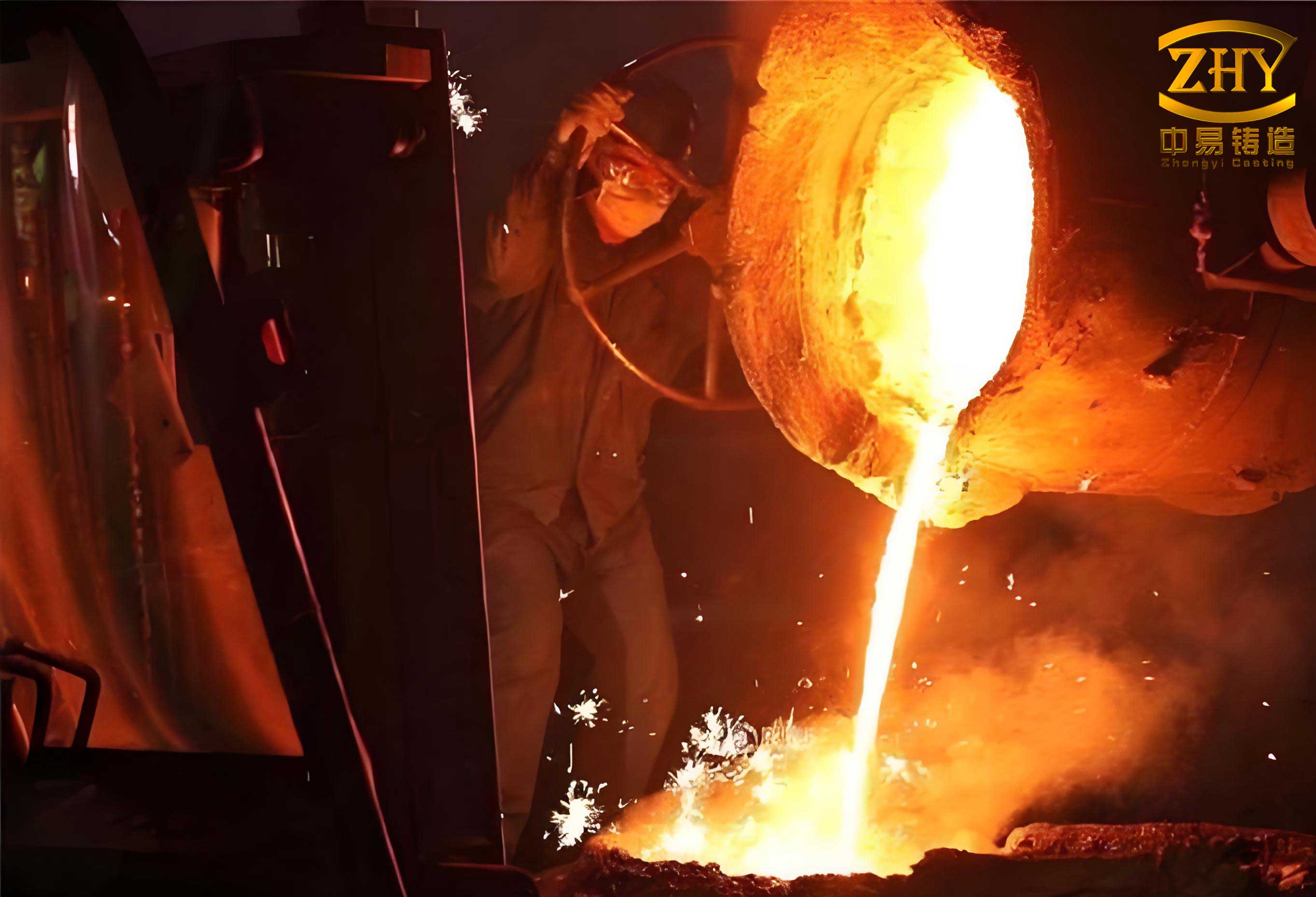
The figure above illustrates a typical green sand molding line in a modern sand casting foundry. The entire sand circulation loop, from shakeout to molding, is a closed system that must be managed with precision. In the following sections, I will detail the specific control strategies I employ.
1. Raw Material Selection and Processing
In my sand casting foundry, the journey toward high-quality molding sand begins with meticulous selection and treatment of raw materials. The four primary components—reclaimed sand, fresh silica sand, clay (typically bentonite), and coal dust—each contribute distinct properties. Any variation in their quality directly affects the green sand’s bond strength, permeability, and refractoriness. Below I summarize the selection criteria I have developed over years of operation.
| Material | Key Property | Required Specification | Test Method | Impact on Sand |
|---|---|---|---|---|
| Fresh silica sand | Grain size distribution | AFS GFN 45–55, uniform distribution, < 0.5% fines (≤0.02 mm) | Sieve analysis | Determines permeability and surface finish |
| Fresh silica sand | Grain shape | Rounded to sub-angular, > 90% quartz content | Microscopic examination | Affects flowability and compaction |
| Bentonite clay | Montmorillonite content | > 85% (by methylene blue test) | MB value (g/100g sand) | Provides green strength and reusability |
| Bentonite clay | Dispersion and swelling index | Swelling volume > 18 mL/2g | Foster swelling test | Influences water absorption and bonding efficiency |
| Coal dust | Volatile matter | > 30% (dry basis) | Volatile content test | Prevents sand burn-on; reduces metallic penetration |
| Coal dust | Ash content | < 10% | Ignition loss test | Excess ash increases fines and reduces permeability |
In my practice, I insist on sourcing each material from a single stable supplier. Changes in silica sand from a different quarry can alter grain size distribution and cause sudden shifts in mold permeability. Similarly, bentonite from different deposits varies in montmorillonite content, which forces me to adjust the clay addition rate dramatically. I have learned that the most insidious problem in a sand casting foundry is material variability. To mitigate this, I maintain a buffer stock that allows three months of production, and I test every incoming lot before releasing it for use.
The processing of reclaimed sand is equally important. After shakeout, the return sand contains metallic particles (from gates, runners, and flash), non-ferrous contaminants (such as pieces of core sand, wire, and debris), and high temperature. In my sand casting foundry, I employ a two-stage magnetic separation system placed before and after the primary crushing and screening unit. Each stage consists of two magnetic separators mounted on the same belt conveyor, ensuring that nearly all magnetic inclusions are removed. Non-magnetic debris is eliminated through vibrating screens with apertures of 4–6 mm. The table below outlines the typical equipment setup I use.
| Process Step | Equipment | Function | Typical Parameters |
|---|---|---|---|
| Primary crushing | Rotary drum crusher | Break large lumps to < 30 mm | Speed 20 rpm, gap 25 mm |
| Stage 1 magnetic separation | Overband magnetic separator | Remove iron pieces > 5 mm | Field strength 1200 Gauss |
| Screening | Vibrating screen (2 decks) | Separate oversized and fines | Top deck 6 mm, bottom deck 0.8 mm |
| Stage 2 magnetic separation | Drum magnetic separator | Remove residual fine iron | Field strength 2000 Gauss |
| Cooling | Double-shaft cooling mixer | Reduce sand temperature to < 42°C and stabilize moisture | Residual moisture 2.0–2.5% |
Cooling the return sand is one of the most challenging tasks in any sand casting foundry. The latent heat from the molten iron must be removed efficiently; otherwise, the molding sand temperature rises, causing premature evaporation of added water and inconsistent green strength. The physics behind cooling is straightforward: for every 1% reduction in moisture content (by evaporation), the sand temperature drops by approximately 25°C. This relationship can be expressed as:
$$ \Delta T = -25 \cdot \Delta W $$
where \(\Delta T\) is the temperature change in °C and \(\Delta W\) is the change in moisture content (expressed as a percentage of sand mass). In practice, I use a temperature-moisture sensor integrated into the discharge of the double-shaft cooler. For example, when the inlet sand temperature is 80°C and I need to cool it to 40°C, I must evaporate about 1.6% moisture. The controller automatically adjusts the water addition accordingly. I have found that maintaining a stable residual moisture of 2.2% ± 0.1% after cooling significantly improves the consistency of subsequent mixing.
The moisture-temperature relationship is not the only factor. The addition of fresh sand, which is typically dry and at ambient temperature, also helps cool the blend. In my sand casting foundry, I have configured the system so that fresh sand is fed directly into the double-shaft cooler inlet. This premixing of fresh sand with hot return sand not only improves heat transfer but also reduces the need for dedicated drying equipment. The energy savings and improvement in sand quality have been remarkable.
2. Molding Sand Preparation
The preparation of green molding sand is where theory meets practice. The goal is to produce sand with consistent green compressive strength, moisture content, compactability, and permeability. In a high-volume sand casting foundry, the sand preparation system must operate reliably, with minimal variation from batch to batch. I have documented the typical quality targets for my foundry in the table below.
| Property | Target Range | Test Method | Frequency |
|---|---|---|---|
| Green compressive strength (kPa) | 120–160 | Universal sand strength machine | Every 10 batches |
| Moisture content (%) | 3.0–3.8 | Oven drying at 105°C | Every batch |
| Compactability (%) | 35–45 | Compactability tester | Every 5 batches |
| Permeability (AFA number) | 140–180 | Permeability meter | Every 10 batches |
| Effective clay content (%) | 7–10 | Methylene blue titration | Twice per shift |
| Loss on ignition (%) | 3.5–5.5 | Furnace at 900°C | Once per shift |
The mixing equipment plays a pivotal role. In my sand casting foundry, I have transitioned from conventional mullers to a high-energy rotor-impeller mixer (e.g., a Simpson-type or Speedmullor). These machines combine mulling pressure with high-speed shear, which is essential for distributing the clay-water bond in a short cycle time. I use a cycle time of 3.5 to 5 minutes per batch, depending on the proportion of fresh additions. The mixing process can be broken into two phases: dry mulling (20 seconds) and wet mulling (the remainder). During dry mulling, the sand and dry additives are blended; water is then injected through a series of nozzles under automatic control.
Precise dosing of each component is non-negotiable. For the solids—return sand, fresh sand, clay, and coal dust—I use weigh-belt feeders with an accuracy of ±0.5% of setpoint. The water addition, however, requires a more sophisticated approach because the moisture requirement varies with the temperature and initial moisture of the return sand. I have implemented an automatic moisture controller that operates on a feedback loop. The system measures the temperature and moisture of the mixed batch in real time using a capacitance-based sensor mounted on the mixer arm. The control algorithm adjusts the water flow rate according to a model that predicts the final moisture based on the following mass balance:
$$ W_{\text{final}} = \frac{M_{\text{recl}} \cdot w_{\text{recl}} + M_{\text{fresh}} \cdot w_{\text{fresh}} + M_{\text{water}}}{M_{\text{recl}} + M_{\text{fresh}} + M_{\text{water}}} $$
where \(M\) denotes mass and \(w\) denotes moisture fraction. But because the sensor provides continuous feedback, the controller uses a proportional-integral (PI) correction:
$$ Q_{\text{water}}(t) = K_p \cdot (w_{\text{target}} – w_{\text{measured}}(t)) + K_i \int (w_{\text{target}} – w_{\text{measured}}(t)) dt $$
where \(Q_{\text{water}}\) is the water addition rate, and \(K_p\) and \(K_i\) are tuning constants. In practice, the water is added in multiple small pulses rather than a single shot, allowing the mixer to homogenize the moisture gradually. I have observed that this method keeps the final moisture within ±0.2% of the target, which is superior to any volumetric or timer-based system I previously used.
The automatic moisture controller also compensates for temperature effects. The electrical conductivity of sand changes with temperature, influencing the capacitance measurement. The controller incorporates a temperature compensation algorithm based on the Arrhenius relationship:
$$ \epsilon(T) = \epsilon_0 \cdot \exp\left(\frac{E_a}{R} \left(\frac{1}{T_0} – \frac{1}{T}\right)\right) $$
where \(\epsilon\) is the dielectric constant, \(T\) is absolute temperature, and \(E_a\) is the activation energy. By calibrating the sensor over a range of temperatures, the controller accurately determines moisture regardless of the sand temperature swings (from 20°C to 70°C). This level of control has been instrumental in maintaining sand quality stability in my sand casting foundry.
3. Automatic Control and Management of the Sand Circulation System
Beyond individual batch preparation, the overall sand circulation system must be managed as an integrated whole. In my experience, the performance of green sand in a sand casting foundry is highly sensitive to the dynamics of the loop—the time sand spends in transit, the amount of sand stored, and the rate of material loss and replenishment. I employ automatic control at three critical points: after shakeout, within the cooler, and inside the mixer. The table below summarizes the control objectives and methods at each stage.
| Stage | Control Objective | Sensor/Actuator | Setpoint | Corrective Action |
|---|---|---|---|---|
| After shakeout | Reduce moisture to < 2% and extract fines | IR moisture sensor, exhaust fan | Moisture exit ≤ 1.8% | Increase ventilation or delay conveying |
| Cooler inlet/outlet | Stabilize temperature and moisture for return sand | Temperature and moisture probes, water spray valve | Temperature ≤ 40°C, moisture 2.0–2.5% | Adjust water addition based on ΔT and ΔW |
| Mixer | Maintain final moisture and compactability | Tamper-type moisture sensor, temperature sensor | Moisture 3.0–3.8%, compactability 40% | Modify water flow and cycle time |
The most challenging aspect is the cooler stage. In my sand casting foundry, I use a forced-air, double-shaft cooling mixer equipped with a temperature-humidity sensor that feeds data to a PLC. The PLC calculates the required water addition using a model that accounts for both sensible heat removal and evaporative cooling. The heat balance can be written as:
$$ m_{\text{sand}} \cdot c_p \cdot (T_{\text{in}} – T_{\text{out}}) = m_{\text{water}} \cdot L_v $$
where \(m_{\text{sand}}\) is the sand mass flow rate, \(c_p\) is the specific heat of sand (~0.8 kJ/kg·°C), \(T_{\text{in}}\) and \(T_{\text{out}}\) are inlet and outlet temperatures, \(m_{\text{water}}\) is the evaporated water mass, and \(L_v\) is the latent heat of vaporization (~2260 kJ/kg). Solving for the required water addition leads to:
$$ m_{\text{water}} = \frac{m_{\text{sand}} \cdot c_p \cdot (T_{\text{in}} – T_{\text{out}})}{L_v} $$
In practice, the water addition also raises the sand moisture, so the controller iterates between temperature and moisture setpoints until convergence. I have found that stabilizing the cooler discharge at a moisture of 2.3% ± 0.1% and a temperature below 42°C ensures that the subsequent mixing process can achieve the target properties with minimal variation.
Automatic control is not limited to the cooler and mixer. The entire sand circulation system, comprising conveyors, elevators, bins, and dust collectors, is monitored from a central control room using a distributed control system (DCS). The DCS monitors bin levels, motor currents, and belt speeds. Whenever a deviation occurs—such as an excessive build-up of returned sand in a bin—the system can automatically redirect the flow to alternate bins or initiate cleaning cycles. The philosophy is to reduce human intervention, because manual adjustments often introduce inconsistency. In my sand casting foundry, the DCS also tracks the cumulative addition of clay and coal dust and alerts the operator when the consumption deviates from the expected norm, indicating a change in effective clay content or degradation of coal dust.
Management of the sand system extends to regular laboratory testing. I schedule a comprehensive test every two hours that includes green compression strength, moisture, compactability, permeability, and effective clay content. The results are entered into a statistical process control (SPC) chart. If any parameter exceeds ±2σ limits, the system automatically recalculates the required additions for the next batches using a dynamic recipe adjustment algorithm. This closed-loop control has reduced the standard deviation of green strength from 15 kPa to 5 kPa in my plant.
4. Storage and Conveying of Materials in the Sand Circulation System
The design of storage and conveying systems has a profound effect on the temporal consistency of molding sand. In a sand casting foundry, the sand in circulation should ideally be “aged” to allow the clay-water bond to fully develop. I have designed my system with a buffer sand bin that holds two to four hours of molding sand for the production line. This bin acts as a homogenizer: fresh sand from the mixer is blended with older sand, smoothing out any batch-to-batch variations. The bin also provides a reservoir that decouples the mixer from the molding machine, allowing the mixer to operate independently even if the molding line temporarily stops.
| Component | Purpose | Typical Capacity | Material of Construction | Special Feature |
|---|---|---|---|---|
| Return sand bin (after cooler) | Store cooled return sand before mixing | 2× production hour volume | Mild steel with abrasion-resistant lining | Level indicator and fluidizing pad |
| Fresh sand bin | Store dry silica sand for controlled addition | 1 day consumption | Galvanized steel | Low-level alarm |
| Bentonite bin | Store bentonite powder; avoid moisture pickup | 3–5 days consumption | Stainless steel with vibrating bottom | Dehumidified air purge |
| Coal dust bin | Store coal dust; prevent spontaneous combustion | 3 days consumption | Carbon steel with explosion vents | Temperature monitoring |
| Molding sand bin (after mixer) | Homogenize mixed sand before delivery to molding | 2–4 h of molding demand | Mild steel with rubber lining | Rotating discharge wheel to prevent bridging |
Conveying systems must avoid segregation and moisture loss. In my sand casting foundry, I use belt conveyors with low-slip drives for the main sand transportation between cooler, mixer, and molding sand bins. The belts are enclosed with covers to minimize dust generation and moisture evaporation. For the vertical lifts, I prefer bucket elevators with a low bucket speed (less than 1.5 m/s) to reduce sand degradation. The degradation of sand grains produces micro-fines that accumulate in the system, reducing permeability and increasing the clay demand. By controlling belt angles and reducing drop heights at transfer points, I have been able to keep the micro-fines content (particles < 0.02 mm) below 1.5%.
The conveying of powdered additives (clay and coal dust) is a different challenge. I use pneumatic conveying lines (dense phase) to transport these powders from the storage silos to the mixer’s weighing hoppers. This method eliminates spillage and dust clouds that can contaminate the surrounding workspace. The pneumatic system is controlled by a PLC that ensures accurate metering via weighted discharge. The lines are grounded to prevent electrostatic discharge that could ignite coal dust.
One critical aspect is the ability to recirculate or bypass sand when its quality is out of specification. I have installed bypass chutes at several points:
- At the cooler outlet: if the sand temperature remains above 50°C after the cooling cycle, the PLC diverts it back to the cooler intake for another pass.
- At the mixer outlet: a line to the return sand bin allows rejecting a batch that fails the online moisture or strength test.
- An emergency dump station that can discard a portion of the circulating sand when the fines content becomes excessive, replacing it with fresh sand to dilute the contamination.
These bypasses ensure that only sand meeting the target quality ever reaches the molding machine. In my experience, this flexibility is essential for maintaining the stability of the sand system over long production runs.
Conclusions and Key Technical Insights
After implementing these strategies in my sand casting foundry, I have achieved a consistent reduction in casting defects attributed to sand quality, from 3.5% to below 0.8%. The key technical insights I wish to share are as follows:
- Stable raw materials are the foundation. Any variation in sand grain size, clay quality, or coal dust volatility propagates through the system. I insist on long-term agreements with suppliers and rigorous incoming inspection.
- Cooling and moisture stabilization are critical control points. The relationship ΔT = -25·ΔW provides a practical guide. Automated temperature-moisture controllers that implement a PI algorithm based on real-time sensor feedback can maintain the consistency of return sand.
- High-energy mixing with precise dosing yields repeatable sand properties. Weigh-belt feeders and automatic moisture control, using a model that accounts for temperature compensation, reduce the batch variation to ±0.2% moisture and ±5 kPa green strength.
- Integrated automatic control of the entire sand loop reduces human error. A DCS that monitors bin levels, motor loads, and sand quality parameters allows proactive management. Statistical process control with automatic recipe adjustment stabilizes the effective clay content and compactability.
- Adequate storage and intelligent conveying prevent segregation and degradation. A buffer bin with a capacity of 2–4 hours of molding sand acts as a homogenizer. Bypass and recirculation loops ensure that only acceptable sand enters the molding process.
In summary, the art of controlling green molding sand in a high-volume sand casting foundry is a blend of materials science, process engineering, and automation. By continuously monitoring the state of the sand and adjusting the inputs accordingly, we can achieve a level of consistency that translates directly into higher casting yields and lower costs. The formulas and tables I have presented here are based on years of trial and error, and I encourage every foundry engineer to adapt these principles to their own specific conditions. The journey toward zero sand-related defects is challenging, but it is absolutely achievable with rigorous control of the four pillars I have described.