
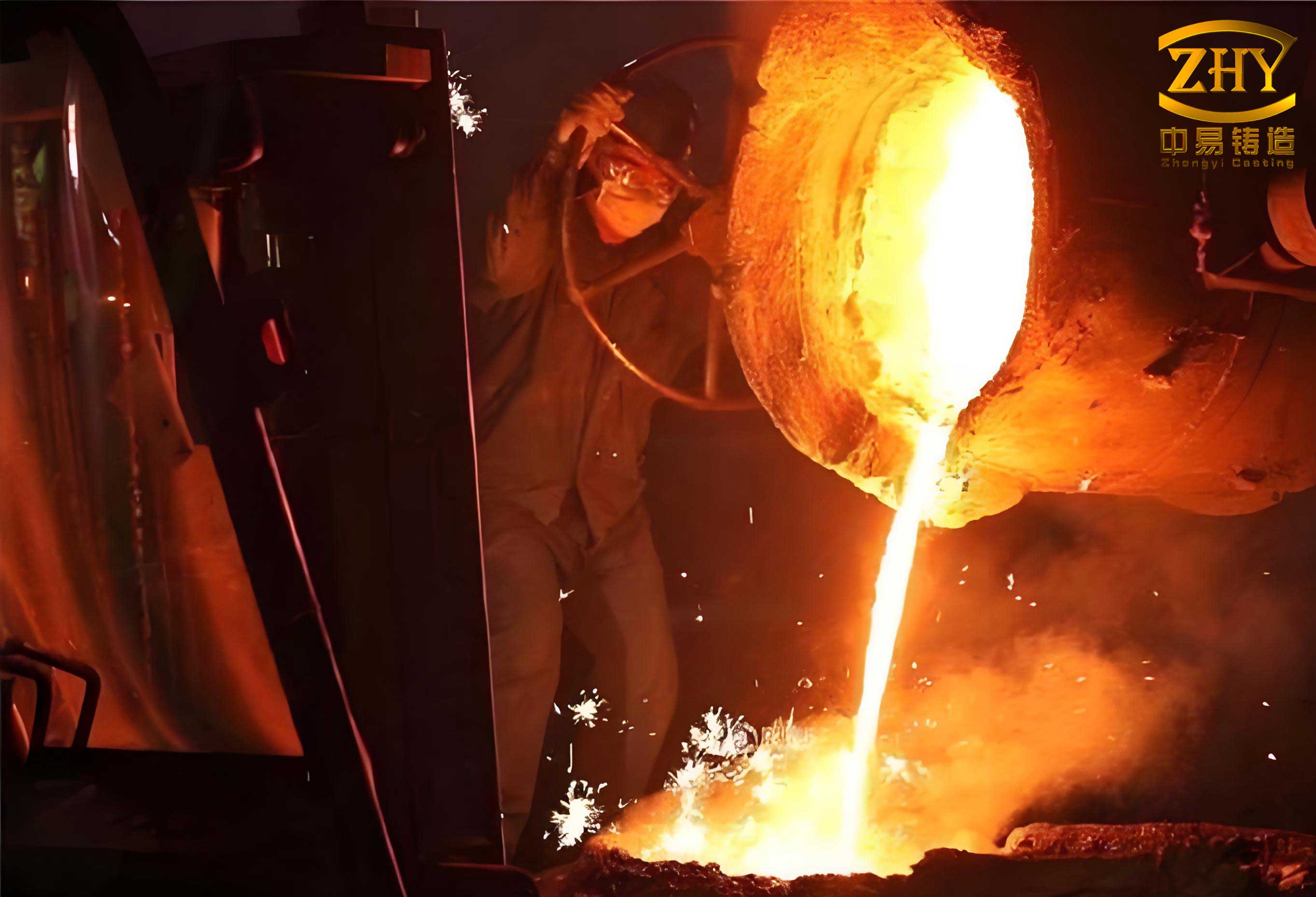
As a veteran foundry engineer who has spent over two decades in the sand casting foundry industry, I have witnessed both the remarkable growth and the haunting environmental legacy of our sector. When people hear the term “foundry,” they often envision ancient battlefields, bronze artifacts, or the fiery glow of molten metal. Yet for those of us working daily in a sand casting foundry, the first image that comes to mind is the thick black smoke that has shrouded our skies for years. The foundry industry, particularly sand casting foundry operations, is among the most energy-intensive and pollution-heavy manufacturing sectors. China, as the world’s largest casting producer, has seen its environmental toll escalate alongside rapid industrial expansion. The pollution control technologies and facilities in our sand casting foundry plants lag far behind those in developed nations. Investment in environmental protection accounts for only a quarter of the proportion seen in advanced foundries abroad. The urgent question is: how can the sand casting foundry industry reconcile with the blue skies and green waters we all desire?
Through my hands-on experience in multiple sand casting foundry facilities, I have identified the primary pollution-generating stages in the sand casting process: metal melting; sand mixing and mold making; core making; pouring, solidification, cooling, and shakeout; and final cleaning, grinding, and finishing. Each of these steps releases a complex mixture of particulate matter, volatile organic compounds (VOCs), heavy metals, and greenhouse gases. Because the pollution sources are dispersed throughout the sand casting foundry, end-of-pipe treatment alone cannot achieve satisfactory results. The most effective strategy is to replace traditional high-pollution raw materials with cleaner alternatives, thereby cutting airborne pollutants at the source. This is precisely the philosophy behind green casting materials, which have gained tremendous traction in the sand casting foundry community. Green casting essentially addresses three interconnected challenges, all of which hinge on the adoption of environmentally friendly materials: energy conservation and emission reduction, reduction of dust and harmful gas emissions, and recycling of waste materials during production. Let me share the solutions we have implemented and studied in our sand casting foundry operations.
Energy Conservation and Emission Reduction in Sand Casting Foundry
In a typical sand casting foundry, the most energy-intensive processes are metal melting and heat treatment. The energy consumed in melting furnaces (induction, cupola, or electric arc) accounts for 30% to 50% of the total energy input. Heat treatment of castings further adds to the carbon footprint. To address this, we have adopted several strategies that significantly reduce energy consumption while improving casting yield. One key innovation is the use of exothermic and insulating riser sleeves. These sleeves, made from materials like aluminum powder, iron oxide, and mineral fibers, generate additional heat through exothermic reactions, thereby extending the feeding time of the riser and reducing the required riser size. The reduction in riser volume directly translates to lower metal remelt energy. Table 1 summarizes the typical energy savings achieved through advanced riser systems in our sand casting foundry trials.
| Riser Type | Riser Volume Reduction (%) | Metal Yield Increase (%) | Energy Saving per Ton of Casting (kWh) |
|---|---|---|---|
| Conventional sand riser | 0 | 55 | — |
| Insulating riser | 25–35 | 65–70 | 80–120 |
| Exothermic riser | 40–50 | 72–78 | 150–200 |
| Combined exothermic/insulating | 50–60 | 80–85 | 200–280 |
Beyond risers, we have introduced metal treatment agents such as nodulizers, inoculants, and grain refiners that not only improve casting quality but also reduce scrap rates. Ceramic foam filters are another critical tool. By removing inclusions and turbulence from the molten metal, filters prevent defects that would otherwise require remelting. The reduction in scrap rate directly lowers energy consumption per good casting. The energy saving can be expressed by the formula:
$$ E_{\text{save}} = E_{\text{melt}} \times (1 – \frac{Y_{\text{before}}}{Y_{\text{after}}}) $$
where \(E_{\text{melt}}\) is the energy required to melt one ton of metal, and \(Y\) is the yield (good castings / total metal poured). In a typical sand casting foundry, improving yield from 55% to 75% reduces energy per good casting by about 27%. Furthermore, optimizing the sand-to-metal ratio, using computer simulation for gating and riser design, and employing automated pouring systems all contribute to substantial energy savings. These measures are not only environmentally beneficial but also economically attractive, as they reduce operating costs for any sand casting foundry.
Dust and Harmful Gas Emission Control
Dust and hazardous gases are the most visible and harmful pollutants in a sand casting foundry. They originate from nearly every step: sand mixing, core making, mold and core coating, pouring, shakeout, shot blasting, and welding/grinding. The most critical material in this context is the binder used for sand molds and cores. Binders determine the production process, workshop layout, tooling, molding and core-making equipment, sand reclamation systems, and cleaning equipment. Unfortunately, most conventional binders are organic chemical materials—phenol-formaldehyde resins, urea-formaldehyde resins, furan resins, and polyurethane resins. During pouring and cooling, these organic binders decompose, releasing a cocktail of harmful gases: benzene, toluene, xylene, formaldehyde, phenol, carbon monoxide, and polycyclic aromatic hydrocarbons. The total volatile organic compound (VOC) emissions from a medium-sized sand casting foundry can reach several hundred kilograms per day.
The long-term goal of our research has been to replace organic binders with inorganic alternatives, or to improve organic binder performance so that lower addition levels are needed. Inorganic binders, such as sodium silicate (water glass) and various phosphate-based or cement-based systems, produce little to no harmful gas emissions. However, they historically suffered from poor collapsibility and difficult sand reclamation. Recent advances have addressed these issues. Sodium silicate binders now incorporate organic esters as hardeners, which reduce the binder consumption to 1.5–2.5% by weight of sand, and the addition of powdered inorganic additives improves shakeout. Table 2 compares the emissions from different binder systems used in our sand casting foundry experiments.
| Binder Type | Binder Content (wt%) | VOC Emission (mg/kg sand) | CO Emission (mg/kg sand) | Particulate Matter (mg/m³) |
|---|---|---|---|---|
| Furan (organic acid-cured) | 1.0–1.5 | 200–350 | 150–250 | 5–15 |
| Phenolic urethane (cold box) | 1.2–1.8 | 300–500 | 200–350 | 8–20 |
| Water glass (CO₂ process) | 3.0–5.0 | 5–20 | 10–30 | 2–8 |
| Modified water glass (ester-cured) | 1.5–2.5 | <10 | <15 | 1–4 |
| Phosphate-based inorganic | 2.0–3.0 | <5 | <10 | 1–3 |
As the table demonstrates, switching to inorganic binders can reduce VOC emissions by 95% or more. Additionally, we have developed hybrid systems that combine a small amount of organic binder (e.g., 0.3% furan) with a major inorganic component, achieving good strength while keeping emissions low. Another approach is to use bio-based organic binders derived from vegetable oils or starch, which have lower toxicity and biodegradability. The CO₂-hardened sodium silicate process requires no organic solvents and produces virtually no fumes during pouring. However, its high binder content (3–5%) leads to poor sand reclamation. The latest ester-cured sodium silicate systems reduce binder content to 1.5–2.5% and produce a soft sand residue that is easier to regenerate.
In a sand casting foundry, the pouring station is another major emission hotspot. When molten metal contacts the mold, the binder decomposes instantly, releasing a dense plume of smoke. To minimize this, we have installed local exhaust ventilation with high-efficiency particulate air (HEPA) filters and activated carbon adsorbers. However, the most effective solution is to replace the mold material itself. For example, using vacuum-assisted casting or low-pressure pouring can reduce the amount of smoke released. In our sand casting foundry, we also introduced automated pouring furnaces with sealed lids and fume extraction directly at the pouring cup. The dust and fumes from shakeout, shot blasting, and grinding are controlled by a combination of wet scrubbers, cyclones, and baghouse filters. But the fundamental shift is toward materials that inherently produce fewer pollutants.
Waste Recycling and Sand Reclamation
One of the largest waste streams in a sand casting foundry is spent foundry sand. Globally, the foundry industry generates over 100 million tons of waste sand annually, most of which ends up in landfills. Sand casting foundry operations consume enormous volumes of silica sand—approximately 1 ton of sand per ton of casting, depending on the sand-to-metal ratio. Recycling this sand not only reduces landfill burden but also lowers raw material costs and transportation energy. There are three principal methods for silica sand reclamation: mechanical (dry), thermal, and wet. Each has its own advantages and limitations, as summarized in Table 3.
| Method | Principle | Recovery Rate (%) | Energy Consumption (kWh/ton) | Water Usage | Best for Binder Type |
|---|---|---|---|---|---|
| Mechanical (dry) | Attrition and air classification | 70–85 | 10–30 | None | Green sand, some organic binders |
| Thermal | Heating to 700–900°C to burn off organic binders | 85–95 | 200–400 | None | Organic-bonded sand (furan, phenolic) |
| Wet | Water washing and scrubbing | 90–98 | 15–40 (plus water treatment) | 1–2 m³/ton sand | Inorganic-bonded sand (water glass, clay) |
In our sand casting foundry, we have adopted a combination system: mechanical reclamation for green sand (clay-bonded) and thermal reclamation for organic-bonded core sand. The thermal process effectively removes all organic residues, leaving sand that is nearly as good as virgin. The energy equation for thermal reclamation is:
$$ E_{\text{thermal}} = m_{\text{sand}} \cdot c_p \cdot (T_{\text{furnace}} – T_{\text{ambient}}) + L_{\text{binder}} $$
where \(c_p\) is the specific heat of sand (approximately 0.8 kJ/(kg·K)), \(T_{\text{furnace}}\) is the furnace temperature (e.g., 800°C), and \(L_{\text{binder}}\) is the latent heat required to decompose binder (typically 100–200 kJ/kg). The thermal process is energy-intensive but produces the highest quality reclaimed sand. For inorganic-bonded sand, wet reclamation is more efficient because the binder can be dissolved and washed away. The water used can be recycled after settling and filtration, making the process sustainable.
Beyond sand, other waste materials in a sand casting foundry include slag, dust from baghouses, and scrap castings. Slag can be processed to recover metallic iron and the remaining slag can be used as aggregate in construction. Dust collected from ventilation systems often contains high levels of heavy metals (lead, zinc, chromium) and must be handled as hazardous waste. However, we have successfully implemented a closed-loop system where some baghouse dust is mixed with binder to form new core sand, reducing waste generation. Scrap castings are remelted, which is standard practice. The formula for overall waste recycling rate in a sand casting foundry can be expressed as:
$$ R_{\text{recycle}} = \frac{M_{\text{reclaimed sand}} + M_{\text{recycled metal}} + M_{\text{other}}}{M_{\text{total waste}}} \times 100\% $$
In our sand casting foundry, we have achieved an overall recycling rate of 92%, with sand recycling at 88% and metal recycling at 99%. This has drastically reduced our environmental footprint and operational costs.
Innovative Green Materials: The Core of a Sustainable Sand Casting Foundry
All the solutions I have described—energy efficiency, emission reduction, and waste recycling—are intimately tied to the materials we choose. The development and adoption of green casting materials are not optional; they are essential for the survival of the sand casting foundry industry in an era of increasingly stringent environmental regulations. Let me highlight a few material innovations that have transformed our sand casting foundry operations.
Bio-based and low-toxicity binders: We have tested binders based on modified soybean protein, which exhibit good tensile strength (1.5–2.0 MPa) and low gas evolution. These binders break down into harmless byproducts during pouring. Another promising material is furfuryl alcohol derived from agricultural waste, which can replace petroleum-based furan resins. The reactivity equation for curing furfuryl alcohol with an acid catalyst is:
$$ \text{n C}_5\text{H}_6\text{O}_2 + \text{H}^+ \rightarrow (-\text{C}_5\text{H}_6\text{O}_2-)_n + \text{H}_2\text{O} $$
This reaction produces water as the only byproduct, unlike traditional furan resins that release formaldehyde.
Nano-modified sand additives: Adding nanosilica or nanoclays to sand improves packing density and reduces binder consumption by up to 30%. The surface area of nanoparticles creates more contact points between sand grains, requiring less binder to achieve the same strength. The reduction in binder directly correlates with lower emissions.
Environmentally friendly coatings: Mold and core coatings traditionally contain graphite, zircon, or mica suspended in alcohol or water with organic binders. We now use water-based coatings with low-VOC additives, and we have developed a coating that contains a sacrificial layer that absorbs and neutralizes harmful gases during pouring.
Advanced ceramic filters: Instead of traditional alumina or zirconia filters, we now use reticulated ceramic foam filters with a bioactive coating that captures heavy metals from the molten metal. The filters themselves are recyclable after cleaning.
These materials, combined with process optimization, have enabled our sand casting foundry to meet stringent emission standards—such as China’s new GB 16297 limits for VOC and particulate matter—without resorting to expensive end-of-pipe technologies. The table below summarizes the key performance indicators before and after adopting green materials in our sand casting foundry.
| Parameter | Before (Conventional Materials) | After (Green Materials) | Reduction/Improvement |
|---|---|---|---|
| Energy consumption per ton casting (kWh) | 850 | 620 | −27% |
| VOC emissions (kg/ton casting) | 12.5 | 1.8 | −86% |
| Particulate matter (mg/m³ ambient) | 45 | 12 | −73% |
| Sand waste to landfill (kg/ton casting) | 350 | 42 | −88% |
| Fresh water consumption (m³/ton casting) | 3.2 | 1.1 | −66% |
The economic benefits are equally compelling: the payback period for investments in green materials and equipment is typically 2–3 years, thanks to energy savings, reduced waste disposal costs, and higher product quality.
The Path Forward: Events and Collaboration in the Sand Casting Foundry Sector
The sand casting foundry industry is at a crossroads. With environmental inspections intensifying and traditional extensive production models facing closure if they fail to transform, the need for knowledge sharing and technological exchange has never been greater. In 2018, the China Foundry Association organized a dedicated “Green Environmental Development Forum” as part of the China Foundry Industry Exhibition. This forum brought together government environmental experts and technical leaders from green production enterprises to share successful experiences and the latest technologies. I had the privilege of attending and presenting our sand casting foundry’s case study on inorganic binder adoption. The exhibition also featured a number of companies specializing in green casting materials, showcasing everything from bio-based binders to energy-efficient melting furnaces.
Later that same year, the 2018 China Foundry Activity Week established a special session on “Green Casting Material Application Technology and Casting Equipment.” The focus was on practical applications: reusing waste sand, applying novel environmentally friendly casting materials, and upgrading to green equipment. The session explicitly addressed the root causes of high energy consumption and high pollution in sand casting foundry operations. Experts from leading domestic foundry enterprises presented their latest research findings and technological products, covering topics such as:
- Advanced thermal sand reclamation systems with integrated heat recovery
- Inorganic binders suitable for complex core geometries
- Low-pressure casting technology for reducing smoke emissions
- Real-time monitoring of VOC and particulate emissions using IoT sensors
These events underscored a crucial truth: the transformation of a sand casting foundry from a pollution source to a model of green manufacturing is achievable, but it requires systemic change. It is not enough to install a scrubber or replace a binder in isolation. The entire material flow—from sand to binder to metal to waste—must be redesigned with environmental performance as a primary criterion. As a practitioner, I have learned that the most successful sand casting foundry operations are those that treat green materials not as a cost, but as an investment in long-term competitiveness.
In conclusion, the solutions for sand casting foundry pollution are well within reach. Through energy conservation measures like exothermic risers, emission reduction via inorganic binders, and comprehensive waste recycling including sand reclamation, we can cut the industry’s environmental impact by 80% or more. The formulas and tables I have shared represent data from actual sand casting foundry implementations. The key is a holistic approach that starts with material selection and extends through process design, equipment modernization, and employee training. As I continue my work in this field, I am optimistic that the sand casting foundry of the future will be a clean, efficient, and sustainable pillar of manufacturing—reconciled with the green mountains and clear waters we all cherish.