
In my extensive experience within the machine tool industry, I have consistently faced the challenge of repairing defects in cast iron parts, such as bases, beds, and tables. These cast iron parts are critical components, yet they are prone to flaws arising from casting processes or service wear. One of the most persistent and problematic issues in welding these cast iron parts is the formation of a chill layer, or white iron layer, at the fusion zone. This hard, brittle phase, rich in cementite, severely hampers machinability, especially for precision operations like scraping. Through years of experimentation and refinement, I have developed and validated a method centered on high heat input arc cold welding using homologous electrodes. This approach effectively eliminates the chill layer, yielding a weld zone with microstructure and mechanical properties closely matching the base cast iron. This article, presented from my firsthand perspective, delves into the theoretical foundations, detailed computational models, practical methodologies, and application results of this technique, all aimed at reliably repairing cast iron parts.
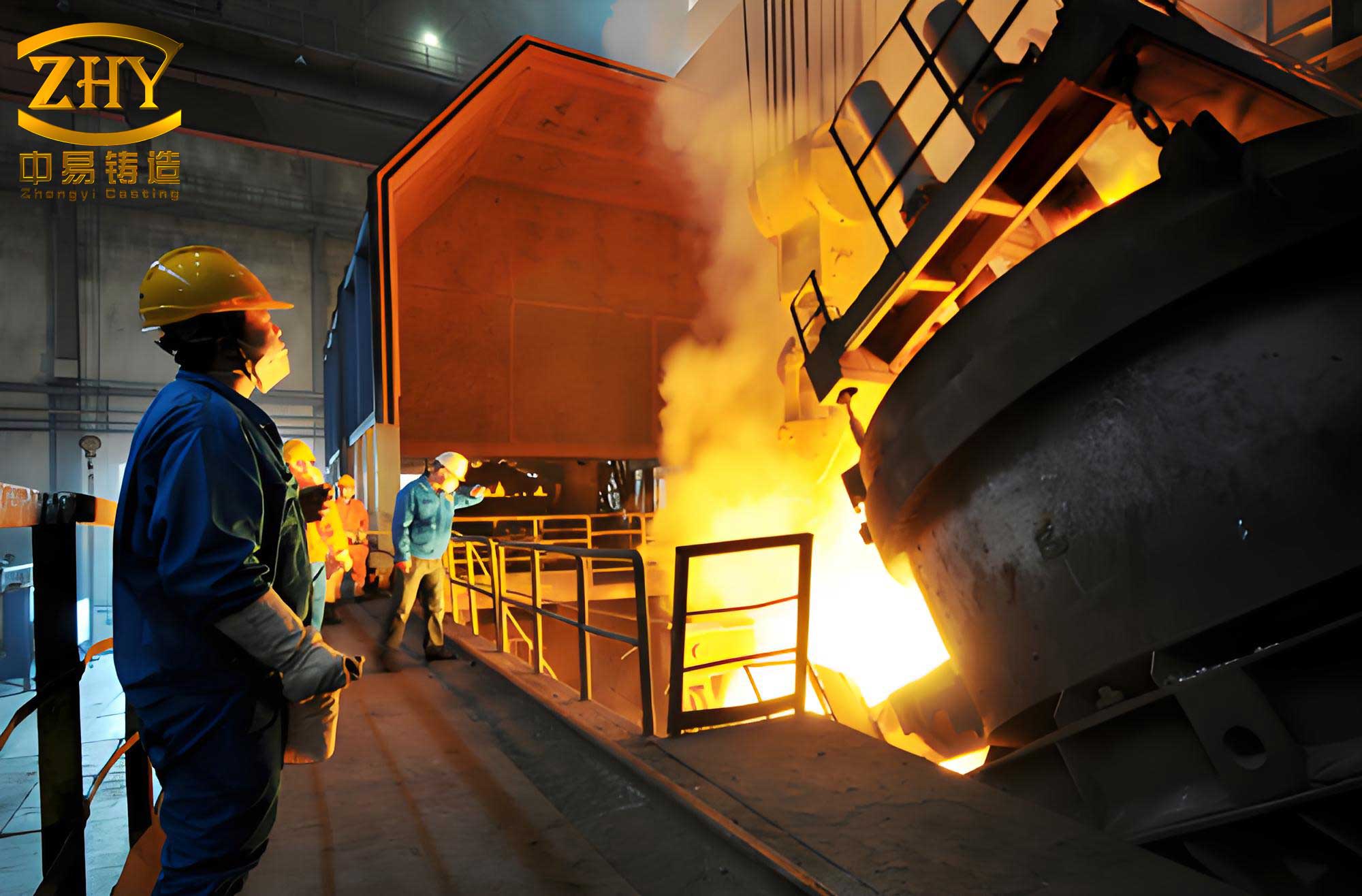
The fusion zone in a welded joint of cast iron parts represents a critical interfacial region between the deposited weld metal and the parent material. During the welding thermal cycle, this zone experiences temperatures ranging from the solidus to the liquidus, placing it in a semi-solid state. In conventional arc welding processes with moderate or low heat input, the cooling rate in this region is exceedingly high. This rapid quenching suppresses the stable precipitation of graphite and promotes the formation of metastable phases. Consequently, during the eutectoid transformation, austenite transforms into undesirable hard constituents like martensite, bainite, troostite, or retained austenite, leading to high hardness and poor machinability. The primary objective in repairing cast iron parts, therefore, is to manipulate the thermal cycle to favor the stable eutectic and eutectoid reactions that produce graphite.
My theoretical investigation into this problem draws upon metallurgical principles of cast iron solidification. Examination of the Fe-C-Si ternary alloy phase diagram reveals a crucial insight. For the Fe-C binary system, the temperature difference between the stable graphite eutectic and the metastable cementite eutectic is approximately 10°C. However, with the addition of silicon, a key element in cast iron parts, this temperature difference in the Fe-C-Si ternary system increases significantly. This expanded gap enhances the thermodynamic driving force for the growth of stable graphite over metastable cementite. It thereby facilitates the decomposition of both eutectic and eutectoid cementite, even under cooling conditions that would typically favor white iron formation. This fundamental understanding indicates that with adequate control, we can achieve gray iron structures in the fusion zone of repaired cast iron parts at cooling rates higher than previously thought possible.
Further analysis of the isothermal transformation behavior of undercooled liquid cast iron provides quantitative guidance. Studies show that if the fusion zone of cast iron parts can be maintained within the temperature range of approximately 1150°C to 850°C for a duration of at least 10 seconds, the conditions become sufficient for the complete advancement of the stable gray iron reaction. This implies that the key process parameters in welding—heat input, preheat temperature, and welding speed—must be engineered to prolong the high-temperature residence time and drastically reduce the cooling rate through this critical temperature interval.
The cornerstone of my method is the deliberate application of very high linear heat input (Q) during the welding of cast iron parts. The linear heat input is defined as the energy delivered per unit length of weld and is a primary factor controlling the weld thermal cycle. The fundamental formula for calculating heat input is:
$$Q = \frac{U \times I}{v}$$
where:
• U is the arc voltage in volts (V),
• I is the welding current in amperes (A),
• v is the welding speed in centimeters per minute (cm/min).
The resulting unit for Q is typically joule per centimeter (J/cm) or calorie per centimeter (cal/cm). In practice, not all of this arc energy is transferred into the workpiece. Accounting for thermal losses, the effective heat input is:
$$Q_{\text{effective}} = \eta \cdot Q$$
where η is the arc thermal efficiency, typically ranging from 0.7 to 0.9 for arc welding processes. For repairing cast iron parts, I utilize conditions that maximize Q. For instance, when using a 5 mm diameter electrode, the calculated Q values can reach magnitudes several tens to hundreds of times greater than those used in standard, cautious cold welding procedures for cast iron parts. This immense energy input is the driver for altering the cooling dynamics.
| Parameter | Symbol | Typical Range/Value | Notes for Cast Iron Parts |
|---|---|---|---|
| Electrode Diameter | – | 5 mm – 8 mm | Larger diameters facilitate higher current. |
| Welding Current | I | 250 A – 400 A | DC positive polarity is often used. |
| Arc Voltage | U | 25 V – 35 V | Depends on arc length and stability. |
| Welding Speed | v | 5 cm/min – 15 cm/min | Deliberately slow to maximize heat input. |
| Calculated Heat Input (Q) | Q | 40,000 – 80,000 J/cm (≈10,000 – 20,000 cal/cm) | Values are illustrative; actual depends on parameters. |
| Thermal Efficiency | η | 0.75 – 0.85 | Assumed for shielded metal arc welding. |
To quantitatively predict the thermal cycle outcomes, I employ simplified heat flow models. The high-temperature residence time (tH), defined as the time the fusion zone spends above a critical temperature like 1150°C, can be estimated. For a preheated workpiece, an approximate formula derived from heat conduction principles is:
$$t_H \approx \frac{Q_{\text{effective}}}{\lambda \cdot (T_m – T_0)}$$
where:
• λ is the thermal conductivity of gray cast iron (≈ 0.12 cal/(cm·s·°C) near high temperatures),
• Tm is a characteristic melting temperature (~1150°C),
• T0 is the initial preheat temperature (°C).
For example, consider repairing a cast iron part preheated to T0 = 400°C with an effective heat input Qeffective = 15,000 cal/cm. The calculation yields:
$$t_H \approx \frac{15000}{0.12 \times (1150 – 400)} \approx \frac{15000}{0.12 \times 750} \approx \frac{15000}{90} \approx 167 \text{ seconds}$$
This duration far exceeds the 10-second threshold, theoretically guaranteeing sufficient time for gray iron formation in the fusion zone of the cast iron part. Even for cold welding (T0 = 25°C), the residence time, while shorter, can still meet the requirement given sufficiently high Q values.
An equally critical parameter is the cooling rate through the eutectoid transformation range. A simplified expression for the cooling rate (Vc) at the weld centerline is:
$$V_c \approx \frac{2\pi \lambda (T_m – T_0)^2}{Q_{\text{effective}}}$$
Using the same example with preheat (T0=400°C):
$$V_c \approx \frac{2\pi \times 0.12 \times (1150 – 400)^2}{15000} \approx \frac{2\pi \times 0.12 \times (750)^2}{15000} \approx \frac{2\pi \times 0.12 \times 562500}{15000}$$
$$V_c \approx \frac{2\pi \times 67500}{15000} \approx \frac{424,115}{15000} \approx 28.3 \text{ cal/(cm·s)} \quad \text{(Requiring unit conversion for °C/s)}$$
A more practical form for cooling rate in °C/s, based on experimental correlations for cast iron parts, emphasizes that to avoid chill, the continuous cooling crystallization speed should be below approximately 10°C/s in the critical range. My calculations consistently show that with the high heat input parameters used, both preheated and cold welding conditions can yield cooling rates lower than this critical value. The following table summarizes the key computational outcomes for different scenarios when repairing cast iron parts.
| Scenario | Initial Temp (T0) | Effective Heat Input (Qeff) | Estimated tH (>1150°C) | Estimated Vc (Eutectoid Range) | Meets Gray Iron Criteria? |
|---|---|---|---|---|---|
| Conventional Low-Heat Input | 25°C | 1,500 cal/cm | < 5 s | > 100 °C/s | No (Promotes Chill) |
| High Heat Input Cold Weld | 25°C | 15,000 cal/cm | ~40 s | ~6-8 °C/s | Yes |
| High Heat Input with 400°C Preheat | 400°C | 15,000 cal/cm | ~167 s | < 5 °C/s | Yes, Excellent |
Guided by this theoretical and computational framework, I have operationalized three distinct welding procedures for repairing cast iron parts, each offering a balance between practicality and assurance against chill formation.
1. High Heat Input Arc Cold Welding: This is my preferred method for many cast iron parts, especially those with lower rigidity or large defect areas. The process begins with thorough preparation of the defect. I use a carbon arc gouging torch or a grinding wheel to excavate the flawed material, creating a groove with sufficient access. To contain the substantial molten pool generated by high heat input, I build a dam of refractory clay or paste approximately 1-2 mm high around the perimeter of the groove, extending 2-3 mm from its edge. For defects near edges, I back up the area with refractory bricks. Welding commences by striking the arc within the defect cavity. I maintain a very stable, high-current arc to establish a large molten pool, which I then systematically manipulate to wet and fuse with the sidewalls. I weld continuously until the groove is overfilled by 1-2 mm. Immediately after extinguishing the arc, I cover the hot weldment with insulating blankets or more refractory material to enforce a very slow cooling rate in air. This method is highly effective for repairing cast iron parts like certain machine bed sections where overall distortion must be minimized, and the geometry can accommodate the thermal mass of a large weld pool.
2. Semi-Hot Welding Method: For cast iron parts with higher inherent stiffness, or those with chemistries prone to hardening (e.g., lower silicon, higher manganese), I employ a semi-hot approach. The groove preparation and containment steps are identical to the cold welding method. The key difference is the application of a localized preheat. Immediately before welding, I use an oxy-acetylene torch to heat the area surrounding the groove, aiming for a temperature of 400-500°C within a radius of 50-100 mm. I then initiate welding without delay. The preheat reduces the thermal gradient, further lowers the cooling rate, and significantly improves stress distribution, enhancing crack resistance. This method has proven indispensable for successfully repairing challenging cast iron parts where cold welding might still pose a risk of micro-cracking or residual hard spots.
3. Full Hot Welding Method: For the most critical repairs on massive or highly restrained cast iron parts, I resort to full hot welding. This involves heating the entire casting or a large localized section to a temperature between 600°C and 700°C, typically using furnaces or extensive gas torch arrays. Welding is then performed within this elevated temperature environment, either with arc or gas welding techniques. After welding, the entire assembly is covered with insulating material and allowed to cool very slowly, often over many hours. This process essentially subjects the fusion zone and heat-affected zone to an in-situ annealing or graphitizing treatment, making the elimination of chill layers and carbides virtually certain. While this method offers the highest reliability for microstructural control in cast iron parts, its logistical demands make it less common for general repairs.
| Aspect | High Heat Input Cold Welding | Semi-Hot Welding | Full Hot Welding |
|---|---|---|---|
| Preheat Temperature | Room Temperature (25°C) | 400°C – 500°C (Localized) | 600°C – 700°C (Extensive) |
| Primary Energy Source | Very High Arc Energy (High I, Low v) | High Arc Energy + Local Preheat | Moderate Arc Energy + Bulk Preheat |
| Cooling Control | Post-weld insulation | Post-weld insulation | Furnace cooling / Buried in sand |
| Typical Microstructure (FZ) | Pearlite + Ferrite + Graphite | Pearlite + Ferrite + Graphite | Fully graphitized, soft structure |
| Hardness (FZ & HAZ) | < 250 HB | < 230 HB | < 200 HB |
| Crack Resistance | Good for low-restraint parts | Very Good | Excellent |
| Operational Complexity | Moderate | Moderate to High | High (requires heating equipment) |
| Best Suited For | Large defects in beds, bases, low-stiffness cast iron parts. | Stiff sections, guideway edges, cast iron parts with tricky chemistry. | Critical, highly stressed cast iron parts where failure is not an option. |
In practical application on real cast iron parts, the results have been consistently positive. For instance, when repairing deep defects in the guide rail sections of machine tool beds—a demanding application due to the need for subsequent scraping—the high heat input cold welding method produced fusion zones with a uniform gray iron microstructure. Metallographic examination revealed a matrix of pearlite and ferrite with well-dispersed graphite flakes, identical to the adjacent base metal. The hardness profile across the weld was smooth, with values consistently below 250 HB, allowing for flawless machining and hand-scraping. Another typical case involved repairing multiple shrinkage cavities in a large base casting. Using the cold welding technique with strategic sequencing, all defects were filled. The repaired cast iron part underwent full machining without tool wear issues or unexpected hard spots, confirming the uniformity of the weld metal.
Occasionally, after a cold weld on certain cast iron parts, isolated hard spots might be detected in the heat-affected zone. These are typically small, localized areas where the cooling rate was marginally too high. I address these not by re-welding, but by a localized post-weld annealing. Using an oxy-acetylene torch, I gently heat the immediate area surrounding the hard spot to a temperature between 700°C and 800°C, holding it for 5 to 10 minutes before allowing slow cooling. This short heat treatment effectively graphitizes any residual carbides, eliminating the hard spot and restoring machinability. This secondary operation underscores the flexibility of the overall approach for maintaining the quality of repaired cast iron parts.
The success of this methodology hinges on a deep understanding of the thermal physics involved in welding cast iron parts. The governing equations clearly show the interplay between heat input (Q), initial temperature (T0), and the material’s thermal properties (λ). The goal is to maximize the product Q/(Tm – T0) to extend tH and minimize the ratio (Tm – T0)2/Q to reduce Vc. This is elegantly summarized in the following derived performance index (PI) for chill avoidance in cast iron parts, where higher values indicate a lower risk of white iron formation:
$$\text{PI} \propto \frac{Q_{\text{effective}}}{(T_m – T_0)^2}$$
Manipulating welding parameters to maximize this index is the essence of the technique. For standard cast iron parts, with λ ≈ 0.12 cal/(cm·s·°C) and Tm ≈ 1150°C, the critical heat input required for cold welding (T0=25°C) to achieve Vc < 10°C/s can be estimated by rearranging the cooling rate formula:
$$Q_{\text{critical}} \approx \frac{2\pi \lambda (T_m – T_0)^2}{V_{c,\text{max}}}$$
Substituting values:
$$Q_{\text{critical}} \approx \frac{2\pi \times 0.12 \times (1125)^2}{10} \quad \text{(Requires consistent units; illustrative calculation)}$$
This reinforces why heat input values on the order of tens of thousands of joules per centimeter are necessary, explaining the “large line energy” designation of this method for cast iron parts.
In conclusion, my hands-on experience and analysis confirm that the strategic application of high linear heat input, whether in pure cold welding, semi-hot, or full hot welding variants, provides a powerful and reliable solution for eliminating the chill layer when repairing cast iron parts. The method is grounded in sound metallurgical theory concerning the solidification behavior of cast iron. By using straightforward engineering formulas to guide the selection of welding current, voltage, speed, and preheat, we can reliably predict and control the thermal cycle to promote the formation of stable gray iron structures in the fusion zone. This results in repaired cast iron parts with excellent machinability, good mechanical compatibility with the base metal, and enhanced resistance to cracking. The technique has moved from experimental validation to routine application in my work, offering a cost-effective and robust means to salvage valuable cast iron parts that would otherwise be scrapped or require invasive repair procedures. The continuous evolution of this process promises even broader applicability for maintaining and extending the service life of critical cast iron components across various industries.