
In our work developing critical components for commercial vehicle engines, we encountered a persistent and troubling issue with exhaust manifolds fabricated from silicon-molybdenum nodular cast iron. During the mandatory engine hot-testing phase prior to customer delivery, these components are subjected to exhaust gas temperatures reaching approximately 700°C. Post-test inspection consistently revealed the formation of red, flaky rust within the internal flow passages of the manifold. This phenomenon was not merely cosmetic; the dislodged rust scales posed a severe risk of damaging downstream turbocharger blades, leading to field failures and significant customer dissatisfaction. Solving this internal corrosion problem became a critical priority for our production and supply chain.
The core material in question is a high-silicon, high-molybdenum grade of nodular cast iron, designated as QTRSi4Mo1. Its chemical composition, which provides good elevated temperature strength, is summarized in Table 1 below.
| Element | C | Si | Mn | Mo | P | S | Mg |
|---|---|---|---|---|---|---|---|
| Content | 2.7 – 3.5 | 4.0 – 4.5 | ≤ 0.3 | 1.0 – 1.5 | ≤ 0.05 | ≤ 0.015 | 0.01 – 0.05 |
Our initial investigation confirmed that the rust was exclusively a product of the engine test cycle. Untested manifolds from the same batch, still coated with protective oil, showed no signs of corrosion on their external surfaces. The problem was clearly initiated by the high-temperature service environment. Standard rust prevention methods for nodular cast iron, such as applying rust-inhibitive oils or paints, function by creating a barrier that isolates the metal from oxygen and moisture. However, these organic coatings are completely ineffective at 700°C; they rapidly decompose, vaporize, or burn off, leaving the bare metal exposed to the aggressive, high-velocity exhaust stream.
The fundamental issue is the thermodynamics and kinetics of iron oxidation. At high temperatures in an oxygen-containing environment, the surface of the nodular cast iron readily oxidizes. The typical rust observed, red iron oxide (Fe2O3, hematite), has a porous, non-protective crystal structure. It provides little barrier to further oxygen diffusion, allowing oxidation to proceed inward. Furthermore, the constant scouring effect of the exhaust gas flow mechanically removes this fragile oxide layer, continuously exposing fresh metal surface and accelerating the corrosion process. This cycle of formation and spallation leads to the problematic red rust. The oxidation kinetics at a constant temperature can often be described by a parabolic rate law:
$$ x^2 = k_p t $$
where $x$ is the oxide scale thickness, $k_p$ is the parabolic rate constant (highly dependent on temperature and oxide properties), and $t$ is time. For a porous, non-adherent oxide like Fe2O3 on nodular cast iron, the constant $k_p$ is relatively high, leading to rapid scale growth and failure.
Our proposed solution was to proactively grow a superior, protective oxide layer on the nodular cast iron manifold before it ever sees engine service. Instead of the non-protective Fe2O3, we aimed to form a dense, adherent layer of magnetite (Fe3O4). Magnetite has a spinel crystal structure which is much more effective at hindering the diffusion of iron cations and oxygen anions, dramatically slowing down further oxidation. The process we developed and optimized is a controlled high-temperature steam oxidation.
The underlying principle leverages the modified oxidation behavior of iron in the presence of water vapor at elevated temperatures. Under specific conditions of temperature and H2O/O2 ratio, the formation of Fe3O4 is thermodynamically favored and its growth kinetics can be controlled to produce a dense layer. The growth of this protective layer can be modeled by an equation considering the partial pressure of steam:
$$ \frac{d\delta}{dt} = A \cdot P_{H_2O}^{n} \cdot \exp\left(-\frac{Q}{RT}\right) $$
where $\delta$ is the oxide layer thickness, $A$ is a pre-exponential factor, $P_{H_2O}$ is the water vapor partial pressure, $n$ is a reaction order, $Q$ is the activation energy for the process, $R$ is the universal gas constant, and $T$ is the absolute temperature. By carefully controlling $T$ and $P_{H_2O}$, we can manage the growth rate ($d\delta/dt$) to achieve a uniform, optimal layer.
The detailed, step-by-step procedure we implemented in production is as follows, with key parameters summarized in Table 2.
| Process Step | Action | Temperature Range | Atmosphere | Flow Rate / Pressure | Duration |
|---|---|---|---|---|---|
| 1. Loading & Initial Purge | Load cleaned manifolds into furnace at room temperature. Begin heating. | RT → 300-420°C | Nitrogen (N2) | 16 – 20 m³/h | During heat-up |
| 2. Initial Soak | Hold temperature to stabilize parts. | 300-420°C | Nitrogen (N2) | 16 – 20 m³/h | 1.5 hours |
| 3. Steam Introduction & Reaction | Switch to steam atmosphere and raise to reaction temperature. | 630 – 690°C | Water Steam (H2O) | (5 ± 1) m³/h | During heat-up |
| 4. Main Oxidation Stage | Maintain conditions for controlled Fe3O4 growth. | 630 – 690°C | Water Steam (H2O) | (5 ± 1) m³/h; Pressure: 14.57 – 21.46 kPa | 2.5 hours |
| 5. Cooling & Unloading | Stop steam, open furnace, and remove parts. | Cool to 530-610°C | Air | N/A | N/A |
The process curve derived from these parameters ensures a controlled transition from a safe, non-oxidizing atmosphere during initial heat-up to the precise steam-rich environment needed for magnetite formation. Through extensive experimentation, we determined that a target Fe3O4 layer thickness of 15 to 25 micrometers provides the optimal balance between corrosion protection and maintaining dimensional tolerances for the nodular cast iron component. This layer is continuous, adherent, and presents a characteristic bluish-black finish.
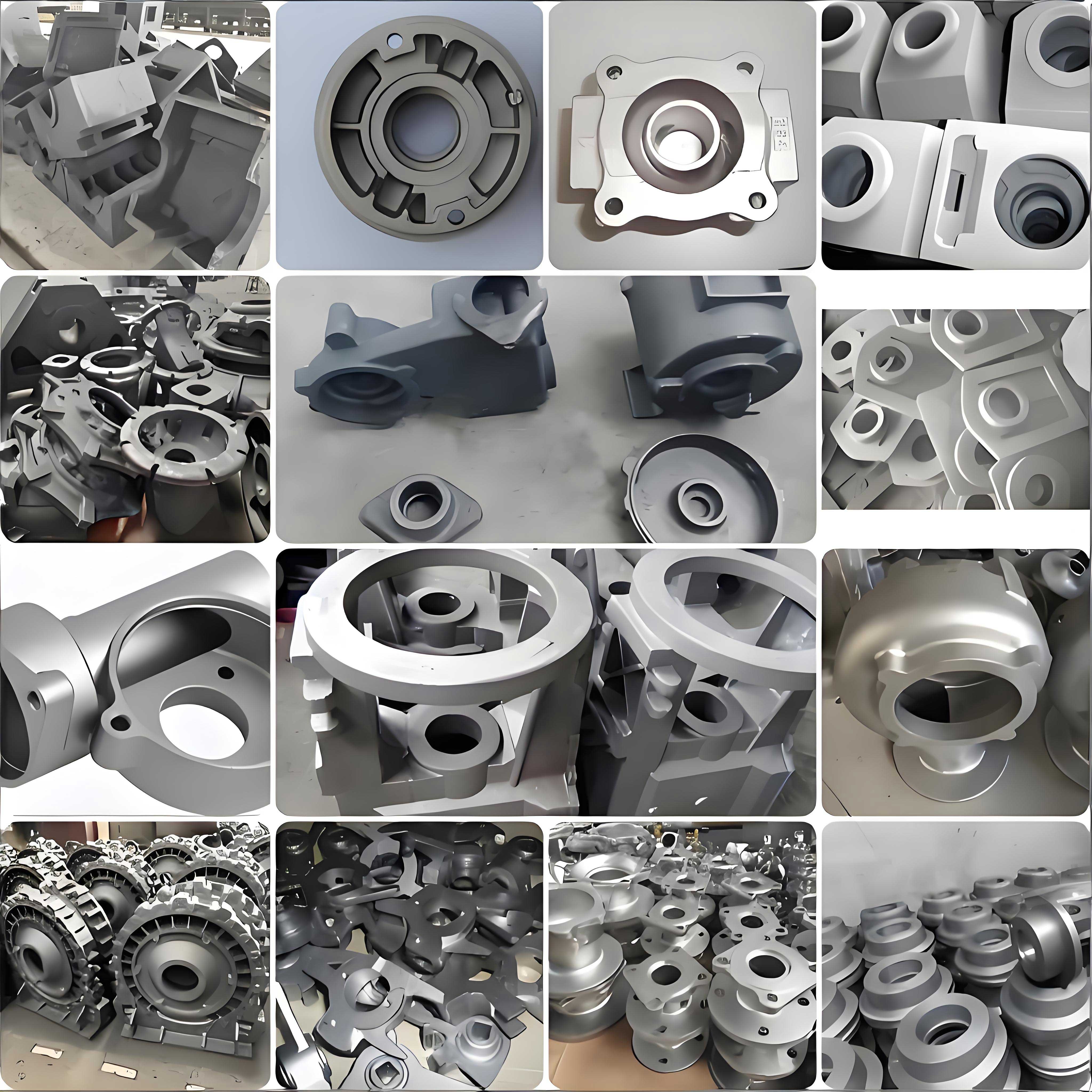
The effectiveness of this high-temperature steam oxidation treatment required rigorous validation through comparative testing. We employed neutral salt spray (NSS) testing per ASTM B117 (equivalent to GB/T 10125-2012) as an accelerated corrosion assessment method.
Control Group 1: Treated vs. Untreated Nodular Cast Iron. This test compared the basic corrosion resistance of standard nodular cast iron parts against those with the steam-generated Fe3O4 layer. The results, detailed in Table 3, were starkly different.
| Sample Type | 2 Hours NSS | 24 Hours NSS | 48 Hours NSS |
|---|---|---|---|
| Untreated Nodular Cast Iron | Appearance of scattered red rust spots. | Complete coverage of surface with red rust (Fe2O3). | Severe, thick layer of red rust. |
| Steam-Oxidized Nodular Cast Iron (with Fe3O4 layer) | No visible rust. Surface retains bluish-black oxide. | First appearance of isolated pinpoint red rust spots. | Localized areas of red rust, but significant portion of protective black oxide remains intact. |
The data clearly demonstrates a dramatic improvement. The untreated nodular cast iron began corroding almost immediately, while the oxidized part maintained its integrity for a substantially longer period. This confirms that the Fe3O4 layer actively retards the corrosion process by acting as a diffusion barrier, effectively increasing the parabolic rate constant’s effective resistance in the equation $x^2 = k_p t$ for the underlying metal.
Control Group 2: Assessing Engine Test Impact on the Oxide Layer. A critical concern was whether the high-velocity, high-temperature exhaust flow during engine testing would damage or strip away the carefully applied Fe3O4 layer, rendering the treatment useless. To evaluate this, we compared steam-oxidized parts that underwent engine hot testing against steam-oxidized parts that did not. Both sets were then subjected to the same salt spray test sequence. The results, shown in Table 4, were conclusive.
| Sample Type | 2 Hours NSS | 24 Hours NSS | 48 Hours NSS |
|---|---|---|---|
| Steam-Oxidized, No Engine Test | No rust. | Pinpoint rust spots. | Localized rust areas. |
| Steam-Oxidized, After Engine Hot Test | No rust. | Pinpoint rust spots. | Localized rust areas. |
The corrosion behavior and timelines for both groups were virtually identical. This proves that the magnetite layer formed on the nodular cast iron is not only protective but also remarkably adherent and resistant to the thermo-mechanical stresses imposed by actual engine operation. The layer is integral to the surface and survives the service conditions it was designed for.
In conclusion, the implementation of a controlled high-temperature steam oxidation process has successfully resolved the critical issue of internal rusting in silicon-molybdenum nodular cast iron exhaust manifolds. The key achievement is the in-situ growth of a dense, adherent Fe3O4 (magnetite) layer, approximately 15-25 µm thick, which fundamentally alters the surface properties of the nodular cast iron. This layer acts as an effective diffusion barrier, significantly increasing the component’s oxidation resistance, as validated by accelerated salt spray testing and, most importantly, by surviving the real-world engine hot test cycle. Beyond solving the immediate rust problem, this treatment offers several ancillary benefits: it enhances the surface hardness and wear resistance at the flanges, improving sealing reliability; it provides a consistent, aesthetically pleasing bluish-black finish; and it replaces temporary, environmentally sensitive oil-based coatings with a permanent, inorganic protective layer that can extend the component’s effective corrosion protection life for many years. This development marks a significant advancement in the surface engineering of high-temperature nodular cast iron components for demanding automotive applications.