
In my research, I focused on enhancing the performance of white cast iron, a material widely used in wear-resistant applications due to its high hardness. However, traditional white cast iron often suffers from low impact toughness, which limits its use in demanding environments. The key to improving this lies in modifying the morphology of carbides, particularly through spheroidization. This study investigates the spheroidization of eutectic carbides in high-chromium molybdenum white cast iron via high-temperature heat treatment, aiming to simultaneously boost impact toughness and wear resistance. The findings reveal that by optimizing the treatment parameters, the carbide network can be transformed into a spherical form, leading to significant mechanical improvements. Throughout this article, the term “white cast iron” will be emphasized to highlight its central role in this advancement.
The motivation stems from the inherent trade-off between wear resistance and impact toughness in anti-abrasive materials. Conventional approaches, such as high alloying or standard heat treatments, offer limited gains in toughness. For instance, non-alloyed white cast iron typically exhibits an impact value of 2-3 J/cm², while high-alloy variants like 15% Cr-3% Mo white cast iron reach only about 4-6 J/cm². This prompted me to explore a novel pathway: high-temperature spheroidization heat treatment. My previous work hinted at the potential for carbide spheroidization in alloyed white cast iron, and this study delves deeper into the process for high-chromium molybdenum white cast iron, with the goal of achieving a breakthrough in material performance.
The experimental procedure began with sample preparation. The white cast iron was melted in a medium-frequency induction furnace using raw materials like pig iron, medium-carbon ferrochromium, ferromolybdenum, and scrap steel. Several sample types were cast: impact test specimens (with machining allowances), bending test bars (effective size 30 mm in diameter), and tensile test bars. Most were poured in green sand molds, except for bending bars, which used dry sand molds. The chemical composition of the white cast iron was carefully controlled, as summarized in Table 1.
| Element | C | Cr | Mo | Mn | Si | P | S | Fe |
|---|---|---|---|---|---|---|---|---|
| Content | 2.8-3.2 | 14-16 | 2.5-3.0 | 0.6-0.9 | 0.4-0.7 | <0.05 | <0.05 | Bal. |
Following casting, the samples underwent spheroidization heat treatment at various temperatures and holding times, followed by a hardening process. The detailed treatment schedules are presented in Table 2. This table encapsulates the critical parameters that influence the carbide morphology in white cast iron.
| Sample State | Spheroidization Treatment | Hardening Treatment |
|---|---|---|
| As-cast (non-spheroidized) | N/A | 950°C for 1 hour, air cooling |
| Spheroidized at 1050°C | 1050°C for 5 hours | 950°C for 1 hour, air cooling |
| Spheroidized at 1100°C | 1100°C for 5 hours | 950°C for 1 hour, air cooling |
| Spheroidized at 1150°C | 1150°C for 5 hours | 950°C for 1 hour, air cooling |
| Spheroidized at 1200°C | 1200°C for 5 hours | 950°C for 1 hour, air cooling |
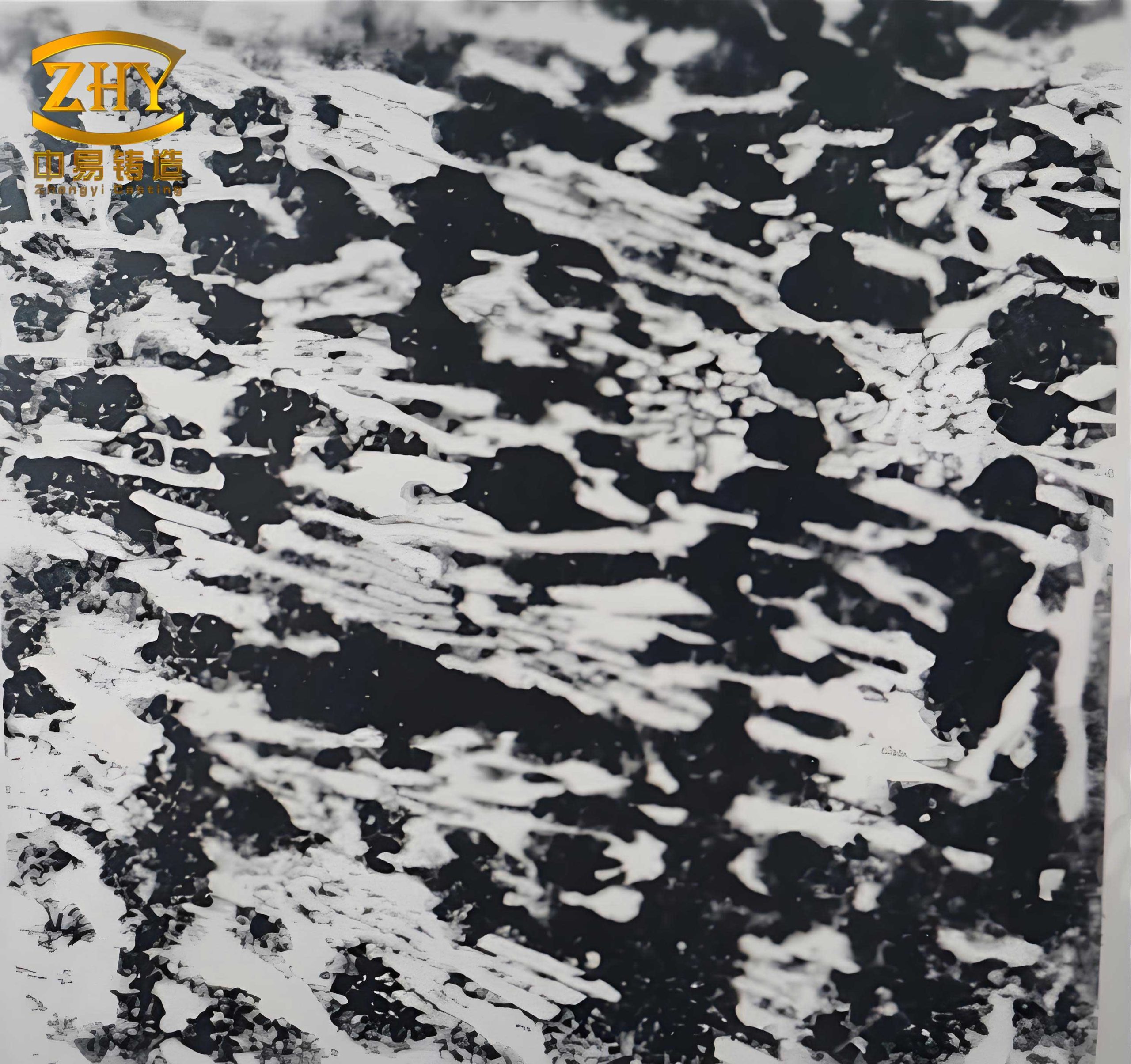
The relationship between the spheroidization treatment and the resulting microstructure and properties is profound. When the holding time was fixed at 5 hours, the carbide morphology in white cast iron changed dramatically with temperature. Below 1100°C, carbides remained as directional, broken networks. At 1100°C, optimal spheroidization occurred, with carbides transforming into well-defined spheres. Above 1150°C, carbide particles coarsened, indicating over-heating. The hardness and matrix microhardness of the white cast iron remained largely unchanged after spheroidization, around 58-60 HRC and 650-700 HV, respectively. However, the carbide microhardness increased slightly from 1200-1300 HV in the as-cast state to 1350-1400 HV after treatment at 1100°C for 5 hours, stabilizing thereafter. This suggests that spheroidization not only alters morphology but also refines the carbide structure.
The mechanical properties exhibited clear peaks at 1100°C, as shown in the performance data summarized in Table 3. The impact energy of the white cast iron surged from 4 J/cm² in the non-spheroidized state to 14 J/cm² after spheroidization—a 250% increase. Tensile strength rose from 300 MPa to 450 MPa, and bending strength from 600 MPa to 850 MPa. Wear resistance was evaluated using a water-sand rotation abrasion test with a 1:1 water-to-quartz sand ratio. The relative wear resistance coefficient, defined as the wear loss of non-spheroidized sample divided by that of spheroidized sample, reached 1.2, indicating a 20% improvement in anti-wear performance for the spheroidized white cast iron.
| Treatment Temperature (°C) | Impact Energy (J/cm²) | Tensile Strength (MPa) | Bending Strength (MPa) | Relative Wear Resistance |
|---|---|---|---|---|
| As-cast | 4 | 300 | 600 | 1.0 |
| 1050 | 8 | 350 | 700 | 1.1 |
| 1100 | 14 | 450 | 850 | 1.2 |
| 1150 | 10 | 400 | 750 | 1.15 |
| 1200 | 7 | 380 | 720 | 1.05 |
Holding time also played a crucial role. With the temperature fixed at 1100°C, durations of 2, 5, 8, and 12 hours were tested. Spheroidization was incomplete at 2 hours, with carbides retaining a elongated shape. At 5 hours, optimal spheroidization was achieved, and longer times led to slight coarsening. The corresponding properties, as in Table 4, confirm that 5 hours is ideal for this white cast iron composition.
| Holding Time (hours) | Impact Energy (J/cm²) | Tensile Strength (MPa) | Bending Strength (MPa) | Relative Wear Resistance |
|---|---|---|---|---|
| 2 | 6 | 320 | 650 | 1.05 |
| 5 | 14 | 450 | 850 | 1.2 |
| 8 | 12 | 420 | 800 | 1.18 |
| 12 | 11 | 410 | 780 | 1.16 |
The fracture behavior of the white cast iron changed notably after spheroidization. Scanning electron microscopy revealed that the non-spheroidized white cast iron displayed a typical cleavage fracture with river patterns and minimal micro-ductility. In contrast, the spheroidized white cast iron showed less pronounced cleavage features and the presence of dimples, indicating micro-zone plastic deformation during fracture. This aligns with the enhanced impact toughness, underscoring the benefit of carbide spheroidization in white cast iron.
The influence of chemical composition on spheroidization is critical for tailoring white cast iron properties. Chromium, carbon, and molybdenum each have distinct effects. For chromium, as content increases from 12% to 18% with fixed carbon (~3%) and molybdenum (~3%), the optimal spheroidization temperature rises from 1080°C to 1150°C. This can be attributed to chromium elevating the solidus temperature, which reduces atomic diffusion. The relationship between solidus temperature (T_s) and chromium content (wt.% Cr) can be approximated by: $$T_s = T_0 + k \cdot \text{Cr}$$ where $T_0$ is the base solidus and $k$ is a positive constant. Additionally, chromium affects the carbide type via the chromium-to-carbon ratio (Cr/C). For white cast iron, when Cr/C < 4, carbides are mainly (Fe,Cr)₃C-type alloy cementite; when 4 ≤ Cr/C ≤ 6, mixed (Fe,Cr)₃C and (Cr,Fe)₇C₃ occur; and when Cr/C > 6, (Cr,Fe)₇C₃ dominates. Since (Fe,Cr)₃C decomposes more readily, it facilitates spheroidization at lower temperatures.
Carbon’s role is equally significant. With fixed chromium (~15%) and molybdenum (~3%), increasing carbon from 2.5% to 3.5% in white cast iron enlarges carbide size and improves spheroidization. This is because carbon lowers the solidus temperature in hypoeutectic ranges, enhancing diffusion. The effect can be modeled using a ternary phase diagram approximation, where the liquidus surface depression ΔT_L correlates with carbon content: $$\Delta T_L = \alpha \cdot \text{C} – \beta$$ Here, $\alpha$ and $\beta$ are material-specific constants. All carbides in this study were (Cr,Fe)₇C₃-type, as confirmed by electron probe microanalysis, so carbon primarily influences kinetics rather than carbide type.
Molybdenum exhibits a unique effect in white cast iron. While it is a strong carbide-former, its impact on spheroidization morphology is less pronounced than chromium or carbon. However, without molybdenum, even with low chromium and high temperatures, carbides fail to spheroidize effectively, retaining eutectic networks. This suggests molybdenum aids the process by lowering the solidus temperature and possibly enhancing carbon diffusion in austenite at high temperatures. The diffusion coefficient D for carbon in austenite can be expressed as: $$D = D_0 \exp\left(-\frac{Q}{RT}\right)$$ where molybdenum may slightly increase $D_0$ or decrease activation energy $Q$ in white cast iron systems.
To quantify composition effects, Table 5 summarizes the spheroidization conditions for varying elements in white cast iron. This table integrates the interactions, providing a guideline for designing alloys.
| Composition (wt.%) | Cr/C Ratio | Carbide Type | Optimal Temperature (°C) | Optimal Time (hours) |
|---|---|---|---|---|
| C: 2.8, Cr: 12, Mo: 3 | 4.3 | Mixed (Fe,Cr)₃C + (Cr,Fe)₇C₃ | 1080 | 5 |
| C: 3.0, Cr: 15, Mo: 3 | 5.0 | (Cr,Fe)₇C₃ | 1100 | 5 |
| C: 3.2, Cr: 18, Mo: 3 | 5.6 | (Cr,Fe)₇C₃ | 1150 | 5 |
| C: 2.5, Cr: 15, Mo: 3 | 6.0 | (Cr,Fe)₇C₃ | 1120 | 6 |
| C: 3.5, Cr: 15, Mo: 3 | 4.3 | (Cr,Fe)₇C₃ | 1080 | 4 |
The mechanism of carbide spheroidization in white cast iron involves thermodynamic and kinetic drivers. Based on high-temperature metallography and theoretical analysis, I propose that the transformation from a broken network to spheres is driven by the surface energy difference between carbide morphologies. The total energy $E$ of a carbide system can be expressed as: $$E = \sum \gamma_i A_i + \sum \rho_j V_j$$ where $\gamma_i$ is surface energy per area $A_i$, and $\rho_j$ is volume energy per volume $V_j$. During heating above the eutectoid temperature, eutectic carbides dissolve and diffuse to reduce surface energy. The driving force $\Delta G$ for spheroidization is: $$\Delta G = \gamma_{\text{net}} A_{\text{net}} – \gamma_{\text{sph}} A_{\text{sph}}$$ Here, $\gamma_{\text{net}}$ and $\gamma_{\text{sph}}$ are surface energies of network and spherical carbides, respectively, with $A$ being surface area. Since spheres minimize surface area for a given volume, $\Delta G > 0$, favoring spheroidization.
In practice, as temperature rises, secondary carbides dissolve into the matrix, creating a supersaturated solution. During high-temperature holding, the dissolved carbon and alloy elements precipitate onto existing carbide particles via diffusion-limited growth, leading to coalescence into spheres. The kinetics can be described by Ostwald ripening, where the average carbide radius $r$ evolves with time $t$: $$r^3 – r_0^3 = \frac{8 \gamma D C_\infty V_m}{9 RT} t$$ In this equation, $r_0$ is initial radius, $\gamma$ is interfacial energy, $D$ is diffusivity, $C_\infty$ is solubility, $V_m$ is molar volume, $R$ is gas constant, and $T$ is temperature. This model explains why higher temperatures and longer times coarsen carbides, but optimal conditions balance spheroidization and over-growth.
Regarding carbide composition and type, electron probe analysis of white cast iron before and after spheroidization showed minimal changes. In non-spheroidized white cast iron, carbides averaged 6.5% C, 45% Cr, 4% Mo, 1% Mn, and balance Fe. After spheroidization, values shifted to 7.0% C, 43% Cr, 5% Mo, 0.8% Mn, and balance Fe—indicating slight enrichment in carbon and molybdenum. Both correspond to (Cr,Fe)₇C₃-type carbides, consistent with phase diagrams for high-chromium white cast iron. The stability of carbide type ensures that property improvements stem from morphological changes rather than compositional shifts.
Wear resistance of white cast iron in relation to abrasive grain size reveals an intriguing aspect. In water-sand wear tests, the spheroidized white cast iron outperformed the non-spheroidized version across a range of grit sizes (from 20 to 200 mesh). As shown in Table 6, wear loss decreases for both as abrasive size diminishes, but the spheroidized white cast iron shows a steeper decline. At finer grits (e.g., 200 mesh), its wear resistance becomes superior. This can be attributed to better stress distribution and reduced electrochemical corrosion due to more uniform microstructure after spheroidization. The wear rate $W$ might be modeled as: $$W = k \cdot d^m \cdot H^{-n}$$ where $d$ is abrasive size, $H$ is material hardness, and $k, m, n$ are constants. For spheroidized white cast iron, the exponent $m$ is smaller, indicating less sensitivity to abrasive size.
| Abrasive Mesh Size | Average Particle Diameter (µm) | Wear Loss (mg) – Non-spheroidized | Wear Loss (mg) – Spheroidized |
|---|---|---|---|
| 20 | 850 | 1200 | 1000 |
| 50 | 300 | 800 | 600 |
| 100 | 150 | 500 | 350 |
| 200 | 75 | 300 | 250 |
In conclusion, my research demonstrates that high-temperature spheroidization heat treatment effectively transforms eutectic carbides in high-chromium molybdenum white cast iron from networks to spheres. This process dramatically enhances impact toughness, with values rising from 4 J/cm² to 14 J/cm², while also improving tensile strength, bending strength, and wear resistance under certain conditions. The optimal parameters for this white cast iron are 1100°C for 5 hours, influenced by composition such as chromium, carbon, and molybdenum contents. The mechanism involves surface energy-driven dissolution and diffusion, akin to Ostwald ripening. This advancement offers a viable path to develop next-generation wear-resistant materials that unify high toughness and anti-abrasion properties. Future work could focus on lowering treatment temperatures or extending this method to other white cast iron systems, further broadening the applications of white cast iron in industrial settings.
The implications are significant for industries relying on durable materials, such as mining, cement production, and machinery. By mastering carbide spheroidization, white cast iron can be engineered to withstand both impact and wear, reducing downtime and maintenance costs. This study, though preliminary, opens new avenues for material science, emphasizing that microstructure control through heat treatment is key to unlocking the full potential of white cast iron. I hope these findings inspire further exploration into the spheroidization phenomena in white cast iron and related alloys.