
In the production of engine components, grey iron casting remains a cornerstone due to its excellent machinability, damping capacity, and cost-effectiveness. As a foundry engineer specializing in metallurgy, I have focused on optimizing melt practices to enhance the quality and reliability of grey iron castings, particularly for critical parts like cylinder blocks. The relentless market demand for higher performance at lower cost places immense pressure on foundries to minimize scrap rates while maintaining stringent mechanical properties. This narrative details my firsthand experience and systematic approach in addressing persistent defect issues in a specific grade of grey iron casting, HT250, used for diesel engine cylinder blocks.
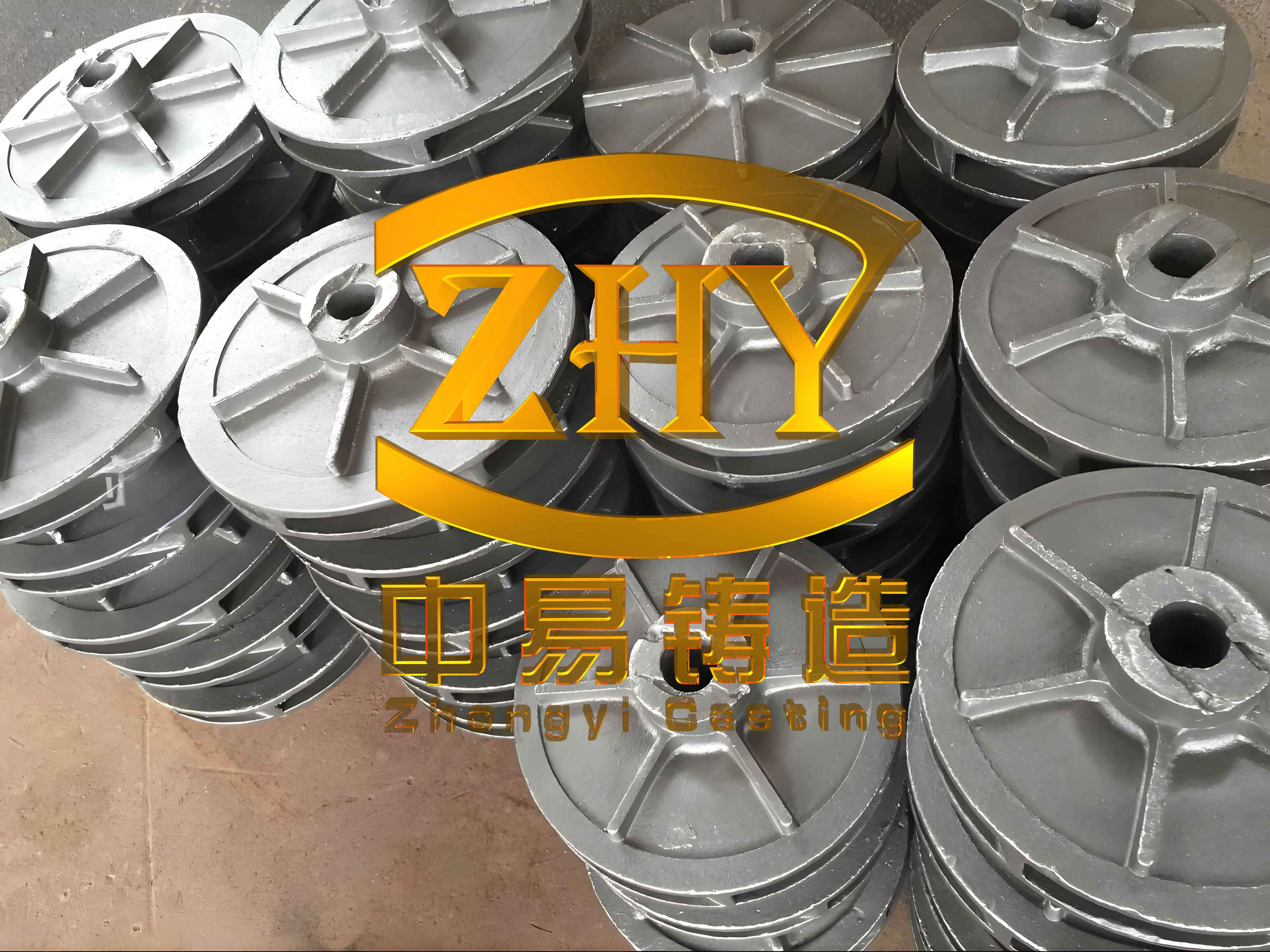
The core challenge involved an unacceptably high rejection rate for our grey iron casting, primarily manifested as subsurface blowholes and surface depressions (shrinkage cavities). These defects not only incurred significant financial loss but also posed reliability risks for the final engine assembly. Our standard melting practice utilized a medium-frequency induction furnace with a charge composed of pig iron, steel scrap, returns, alloys, and a low-sulfur, low-nitrogen recarburizer. This recarburizer, a graphitized petroleum coke product, was selected for its purity—low in sulfur, nitrogen, ash, and volatiles. However, data from a three-month period revealed a concerning trend. The average scrap rate for the grey iron casting was 3.35%, with blowholes accounting for 2.28% and shrinkage depressions for 0.34%. These two defects together constituted 78% of the total rejections, clearly identifying them as the primary targets for process improvement.
| Period | Blowhole Rejection Rate (%) | Depression Rejection Rate (%) | Total Rejection Rate (%) |
|---|---|---|---|
| Month 1 | 1.88 | 0.13 | 2.91 |
| Month 2 | 2.21 | 0.22 | 2.96 |
| Month 3 | 2.75 | 0.69 | 4.18 |
| Average | 2.28 | 0.34 | 3.35 |
A thorough root-cause analysis was imperative. For blowholes, especially the subcutaneous type found after machining, the interaction between molten metal and the mold atmosphere is critical. While aluminum content in the iron (0.007-0.009%) and mold sand moisture (2.6-3.0%) were within acceptable ranges, the solidification behavior of the grey iron casting emerged as a key factor. Faster solidification can trap gases evolved during pouring before they can escape to the surface. The solidification time is intrinsically linked to the composition, particularly the carbon content. A higher carbon content generally delays the overall solidification, allowing more time for gas liberation. The relationship can be conceptualized through solidification models. For a grey iron casting, the solidification time t can be related to the carbon equivalent (CE) and casting geometry. A simplified expression considering the thermal properties is:
$$ t_f \propto \frac{(\Delta T_s)^2}{\kappa \cdot (CE – CE_{eutectic})^n } $$
where \( t_f \) is the local freezing time, \( \Delta T_s \) is the superheat, \( \kappa \) is the thermal diffusivity, \( CE \) is the carbon equivalent, \( CE_{eutectic} \) is the eutectic carbon equivalent, and \( n \) is an empirical exponent. A lower CE (hypoeutectic) leads to a broader solidification range and potentially shorter local freezing times in certain zones, increasing blowhole susceptibility.
Regarding shrinkage depressions, which occurred at thermal junctions, the problem was fundamentally one of inadequate feeding. The grey iron casting in question had a relatively low carbon equivalent (average ~3.77%), placing it in the hypoeutectic region. During solidification, a network of primary austenite dendrites forms first. The inter-dendritic liquid contracts as it cools, creating a demand for feed metal. If this demand is not met by risers, gates, or the later expansion from eutectic graphite precipitation, shrinkage porosity or surface sinks form. The feed metal requirement, \( V_{feed} \), can be approximated by:
$$ V_{feed} = V_{casting} \cdot [\beta_{liq} + \beta_{sol} – \epsilon_{graphite}] $$
Here, \( \beta_{liq} \) is the liquid contraction coefficient, \( \beta_{sol} \) is the solidification contraction coefficient, and \( \epsilon_{graphite} \) is the expansion due to graphite precipitation. In hypoeutectic grey iron casting, \( \epsilon_{graphite} \) is smaller due to less graphite volume, reducing the natural compensation and increasing the risk of shrinkage defects. Furthermore, lower carbon content reduces fluidity, impairing the melt’s ability to feed these isolated hot spots.
The logical remedy was to increase the carbon content of the grey iron casting to improve fluidity, extend solidification time, and enhance graphite expansion. However, a direct increase threatened to lower the tensile strength below the required 250 MPa minimum. The breakthrough idea was to leverage the metallurgical effects of nitrogen. We hypothesized that introducing a controlled amount of nitrogen into the melt via a high-sulfur, high-nitrogen recarburizer could modify the graphite morphology and matrix structure, thereby strengthening the grey iron casting and allowing a safe increase in carbon content. The high-sulfur, high-nitrogen recarburizer was a calcined petroleum coke product, significantly richer in sulfur and nitrogen but more economical than its graphitized counterpart.
| Component | Low-Sulfur/Low-Nitrogen Recarburizer (%) | High-Sulfur/High-Nitrogen Recarburizer (%) |
|---|---|---|
| Fixed Carbon | 99.20 | 99.13 |
| Sulfur (S) | 0.04 | 0.45 |
| Nitrogen (N) | 0.011 | 1.15 |
| Ash | 0.31 | 0.43 |
| Volatiles | 0.45 | 0.41 |
| Moisture | 0.02 | 0.026 |
We designed a series of trials for our grey iron casting production. The new practice involved blending the high-sulfur, high-nitrogen (High-S/N) recarburizer with the standard low-sulfur, low-nitrogen (Low-S/N) type in a specific ratio. The total recarburizer addition was maintained between 1.6% and 2.0% of the charge weight, adjusted for scrap steel content. The optimal blend ratio found was 70% High-S/N to 30% Low-S/N by weight. The addition protocol was crucial: recarburizer was added in batches starting when about 20% of the charge was molten, and all was introduced before the final 30% of charge was loaded. This ensured maximum dissolution via the furnace’s electromagnetic stirring, minimizing surface oxidation loss. The carbon pickup efficiency \( \eta_C \) can be described as:
$$ \eta_C = \frac{C_{final} – C_{initial}}{C_{recarburizer} \cdot m_{recarburizer}} \times 100\% $$
where \( C_{final} \) and \( C_{initial} \) are the final and initial carbon contents in the iron, and \( C_{recarburizer} \) is the carbon content of the recarburizer blend. With our method, \( \eta_C \) consistently exceeded 90%. Post-inoculation with a Si-Ca-Ba inoculant aimed for a final target carbon content of approximately 3.30%, a significant increase from the previous ~3.17%.
The results were meticulously documented. Spectroscopic analysis confirmed the compositional shift. The key outcome was that the increased carbon content did not degrade the mechanical properties of the grey iron casting. Tensile strength and hardness were maintained, while the defect rates plummeted.
| Sample # | C (%) | CE (%) | Si (%) | N (ppm, est.) | Tensile Strength (MPa) | Hardness (HBW) |
|---|---|---|---|---|---|---|
| 1 | 3.32 | 3.91 | 1.79 | 60-100 | 296 | 197 |
| 2 | 3.31 | 3.90 | 1.78 | 60-100 | 303 | 201 |
| 3 | 3.30 | 3.91 | 1.82 | 60-100 | 325 | 195 |
| 4 | 3.29 | 3.90 | 1.81 | 60-100 | 318 | 198 |
| 5 | 3.31 | 3.91 | 1.79 | 60-100 | 312 | 197 |
| 6 | 3.30 | 3.90 | 1.78 | 60-100 | 299 | 203 |
| 7 | 3.32 | 3.92 | 1.81 | 60-100 | 309 | 195 |
| 8 | 3.31 | 3.90 | 1.78 | 60-100 | 312 | 205 |
| 9 | 3.31 | 3.90 | 1.77 | 60-100 | 290 | 192 |
| 10 | 3.30 | 3.90 | 1.79 | 60-100 | 296 | 200 |
| 11 | 3.28 | 3.89 | 1.82 | 60-100 | 293 | 197 |
| 12 | 3.27 | 3.89 | 1.83 | 60-100 | 303 | 195 |
| Avg. | 3.302 | 3.905 | 1.798 | ~80 | 305 | 198 |
The most significant impact was on the scrap rate for the grey iron casting. Over a five-month period following implementation, the average total rejection rate dropped to 1.96%, a reduction of 1.39 percentage points. Blowhole defects fell dramatically to an average of 0.65%, and shrinkage depressions were virtually eliminated.
| Period | Blowhole Rejection Rate (%) | Depression Rejection Rate (%) | Total Rejection Rate (%) |
|---|---|---|---|
| Month 4 | 1.19 | 0.00 | 2.15 |
| Month 5 | 0.47 | 0.00 | 1.47 |
| Month 6 | 0.30 | 0.00 | 1.36 |
| Month 7 | 0.47 | 0.00 | 2.83 |
| Month 8 | 0.66 | 0.00 | 1.98 |
| Average | 0.65 | 0.00 | 1.96 |
The underlying metallurgical mechanism is fascinating and central to the success with this grey iron casting. The primary active element introduced by the High-S/N recarburizer is nitrogen. With the blended addition, the estimated dissolved nitrogen in the iron increased from a trace level (below 20 ppm) to a range of 60-100 ppm. Nitrogen profoundly influences both the graphite and the matrix in grey iron casting. Firstly, nitrogen acts as a powerful graphite modifier. It adsorbs at the growing edges of graphite flakes, inhibiting their lateral growth and promoting branching and curvature. This results in shorter, more curved graphite with blunted ends, effectively reducing the aspect ratio (length/width). The aspect ratio \( AR \) is a key parameter:
$$ AR = \frac{l_{graphite}}{w_{graphite}} $$
Nitrogen addition reduces \( AR \), which diminishes the stress-concentration effect of graphite flakes, leading to higher tensile strength despite a higher carbon equivalent. Secondly, nitrogen affects the matrix. It lowers both the equilibrium and non-equilibrium eutectic transformation temperatures, increasing the undercooling \( \Delta T \):
$$ \Delta T = T_{eutectic}^{equilibrium} – T_{eutectic}^{actual} $$
This increased undercooling provides a greater driving force for nucleation, resulting in a finer eutectic cell structure. Furthermore, nitrogen, being an interstitial atom with a small atomic radius, dissolves in both ferrite and cementite, causing lattice strain and solid solution strengthening. The combined effect is a refinement of pearlite and overall matrix strengthening. The strengthening contribution from dissolved nitrogen \( \Delta \sigma_N \) can be approximated by a relationship similar to other interstitial strengtheners:
$$ \Delta \sigma_N \approx k_N \cdot [N]^{m} $$
where \( k_N \) is a strengthening coefficient, \( [N] \) is the weight percent of nitrogen in solution, and \( m \) is an exponent typically near 0.5. This strengthening mechanism effectively counteracted the potential softening effect of increased carbon, allowing the grey iron casting to meet its strength specifications. The improved graphite morphology also enhances thermal conductivity and damping, beneficial properties for an engine cylinder block. The increase in carbon content, now possible without sacrificing strength, directly addressed the defect origins: higher fluidity improved feeding to prevent shrinkage, and a longer solidification time facilitated gas escape to minimize blowholes. The fluidity index \( L_f \) can be empirically related to carbon equivalent:
$$ L_f \propto \exp(\alpha \cdot CE) $$
where \( \alpha \) is a positive constant. Thus, a rise in CE from 3.77% to 3.91% significantly improved the mold-filling and feeding capability of the grey iron casting melt.
In conclusion, the strategic application of a blended recarburizer system, incorporating a high-sulfur, high-nitrogen grade, proved highly effective in solving quality issues for our specific grey iron casting. The process leveraged the dual benefit of nitrogen—enhancing mechanical properties through microstructural refinement—and the classic benefits of higher carbon content—improving fluidity and feeding. This synergy enabled a substantial reduction in blowhole and shrinkage depression defects, dramatically lowering the overall scrap rate for the cylinder block grey iron casting. It is a compelling example of how nuanced metallurgical understanding can drive practical process improvements in foundry operations. A critical note of caution is essential: while beneficial in controlled amounts, excessive nitrogen can lead to nitride precipitation or gas porosity. Therefore, rigorous incoming inspection of all charge materials, including consistent monitoring of recarburizer nitrogen content, is paramount to maintain the stability and quality of the grey iron casting production process. This approach has not only reduced costs but also increased the reliability and performance consistency of our most critical grey iron casting components.