
In recent years, the demand for lightweight materials in advanced engineering sectors such as aerospace, aviation, and defense has driven extensive research into magnesium alloys. Among these, Mg-Gd-Y alloys stand out due to their exceptional combination of high strength, excellent heat resistance, and good castability. The sand casting process is a versatile and cost-effective manufacturing method widely used for producing complex-shaped components, making it crucial to understand how alloying elements influence the microstructure and mechanical properties of sand-cast Mg-Gd-Y alloys. This study focuses on investigating the effects of gadolinium (Gd) content on the microstructure, tensile properties, and fracture behavior of sand-cast Mg-Gd-Y alloys, with the aim of elucidating the underlying mechanisms and optimizing alloy design for practical applications.
The addition of rare earth elements like Gd and Y to magnesium alloys significantly enhances their performance. Gd, with its high solid solubility in magnesium, contributes to potent solid solution strengthening and precipitation hardening, particularly at elevated temperatures. Y modifies the kinetics of precipitation in Mg-Gd alloys, improving age-hardening responses. However, most prior research has concentrated on permanent mold casting, leaving a gap in knowledge regarding sand casting, which involves slower cooling rates and distinct solidification behaviors. Therefore, we embarked on a comprehensive study to explore the role of Gd content in sand-cast Mg-Gd-Y alloys, employing optical microscopy, scanning electron microscopy, X-ray diffraction, and mechanical testing to establish correlations and develop predictive models.
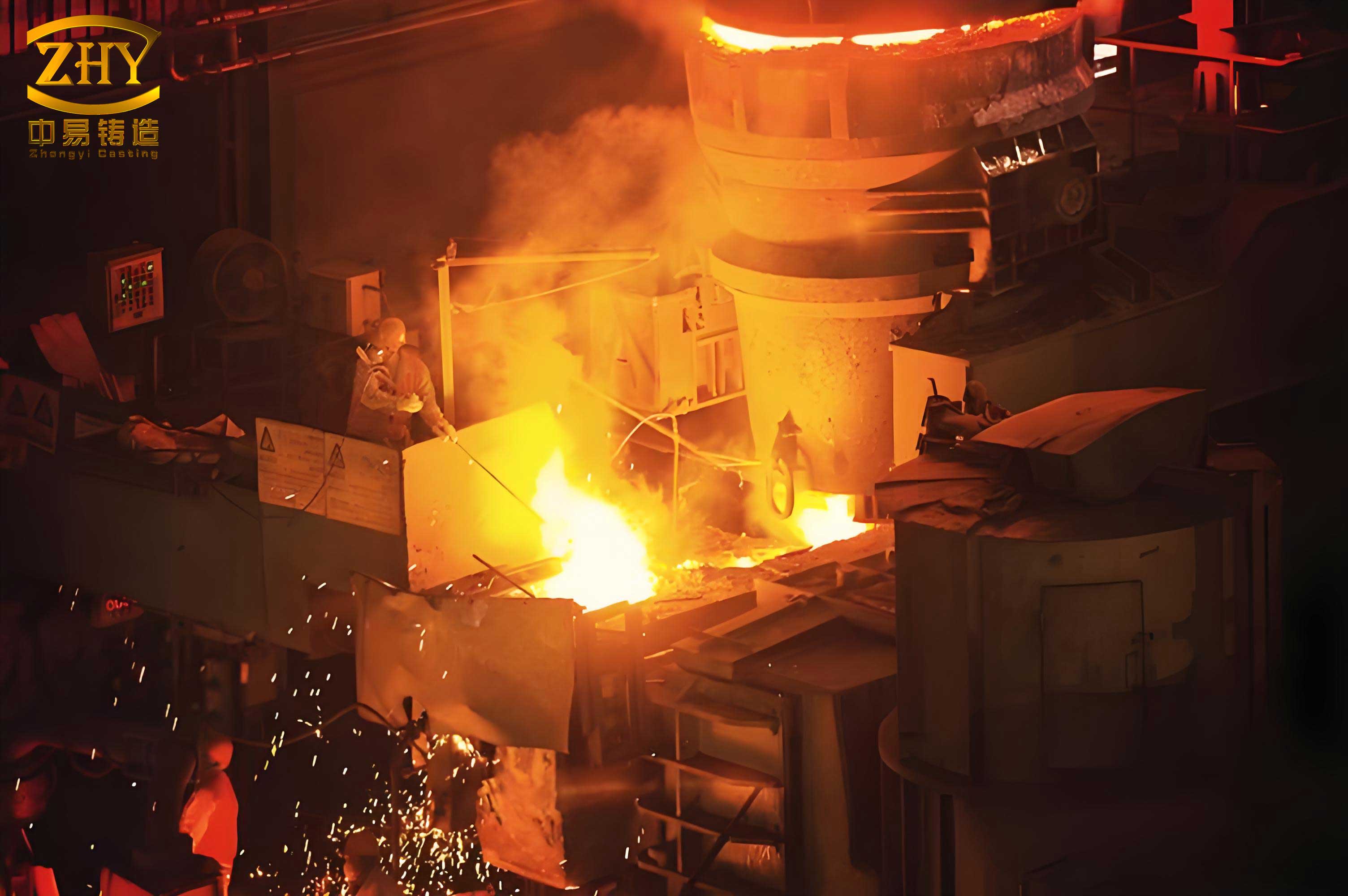
The sand casting process involves pouring molten metal into sand molds, which are typically preheated to control solidification rates. In our experiments, we prepared a series of Mg-xGd-3Y alloys with varying Gd contents (0 to 12.7 wt.%) using high-purity raw materials and master alloys. The melting was conducted in a resistance furnace under a protective atmosphere to prevent oxidation. Initially, pure magnesium was heated to 400°C, followed by the addition of Mg-25Gd and Mg-25Y master alloys at 720°C. After complete dissolution, Mg-30Zr master alloy was introduced at 780°C to incorporate zirconium for grain refinement. The melt was then stirred, refined, and allowed to settle before pouring into sand molds preheated to 200°C at a temperature of 740°C. This sand casting setup ensured consistent cooling conditions representative of industrial practices.
Chemical compositions of the alloys were determined using inductively coupled plasma optical emission spectrometry (ICP-OES), as summarized in Table 1. The alloys are designated as Alloy 1 to Alloy 5 based on increasing Gd content. It is evident that Y content was maintained around 3 wt.%, and Zr was kept at approximately 0.4 wt.% across all compositions to isolate the effect of Gd. Microstructural characterization involved standard metallographic preparation, including grinding, polishing, and etching with nitric acid ethanol solution. Grain sizes were measured using the linear intercept method according to ASTM standards. Phase identification was performed via X-ray diffraction (XRD) with Cu-Kα radiation, while detailed microstructural features and fracture surfaces were examined using scanning electron microscopy (SEM) coupled with energy-dispersive spectroscopy (EDS) for elemental analysis. Tensile tests were conducted on machined specimens at a constant strain rate of 1 mm/min to evaluate yield strength (σ0.2), ultimate tensile strength (σb), and elongation (δ).
| Alloy Designation | Gd Content | Y Content | Zr Content | Mg |
|---|---|---|---|---|
| Alloy 1 | 0 | 3.07 | 0.41 | Balance |
| Alloy 2 | 3.0 | 3.12 | 0.42 | Balance |
| Alloy 3 | 5.4 | 3.09 | 0.41 | Balance |
| Alloy 4 | 10.2 | 2.91 | 0.42 | Balance |
| Alloy 5 | 12.7 | 2.96 | 0.43 | Balance |
Microstructural analysis revealed that the sand-cast Mg-xGd-3Y alloys consist primarily of α-Mg matrix and eutectic compounds. As Gd content increased from 0 to 12.7 wt.%, the average grain size of α-Mg decreased significantly from 112 μm to 54 μm, representing a grain refinement efficiency of approximately 52%. This refinement can be attributed to the growth restriction effect of Gd atoms during solidification, as well as the presence of Zr-rich particles that act as heterogeneous nucleation sites. The eutectic morphology evolved with Gd content: for Gd ≤ 3.0 wt.%, no eutectic compounds were observed; at 5.4 wt.%, discrete particulate eutectic appeared along grain boundaries; and at higher Gd contents (10.2–12.7 wt.%), the eutectic transformed into coarse, irregular, and sometimes island-like structures. The volume fraction of eutectic compounds increased progressively, altering the overall microstructure of the sand-cast alloys.
XRD patterns confirmed the phases present in these sand-cast alloys. Alloy 1, without Gd, exhibited only α-Mg peaks. With 5.4 wt.% Gd, additional peaks corresponding to the body-centered cubic (bcc) Mg24RE5 phase (where RE denotes Gd and Y) were detected. At 12.7 wt.% Gd, peaks for Mg5RE phase emerged, indicating the formation of stable intermetallic compounds due to the higher Gd concentration. The shift of α-Mg diffraction peaks to lower angles with increasing Gd content suggests lattice distortion caused by the solid solution of larger Gd atoms, consistent with Bragg’s law:
$$ n\lambda = 2d\sin\theta $$
where λ is the X-ray wavelength, d is the interplanar spacing, and θ is the diffraction angle. The increase in d due to solute atoms reduces θ, thereby decreasing the 2θ value. This lattice strain contributes to solid solution strengthening, a key mechanism in these sand-cast alloys.
SEM and EDS analyses provided further insights into the microstructure. The eutectic compounds were identified as Mg + Mg24RE5, with the RE content in the eutectic increasing with higher bulk Gd concentrations. Additionally, Zr-rich clusters surrounded by solute-enriched zones (often called “Zr-rich halos”) were observed, typical of Zr-containing magnesium alloys. These clusters, consisting of fine Zr particles or α-Mg grains encapsulating Zr, play a vital role in grain refinement during sand casting. Elemental mapping showed that Gd atoms were predominantly segregated at α-Mg grain boundaries, with some distribution within grains near boundaries, owing to the low diffusion rate of Gd in magnesium. This segregation pattern influences both strengthening and fracture behavior.
The mechanical properties of the sand-cast Mg-xGd-3Y alloys were strongly dependent on Gd content. Tensile test results are summarized in Table 2, illustrating the trends in yield strength, ultimate tensile strength, and elongation. As Gd content increased from 0 to 12.7 wt.%, yield strength rose from 64.9 MPa to 174.3 MPa, and ultimate tensile strength improved from 157.5 MPa to 221.2 MPa. However, elongation declined markedly from 21.3% to 0.9%, indicating a trade-off between strength and ductility. Alloy 4, with 10.2 wt.% Gd, exhibited an optimal balance of properties: σ0.2 = 140.0 MPa, σb = 196.1 MPa, and δ = 3.3%. These findings highlight the profound impact of Gd on enhancing strength while compromising ductility in sand-cast alloys.
| Alloy Designation | Gd Content (wt.%) | Yield Strength, σ0.2 (MPa) | Ultimate Tensile Strength, σb (MPa) | Elongation, δ (%) | Average Grain Size, d (μm) |
|---|---|---|---|---|---|
| Alloy 1 | 0 | 64.9 | 157.5 | 21.3 | 112 |
| Alloy 2 | 3.0 | 85.2 | 175.8 | 12.4 | 98 |
| Alloy 3 | 5.4 | 110.5 | 188.3 | 6.7 | 76 |
| Alloy 4 | 10.2 | 140.0 | 196.1 | 3.3 | 62 |
| Alloy 5 | 12.7 | 174.3 | 221.2 | 0.9 | 54 |
To quantify the relationship between microstructure and strength, we analyzed the correlation between average grain size (d) and yield strength (σ0.2). The data fit a linear model based on the Hall-Petch equation, which describes grain boundary strengthening:
$$ \sigma_{0.2} = \sigma_0 + k_y d^{-1/2} $$
where σ0 is the friction stress and ky is the strengthening coefficient. For our sand-cast alloys, the best-fit equation was derived as:
$$ \sigma_{0.2} = -178.1 + 2476 \, d^{-1/2} $$
with a coefficient of determination R2 = 0.897. This indicates that grain refinement accounts for a significant portion of the yield strength increase, but other factors like solid solution strengthening and second-phase effects also play roles, reducing the linearity. The deviation from ideal Hall-Petch behavior can be attributed to the increasing volume fraction of eutectic compounds and solute segregation in these sand-cast alloys.
Solid solution strengthening is another critical mechanism, given the high solubility of Gd in magnesium. The strengthening contribution from solute atoms can be estimated using the Fleischer model:
$$ \Delta \tau = G \epsilon^{3/2} c^{1/2} $$
where Δτ is the increase in critical resolved shear stress, G is the shear modulus, ε is the misfit parameter, and c is the solute concentration. For Gd in magnesium, the large atomic size mismatch results in substantial lattice strain, enhancing strength. Additionally, the presence of Y modifies the strain fields, further contributing to strengthening in these sand-cast alloys.
The deterioration in ductility with increasing Gd content is closely linked to microstructural changes. As Gd content rises, the eutectic compounds become more continuous and coarse, acting as stress concentrators during deformation. This leads to inhomogeneous strain distribution between grains and at grain boundaries, promoting early crack initiation. Fracture surface analysis via SEM revealed that the failure mode transitioned from mixed ductile-brittle fracture in low-Gd alloys to predominantly cleavage fracture in high-Gd alloys. For Alloy 1 (0 wt.% Gd), the fracture surface showed dimples and tear ridges, indicative of some plastic deformation. In contrast, Alloy 5 (12.7 wt.% Gd) exhibited flat cleavage facets, river patterns, and minimal ductile features, consistent with brittle fracture. The presence of eutectic compounds along grain boundaries facilitated crack propagation, reducing overall ductility in these sand-cast alloys.
We further investigated the fracture behavior by analyzing crack initiation and propagation. In sand-cast Mg-Gd-Y alloys, cracks often nucleate at the interface between α-Mg matrix and eutectic compounds due to strain incompatibility. The stress concentration factor (K) at such interfaces can be expressed as:
$$ K = 1 + 2\sqrt{\frac{a}{\rho}} $$
where a is the crack length and ρ is the radius of curvature at the interface. With larger and more irregular eutectic particles in high-Gd alloys, ρ decreases, increasing K and promoting crack formation. Additionally, the low number of active slip systems in magnesium alloys exacerbates plastic instability, leading to transgranular fracture as observed in our sand-cast specimens.
The role of Zr in grain refinement cannot be overlooked. Zr addition via master alloys leads to the formation of Zr-rich particles that serve as potent nucleation sites for α-Mg grains during solidification in sand casting. The effectiveness of Zr can be quantified by the grain refinement efficiency, which depends on cooling rate and alloy composition. In our sand-cast process, the preheated molds at 200°C resulted in moderate cooling rates, allowing sufficient time for Zr particles to act. The grain size (d) as a function of Gd content (cGd) and cooling rate (Ṫ) can be modeled empirically:
$$ d = A + B \cdot c_{Gd}^{-1} + C \cdot \dot{T}^{-1} $$
where A, B, and C are constants. For our data, fitting yields insights into the synergistic effects of Gd and cooling conditions on microstructure in sand casting.
To provide a comprehensive overview, we developed a multi-variable regression model to predict yield strength based on Gd content, grain size, and eutectic volume fraction (Ve). The model takes the form:
$$ \sigma_{0.2} = \alpha_0 + \alpha_1 c_{Gd} + \alpha_2 d^{-1/2} + \alpha_3 V_e $$
where α0, α1, α2, and α3 are coefficients determined from experimental data. This approach captures the combined contributions of solid solution strengthening, grain refinement, and second-phase strengthening in sand-cast Mg-Gd-Y alloys. The values derived from our study emphasize the dominant role of Gd content in enhancing strength, albeit at the cost of ductility.
In terms of practical implications, the sand casting process offers advantages for producing large or complex components, but the slower solidification rates compared to permanent mold casting can lead to coarser microstructures. Our findings suggest that optimizing Gd content around 10 wt.% can yield a favorable balance of strength and ductility for sand-cast applications. Additionally, controlling cooling rates through mold design or post-casting heat treatments could further tailor properties. For instance, solution treatment followed by aging may redistribute eutectic compounds and enhance precipitation hardening, potentially improving ductility without sacrificing strength in sand-cast alloys.
We also explored the thermodynamic aspects of phase formation in these sand-cast alloys. Using the Mg-Gd-Y phase diagram, the eutectic reaction L → α-Mg + Mg24RE5 occurs at approximately 548°C for high Gd concentrations. The volume fraction of eutectic (Ve) can be estimated from the lever rule:
$$ V_e = \frac{c_0 – c_\alpha}{c_e – c_\alpha} $$
where c0 is the bulk Gd content, cα is the solubility limit of Gd in α-Mg at the eutectic temperature, and ce is the eutectic composition. For our alloys, as c0 increases, Ve rises, aligning with microstructural observations. This thermodynamic framework helps predict microstructural features for different Gd contents in sand casting.
Furthermore, the creep resistance and high-temperature performance of these sand-cast alloys are of interest for elevated-temperature applications. Gd and Y improve thermal stability by forming stable precipitates that pin grain boundaries and dislocations. The creep rate (έ) can be described by the Norton power law:
$$ \dot{\epsilon} = A \sigma^n \exp\left(-\frac{Q}{RT}\right) $$
where A is a constant, σ is the stress, n is the stress exponent, Q is the activation energy, R is the gas constant, and T is the absolute temperature. The addition of Gd likely increases Q and n, enhancing creep resistance in sand-cast Mg-Gd-Y alloys, though detailed studies are needed.
In conclusion, our investigation into the effects of Gd content on sand-cast Mg-Gd-Y alloys reveals significant microstructural and mechanical property variations. The sand casting process, with its unique solidification characteristics, leads to distinct grain refinement and eutectic formation behaviors. Increasing Gd content from 0 to 12.7 wt.% reduces α-Mg grain size by 52%, boosts yield strength by 169%, and increases ultimate tensile strength by 40%, but elongation drops by 96%. The optimal composition for sand casting is around 10.2 wt.% Gd, offering a balanced combination of strength and ductility. The relationships between Gd content, grain size, and strength can be modeled mathematically, aiding in alloy design. Fracture analysis indicates a shift from ductile to brittle failure modes with higher Gd, driven by eutectic compounds and solute segregation. These insights contribute to the advancement of sand-cast magnesium alloys for lightweight structural applications, emphasizing the critical role of Gd in tailoring properties for specific engineering needs.
Future work should focus on optimizing the sand casting process parameters, such as pouring temperature, mold preheat temperature, and cooling rate, to further enhance the performance of Mg-Gd-Y alloys. Additionally, the effects of other alloying elements like Zn, Ag, or Ca could be explored to improve ductility and corrosion resistance without compromising strength. The integration of heat treatment schedules post-sand casting may also unlock higher property combinations, making these alloys more viable for demanding applications. Overall, sand casting remains a pivotal manufacturing route for magnesium alloys, and understanding the influence of Gd content is essential for leveraging their full potential in innovative engineering solutions.