
In the realm of foundry operations, the production of high-quality sand casting products has always been a cornerstone of industrial manufacturing. As a researcher deeply involved in refining casting processes, I have focused on enhancing the environmental and performance aspects of green sand systems. Traditional green sand, which incorporates coal dust, has long been used for its anti-sticking properties and surface finish in sand casting products. However, its drawbacks—such as pollution, health hazards, and degraded working conditions—have driven me to explore sustainable alternatives. This article delves into my comprehensive study on eliminating coal dust from green sand formulations, particularly for intricate sand casting products like compressor cylinder blocks, while maintaining or even improving defect-free outcomes.
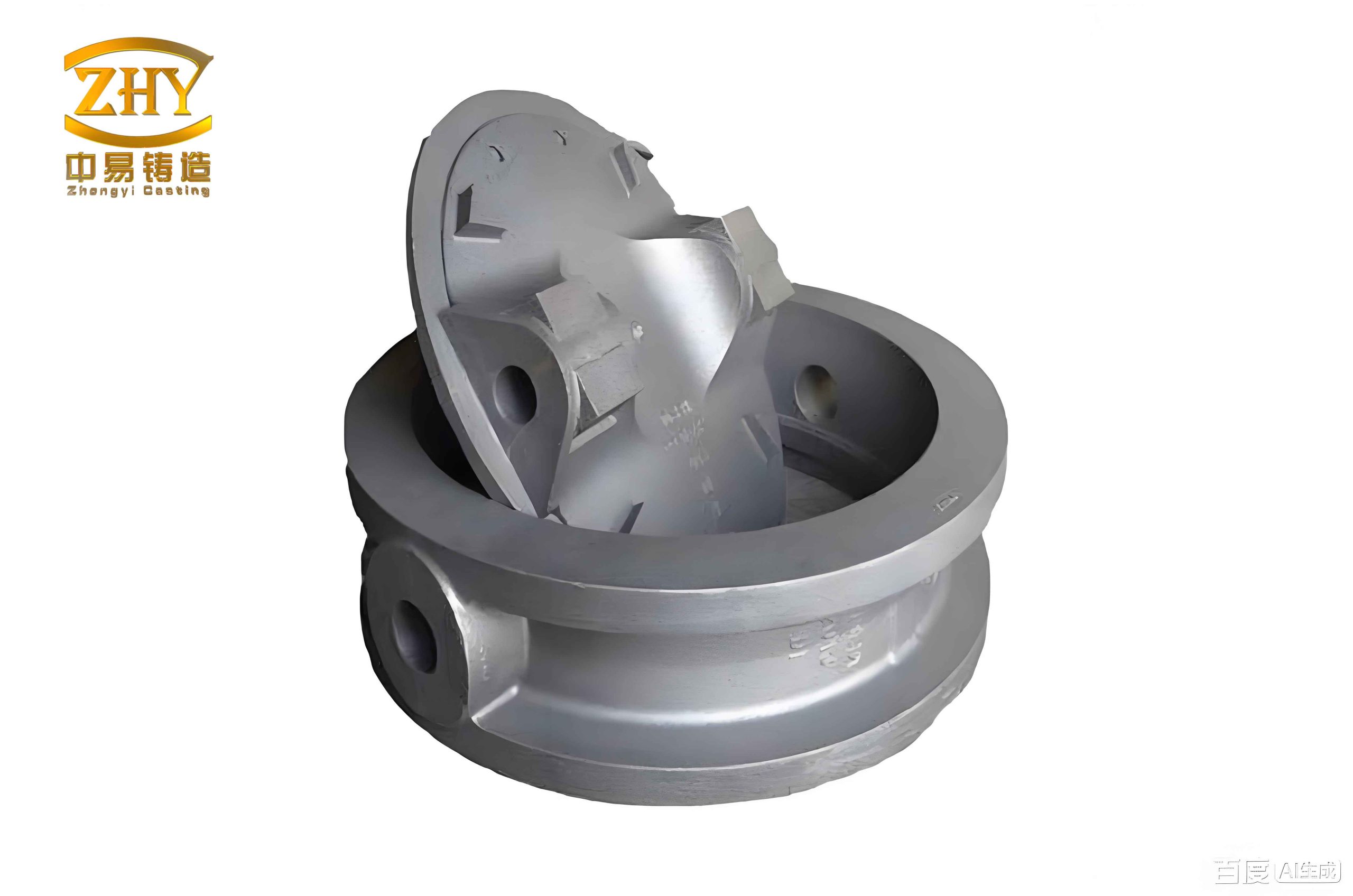
The widespread use of green sand in sand casting products stems from its cost-effectiveness and adaptability, especially in vertical parting line molding systems. For decades, coal dust has been a key additive, primarily to prevent sand burn-on and ensure smooth surfaces in sand casting products. Its mechanism involves generating reducing gases during pouring, which inhibit metal oxidation, and forming a lustrous carbon layer that repels molten metal penetration. Yet, the environmental toll is significant: airborne particulates, volatile organic compounds, and residual ash compromise both worker safety and sand reusability. In my pursuit of greener foundry practices, I investigated whether coal-free green sand could match or exceed the performance of traditional mixes for critical sand casting products. This inquiry is not merely theoretical; it has practical implications for reducing the ecological footprint of sand casting products while boosting productivity.
To assess the feasibility of coal-free green sand, I first analyzed the fundamental roles of coal dust. In sand casting products, coal dust acts through multiple pathways: it produces reducing gases at high temperatures, softens to buffer thermal expansion stresses, forms colloidal phases to seal sand voids, and deposits “bright carbon” to create a non-wettable barrier. Historically, some foundries in China used natural “red sand” without coal dust or bentonite for thin-walled iron castings, achieving good surface quality due to its fine grain size. This hinted that fine-grained silica sand might replicate coal dust’s anti-penetration effects. My preliminary tests on compressor cylinder blocks—a high-volume sand casting product—confirmed this. By increasing the average fineness number (AFS) of the sand through finer silica additions, I reduced burn-on defects without coal dust. The relationship between sand fineness and defect prevention can be expressed as a qualitative formula: the likelihood of sand burn-on decreases with higher AFS values, denoted as:
$$ \text{Burn-on Risk} \propto \frac{1}{\text{AFS}} $$
This inverse proportionality underscores how finer sands compact more tightly, leaving smaller interstices for metal intrusion. Thus, for sand casting products with complex geometries, optimizing grain size distribution is a viable strategy to eliminate coal dust.
My experimental phase involved systematic trials comparing coal-free and coal-containing green sands. The sand casting products under focus were refrigerator compressor cylinder blocks made of HT200 iron, each weighing about 2 kg. These sand casting products often exhibited burn-on in acoustic cavities, a persistent issue. I formulated a coal-free mix using 100/200-mesh silica sand, bentonite, and water, while a control mix included coal dust. The properties were meticulously measured, as summarized in Table 1, which highlights key parameters affecting sand casting products quality.
| Parameter | Coal-Free Sand | Coal-Containing Sand |
|---|---|---|
| Compactability (%) | 44–49 | 38–31 |
| Moisture Content (%) | 2.5–2.4 | 3.0–3.5 |
| Permeability | 70–78 | 83–115 |
| Green Compression Strength (kPa) | 134–137 | 158–176 |
| Effective Clay Content (%) | 8.4–8.57 | — |
| Loss on Ignition (%) | 1.4 | 3.7 |
| Clay Content (%) | 8.18 | 11.38 |
| Average Fineness (AFS) | 89.18 | 65.83 |
The data reveal that coal-free sand had higher AFS and lower moisture, crucial for reducing defects in sand casting products. During molding, the coal-free sand showed slightly lower strength, but this was mitigated by adjusting compaction. Pouring tests yielded sand casting products with no burn-on in acoustic cavities, proving that fine-grained, coal-free sand can produce clean surfaces. However, a new challenge emerged: gas holes appeared in the gating systems and internal sections of sand casting products when coal dust was omitted from production lines. This indicated that simply removing coal dust without addressing sand degradation could compromise sand casting products integrity.
Investigating the gas hole phenomenon, I identified “oolitization rate” as a critical factor. Oolitization refers to the formation of a dead-burned bentonite coating on sand grains after repeated heating cycles, which increases moisture absorption and reduces sand strength. In sand casting products, high oolitization rates elevate gas generation during pouring, leading to porosity. I developed a method to quantify oolitization, involving acid and alkali treatments, and correlated it with shear strength. The oolitization rate (OR) can be modeled as a function of recycled sand usage, expressed as:
$$ \text{OR} = k \cdot \frac{R}{N + R} $$
where \( k \) is a constant dependent on bentonite type, \( R \) is the amount of recycled sand, and \( N \) is the amount of new sand. Higher OR values correspond to lower shear strength, increasing defect risks in sand casting products. Table 2 illustrates this relationship, derived from my tests on various production lines.
| Production Line | Shear Strength (kPa) | Oolitization Rate (%) |
|---|---|---|
| A | 27 | 20.11 |
| A | 45 | 17.11 |
| B | 29 | 22.47 |
| B | 46 | 17.33 |
To combat gas holes in sand casting products, I optimized the sand recycling process by increasing new sand additions. This lowered the oolitization rate below 15%, effectively eliminating porosity. The impact on sand casting products quality is shown in Table 3, where defect rates dropped to zero with controlled oolitization.
| New Sand Addition (%) | Oolitization Rate (%) | Gas Hole Rate in Castings (%) |
|---|---|---|
| 0.30 | 19.86 | 6 |
| 0.50 | 17.34 | 3 |
| 0.70 | 15.66 | 1 |
| 1.00 | 14.82 | 0 |
The transition to sustainable sand casting products production required ensuring that coal-free green sand could be regenerated and reused consistently. I conducted further trials with enhanced bentonite content to boost clay levels in fresh coal-free sand. By formulating mixes with 11.8% bentonite and fine silica, I achieved high clay content (around 12%) and AFS values above 80. These sands produced cylinder blocks—a prime example of sand casting products—with excellent surface finish and no internal defects, as confirmed by non-destructive testing. The key takeaway is that coal-free sand must maintain high fineness and controlled oolitization during recycling to uphold quality in sand casting products.
My research also led to the development of a comprehensive model for optimizing green sand properties. The overall performance index \( P \) for sand casting products can be expressed as a function of multiple variables:
$$ P = \alpha \cdot \text{AFS} + \beta \cdot \frac{1}{\text{OR}} + \gamma \cdot \text{CS} – \delta \cdot M $$
where \( \alpha, \beta, \gamma, \delta \) are weighting coefficients, AFS is average fineness, OR is oolitization rate, CS is compression strength, and M is moisture content. Maximizing \( P \) ensures defect-free sand casting products. In practice, this involves balancing new sand inputs, bentonite ratios, and water amounts. For instance, increasing AFS through finer silica reduces burn-on, while lowering OR via higher new sand percentages minimizes gas holes. These principles are universally applicable to diverse sand casting products, from automotive components to compressor parts.
The environmental benefits of coal-free green sand are substantial. By eliminating coal dust, foundries can reduce airborne pollutants by up to 50%, creating safer workplaces. Moreover, the absence of coal residue in sand casting products enhances sand reusability, cutting down on waste and raw material consumption. In my trials, the coal-free system required less water and bentonite adjustments, leading to cost savings over time. This aligns with global trends toward sustainable manufacturing, where sand casting products must meet both quality and ecological standards.
Looking ahead, the adoption of coal-free green sand necessitates ongoing monitoring. Advanced sensors and real-time analysis can track sand parameters like AFS and OR, enabling proactive adjustments. For high-volume sand casting products, automated systems could blend sands to maintain optimal fineness and strength. Additionally, exploring alternative additives—such as organic binders or nano-materials—might further enhance coal-free sands for specialized sand casting products. My experiments have laid a foundation, but continuous innovation is key to perfecting this technology.
In conclusion, my extensive study demonstrates that coal-free green sand is not only feasible but advantageous for producing high-quality sand casting products. Through precise control of sand fineness, bentonite content, and oolitization rates, foundries can eliminate coal dust while preventing defects like burn-on and gas holes. The methodologies outlined here—supported by empirical data and mathematical models—provide a roadmap for transitioning to greener sand casting processes. As the demand for eco-friendly sand casting products grows, this research offers practical solutions that balance performance, cost, and environmental stewardship. The future of sand casting products lies in such innovative approaches, where tradition meets sustainability for lasting industrial impact.