
From my extensive experience in materials science and foundry engineering, the pursuit of enhanced performance and cost efficiency in the production of sand casting parts remains a central industrial challenge. The quality and dimensional accuracy of final sand casting parts are fundamentally dictated by the properties of the mold or core in which they are formed. This, in turn, is heavily dependent on the binder system used to agglomerate the refractory sand grains. Traditional binder systems often present a trade-off between achieving high strength and maintaining adequate operational time (bench life), while also grappling with environmental and economic concerns. In this article, I will delve into the chemistry, development, and application of advanced curing agents for sand binders, a field where significant innovation is actively underway to create more robust and controllable processes for manufacturing high-integrity sand casting parts.
The dominant chemistry for high-performance core-making in recent decades has been based on phenolic resins cured with acidic catalysts. The fundamental reaction can be described as an acid-catalyzed condensation polymerization, where the phenolic resin undergoes cross-linking. A simplified representation of the key curing mechanism is:
$$ \text{Resin (Phenolic)} + H^+_{\text{(from catalyst)}} \rightarrow \text{Intermediate (Carbonium ion)} $$
$$ \text{Intermediate} + \text{Resin} \rightarrow \text{Cross-linked Polymer Network} + H^+ $$
This regeneration of the proton ($H^+$) is characteristic of acid catalysis. The rate and depth of this cross-linking reaction are exquisitely sensitive to the nature and concentration of the acid catalyst. The ideal catalyst must provide a controllable induction period for molding operations, followed by a rapid and complete cure to develop maximum strength. Premature curing leads to poor mold compaction and defective sand casting parts, while delayed curing hampers productivity.
Recent research has focused on moving beyond simple mineral acids (like phosphoric acid) or sulfonic acids to more complex, ester-based latent acid catalysts. These compounds hydrolyze in the presence of the moisture present in the sand mix or from the environment, releasing the active acid in a controlled manner. For instance, an organic sulfate ester might hydrolyze as follows:
$$ R-OSO_3H + H_2O \rightleftharpoons R-OH + H_2SO_4 $$
Where $R$ is an organic group that influences the hydrolysis rate. By tailoring the organic moiety ‘R’, the kinetics of acid release—and therefore the “work time” of the sand mixture—can be precisely engineered. This is a critical advancement for producing complex cores for sand casting parts. The development of two distinct products, let’s designate them as Type-A and Type-B catalysts, exemplifies this principle. Type-A formulations are engineered for a prolonged work time, significantly enhancing the operator’s window for shaping intricate core geometries without premature hardening. Type-B formulations are optimized for a more rapid hydrolysis profile, yielding a curing curve that maximizes final compressive and tensile strength of the sand mold, which is directly correlated to the dimensional stability and surface finish of the resulting sand casting parts.
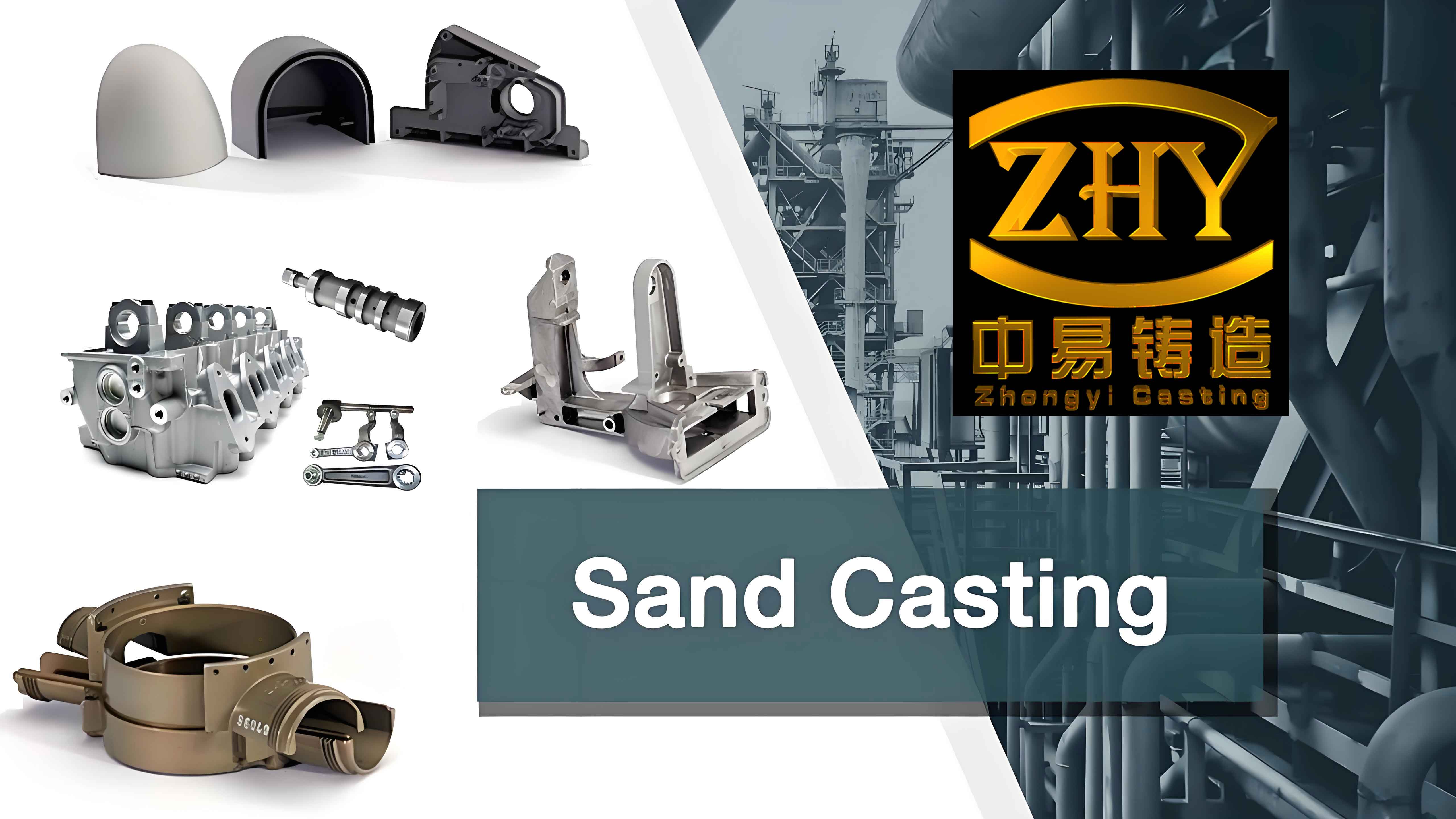
The performance of these advanced curing agents is not merely a function of their chemical identity but also of their interaction with the entire sand-binder system. Key process variables must be meticulously optimized. The following table summarizes the critical parameters and their impact on the properties of the sand mixture and the final sand casting parts.
| Process Parameter | Typical Range | Impact on Work Time | Impact on Final Strength | Influence on Casting Part Quality |
|---|---|---|---|---|
| Catalyst Addition Level (% of resin weight) | 15% – 40% | Decreases with increase | Increases to an optimum, then may decrease | Critical for avoiding gas defects and veining. |
| Sand Temperature (°C) | 20 – 30 | Decreases with increase | Increases with temperature | High temp can cause premature skin curing, leading to poor surface finish on sand casting parts. |
| Relative Humidity (%) | 30 – 60 | Can decrease (for moisture-sensitive catalysts) | Can accelerate cure | Affects consistency; controlled environment is preferred. |
| Mixing Energy & Time | Manufacturer Specified | Minor effect if within spec | Crucial for uniform coating; affects strength | Poor mixing leads to weak spots and inclusions in sand casting parts. |
| Resin Type & Level | 0.8% – 2.0% of sand weight | Largely independent | Directly proportional | Higher levels improve strength but increase cost and gas evolution. |
The synthesis of these tailored ester catalysts involves controlled esterification and purification steps. The core reaction can be generalized as:
$$ \text{Acid Anhydride (or Sulfonic Acid)} + \text{Alcohol} \xrightarrow[\text{Catalyst}]{\Delta} \text{Ester} + H_2O $$
The “degree of esterification” or purity is a paramount quality metric. A higher, more consistent degree of esterification for Type-B catalysts, as mentioned in prior work, is what delivers the optimal balance of strength and cure profile. Impurities or side-products can act as unpredictable accelerants or inhibitors, destabilizing the entire foundry process. Therefore, process control in catalyst manufacture is as important as the molecular design itself. Continuous flow reactors with precise temperature and stoichiometric control are increasingly replacing batch processes to achieve this consistency, which directly benefits the reliability of producing sand casting parts.
Quantifying the performance of a sand binder system requires standardized testing. The most relevant properties are strip time (time to develop enough strength to remove the pattern), tensile strength development over time, and gas evolution. The tensile strength development often follows a kinetic model that can be approximated by a modified exponential function:
$$ S(t) = S_{\infty}(1 – e^{-k(t-t_0)}) $$
Where $S(t)$ is the tensile strength at time $t$, $S_{\infty}$ is the ultimate tensile strength, $k$ is the cure rate constant (highly dependent on the catalyst), and $t_0$ is the induction or work time. A comparison of two hypothetical catalyst systems demonstrates their differing behaviors:
| Property | Catalyst Type-A (Prolonged Work Time) | Catalyst Type-B (Optimized Strength) |
|---|---|---|
| Induction Time, $t_0$ (minutes) | 4.0 – 6.0 | 1.5 – 2.5 |
| Cure Rate Constant, $k$ (min⁻¹) | ~0.25 | ~0.45 |
| Ultimate Tensile Strength, $S_{\infty}$ (psi) | 280 – 320 | 350 – 400 |
| Gas Evolution (mL/g at 1000°C) | Low to Medium | Medium |
| Ideal Application | Complex, thin-walled cores for aluminum sand casting parts. | Heavy-duty cores for iron and steel sand casting parts requiring high erosion resistance. |
The application of these advanced systems extends beyond mere strength. Environmental and post-casting considerations are vital. The decomposition of organic binders during the pouring of molten metal leads to the generation of volatile organic compounds (VOCs) and other emissions. Next-generation research is focused on developing bio-derived or lower-emission resin systems that pair with these advanced catalysts. Furthermore, the “shakeout” characteristic—the ease with which the sand mold breaks down after the sand casting parts have solidified—is influenced by the binder-catalyst combination. A brittle, well-cured network from a Type-B catalyst may actually improve shakeout in certain alloys by creating a more friable mold wall that readily collapses, reducing cleaning costs for the final sand casting parts.
Looking forward, the field is moving towards greater intelligence and integration. The concept of “Industry 4.0” in the foundry involves real-time monitoring of sand mix parameters (temperature, humidity, resin content) and dynamically adjusting catalyst dosage or type through automated systems. Predictive models using the kinetic equations mentioned earlier, fed with real-time data, can forecast strip times and optimize cycle times. The goal is a fully adaptive system that guarantees first-pass quality for increasingly demanding sand casting parts, such as those for electric vehicle powertrains or high-performance aerospace components, where integrity is non-negotiable.
In parallel, the exploration of entirely novel curing mechanisms, such as ultraviolet (UV) light-initiated polymerization of specially formulated resins, offers a pathway to near-instant curing with virtually unlimited work time in the dark. While currently more expensive and suited to specific geometries, this technology highlights the innovative spirit driving the industry. The lessons learned from fine-tuning the acid-release kinetics of ester catalysts are directly applicable to optimizing photo-initiator systems for these new binder chemistries.
In conclusion, the development of sophisticated curing agents like the Type-A and Type-B systems discussed represents a profound evolution in foundry technology. By mastering the delayed and controlled release of active curing species, we can now engineer the temporal mechanical properties of sand molds with unprecedented precision. This capability translates directly into enhanced dimensional accuracy, superior surface finish, and improved production reliability for a vast array of metal components. The continuous refinement of these catalysts, their manufacturing processes, and their integration into smart foundry systems will remain a cornerstone of progress. As the requirements for lighter, stronger, and more complex metal parts intensify, the humble sand mold, empowered by advanced chemical innovation, will continue to be a vital and adaptable manufacturing route. The future of producing high-quality sand casting parts hinges on our ongoing commitment to deepening the fundamental understanding of these binder-catalyst-sand interactions and relentlessly pursuing practical, economical solutions to the challenges of modern manufacturing.