
Based on practical production needs, I have conducted an in-depth study on the integrated application of industrial robots in the machine tool casting processing industry. The goal is to address existing challenges and enhance efficiency through automation. This article explores the fundamental principles of industrial robots, analyzes problems in traditional processing, proposes integration methods, and presents a detailed case study of an intelligent production line. Throughout this discussion, I will emphasize the significance of machine tool casting, a critical component in manufacturing, and demonstrate how robotic integration can revolutionize this field.
Industrial robots are indispensable in modern manufacturing, offering high flexibility, precision, and efficiency. Their basic principles revolve around four core systems: control, mechanical structure, sensors, and algorithms. The control system executes pre-programmed instructions to manage robotic movements, often through human-machine interfaces or software. It incorporates sensors for environmental feedback. The mechanical structure, composed of joints, links, and actuators, enables multi-axis motion in three-dimensional space, determining the robot’s workspace and payload capacity. Sensor systems include vision, force, and position sensors; for instance, vision sensors identify object locations, while force sensors measure applied forces for adjustments. Control algorithms, such as PID control and path planning, compute actions based on inputs and feedback. A common PID control formula is expressed as:
$$ u(t) = K_p e(t) + K_i \int_0^t e(\tau) d\tau + K_d \frac{de(t)}{dt} $$
where \( u(t) \) is the control output, \( e(t) \) is the error signal, and \( K_p \), \( K_i \), and \( K_d \) are proportional, integral, and derivative gains, respectively. This foundation supports the integration of robots into machine tool casting processes, where precision and adaptability are paramount.
In the machine tool casting processing industry, several persistent issues hinder productivity. Castings for machine tools often exhibit high variety but low differentiation, necessitating frequent re-fixturing and compatibility checks to maintain quality consistency. This complexity increases both process difficulty and costs. Additionally, orders typically involve small batches with short lead times, demanding efficient material management and production scheduling. The high-performance efficiency of CNC machining is offset by complex programming and operation, requiring skilled technicians. These challenges underscore the need for automation. The following table summarizes key problems and their impacts in machine tool casting processing:
| Problem Category | Description | Impact on Production |
|---|---|---|
| Product Variety | High number of casting types with minimal differences | Increased setup times, higher costs, quality inconsistencies |
| Order Patterns | Small-batch, frequent orders with tight deadlines | Strained logistics, need for rapid response and flexibility |
| Operational Complexity | Intricate CNC programming and manual operations | Dependence on specialized labor, potential for errors |
| Processing Consistency | Difficulty in maintaining uniform quality across castings | Reduced product reliability, increased scrap rates |
To optimize production, I propose three primary methods for integrating industrial robots. First, single-station integration involves robots performing repetitive tasks like assembly or packaging at individual workstations, boosting efficiency and reducing labor. Second, multi-machine integration combines robots with multiple CNC machines to form automated lines, enhancing precision and adaptability for complex casting processes. Third, intelligent production lines integrate multiple robots and devices via information systems, enabling real-time monitoring and data-driven adjustments. The evolution from single-station to smart lines can be modeled as a function of automation level \( A \) and productivity \( P \):
$$ P(A) = P_0 + \alpha A – \beta A^2 $$
where \( P_0 \) is baseline productivity, \( \alpha \) represents efficiency gains, and \( \beta \) accounts for diminishing returns at high automation levels. This framework guides the design of integrated solutions for machine tool casting, ensuring scalable improvements.
In a practical application, I developed an integrated system for machine tool casting processing, focusing on an intelligent production line. The design was based on specific process requirements, including workpiece identification, milling of assembly surfaces, drilling, tapping, cleaning, and automatic unloading. These steps are critical for ensuring the quality of castings for machine tools. The table below outlines the key processing requirements and their parameters:
| Process Step | Description | Cycle Time (s/unit) | Equipment Type | Quality Standards |
|---|---|---|---|---|
| Workpiece Identification | Visual recognition of casting dimensions and position | 30 | Vision System | Accuracy within ±0.1 mm |
| Milling Assembly Surfaces | Precision milling for flatness and reference planes | 900 | CNC Machining Center | Surface roughness ≤1.6 µm |
| Drilling and Tapping | Creating holes and threads in castings | 1950 | CNC Machining Center | Hole diameter tolerance ±0.05 mm |
| Cleaning | Removing debris and contaminants | 220 | Dedicated Cleaning Machine | Particle size <0.1 mm, no residue |
| Automatic Unloading | Robotic transfer to next station or storage | 60 | Industrial Robot | Placement accuracy within ±0.5 mm |
The intelligent production line was designed with a holistic layout, incorporating three CNC machining systems, a GSK-RB35 robot, a seventh-axis robotic mobility system, loading/unloading warehouses, a secondary positioning and identification system, a flipping device with cleaning system, and a GSK Manufacturing Execution System (MES). This integration enables flexible, mixed production of various machine tool castings, adapting to diverse order demands. The layout ensures seamless workflow coordination, with robots handling material transfer between stations. For instance, the robot moves castings from the warehouse to CNC machines, then to cleaning and flipping stations, all synchronized via the MES. The overall efficiency \( E \) of such a line can be estimated using a throughput formula:
$$ E = \frac{N}{T_{total}} = \frac{\sum_{i=1}^{n} Q_i}{\sum_{i=1}^{n} (t_{process,i} + t_{transfer,i})} $$
where \( N \) is the total number of castings processed, \( T_{total} \) is the total time, \( Q_i \) is the quantity per batch, \( t_{process,i} \) is processing time, and \( t_{transfer,i} \) is robotic transfer time. This design maximizes output while maintaining quality for machine tool castings.
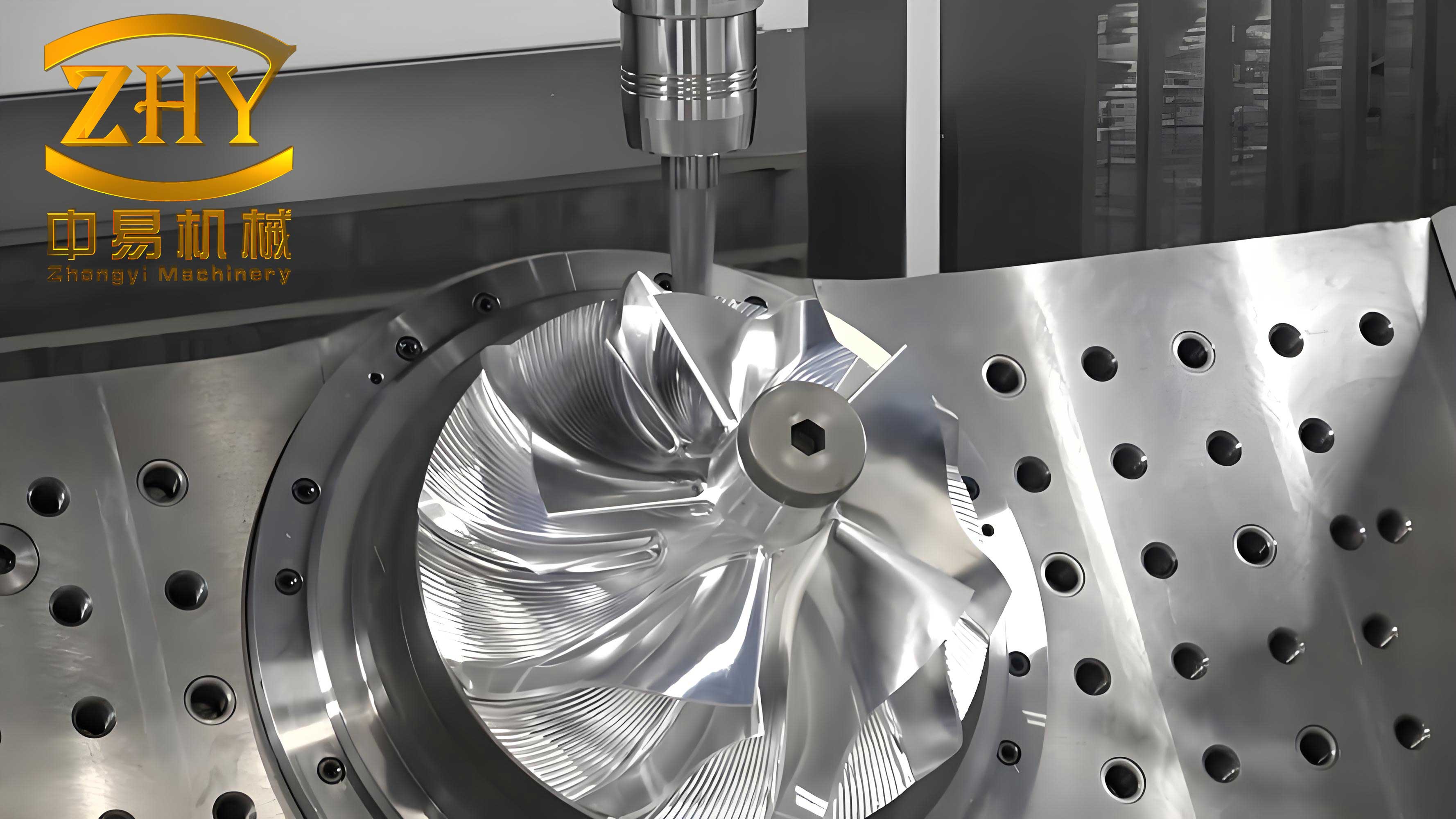
The integrated CNC machine system features a five-face machining center, combining horizontal and vertical machining centers to leverage their advantages for machine tool casting processing. Horizontal centers offer large workspace and stability for bulky castings, while vertical centers provide rigidity and precision for intricate details. The tooling fixtures include pins and reference surfaces for accurate positioning, along with air-blowing devices to clean casting surfaces, ensuring no impurities affect quality. This setup minimizes setup times and enhances repeatability, critical for the high-mix, low-volume nature of machine tool casting production.
Secondary positioning and identification systems play a vital role in this integration. Fixtures with pins and datum planes ensure precise placement of castings into machine tools, while non-contact scanning by robots reads workpiece information, such as dimensions and geometry. This data is transmitted to the GSK MES for real-time control and analysis, enabling adaptive adjustments. For example, if a casting deviation is detected, the system can recalibrate machining parameters automatically. The accuracy of positioning \( \delta \) can be modeled as a function of sensor resolution \( R \) and robotic repeatability \( \rho \):
$$ \delta = \sqrt{R^2 + \rho^2} $$
With typical values of \( R = 0.01 \, \text{mm} \) and \( \rho = 0.02 \, \text{mm} \), \( \delta \approx 0.022 \, \text{mm} \), meeting the stringent tolerances required for machine tool castings. The MES orchestrates the entire process, from order management to quality monitoring, as illustrated in the network diagram where components like robots, CNC machines, and warehouses communicate via TCP/IP protocols.
In conclusion, the integrated application of industrial robots in machine tool casting processing offers substantial benefits: increased productivity, improved precision, reduced labor intensity, and lower costs. By addressing industry-specific challenges through automation, we can achieve more flexible and efficient production lines. Future advancements should focus on enhancing robotic adaptability and intelligence, such as incorporating AI for predictive maintenance and further optimizing human-robot collaboration. This research provides a theoretical and practical guide for leveraging robotics in the machine tool casting sector, paving the way for smarter manufacturing ecosystems. As technology evolves, continuous innovation will ensure that machine tool casting remains at the forefront of industrial progress, driving quality and competitiveness worldwide.