
In the realm of foundry engineering, the production of large plate castings, especially those with intricate geometries, has always presented significant challenges. Among these, gray iron castings for machinery bases, such as those used in woodworking equipment, demand high dimensional accuracy, surface finish, and structural integrity. Traditional methods like resin sand and clay sand casting have been employed for years, but they often involve high labor intensity, poor working conditions, and environmental concerns. The V-process, or vacuum sealed molding process, has emerged as a promising alternative due to its ability to produce castings with excellent surface quality, minimal draft angles, and reduced environmental impact. This article, based on my firsthand experience in developing V-process casting for a complex large plate gray iron component, delves into the intricacies of this technique, highlighting the critical control points necessary for successful production.
The focus of this exploration is a dual-head planer machine base, a representative gray iron casting used in woodworking machinery. This component exemplifies the typical characteristics of large plate castings: substantial planar surfaces, complex reinforcing ribs, and stringent requirements for flatness and dimensional stability. The material is standard HT200 gray cast iron, which, while not requiring exceptional mechanical properties, must exhibit consistent quality for assembly and machining. The transition to V-process casting aimed to address the limitations of conventional methods, leveraging its advantages such as reduced binder usage, easier sand handling, and superior surface finish. However, the unique nature of this gray iron casting—with its extensive planar area and intricate rib network—introduced specific hurdles that necessitated a meticulous approach to process control.
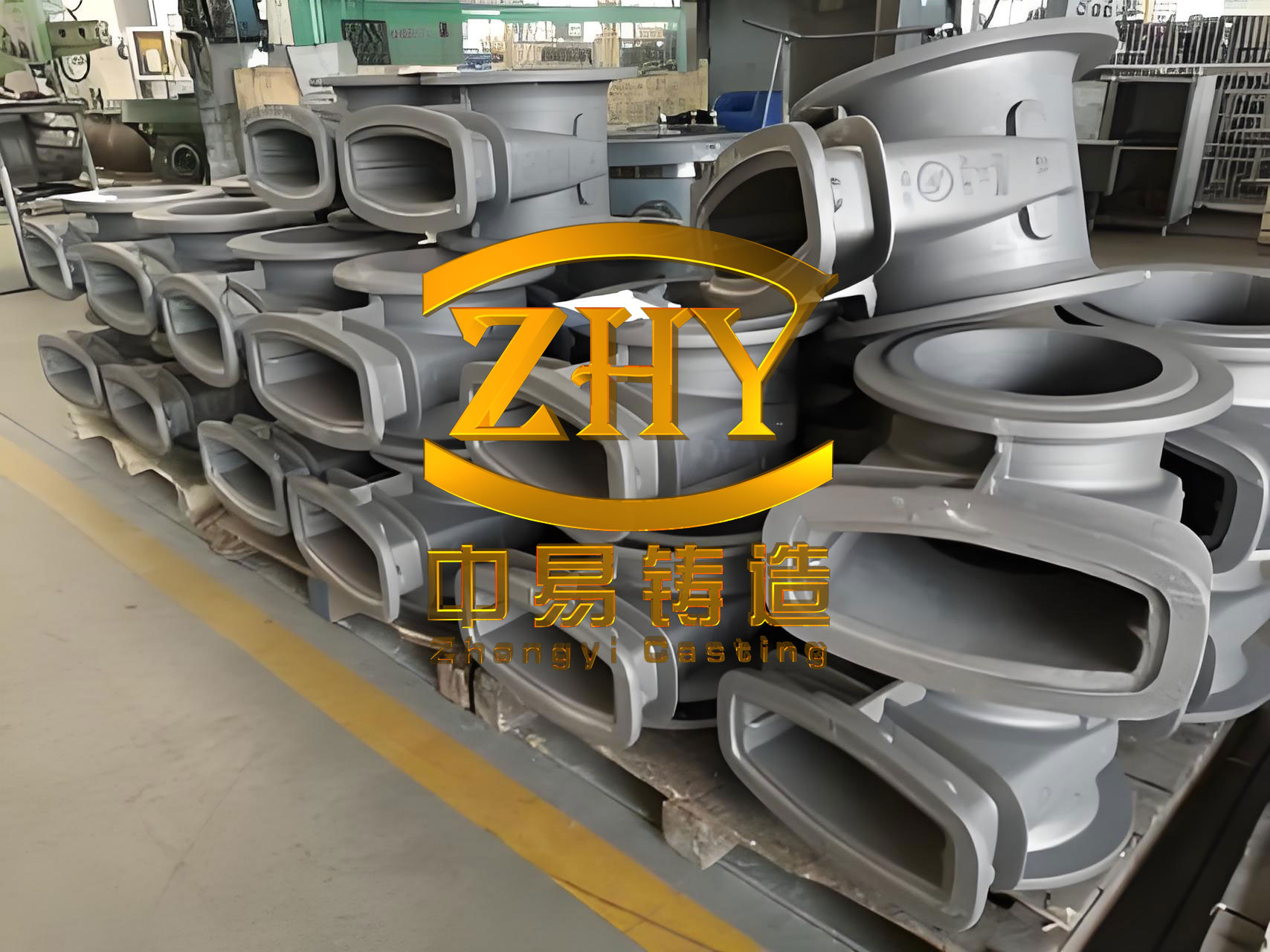
The casting in question measures approximately 1800 mm in length, 960 mm in width, and 110 mm in height, with a mass of around 370 kg. Its design includes numerous intersecting ribs that enhance stiffness but complicate mold formation in the V-process. The primary challenges identified were: achieving complete and uniform film draping over the complex rib patterns, controlling dimensional shrinkage and warpage, ensuring mold stability during pouring, and preventing defects like mechanical sand penetration. These issues are particularly acute for gray iron castings produced via the V-process, as the absence of binder and the reliance on vacuum pressure introduce distinct behavioral dynamics during solidification and cooling.
To systematically address these challenges, the process development followed a structured path, beginning with mold design and progressing through trials and adjustments. The initial mold design placed the large planar surface at the bottom of the mold, with the parting line along this plane. The gating system was designed to promote smooth metal flow and temperature uniformity: a sprue with a diameter of 50 mm, a trapezoidal runner in the lower mold with a cross-section of 50 mm × 40 mm, and six ingates distributed along the ribs—four near the sprue (5 mm × 60 mm) and two farther away (5 mm × 40 mm). Each ingate was fitted with a hemispherical slag trap to capture inclusions. Venting was critical for maintaining vacuum stability; vents were placed at the highest points of the casting, such as the assembly hole bosses, and additional structural vents were added in smaller bosses to prevent isolated pressure zones that could lead to mold collapse. Cores were used for the assembly holes, made from sodium silicate or resin sand for simplicity.
However, the first trial revealed several issues. Film draping, a cornerstone of the V-process, proved extremely difficult over the intersecting ribs. The ethylene-vinyl acetate (EVA) film, typically heated to become pliable, consistently tore at complex junctions, necessitating manual patching with adhesive tape. This not only increased labor but also compromised mold integrity. After pouring, the casting showed localized collapse and extensive mechanical sand adhesion, indicating inadequate mold stability and coating performance. The dimensional analysis further highlighted discrepancies: shrinkage rates exceeded initial estimates, and warpage of the large plane reached up to 10 mm. These outcomes underscored the need for refined control parameters specific to gray iron castings in the V-process.
The shrinkage behavior of gray iron in V-process casting deviates significantly from conventional sand casting due to the minimal restraint offered by the unbonded sand once vacuum is released. In traditional methods, the mold provides resistance, leading to constrained shrinkage, typically accounted for with shrinkage allowances of 0.6% to 0.8%. In contrast, the V-process allows for nearly free contraction, resulting in higher effective shrinkage rates. Based on experimental measurements, the following shrinkage factors were derived for this gray iron casting:
| Dimension | Desired Casting Size (mm) | Mold Size (mm) | Actual Casting Size (mm) | Observed Shrinkage (%) | Recommended Shrinkage for V-Process (%) |
|---|---|---|---|---|---|
| Length | 1802 | 1812 | 1792 | ~1.1 | 1.1 |
| Width | 962 | 966 | 955 | ~1.25 | 1.3 |
| Height | 90.5 | 90.5 | 89.6 | ~1.0 | 1.2 |
| Center Distance of Assembly Holes | 802 | 805 | 798 | ~0.88 | 0.9 |
The shrinkage can be modeled using the linear shrinkage formula: $$ S = \frac{L_m – L_c}{L_m} \times 100\% $$ where \( S \) is the shrinkage percentage, \( L_m \) is the mold dimension, and \( L_c \) is the casting dimension. For gray iron, the high graphite content influences contraction, and in the V-process, the cooling conditions amplify this effect. Empirical adjustments are necessary, as standard sand-casting data are inadequate.
Warpage control is another critical aspect. The large planar surface of gray iron castings tends to distort due to uneven cooling and the structural influence of ribs. In the V-process, warpage is exacerbated if vacuum is cut off prematurely, allowing the casting to contract freely against the minimal sand resistance. To mitigate this, several strategies were employed: prolonging the vacuum holding time after pouring to maintain mold rigidity during solidification, adding inverse deformation (camfer) to the mold, and optimizing the gating to ensure a uniform temperature field. The inverse deformation was quantified based on trial data; for this casting, a central rise of 7–8 mm with a taper to 3 mm at the edges was implemented. The warpage reduction can be expressed as: $$ \Delta = k \cdot \frac{T_h – T_c}{t} $$ where \( \Delta \) is the deformation, \( k \) is a material constant for gray iron, \( T_h \) and \( T_c \) are temperatures at hot and cold regions, and \( t \) is the section thickness. By controlling cooling through vacuum management, warpage was reduced to 1–2 mm residual convexity, acceptable for machining.
Film draping integrity is paramount in the V-process. The use of EVA film with appropriate elongation properties is essential. Trials with domestic and imported films revealed that film performance is highly temperature-sensitive; uneven heating on the film frame led to poor conformity at the mold edges. To enhance drapability, the rib design was modified in consultation with the client: sharp intersections were rounded, and the height of certain斜 ribs was reduced. This structural adjustment, while preserving the functional strength of the gray iron casting, significantly improved film adhesion without compromising part performance. Additionally, vent plugs were strategically placed on the mold to aid film suction, as shown in subsequent trials. The relationship between film stretch and mold complexity can be approximated by: $$ \epsilon = \frac{\Delta L}{L_0} \geq \frac{C}{t_f} $$ where \( \epsilon \) is the required film strain, \( \Delta L \) is the elongation, \( L_0 \) is the original length, \( C \) is a geometric complexity factor, and \( t_f \) is the film thickness. For complex gray iron castings, selecting a film with high thermal elongation and optimizing mold geometry are dual necessities.
Coating application directly affects surface quality. For gray iron castings, which are prone to sand penetration due to their metallurgical characteristics, a uniform and robust coating is vital. Initially, brushing led to inconsistent coating thickness, especially on intricate ribs, causing widespread mechanical sand adhesion. Switching to spraying ensured complete coverage, and proper drying enhanced surface strength. The coating thickness \( d_c \) should satisfy: $$ d_c \geq \frac{\sigma_s}{\sigma_c} \cdot r_s $$ where \( \sigma_s \) is the sand particle pressure, \( \sigma_c \) is the coating compressive strength, and \( r_s \) is the sand grain radius. For V-process gray iron castings, a coating thickness of 0.2–0.3 mm is typically adequate to prevent sand burn-on.
Vacuum control is the backbone of the V-process, influencing every stage from molding to cooling. During molding, insufficient vacuum can lead to poor sand compaction and dimensional inaccuracies. During pouring, vacuum stability prevents mold collapse, especially for large plate castings where pressure differentials are critical. The vacuum pressure \( P_v \) must be maintained above a threshold: $$ P_v > \rho_m \cdot g \cdot h + \Delta P_{loss} $$ where \( \rho_m \) is the molten metal density (for gray iron, approximately 7.2 g/cm³), \( g \) is gravity, \( h \) is the metal head height, and \( \Delta P_{loss} \) accounts for leaks. For this gray iron casting, a vacuum of 0.04–0.06 MPa was used. After pouring, holding vacuum for an extended period (e.g., 10–15 minutes) helps restrain warpage. However, vents and gating are often burned through, so auxiliary measures like covering these areas with spare film patches are needed to maintain vacuum integrity. The vent-to-sprue area ratio, often cited as 2–3 for general V-process casting, required adjustment for this plate-shaped gray iron casting; a higher ratio ensured uniform pressure distribution across the extensive planar area.
Gating and venting design must account for mold stability and thermal uniformity. For gray iron castings with complex rib patterns, multiple ingates distributed along the ribs promote even filling and reduce thermal gradients. The total vent area \( A_v \) was empirically determined to be: $$ A_v = n \cdot A_s \cdot f $$ where \( n \) is the number of vents, \( A_s \) is the sprue cross-sectional area, and \( f \) is a factor ranging from 1.5 to 2.5 for plate-like gray iron castings. In the improved design, additional vents were placed at distal locations to prevent localized vacuum loss. Pouring was done with a slight tilt (40–50 mm elevation at one end) to minimize film burning at the sprue area, further enhancing stability.
The improved process yielded a gray iron casting with excellent surface finish, dimensional accuracy, and minimal defects. Surface roughness measurements averaged 30–50 µm, with some areas as low as 10–15 µm, surpassing resin and clay sand results. Dimensional data met specifications, and warpage was controlled within 1–2 mm. A comparison with traditional methods underscores the advantages of V-process for gray iron castings:
| Aspect | Resin Sand / Clay Sand Casting | V-Process Casting |
|---|---|---|
| Draft Angles | Required (typically 2.5°) | Minimal to none |
| Machining Allowance | 3 mm or more on all sides | 1 mm on non-planar surfaces; often unnecessary |
| Surface Roughness | >40 µm, with frequent sand adhesion | 12.5–50 µm, clean and smooth |
| Dimensional Stability | Variable due to mold resistance | High, with predictable shrinkage |
| Labor Skill Required | High for manual methods | Low, process-driven |
| Environmental Impact | High binder emissions and waste | Low, dry sand reusable |
| Production Cost | Moderate to high | Low, due to reduced material and labor |
From this experience, key control points for V-process casting of complex large plate gray iron castings can be summarized:
1. Shrinkage Allowances Must Be Tailored: Gray iron castings in the V-process exhibit higher shrinkage than in conventional sand casting, due to near-free contraction. Recommended linear shrinkage rates are 1.1–1.3% for planar dimensions, requiring mold oversizing based on experimental validation. The formula $$ L_m = L_c \cdot (1 + S/100) $$ should be applied with S derived from trials specific to the gray iron grade and casting geometry.
2. Warpage Management Through Integrated Measures: Inverse deformation on the mold, prolonged vacuum holding, and optimized gating are essential to control flatness deviations. The deformation can be estimated using thermal-stress models, but practical adjustments are often needed. For gray iron castings, a vacuum hold time \( t_h \) proportional to the section thickness \( t \) is advised: $$ t_h = \alpha \cdot t^2 $$ where \( \alpha \) is a constant dependent on gray iron’s cooling characteristics.
3. Vacuum System Precision: Consistent vacuum pressure throughout the cycle is critical. Monitoring and maintaining vacuum levels above calculated thresholds prevent mold collapse and ensure dimensional fidelity. For large plate gray iron castings, auxiliary sealing at burned vents is necessary to sustain pressure during solidification.
4. Gating and Venting for Stability: Distributed ingates and ample venting, with area ratios adjusted for planar geometries, promote uniform filling and pressure balance. The vent area should be scaled to the casting’s projected area to avoid localized vacuum loss.
5. Film and Coating Optimization: Film selection based on elongation properties, combined with mold geometry simplifications (e.g., rounding sharp ribs), enhances drapability. Coating should be sprayed uniformly and dried adequately to withstand sand erosion during pouring of gray iron.
6. Process Parameter Synergy: The interdependence of vacuum, gating, and cooling requires a holistic approach. For instance, the vacuum holding time influences both warpage and shrinkage, necessitating balanced settings.
In conclusion, the V-process offers a viable and advantageous route for producing complex large plate gray iron castings, but success hinges on mastering these control points. The unique behavior of gray iron under vacuum molding conditions—from shrinkage and warpage to surface formation—demands a departure from conventional sand-casting norms. Through iterative trials and systematic adjustments, high-quality gray iron castings with excellent dimensional accuracy and surface finish can be achieved, underscoring the potential of the V-process for modern foundry applications. Future work could focus on predictive modeling for shrinkage and deformation, further reducing trial-and-error efforts in the production of gray iron components.
The journey of adapting the V-process to this gray iron casting revealed that process robustness stems from attention to detail: film handling, vacuum management, and geometric considerations. As foundries seek sustainable and efficient methods, the insights gained here can guide the production of similar gray iron castings, paving the way for broader adoption of the V-process in the manufacturing of large, complex plate components. The consistent emphasis on gray iron throughout this discussion highlights its central role in the foundry industry, and the V-process proves to be a tailored solution for its unique challenges.