
In my research, I embarked on a comprehensive comparison of the microstructure and mechanical properties of AlSi10Mg alloy produced through two distinct manufacturing routes: selective laser melting (SLM) additive manufacturing and sand casting utilizing 3D printed (3DP) sand molds. The motivation stems from the growing adoption of additive manufacturing in industries like automotive, where complex, lightweight components are in demand, while traditional sand casting remains a cornerstone for economical mass production. This study aims to elucidate the fundamental differences in material behavior arising from these processes, with a particular focus on the implications for part design and performance. I will present my findings in detail, incorporating quantitative data, theoretical models, and visual aids to provide a thorough understanding.
The AlSi10Mg alloy, a near-eutectic Al-Si-Mg system, was selected for its excellent castability, good strength-to-weight ratio, and thermal properties. For the SLM process, I used gas-atomized AlSi10Mg powder with a particle size distribution of 20–63 μm. The chemical composition, verified by spectroscopy, is presented in Table 1. For the sand casting process, I used a standard AlSi10Mg ingot of matching composition.
| Element | Si | Mg | Fe | Cu | Mn | Ni | Ti | Al |
|---|---|---|---|---|---|---|---|---|
| Wt. % | 10.2 | 0.31 | 0.06 | <0.01 | <0.01 | <0.01 | <0.01 | Bal. |
The SLM process was conducted on a commercial machine with a build volume of 425 mm × 425 mm × 20 mm. I designed tensile test bars according to standard dimensions and arranged them on the build plate at three distinct orientations relative to the substrate: 0°, 45°, and 90°. Specimens at 45° required support structures to ensure successful fabrication of overhanging surfaces. The key process parameters I optimized are summarized in Table 2.
| Parameter | Value |
|---|---|
| Layer Thickness | 40 μm |
| Laser Power | 400 W |
| Scan Speed | 1300 mm/s |
| Hatch Spacing | 0.15 mm |
| Substrate Temperature | 160 °C |
| Atmosphere | Argon (<1000 ppm O2) |
A subset of the as-built SLM specimens underwent stress-relief annealing at 300 °C for 2 hours, with a heating and cooling rate of 5 °C/min to minimize thermal stresses.
For the sand casting counterpart, I employed the binder jetting 3D printing process to fabricate the sand molds directly from a CAD model of the tensile test bar cavity. This approach exemplifies the modern integration of additive manufacturing into traditional foundry practice. The sand was silica sand (100-140 mesh) coated with a furan resin. The properties of the resin-coated sand are shown in Table 3.
| Property | Value |
|---|---|
| Compressive Strength | 6.1 MPa |
| Tensile Strength | 1.8 MPa |
| Gas Evolution (850°C) | 13 mL/g |
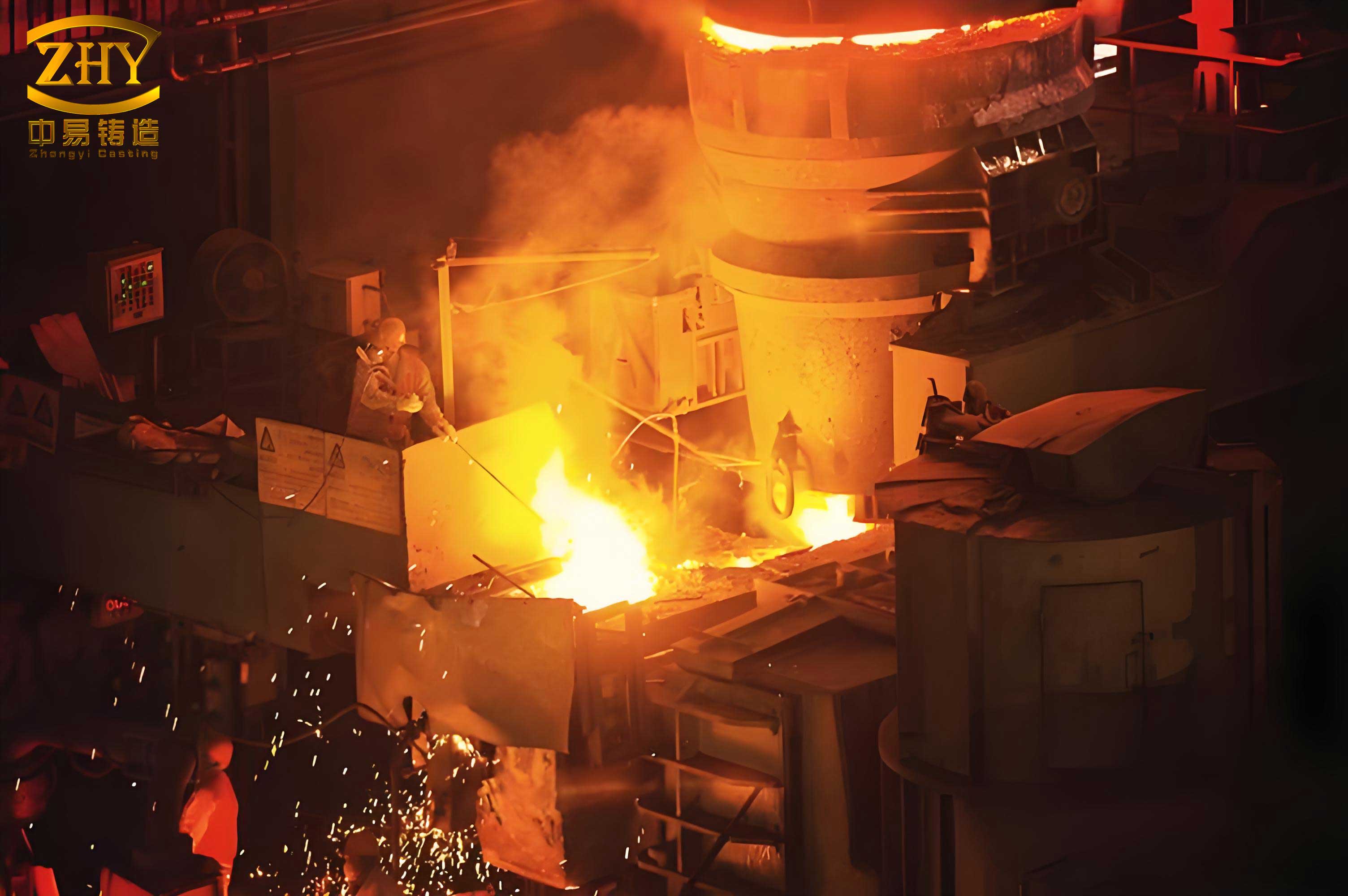
The sand casting process involved melting the AlSi10Mg ingot in a resistance furnace, degassing, and then pouring at approximately 720 °C into the preheated 3DP sand molds. After solidification and cooling, the cast test bars were removed from the molds. To achieve a meaningful comparison with the heat-treated SLM material and to realize the alloy’s potential, I subjected the sand-cast specimens to a full T6 heat treatment. This consisted of a solution treatment at 540 °C for 12 hours, followed by rapid water quenching, and then artificial aging at 160 °C for 8 hours. Both heating stages used a stepped ramp to mitigate distortion and reduce the risk of blistering from residual mold gases—a common concern in sand casting.
Microstructural examination was performed on polished and etched samples using optical microscopy. Mechanical properties were assessed via uniaxial tensile testing at room temperature, with a minimum of three specimens per condition. Fractography was conducted using scanning electron microscopy (SEM) to identify failure mechanisms.
The microstructures revealed profound differences. The SLM material in the as-built state exhibited a characteristic fine cellular/dendritic structure of α-Al supersaturated with Si, surrounded by a ultrafine network of eutectic Si. After the 300 °C anneal, this structure coalesced slightly. The Si phase remained predominantly as fine, discrete particles located at cell boundaries. In contrast, the sand-cast and T6-treated alloy displayed a much coarser microstructure. The primary α-Al dendrites were evident, with the interdendritic regions containing a mixture of modified eutectic Si in a needle-like and blocky morphology, along with precipitation of Mg2Si phases. This structural disparity is the root cause of the performance differences outlined below.
The mechanical performance data form the core of this comparison. The SLM process produced material with exceptional and highly consistent properties. However, I observed a distinct anisotropy in the as-built state related to the build direction. The data for yield strength (YS), ultimate tensile strength (UTS), and elongation are compiled in Table 4.
| Process & Condition | Orientation | Yield Strength (MPa) | Ultimate Tensile Strength (MPa) | Elongation (%) |
|---|---|---|---|---|
| SLM (As-built) | 0° | 295 ± 3 | 445 ± 5 | 3.5 ± 0.5 |
| 45° | 280 ± 4 | 430 ± 4 | 3.0 ± 0.6 | |
| 90° | 254 ± 5 | 410 ± 6 | 2.5 ± 0.4 | |
| SLM (300°C Annealed) | 0° | 230 ± 2 | 380 ± 3 | 10.5 ± 1.0 |
| 45° | 238 ± 3 | 385 ± 4 | 9.8 ± 0.8 | |
| 90° | 240 ± 2 | 382 ± 3 | 8.5 ± 0.7 | |
| Sand Cast (As-cast) | N/A | 140 ± 25 | 195 ± 30 | 3.2 ± 1.5 |
| Sand Cast (T6 Treated) | N/A | 210 ± 20 | 240 ± 25 | 1.5 ± 0.8 |
The directional dependence of strength in the as-built SLM specimens can be modeled by a simple linear relationship. If we define the angle θ between the tensile axis and the build plate (0° ≤ θ ≤ 90°), the yield strength σ_y shows an approximate linear decrease with increasing θ. From my data, the relationship can be expressed as:
$$\sigma_y(\theta) \approx \sigma_{y,0°} – m \cdot \theta$$
where $\sigma_{y,0°}$ is the yield strength at 0° orientation (≈295 MPa), and $m$ is a degradation coefficient. Fitting the data gives $m \approx 0.44$ MPa/degree, or roughly 20 MPa per 45° increment. This anisotropy is attributed to the layer-wise nature of the process, the alignment of microstructural features and potential defects parallel to layers, and the varying effectiveness of thermal conduction to the substrate or supports. The stress-relief annealing at 300 °C effectively homogenized the properties, eliminating this anisotropy. The annealing reduced the yield strength, particularly for the 0° and 45° orientations, due to the relaxation of residual stresses and the slight coarsening of the fine microstructure, but it dramatically improved ductility by over 200%.
The performance of the sand casting specimens was markedly different. The as-cast condition showed low strength and highly variable properties, a direct consequence of the coarse dendritic structure, porosity, and other casting defects inherent to the sand casting process. The T6 heat treatment significantly increased strength through solid solution strengthening and precipitation hardening, but at the cost of ductility, which plummeted. The variability (large standard deviations) remained, underscoring one of the key challenges in sand casting: achieving consistent microstructure and properties, especially in complex molds where factors like gating, cooling rates, and gas evolution are difficult to control uniformly. This variability is a critical drawback when compared to the repeatability of SLM.
To further analyze the strength differences, we can invoke the Hall-Petch relationship, which links yield strength to grain size:
$$\sigma_y = \sigma_0 + \frac{k_y}{\sqrt{d}}$$
where $\sigma_0$ is the friction stress, $k_y$ is the strengthening coefficient, and $d$ is the average grain size. The SLM process, with its extremely high cooling rates ($10^5$ to $10^6$ K/s), results in a very fine effective “grain” or cell size ($d_{SLM}$ ~ 0.5-1 μm), leading to high $\sigma_y$. The sand casting process has orders of magnitude slower cooling, producing a much larger dendritic arm spacing and grain size ($d_{Cast}$ ~ 50-200 μm), which corresponds to a lower intrinsic strength. Even after T6 treatment, which introduces precipitation hardening ($\Delta\sigma_{ppt}$), the overall strength of the sand-cast material may be approximated as:
$$\sigma_{y,cast}^{T6} = (\sigma_0 + \frac{k_y}{\sqrt{d_{Cast}}}) + \Delta\sigma_{ppt}$$
This sum often fails to reach the levels achieved by the fine-scale strengthening mechanisms in SLM material.
The fracture surfaces provided clear evidence of the underlying micromechanisms. The SLM specimens (annealed condition) exhibited a mixed-mode fracture. At low magnification, facets and tear ridges were visible. Higher magnification SEM revealed a fine dimpled morphology superimposed with areas of quasi-cleavage, indicating a combination of microvoid coalescence and brittle fracture along the fine cell boundaries. The sand-cast T6 specimens showed predominantly brittle fracture characteristics. The surface was covered with cleavage facets and sharp, shiny ridges. The brittle eutectic Si particles and intermetallics acted as stress concentrators and crack initiation sites. The crack propagation was primarily transgranular, following the cleavage planes of the α-Al matrix, with minimal plastic deformation—consistent with the low elongation values.
The discussion naturally centers on the trade-offs between these two manufacturing routes. The SLM process offers superior and highly consistent mechanical properties, excellent geometric freedom, and the ability to create complex internal features. However, it suffers from anisotropy in the as-built state, requires post-processing heat treatments to stabilize properties, and has limitations in terms of build volume, production rate, and cost for large parts. The sand casting process, especially when augmented with 3DP for mold making, excels in producing large, bulky components economically. The flexibility of 3DP sand molds allows for complex part geometries that might be difficult with traditional pattern-making. Yet, the inherent nature of sand casting leads to microstructural inhomogeneity, porosity, and relatively lower mechanical properties compared to wrought or additively manufactured counterparts. The properties are also more variable, as seen in the large standard deviations, which is a critical factor for safety-critical components. The T6 heat treatment improves strength but further compromises ductility, a classic trade-off in precipitation-hardening aluminum alloys.
From an application perspective, the choice hinges on the component’s functional requirements. For high-performance, lightweight structural parts with complex topology in the automotive or aerospace sectors, SLM is increasingly attractive. For larger, less critically stressed components, or for prototypes and low-volume production where tooling cost is prohibitive, sand casting with 3DP molds presents a compelling solution. It is worth emphasizing that advancements in both fields continue. In sand casting, improved binder systems, optimization of pouring and gating designs, and advanced melt treatment can reduce defects and improve consistency. In SLM, developments in process monitoring, multi-laser systems, and new post-processing techniques are addressing anisotropy and productivity challenges.
In conclusion, my research demonstrates a significant performance gap between AlSi10Mg alloy produced by selective laser melting additive manufacturing and that produced by sand casting. The SLM process generates a fine, homogeneous microstructure that translates to superior yield strength, ultimate tensile strength, and—after a simple stress-relief anneal—exceptional ductility, all with high repeatability. The sand casting process, even when utilizing advanced 3D printed molds and T6 heat treatment, produces material with lower strength, significantly lower ductility, and greater property scatter due to its coarse microstructure and susceptibility to casting defects. The anisotropy observed in as-built SLM parts is a manageable factor, as it can be effectively eliminated through post-process heat treatment. Therefore, for applications demanding high specific strength, geometric complexity, and reliability, laser additive manufacturing holds a distinct advantage. However, for applications where cost-effectiveness for large volumes or large part sizes is paramount, sand casting remains a viable and important manufacturing process. This comparative study provides a foundational understanding for material selection and process design in the evolving landscape of modern manufacturing.