
As an engineer deeply involved in the automotive industry, I have witnessed the growing emphasis on lightweight design as a critical strategy for addressing energy efficiency, environmental protection, and safety. The increasing number of vehicles on the road, coupled with stricter regulations and consumer demands for better performance, has made lightweighting an imperative. In this context, casting parts play a pivotal role in automotive structures, offering unique advantages in terms of design flexibility and material efficiency. Lightweight design is not merely about substituting materials; it is a holistic approach that integrates advanced design techniques, material science, and manufacturing processes to reduce weight while maintaining or enhancing performance. This article delves into the theoretical foundations, design principles, and practical methodologies for lightweighting automotive casting parts, drawing from extensive engineering experience. By systematically exploring these aspects, I aim to provide a comprehensive guide that enriches the technical basis for lightweight design and serves as a reference for整车轻量化研究.
The essence of lightweight design lies in performance development, where structure, materials, and工艺 are integrated. For casting parts, this often involves optimizing the geometry to achieve the desired mechanical properties with minimal material usage. The theoretical underpinnings of structural lightweighting are rooted in principles observed in nature and engineering mechanics. Below, I summarize key theories relevant to casting part design, often expressed through mathematical formulations to clarify their impact.
| Principle | Description | Key Formula/Representation |
|---|---|---|
| Triangle Principle | The triangle is the most stable minimal unit in two-dimensional systems, with short force transmission paths and high strength-to-weight ratio. For casting parts, triangular elements can enhance rigidity. | Stability derived from geometric constraints: $$F_{internal} = \frac{P}{\sin(\theta)}$$ where \(P\) is applied load and \(\theta\) is angle. |
| Shell Principle | Thin-shell structures utilize curvature to carry loads primarily through in-plane axial forces and shear, minimizing bending moments. This is ideal for casting parts with curved surfaces. | Shell stress: $$\sigma_{shell} = \frac{N}{t} \pm \frac{M}{t^2/6}$$ where \(N\) is axial force, \(M\) is moment, \(t\) is thickness. |
| Arch Principle | Arch structures transfer loads via axial compression, converting vertical forces into horizontal thrust. This reduces material usage in casting parts like supports. | Arch thrust: $$H = \frac{wL^2}{8f}$$ where \(w\) is load, \(L\) is span, \(f\) is rise. |
| Hollow Principle | Hollow sections maximize the moment of inertia, improving bending and torsional stiffness. For casting parts, hollow designs reduce weight while maintaining strength. | Moment of inertia for hollow rectangle: $$I = \frac{bh^3 – (b-2t)(h-2t)^3}{12}$$ where \(b\) is width, \(h\) is height, \(t\) is wall thickness. |
| Truss Principle | Trusses consist of triangular units that carry axial loads, efficiently using material strength. Casting parts can emulate truss patterns for lightweight frames. | Axial force in member: $$F = \frac{P}{\cos(\alpha)}$$ where \(\alpha\) is member angle. |
| Neutral Axis Principle | In bending, the neutral axis experiences zero normal stress, so material near it contributes little to stiffness. Optimizing casting part cross-sections to move material away from the neutral axis enhances performance. | Bending stress: $$\sigma = \frac{My}{I}$$ where \(M\) is moment, \(y\) is distance from neutral axis, \(I\) is moment of inertia. |
| Section Geometry Principle | The shape and size of a cross-section affect stiffness. For casting parts, increasing轮廓尺寸 without adding thickness improves bending and torsional rigidity. | Stiffness ratio: $$\frac{I_{hollow}}{I_{solid}} = 1 + \left(\frac{t}{r}\right)^2$$ for circular sections, where \(r\) is radius. |
These theories inform core design principles for lightweight casting parts. First, the shortest force path principle dictates that forces should travel along direct routes to minimize cumulative deformation and stress concentrations. This can be expressed by optimizing the force flow density \(\rho_f\), where higher density indicates critical regions: $$\rho_f = \frac{dF}{dA}$$ where \(F\) is force and \(A\) is area. Second, the equal strength design principle aims for uniform stress distribution, ensuring material is used efficiently. For a casting part under bending, the ideal variable thickness \(t(x)\) can be derived from: $$\sigma(x) = \frac{M(x)}{S(x)} = \text{constant}$$ where \(S(x)\) is the section modulus. Third, the direct support principle requires that loads be transferred directly to main structures, avoiding附加弯矩 or torque. This reduces peak stresses in casting parts, enhancing durability.
In practice, lightweight design of casting parts involves multiple methodologies, each leveraging these principles. Below, I outline key approaches with examples, emphasizing how they apply to automotive casting parts. To illustrate the diversity and application of these methods, consider the following table that summarizes techniques and their impacts on casting part performance.
| Design Method | Description | Key Formula/Consideration | Effect on Casting Part |
|---|---|---|---|
| Thin-Walling | Reducing wall thickness to the minimum allowed by casting工艺, using ribs for reinforcement. This directly cuts weight in casting parts. | Critical buckling stress: $$\sigma_{cr} = k \frac{E t^2}{L^2}$$ where \(k\) is factor, \(E\) is modulus, \(L\) is length. | Weight reduction up to 20-30% while maintaining stiffness. |
| Ribbing (Bone Structure) | Adding ribs to create a skeletal framework that carries loads efficiently, removing low-stress material from casting parts. | Rib effectiveness: $$I_{total} = I_{base} + n \cdot I_{rib}$$ where \(n\) is number of ribs. | Enhanced strength-to-weight ratio; ideal for支架类铸件. |
| Miniaturization | Shrinking the overall size and volume of casting parts without compromising function, achieving “less is more” outcomes. | Volume-weight relation: $$W = \rho V$$ where \(\rho\) is density, \(V\) is volume. | Reduced material usage and lower inertia in assemblies. |
| Integration | Combining multiple adjacent casting parts into a single component to eliminate overlap and reduce weight and assembly steps. | Integration benefit: $$W_{integrated} < \sum W_{individual}$$ due to removed interfaces. | Weight saving and simplified logistics for casting part production. |
| Hybridization | Using multiple materials or processes within one casting part to optimize performance, such as casting with welded inserts. | Composite stiffness: $$E_{eff} = \sum f_i E_i$$ where \(f_i\) is volume fraction. | Tailored properties for different regions of the casting part. |
| Shellification | Employing curved shell geometries to distribute stresses evenly, often seen in薄壳铸件 for automotive frames. | Shell curvature effect: $$\kappa = \frac{1}{R}$$ where \(R\) is radius, influencing stress distribution. | Improved crashworthiness and weight efficiency in casting parts. |
| Hollowing | Creating internal cavities in casting parts to increase the moment of inertia without adding mass, crucial for structural members. | Torsional stiffness: $$J = \frac{\pi (D^4 – d^4)}{32}$$ for hollow cylinders, where \(D\) is outer diameter, \(d\) is inner diameter. | Higher torsional rigidity, beneficial for轴类铸件. |
| Truss Emulation | Designing casting parts with truss-like patterns to handle axial loads efficiently, mimicking natural structures. | Truss optimization: $$\min \sum \rho_i A_i L_i$$ subject to stress constraints, where \(\rho_i\) is material density. | Lightweight and stiff frameworks for支架 systems. |
| Flattening | Compressing the form factor of casting parts to reduce protruding volumes, often applied to connection areas. | Contact stress: $$\sigma_{contact} = \frac{F}{A_{contact}}$$ reduced by enlarging area. | Lower weight and improved packaging in tight spaces. |
| Redundancy Removal | Eliminating non-load-bearing material from casting parts, such as overlapping sections or low-stress zones, to clarify force paths. | Stress threshold: Remove material where $$\sigma < \sigma_{allowable}/k$$ with \(k\) as safety factor. | Cleaner designs and further weight reduction in casting parts. |
| Topology Optimization | Using computational tools to find the optimal material layout within a design space, ideal for conceptual casting part design. | Optimization objective: $$\min W = \int_V \rho dV$$ subject to $$\sigma \leq \sigma_{max}$$ and displacement constraints. | Generative designs that minimize weight while meeting performance targets for casting parts. |
To ground these methods in reality, consider the application to automotive支架类铸件. For instance, thin-walling can be applied to an engine compressor mounting bracket, where wall thickness is reduced from 5mm to 3mm, supported by rib networks. This casting part sees a weight drop of 25% without sacrificing stiffness, as verified by finite element analysis (FEA). Similarly, integration might merge a front crossmember bracket with adjacent supports, consolidating four separate casting parts into one, cutting weight by 15% and reducing assembly time. Hollowing is effective for steering knuckles, where internal cavities boost torsional stiffness by 30% while shedding 10% weight. Each case underscores how lightweight design transforms casting parts into efficient components.
The mathematical backbone of these approaches often involves optimizing performance metrics. For example, the bending stiffness \(K_b\) of a casting part beam can be expressed as: $$K_b = \frac{3EI}{L^3}$$ where \(E\) is Young’s modulus, \(I\) is moment of inertia, and \(L\) is length. By increasing \(I\) through hollow sections or ribbing, we enhance \(K_b\) without raising weight. Similarly, torsional stiffness \(K_t\) for a casting part shaft is: $$K_t = \frac{GJ}{L}$$ where \(G\) is shear modulus and \(J\) is polar moment of inertia. Design choices that maximize \(J\) per unit mass are key. Furthermore, the weight \(W\) of a casting part is proportional to its volume \(V\) and material density \(\rho\): $$W = \rho V = \rho \int_A t(x) dA$$ where \(t(x)\) is thickness distribution. Lightweighting aims to minimize this integral subject to constraints like stress \(\sigma\) and deflection \(\delta\): $$\sigma \leq \sigma_{yield}, \quad \delta \leq \delta_{max}.$$ These formulations drive iterative design improvements.
In the broader context, lightweight design of casting parts is a持续性的精益设计过程. It requires balancing manufacturing constraints, such as casting fluidity and minimum wall thickness, with performance goals. For example, die-casting allows for thinner walls in aluminum casting parts, while sand casting might suit heavier sections. The choice of material—whether aluminum, magnesium, or advanced steels—also influences the lightweight potential of casting parts. However, structural optimization often delivers the quickest and most cost-effective gains, as it leverages existing manufacturing setups. As I reflect on engineering projects, the integration of topology optimization early in the design phase has proven invaluable for generating innovative casting part geometries that traditional methods might overlook.
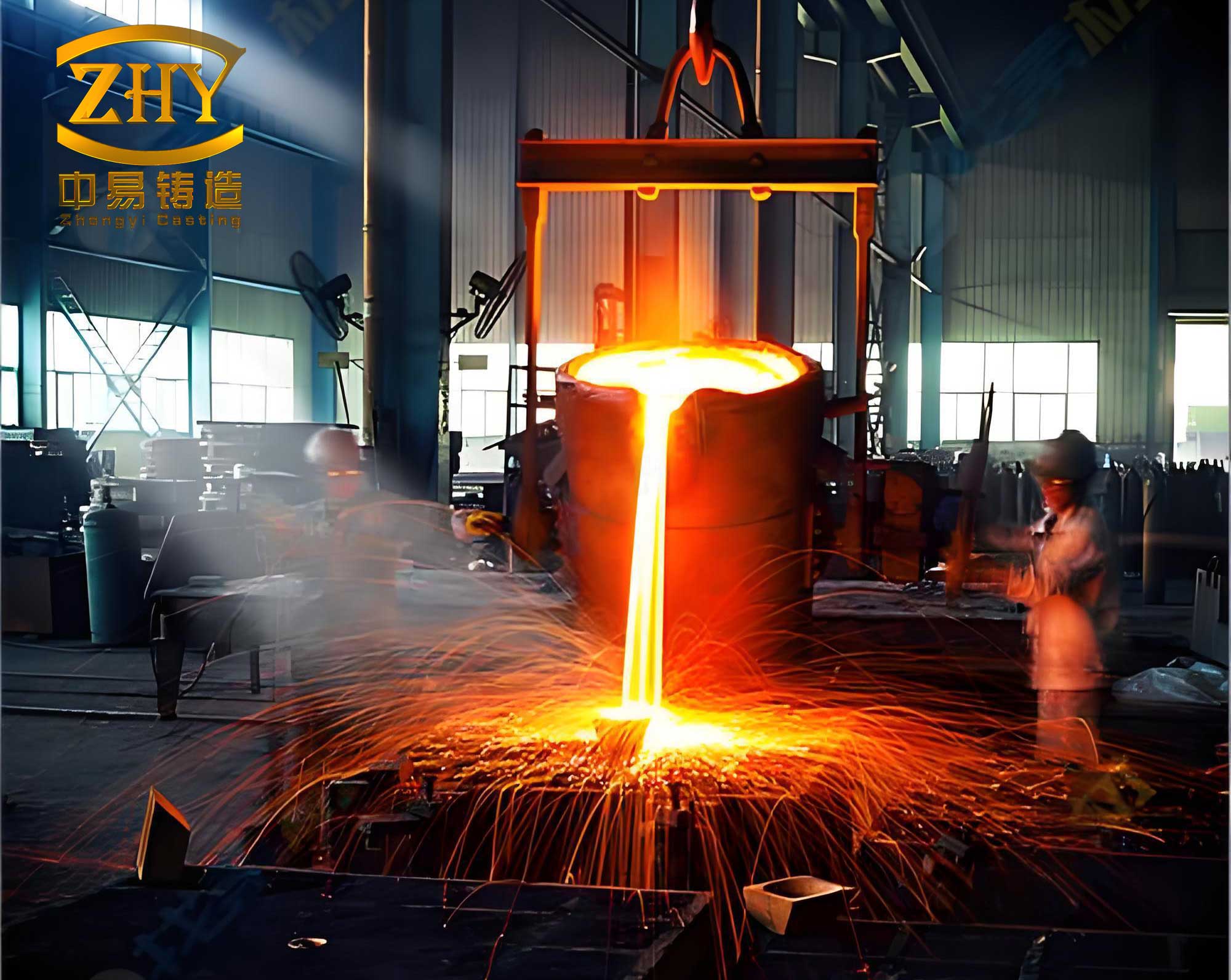
Looking ahead, the future of automotive lightweighting will likely involve more multi-material and multi-process strategies for casting parts. Hybrid structures that combine cast nodes with extruded beams or composite panels can push weight savings further. Additionally, digital tools like AI-driven generative design and simulation will accelerate the optimization of casting parts, enabling real-time adjustments for mass production. The ultimate goal is to achieve a holistic vehicle lightweighting where every casting part contributes to reduced emissions and enhanced performance. This journey demands persistent knowledge积累 and a commitment to精益设计理念, ensuring that each iteration of a casting part brings us closer to ideal efficiency.
In conclusion, the lightweight design of automotive casting parts is a multifaceted discipline rooted in solid mechanics and inspired by natural efficiency. Through principles like shortest force paths and equal strength, and methods ranging from thin-walling to topology optimization, we can significantly reduce the weight of casting parts while upholding safety and functionality. My experience underscores that this is not a one-time effort but a continuous pursuit of perfection, where every gram saved in a casting part translates to broader benefits for energy conservation and environmental sustainability. By sharing these insights, I hope to foster further innovation in the field, encouraging engineers to explore new frontiers in casting part design for the vehicles of tomorrow.