
In my years of hands-on experience within the foundry industry, few processes have presented such a unique blend of promise and challenge as lost foam casting. Also known as evaporative pattern casting or dry sand real-mode negative pressure casting, this method involves creating a foam pattern cluster, coating it with a refractory material, embedding it in unbonded sand under vibration, and pouring molten metal under a vacuum. The foam vaporizes, allowing the metal to take its precise shape. While celebrated for its ability to produce complex, near-net-shape components with minimal finishing, the lost foam casting process for aluminum alloys is particularly susceptible to a range of defects if not meticulously controlled. Through extensive trial, error, and analysis, I have come to understand the intricate dance between foam decomposition, metal flow, and heat transfer that defines this process. This article consolidates my insights into the common defects encountered in aluminum lost foam casting, their root causes, and the preventive measures that have proven effective, supplemented with technical models and summaries to aid practitioners.
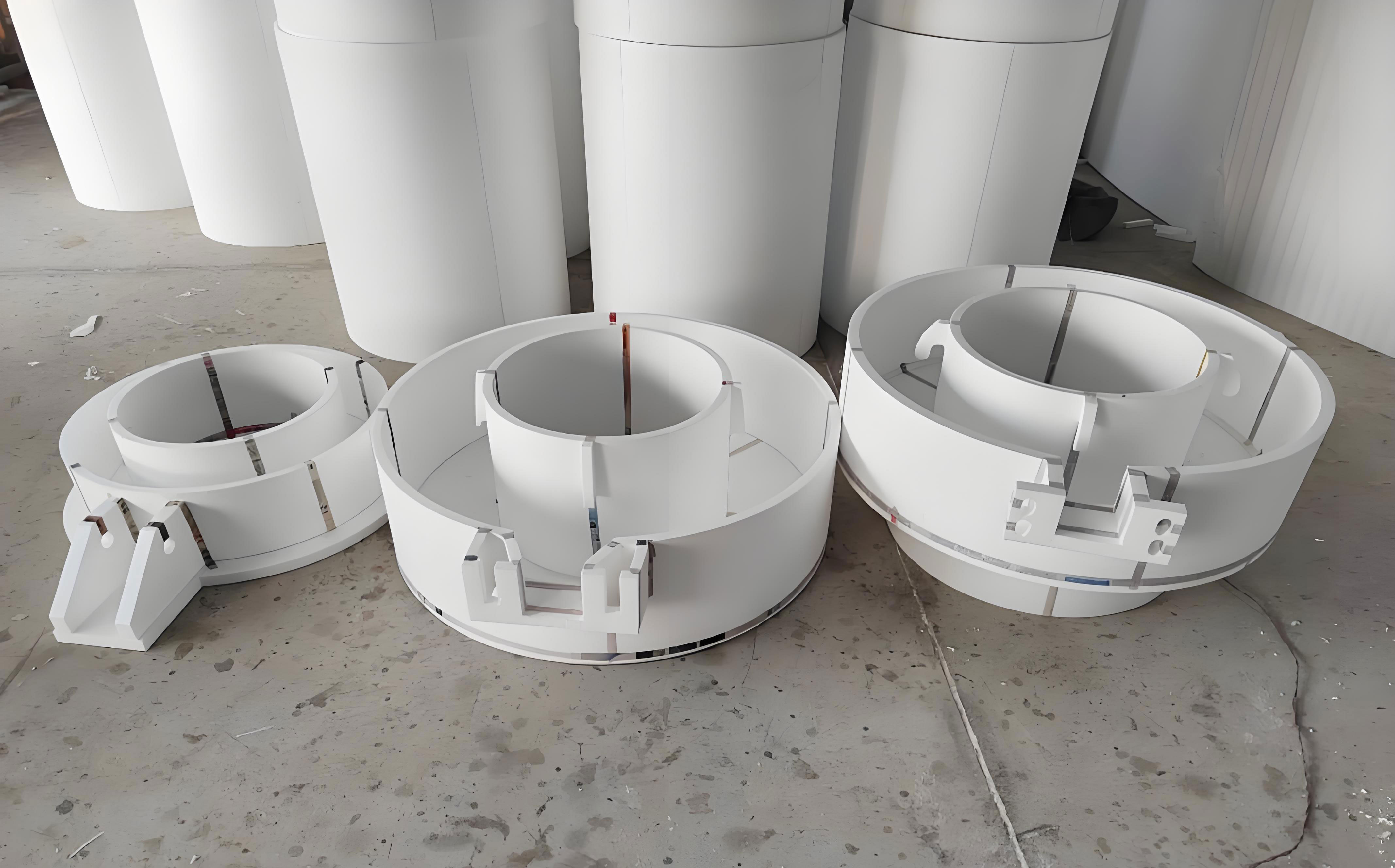
The fundamental characteristic of lost foam casting that governs everything is the dynamics of mold filling. Unlike conventional casting, the metal front does not simply displace a void; it must first vaporize the foam pattern. This creates a critical gap layer between the advancing metal and the retreating foam pattern. The stability of this gap, dictated by the foam’s decomposition rate and the metal’s advance speed, is the linchpin for success. An excessively large gap, from too-rapid foam vaporization, risks mold collapse. An excessively small gap traps pyrolysis gases and impedes their escape, leading to gas-related defects. Furthermore, the endothermic nature of foam decomposition absorbs heat from the metal, lowering its temperature and inherent feeding capability, while the absence of open risers eliminates the possibility of post-pour feeding. These intrinsic aspects of lost foam casting make it more prone to shrinkage defects compared to traditional methods. A simplified model for the energy balance at the metal-foam interface can be expressed as:
$$ \rho_m C_{p,m} v \frac{dT}{dx} = k \frac{\partial^2 T}{\partial x^2} + \dot{q}_{vap} $$
Here, $\rho_m$ is the metal density, $C_{p,m}$ is its specific heat, $v$ is the metal front velocity, $T$ is temperature, $k$ is thermal conductivity, and $\dot{q}_{vap}$ represents the heat sink per unit volume due to foam vaporization. Controlling this interaction is the first step in mastering lost foam casting.
Incomplete Filling and Distortion
One of the most immediately apparent failures in lost foam casting is a铸件 that is misshapen or only partially formed. From my observations, distortion often stems from pattern deformation during the sand-filling and compaction stage. If the three-dimensional vibration amplitude is set too high or the foam pattern itself lacks sufficient strength, it can warp under the pressure of the sand. This distorted geometry is then faithfully replicated in metal. Incomplete filling, on the other hand, is almost invariably a result of mold wall collapse during pouring. The causes are multifaceted. Firstly, a mismatch between the gating system design and the vacuum system can lead to unstable negative pressure. If the vacuum fluctuates, the pressure differential supporting the sand mold changes, potentially causing a localized or total cave-in. Secondly, an interrupted pour creates a stark discontinuity in the thermal and mechanical state of the sand, often triggering collapse. Thirdly, damage to the plastic film sealing the top of the flask during pouring can cause a catastrophic loss of vacuum.
The prevention strategy is built on control and consistency. Selecting the correct foam bead size and achieving an optimal pattern density (typically between 0.016 and 0.028 g/cm³) is crucial for strength. The vibration parameters must be tuned to the part’s size and geometry to achieve uniform compaction without pattern shift. Most critically, the vacuum system must be designed with regulating valves to maintain a stable negative pressure throughout the pour, and the protective sand layer over the sealing film must be thick enough to prevent burn-through. The relationship between sand compactibility, vibration parameters, and pattern strength can be explored through a dimensionless number akin to a vibration Reynolds number, though in practice, empirical tuning is often key.
| Defect Type | Primary Causes | Key Preventive Measures | Critical Parameters |
|---|---|---|---|
| Distortion | Excessive vibration amplitude; Low foam pattern strength. | Optimize foam density (0.016-0.028 g/cm³); Calibrate vibration for uniform compaction. | Pattern Density, Vibration Frequency/Amplitude. |
| Incomplete Filling/Collapse | Unstable vacuum; Interrupted pour; Broken seal. | Use vacuum regulators; Ensure continuous pour; Adequate cover sand over film. | Vacuum Stability (e.g., ± 0.005 MPa), Pouring Time. |
Surface Pinholes and Subsurface Blowholes
Perhaps the most common and insidious defects in aluminum lost foam casting are gas-related: surface pinholes and subsurface porosity. Aluminum’s high affinity for hydrogen is well-known. During melting and pouring, reactions with moisture from tools, refractories, or the atmosphere can dissolve hydrogen into the melt. In lost foam casting, this is compounded significantly. The decomposing foam generates a substantial volume of gaseous hydrocarbons, water vapor, and other pyrolysis products. If the coating’s permeability is too low or the vacuum insufficient, these gases cannot escape fast enough and are forced into the solidifying metal. Additionally, turbulent filling can entrap air. The resulting defects manifest as small, rounded pores just beneath or breaking the surface. The solubility of hydrogen in aluminum follows Sieverts’ law:
$$ S_{H} = k_{H} \sqrt{P_{H_2}} $$
where $S_{H}$ is the solubility, $k_{H}$ is the equilibrium constant, and $P_{H_2}$ is the partial pressure of hydrogen at the metal-gas interface. During lost foam casting, the local pressure at the metal-foam interface ($P_{interface}$) is a complex function of vacuum pressure ($P_{vac}$), gas generation rate ($G$), and coating permeability ($\Pi$): $P_{interface} = f(P_{vac}, G, \Pi)$. If $P_{interface}$ rises, the effective $P_{H_2}$ for hydrogen rejection decreases, promoting gas pore formation.
Prevention is a multi-front campaign. The melt must be rigorously degassed using rotary inert gas or flux injection. All tools and additives must be pre-dried. The foam pattern and its coating must be thoroughly dried to minimize water vapor. The coating formulation must prioritize high permeability while maintaining adequate strength. The gating should be designed for rapid, non-turbulent filling—often using a pressurized system. Finally, maintaining a stable and sufficient vacuum level is non-negotiable to extract gases promptly.
| Defect Source | Control Method | Process Goal | Typical Target/Formula |
|---|---|---|---|
| Melt Hydrogen | Degassing (Rotary Impeller) | Minimize hydrogen content. | Reduction to < 0.15 ml/100g Al. |
| Pyrolysis Gases | Coating Permeability & Vacuum | Maximize gas evacuation. | Coating Permeability Number > 30; Vacuum > 0.04 MPa. |
| Pattern Moisture | Drying Cycle | Eliminate water vapor. | Pattern weight constant after 4+ hrs at 50-60°C. |
| Turbulence | Gating Design | Laminar fill front. | Use choke at sprue base: $A_{choke} < \Sigma A_{gates}$. |
Inclusions and Slag Defects
Inclusions in lost foam castings arise from two primary pathways: conventional melt slag and carbonaceous residues from the foam. Despite best practices, oxides, dross, or refractory fragments can be carried into the mold cavity. The lost foam process adds its own unique contributor: if the foam does not completely vaporize and degrade, sticky, partially burnt residues can be entrapped in the metal stream, forming black, carbonaceous inclusions. The combustion efficiency of the foam is a function of temperature, oxygen availability (influenced by vacuum), and foam composition. A simple kinetic model for foam degradation can be considered:
$$ \frac{dm}{dt} = -A e^{-E_a/(RT)} P_{O_2}^n $$
where $dm/dt$ is the decomposition rate, $A$ is a pre-exponential factor, $E_a$ is the activation energy, $R$ is the gas constant, $T$ is temperature, $P_{O_2}$ is partial pressure of oxygen, and $n$ is the reaction order. Low pouring temperature or insufficient oxygen leads to incomplete decomposition ($dm/dt$ too low), leaving residues.
To combat this, I advocate for a holistic approach. For metallic slag, strict melt handling and filtration are essential. For foam residues, several tactics work: using low-density, low-residue foam; designing gating with integral slag traps or filters; slightly increasing pouring temperature to ensure complete foam gasification; and ensuring good coating permeability to allow oxygen ingress and gaseous product egress. Sometimes, using hollow runners or downsizing the gating mass (while meeting feeding requirements) reduces the total volume of foam to be decomposed.
Sand Inclusions, Burn-On, and Metal Penetration
This category encompasses defects where the boundary between metal and sand breaks down: sand inclusions (mechanical erosion), burn-on or rough surface (metal penetration into sand), and small metal nodules called “fins” or “veins” within the sand. All are linked to the integrity of the refractory coating. If the coating is too thin, has low hot strength, cracks during drying or vibration, or is locally abraded by sharp corners in the gating, sand grains can be washed into the metal. If the coating is permeable enough to allow metal infiltration but not catastrophic failure, burn-on occurs. Key factors include coating thickness, strength, sand grain size and shape, mold compaction uniformity, and pouring temperature. The pressure head of the metal ($P_{metal} = \rho g h$) must be supported by the coating’s strength and the sand’s compactness to prevent penetration. Laplacian pressure for metal penetration into a sand pore can be approximated by:
$$ \Delta P = \frac{2 \gamma_{lv} \cos \theta}{r} $$
where $\gamma_{lv}$ is the metal’s surface tension, $\theta$ is the contact angle with the coating/sand, and $r$ is the effective pore radius. A well-compacted mold with fine, rounded sand and a continuous coating minimizes $r$ and supports a higher $\Delta P$ threshold.
Preventive measures are engineering-focused: design gating with generous radii, avoiding sharp corners; control coating application to achieve a uniform 0.6-1.0 mm layer; use sand with low percentage of angular grains (<20%); ensure even mold compaction through layered filling and controlled vibration; and maintain stable vacuum to avoid pressure shocks that crack the coating. Pouring temperature should be optimized—high enough for fluidity but not so high as to severely attack the coating.
| Defect | Mechanism | Governed by | Prevention Focus |
|---|---|---|---|
| Sand Inclusion | Coating erosion/collapse, sand wash. | Coating adhesion, shear strength, gating geometry. | Coating strength, rounded gating corners. |
| Burn-On / Metal Penetration | Metal infiltration through coating pores. | Coating permeability, pore size $r$, metal pressure. | Coating density, sand compaction, lower superheat. |
| Fins/Veins | Metal penetration into coating cracks. | Coating cracking tendency, vacuum stability. | Coating flexibility, stable vacuum during pour. |
Cold Shuts and Mistruns
Cold shuts appear as seams or folds on the cast surface where two metal streams meet but fail to fuse completely. In lost foam casting, besides the usual suspects of low pouring temperature or interrupted flow, a unique mechanism exists. If the vacuum negative pressure is set too high, the foam near the coating wall vaporizes extremely rapidly. This can cause the metal to advance faster along the walls than in the center—a reverse of typical filling. The cooler metal at the walls may then solidify before the central flow arrives to remelt and fuse with it, resulting in a cold shut or a “lapping” defect. The condition for fusion between two metal fronts is that their temperature must be above the solidus upon meeting, requiring a thermal analysis of the filling sequence.
Prevention involves harmonizing filling speed with foam decomposition. The gating must be designed to promote progressive, uniform filling from one end. Pouring temperature must be adequate for the section thickness. Operator training ensures a steady, rapid pour. Most importantly, the vacuum level must be optimized based on part geometry—not too low to cause gas defects, not too high to cause reverse filling and cold shuts. This optimization is a cornerstone of successful lost foam casting.
Wrinkles (Kohleschwärze)
Wrinkles, sometimes called “fold defects” or appearing as a ripple pattern, are primarily a surface defect caused by slow foam decomposition. When the foam vaporizes too sluggishly, the metal front pushes against a viscous, tarry residue. This residue can become trapped at the metal surface, forming folds or a wrinkled, carbon-rich film. The causes are often the inverse of those causing gas porosity: vacuum pressure too low, coating permeability too low, foam density too high, or sand too fine (reducing overall mold permeability). The decomposition rate, as mentioned earlier, is key. A low rate leads to a thick, high-viscosity liquid pyrolysis layer that disrupts smooth metal flow.
To combat wrinkles, increase the driving force for gas removal: raise the vacuum level. Improve overall system permeability: use a more permeable coating, select coarser sand (for larger parts), and regularly remove fines from the sand system. Reduce the gas load: use the lowest feasible foam density that maintains handling strength. The gating should also be designed to ensure a swift, forceful fill that can push through any residual layers.
Shrinkage Porosity and Cavities
Shrinkage defects are internal voids caused by the lack of sufficient liquid metal to compensate for solidification contraction. In lost foam casting, this challenge is accentuated. The foam decomposition cools the metal, reducing its thermal content and fluidity for longer-range feeding. Furthermore, the blind risers used (which are essentially foam patterns coated like the part) contain cooler metal and are under lower metallostatic pressure compared to open risers in sand casting. The famous Chvorinov’s rule still applies for solidification time:
$$ t_s = B \left( \frac{V}{A} \right)^n $$
where $t_s$ is solidification time, $V$ is volume, $A$ is surface area, $B$ is a mold constant, and $n$ is an exponent (often ~2). However, in lost foam casting, the mold constant $B$ is effectively larger due to the endothermic foam reaction, meaning sections solidify faster, shortening the feeding time window. The pressure available for feeding through a riser neck is also reduced by the vacuum draw on the mold.
The prevention strategy is purely geometric and thermal through gating and risering design. Risers must be larger relative to the section they feed compared to conventional casting. They should be connected to the heaviest sections, and chills may be used to promote directional solidification towards the riser. Computer simulation of solidification is invaluable here. Increasing pouring temperature slightly can help, but it must be balanced against other defects like penetration. The fundamental principle is to design the entire foam cluster—part and feeding system—as a thermally optimized entity that ensures a continuous gradient of solidification from the extremities toward the risers.
| Defect Observed | Likely Primary Cause | Key Process Parameters to Check | Corrective Action Priority |
|---|---|---|---|
| Surface Pinholes | High gas pressure at interface, melt hydrogen. | Coating permeability, vacuum level, degassing efficacy. | Increase vacuum; Improve degassing; Check pattern dryness. |
| Carbon Inclusions | Incomplete foam decomposition. | Pouring temperature, foam density, coating permeability. | Increase pouring temp; Use lower-density foam. |
| Mold Collapse | Unstable/low vacuum, weak sand support. | Vacuum stability, sand compaction, gating size. | Check vacuum system for leaks; Ensure continuous pour. |
| Cold Shuts | Reverse fill from high vacuum, low temp. | Vacuum level, pouring temperature, gating design. | Reduce vacuum slightly; Increase pouring temp. |
| Wrinkled Surface | Slow foam decomposition, low vacuum. | Vacuum level, foam density, sand fineness. | Increase vacuum; Reduce foam density; Use coarser sand. |
| Shrinkage Cavity | Inadequate feeding, rapid heat loss. | Riser size/placement, pouring temperature, pattern density. | Enlarge risers; Use chills; Simulate solidification. |
In conclusion, the lost foam casting process is a powerful but finely balanced technique. Its advantages—minimal draft, reduced machining, design flexibility, and environmental benefits from dry, unbonded sand—are substantial. However, its success hinges on controlling a complex interplay of parameters: foam properties, coating performance, sand system management, vacuum stability, and thermal dynamics. Each defect tells a story about an imbalance in this system. Through systematic analysis, often guided by fundamental principles of heat transfer, fluid flow, and solidification, these defects can not only be corrected but anticipated and designed against. The lack of standardized industry-wide parameters means that each foundry must engage in its own rigorous process development, a journey of careful experimentation. The insights shared here, drawn from persistent problem-solving in the context of lost foam casting, are intended to provide a structured framework for that journey, helping to stabilize production and unlock the full potential of this innovative casting method for aluminum alloys.