
As someone deeply involved in the field of advanced manufacturing and casting technologies, I have spent considerable time studying and implementing various foundry processes. Among these, lost foam casting stands out as a particularly innovative and efficient method. In this article, I will share my insights and experiences regarding lost foam casting, focusing on its principles, common defects, and practical countermeasures. My goal is to provide a detailed resource that underscores the importance of meticulous process control in lost foam casting operations. I will structure this discussion to include technical explanations, data summaries via tables, and mathematical models where applicable, all from my first-person perspective as a practitioner and researcher.
Lost foam casting, also known as evaporative pattern casting, is a process where a foam pattern coated with a refractory material is placed in a flask and surrounded by unbonded sand. When molten metal is poured, the foam pattern vaporizes, allowing the metal to take its shape. This technique, invented by H.F. Shroyer in 1958, has evolved significantly, incorporating methods like magnetic casting and V-process casting to enhance stability and efficiency. From my observations, the appeal of lost foam casting lies in its simplicity compared to traditional clay sand casting. It offers high precision, design flexibility, environmental benefits, and reduced costs. However, despite these advantages, the process is prone to specific defects that can compromise product quality. In my work, I have encountered many of these issues and developed strategies to address them, which I will elaborate on here.
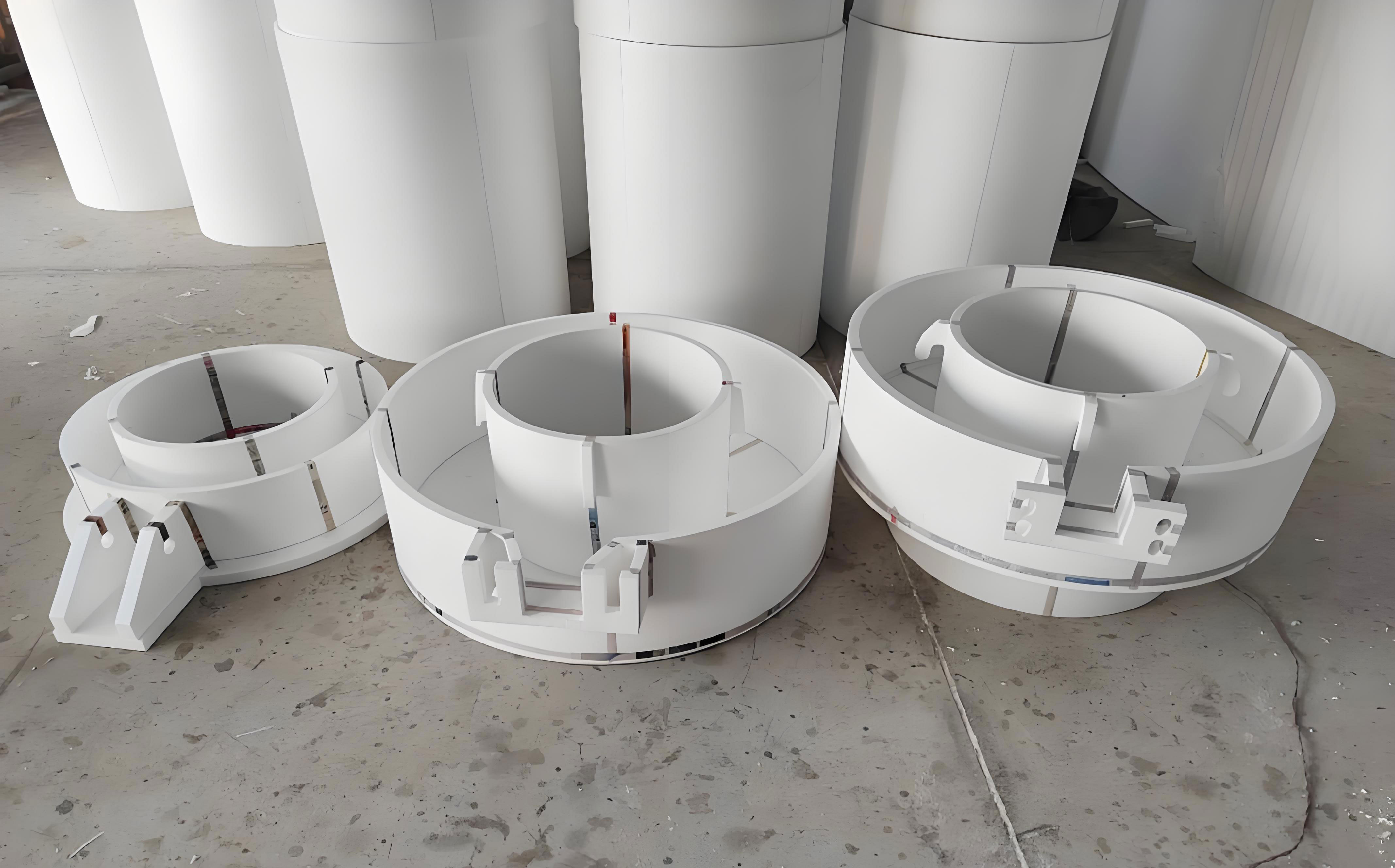
To fully appreciate the challenges in lost foam casting, it is essential to understand the underlying physical and chemical transformations. During the lost foam casting process, the foam pattern undergoes thermal decomposition as the metal is poured, leading to the release of gases and residues. These by-products can interact with the molten metal, causing defects. From my analysis, the key variables include pattern material properties, coating permeability, sand type, vacuum levels, and gating system design. I will explore each of these factors in detail, as they are critical to mastering lost foam casting. Moreover, I will present mathematical formulations to model aspects like gas evolution and heat transfer, which have guided my approach to optimizing lost foam casting parameters.
The foam pattern in lost foam casting typically consists of expanded polystyrene (EPS) or co-polymers like EPMMA and STMMA. The choice of material significantly influences defect formation. For instance, in my experiments, I found that lower-density patterns reduce the amount of decomposition products, thereby minimizing carbon-related issues. The density of the foam pattern, denoted as $\rho_p$, affects the mass of gas generated during vaporization. This can be expressed as: $$ m_g = \rho_p \cdot V_p \cdot f_v $$ where $m_g$ is the mass of gas produced, $V_p$ is the volume of the pattern, and $f_v$ is the vaporization fraction. In lost foam casting, controlling $m_g$ is crucial to prevent defects like carbon pickup and wrinkles. I often recommend using patterns with densities between 20 to 22 kg/m³ for optimal results in lost foam casting applications.
Another vital component in lost foam casting is the refractory coating applied to the foam pattern. The coating’s permeability, which I denote as $P_c$, determines how easily gases escape during pouring. Based on Darcy’s law, I model permeability as: $$ P_c = \frac{k \cdot A \cdot \Delta P}{\mu \cdot L} $$ where $k$ is the intrinsic permeability of the coating, $A$ is the area, $\Delta P$ is the pressure difference, $\mu$ is the gas viscosity, and $L$ is the coating thickness. In lost foam casting, a higher $P_c$ facilitates better gas evacuation, reducing the risk of defects. I have observed that coatings with coarse refractory grains and minimal thickness enhance permeability, but they must balance against sand penetration risks. This trade-off is a constant consideration in my lost foam casting projects.
Now, let’s delve into the common defects in lost foam casting. I have categorized them based on alloy type and manifestation, as shown in the table below. This summary reflects my hands-on experience and literature review, highlighting the prevalence of carbon-related issues in lost foam casting.
| Defect Type | Common Alloys Affected | Primary Causes | Key Impact on Casting |
|---|---|---|---|
| Carbon Pickup | Steel Castings | Foam decomposition products, low coating permeability | Increased hardness, reduced machinability |
| Surface Wrinkles | Iron Castings | Incomplete pattern vaporization, low pouring temperature | Poor surface finish, aesthetic flaws |
| Carbon Black Inclusions | Iron Castings | Carbon residue deposition, inadequate venting | Internal voids, leakage in pressure parts |
| Sand Burning-On | All Alloys | Coating failure, high metal temperature | Difficulty in cleaning, surface roughness |
| Mold Collapse | Large or Complex Castings | Insufficient sand support, rapid pouring | Incomplete filling, scrapped castings |
| Nodules and Veining | All Alloys | Sand compaction issues, thermal stresses | Projections on surface, rework required |
| Pinholing | All Alloys | Gas entrapment, fine sand grains | Small surface bumps, reduced aesthetics |
| Cold Shuts with Inclusions | All Alloys | Slow filling, poor gating design | Weak seams, potential failure points |
In my practice of lost foam casting, carbon pickup in steel castings is a frequent concern. This defect arises when carbon from the decomposing foam dissolves into the molten steel. The mechanism can be described using a diffusion model: $$ \frac{\partial C}{\partial t} = D \frac{\partial^2 C}{\partial x^2} + S $$ where $C$ is the carbon concentration, $t$ is time, $D$ is the diffusion coefficient, $x$ is the distance from the surface, and $S$ is a source term from foam decomposition. To mitigate this in lost foam casting, I emphasize using co-polymer patterns like EPMMA, which generate less carbon. Additionally, enhancing coating permeability and applying higher vacuum during pouring, typically above 0.04 MPa, has proven effective in my lost foam casting trials. The table below outlines specific countermeasures I recommend for carbon pickup in lost foam casting.
| Countermeasure | Implementation in Lost Foam Casting | Expected Outcome |
|---|---|---|
| Pattern Material Selection | Use low-density EPMMA or ETMMA co-polymers | Reduced carbon source, lower $m_g$ |
| Coating Optimization | Increase grain size, reduce thickness to boost $P_c$ | Better gas escape, less carbon absorption |
| Vacuum Enhancement | Maintain vacuum ≥ 0.05 MPa during pouring | Improved pattern vaporization, fewer residues |
| Pattern Design | Employ hollow structures to minimize foam volume | Decreased decomposition products |
For iron castings in lost foam casting, surface wrinkles are a predominant defect. I attribute this to the deposition of carbonaceous residues on the casting surface. The wrinkling tendency, $W_r$, can be correlated with pouring temperature $T_p$ and pattern density $\rho_p$: $$ W_r \propto \frac{\rho_p}{T_p – T_c} $$ where $T_c$ is a critical temperature for complete vaporization. In my lost foam casting experiments, raising the pouring temperature by 20–80°C above conventional sand casting levels significantly reduces wrinkles. Moreover, using STMMA co-polymer patterns, which vaporize rapidly, helps achieve smoother surfaces. I also advocate for higher vacuum levels and optimized gating systems, such as bottom pouring, to ensure steady metal flow in lost foam casting.
Carbon black inclusions in lost foam casting are another vexing issue, often appearing as dark spots within iron castings. This defect stems from carbon particles that fail to evacuate and become trapped. From my analysis, the probability of carbon black formation, $P_{cb}$, relates to coating permeability and pouring speed $v_p$: $$ P_{cb} = \alpha \cdot \frac{1}{P_c} + \beta \cdot v_p $$ where $\alpha$ and $\beta$ are constants. To combat this in lost foam casting, besides the measures for wrinkles, I suggest installing slag collectors or risers at potential hotspot locations. These act as reservoirs for contaminants, preserving casting integrity. The integration of such features is a key aspect of my design philosophy for lost foam casting.
Beyond carbon-related defects, lost foam casting is susceptible to other issues like sand burning-on, which I term as mechanical sand adhesion. This occurs when the coating fails, allowing sand grains to fuse with the metal. In my lost foam casting practice, I address this by adjusting coating compositions—increasing binders and suspenders to enhance thermal resistance. The coating strength $\sigma_c$ can be modeled as: $$ \sigma_c = \sigma_0 + k_s \cdot C_b $$ where $\sigma_0$ is the base strength, $k_s$ is a coefficient, and $C_b$ is the binder concentration. Through iterative testing in lost foam casting, I have found that a balanced formulation prevents cracking and sand penetration.
Mold collapse in lost foam casting, particularly for large planar castings, is a catastrophic failure. I have witnessed this when the sand support is inadequate during pouring. To prevent collapse, I focus on sand compaction and vacuum control. The stability of the sand mold can be expressed through a force balance: $$ F_{vac} + F_{fric} \geq F_{metal} + F_{gas} $$ where $F_{vac}$ is the vacuum force, $F_{fric}$ is the frictional force between sand grains, $F_{metal}$ is the metal pressure, and $F_{gas}$ is the gas pressure from decomposition. In lost foam casting, using angular silica sand increases $F_{fric}$, and maintaining a vacuum above 0.03 MPa bolsters $F_{vac}$. Additionally, I prefer bottom gating for heavy sections to minimize turbulence, a lesson learned from past lost foam casting mishaps.
Nodules and veining in lost foam casting result from irregular sand packing or thermal expansion. These defects manifest as瘤-like projections. I mitigate them by ensuring uniform sand compaction around the pattern. The compaction density $\rho_s$ should satisfy: $$ \rho_s \geq \rho_{min} \text{ for all regions} $$ where $\rho_{min}$ is a threshold value determined by sand type. In lost foam casting, vibrating the flask at optimal frequencies helps achieve consistency. Furthermore, modifying casting designs to eliminate sharp corners reduces stress concentrations, a strategy I always incorporate in lost foam casting projects.
Pinholing, or small protrusions on casting surfaces, is often linked to fine sand grains and low vacuum in lost foam casting. I relate this to gas bubble formation, with the bubble radius $r_b$ given by: $$ r_b = \frac{2 \gamma}{P_{gas} – P_{hyd}} $$ where $\gamma$ is the surface tension, $P_{gas}$ is the gas pressure, and $P_{hyd}$ is the hydraulic pressure. To eliminate pinholes in lost foam casting, I use coarser sands (e.g., AFS 50–70) and higher vacuum levels to reduce $P_{gas}$. This approach has consistently improved surface finish in my lost foam casting outputs.
Cold shuts with inclusions in lost foam casting occur at final fill areas, presenting as discontinuous seams. I address this by optimizing gating systems to promote directional solidification. The thermal gradient $G$ should be maximized: $$ G = \frac{dT}{dx} $$ where $T$ is temperature and $x$ is distance. In lost foam casting, employing step gates or multiple ingates enhances $G$, ensuring rapid and complete filling. I also place risers at last-to-fill zones to capture cold metal and inclusions, a tactic that has saved many lost foam casting components from rejection.
Throughout my engagement with lost foam casting, I have realized that process control is multifaceted. The table below summarizes the key parameters I monitor in lost foam casting, along with their target ranges based on my experience and industry standards.
| Parameter | Symbol | Target Range in Lost Foam Casting | Influence on Defects |
|---|---|---|---|
| Pattern Density | $\rho_p$ | 18–22 kg/m³ | Lower values reduce carbon defects |
| Pouring Temperature | $T_p$ | 20–80°C above sand casting | Higher temps minimize wrinkles and cold shuts |
| Coating Permeability | $P_c$ | High (coarse grains, thin layers) | Facilitates gas escape, less carbon pickup |
| Vacuum Pressure | $P_{vac}$ | 0.04–0.06 MPa | Stabilizes mold, enhances vaporization |
| Sand Grain Size | $d_s$ | AFS 40–60 for general use | Coarser grains improve permeability |
| Pouring Speed | $v_p$ | Moderate to fast (depends on geometry) | Prevents collapse and cold shuts |
In addition to these parameters, the gating design in lost foam casting is critical. I often use hydraulic principles to size gates. The flow rate $Q$ through a gate is: $$ Q = A_g \cdot v_g $$ where $A_g$ is the gate area and $v_g$ is the velocity. For lost foam casting, I ensure $v_g$ is sufficient to maintain a turbulent front for clean displacement but not so high as to cause erosion. Computer simulations have been invaluable in my lost foam casting work for predicting flow patterns and optimizing gate dimensions.
Looking at the broader picture, lost foam casting technology has matured globally, but in my region, it remains in a phase of technical refinement. The adoption of lost foam casting for complex parts is growing, yet defect management is paramount. From my perspective, the future of lost foam casting lies in advanced materials for patterns and coatings, real-time process monitoring, and integrated quality systems. I am particularly excited about the potential of AI-driven adjustments in lost foam casting parameters to dynamically respond to process variations.
To conclude, lost foam casting is a powerful method that demands attention to detail. My journey with lost foam casting has taught me that every step—from pattern making to pouring—holds potential for defect generation. By controlling foam material quality, enhancing coating permeability, selecting appropriate sands, maintaining vacuum stability, and designing effective gating systems, we can harness the full benefits of lost foam casting. I encourage fellow practitioners to embrace a holistic approach, as even minor oversights can lead to significant losses in lost foam casting operations. Through continued research and shared experiences, we can elevate the standards of lost foam casting worldwide, making it a cornerstone of modern manufacturing.