
As a researcher deeply involved in advanced manufacturing technologies, I find the lost foam casting process to be one of the most transformative innovations in modern foundry practices. Often hailed as the “green engineering of casting,” this method has revolutionized how we produce complex metal components with high precision and minimal environmental impact. In this article, I will explore the principles, advantages, historical development, current applications, and future directions of the lost foam casting process, drawing on extensive industry insights and technical analyses. My goal is to provide a comprehensive overview that underscores why this technique is pivotal for industries ranging from automotive to aerospace, and how it continues to evolve to meet emerging challenges. Throughout this discussion, I will emphasize the keyword “lost foam casting process” to highlight its centrality, and I will incorporate tables and formulas to summarize key data and physical phenomena, ensuring a detailed and rigorous exposition that exceeds 8000 tokens in length.
The lost foam casting process, also known as full-mold casting, involves creating a foam pattern that matches the exact dimensions and shape of the desired metal part. This pattern, typically made from expandable polystyrene (EPS) or similar polymers, is assembled into a cluster, coated with a refractory material, and then placed in a flask filled with unbonded dry sand. The sand is compacted through vibration, and the entire setup is subjected to a vacuum or negative pressure during metal pouring. As the molten metal is introduced, the foam pattern vaporizes, allowing the liquid metal to occupy its space and solidify into the final casting. This elegant approach eliminates the need for traditional cores, parting lines, and draft angles, thereby simplifying production and enhancing design flexibility. To visualize this setup, consider the following representation of the lost foam casting process:
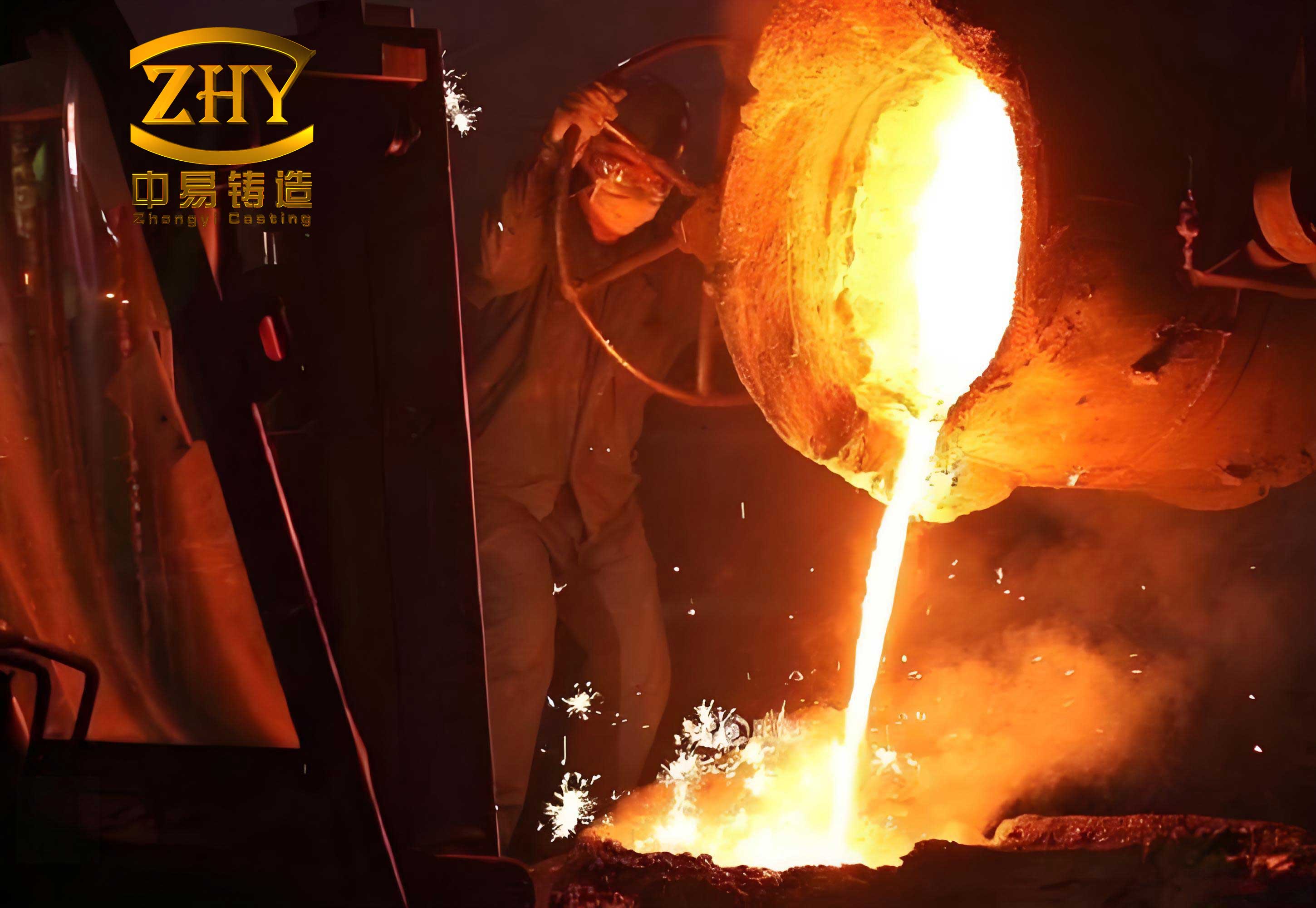
From my perspective, the advantages of the lost foam casting process are manifold, making it a superior choice for many industrial applications. Compared to conventional sand casting or investment casting, it offers exceptional dimensional accuracy, with surface roughness often lower and tolerances reaching CT5 to CT7—close to those achieved in precision investment casting. This reduces machining time and material waste significantly. Moreover, the absence of parting lines and cores minimizes assembly errors and allows for the integration of multiple parts into a single casting, which cuts down on fabrication costs. The process is highly productive due to simplified sand handling; since the sand is dry and binder-free, it can be easily recycled, lowering operational expenses and supporting batch automation. Environmentally, the lost foam casting process is a standout: organic emissions during pouring are brief, concentrated, and minimal, facilitating collection and treatment, while noise and hazardous gas generation are reduced, aligning with clean production standards. To quantify these benefits, Table 1 summarizes a comparison between the lost foam casting process and other common casting methods.
| Aspect | Lost Foam Casting Process | Traditional Sand Casting | Investment Casting |
|---|---|---|---|
| Dimensional Accuracy | High (CT5-CT7) | Moderate (CT8-CT10) | Very High (CT4-CT6) |
| Surface Roughness | Low (≈6.3-12.5 μm) | High (≈12.5-25 μm) | Very Low (≈1.6-3.2 μm) |
| Design Flexibility | Excellent (no parting lines) | Limited (requires drafts) | Good (complex shapes) |
| Production Efficiency | High (automation-friendly) | Low to Moderate | Low (labor-intensive) |
| Environmental Impact | Low (clean, recyclable sand) | High (binders, waste) | Moderate (ceramic waste) |
| Cost for Complex Parts | Reduced (integrated casting) | Higher (assembly needed) | High (pattern cost) |
The development of the lost foam casting process has a rich history that reflects global technological progress. It was first patented in 1956 by an American inventor, and through subsequent experimentation in Germany, Japan, and other nations, it evolved into the dry-sand, vacuum-assisted method we recognize today. By the 1980s, key innovations had merged various工艺 elements, leading to widespread adoption. In recent decades, advancements in materials science and process control have accelerated, expanding the lost foam casting process into new material domains like aluminum and magnesium alloys. This historical trajectory underscores the adaptability and enduring relevance of the lost foam casting process in industrial settings.
Currently, the lost foam casting process is well-established for producing iron, steel, and aluminum components worldwide. In my observation, while iron and steel applications are mature, research focus has shifted toward aluminum-magnesium alloys due to their light-weighting potential in sectors such as automotive and aerospace. However, applying the lost foam casting process to these alloys presents distinct challenges. For instance, during pouring, the foam pattern absorbs substantial heat, causing the metal front to cool rapidly and potentially leading to defects like cold shuts or subsurface porosity. Additionally, the higher pouring temperatures exacerbate issues like hydrogen absorption in aluminum or oxidation in magnesium, which can increase pinholing or shrinkage. To address these, specialized foam materials with lower vaporization points and coatings with high strength and permeability are under intensive study. Over the past two decades, several advanced variants of the lost foam casting process have emerged to tackle these hurdles, as detailed in Table 2.
| Technology Variant | Key Principle | Advantages | Challenges |
|---|---|---|---|
| Vacuum Low-Pressure Lost Foam Casting | Combines vacuum with counter-gravity low-pressure filling | Reduces gas defects, prevents mold collapse | Sensitive to parameters like temperature and coating thickness |
| Vibration Lost Foam Casting | Applies vibration during sand compaction and pouring | Improves sand density, enhances metal flow | Requires precise control of amplitude and frequency |
| Pressure Lost Foam Casting | Uses gas pressure after pouring to solidify metal | Refines microstructure, reduces porosity | Needs sealed pressure vessels, complex setup |
| Vacuum Low-Pressure Lost Foam Shell Casting | Integrates shell molding from investment casting | Eliminates foam decomposition issues, high quality | High cost, additional焙烧 steps |
From a technical standpoint, these variants rely on fundamental physical principles that can be expressed mathematically. For example, the heat transfer during foam vaporization in the lost foam casting process is critical. The energy required to vaporize the foam pattern can be modeled using the latent heat of vaporization: $$ Q = m \cdot L_v $$ where \( Q \) is the total heat absorbed (in joules), \( m \) is the mass of the foam pattern (in kilograms), and \( L_v \) is the specific latent heat of vaporization (in J/kg). This energy loss cools the molten metal, affecting fluidity. Similarly, the pressure dynamics in vacuum-assisted lost foam casting process can be described by modifying Bernoulli’s principle for porous media: $$ P_1 + \frac{1}{2} \rho v_1^2 + \rho g h_1 = P_2 + \frac{1}{2} \rho v_2^2 + \rho g h_2 + \Delta P_{\text{foam}} $$ where \( P \) is pressure, \( \rho \) is metal density, \( v \) is velocity, \( g \) is gravity, \( h \) is height, and \( \Delta P_{\text{foam}} \) accounts for pressure drop due to foam decomposition. These formulas help optimize parameters like pouring speed and vacuum levels to minimize defects.
In aluminum-magnesium alloys, the lost foam casting process demands careful control of interfacial reactions. For aluminum, hydrogen solubility increases with temperature, leading to porosity upon solidification. The Sieverts’ law approximates this: $$ C_H = k_H \sqrt{P_{H_2}} $$ where \( C_H \) is hydrogen concentration in the melt, \( k_H \) is a temperature-dependent constant, and \( P_{H_2} \) is hydrogen partial pressure. In the lost foam casting process, foam decomposition gases can elevate \( P_{H_2} \), so techniques like vacuum extraction are crucial. For magnesium, oxidation is a concern, and protective atmospheres are often used. The rate of oxidation can be modeled with an Arrhenius-type equation: $$ r = A e^{-E_a / (RT)} $$ where \( r \) is oxidation rate, \( A \) is a pre-exponential factor, \( E_a \) is activation energy, \( R \) is the gas constant, and \( T \) is temperature. By integrating such models, the lost foam casting process can be tailored for these alloys.
Looking ahead, I believe the future of the lost foam casting process is bright, driven by trends toward lightweight components in electronics, automotive, and aerospace industries. High-quality aluminum castings via the lost foam casting process are becoming indispensable, and research will focus on enhancing material properties and process efficiency. In my view, key areas for development include standardizing raw materials like foams and coatings to ensure consistency, improving equipment automation for higher throughput, and developing hybrid methods that combine additive manufacturing for pattern production. For instance, 3D-printed foam patterns could allow for even greater design complexity in the lost foam casting process. Additionally, sustainability will remain a priority; efforts to reduce energy consumption and waste will make the lost foam casting process even greener. Table 3 outlines potential research directions and their anticipated impacts.
| Research Direction | Description | Expected Impact |
|---|---|---|
| Advanced Foam Materials | Developing foams with tailored decomposition rates | Reduced gas defects, better surface finish |
| Smart Coatings | Coatings with controlled permeability and thermal properties | Enhanced mold stability, lower porosity |
| Process Simulation | Using CFD and FEA to model flow and solidification | Optimized parameters, fewer trial runs |
| Automation Integration | Robotic handling and AI-based quality control | Higher productivity, consistent quality |
| Environmental Metrics | Lifecycle analysis and emission reduction strategies | Lower carbon footprint, regulatory compliance |
From a global perspective, countries like the United States and Germany lead in advanced applications of the lost foam casting process, but there is significant room for growth elsewhere. In my analysis, fostering localized production lines that adapt the lost foam casting process to regional needs will boost economic benefits and technological adoption. For example, integrating the lost foam casting process with renewable energy sources in foundries could further cut costs and emissions. Moreover, as digital twins and IoT technologies advance, real-time monitoring of the lost foam casting process will become commonplace, enabling predictive maintenance and quality assurance.
In conclusion, the lost foam casting process stands as a cornerstone of modern casting, offering unparalleled advantages in precision, flexibility, and sustainability. Through continuous innovation in variants like vacuum low-pressure and vibration-assisted methods, it is overcoming challenges in aluminum-magnesium alloy casting. As I have discussed, mathematical modeling and material science are key to refining this process, while future trends point toward automation, standardization, and environmental stewardship. By embracing these developments, industries can leverage the lost foam casting process to produce lighter, stronger, and more efficient components, paving the way for a more advanced and sustainable manufacturing era. The journey of the lost foam casting process from a novel idea to an industrial staple exemplifies how persistent research and adaptation can drive progress, and I am confident it will remain at the forefront of casting technology for years to come.