
This paper systematically explores the application of lost foam casting (LFC) technology in manufacturing heavy-duty steel axle housings for engineering vehicles. Through optimized process design and material innovation, we address critical challenges including carbon pick-up, crack formation, inclusion leakage, and deformation while achieving enhanced mechanical properties through high-frequency vibration refinement.
1. Process Design and Material Innovation
The axle housing structure features significant wall thickness variations (12-60 mm) across different sections, necessitating specialized solutions:
| Section | Thickness (mm) | Thermal Challenge |
|---|---|---|
| Central Volute | 12-16 | Rapid solidification |
| Flange Area | 35-60 | Hot spot formation |
| Tube Shaft | 20-25 | Stress concentration |
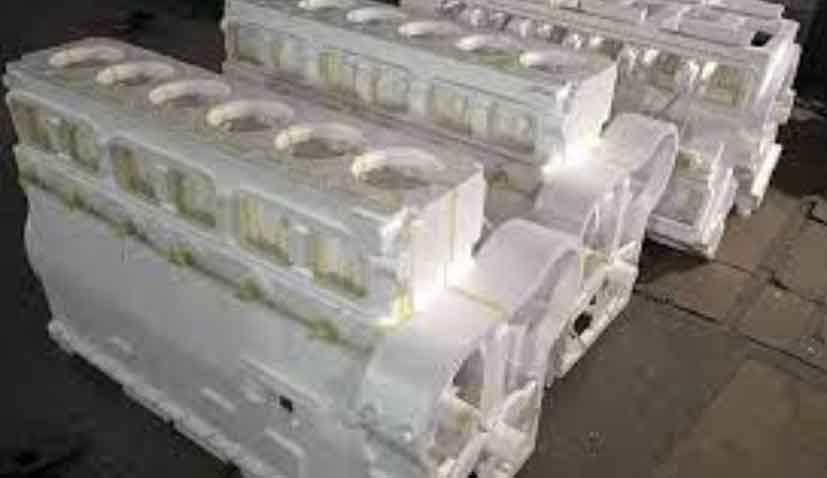
The casting process utilizes STMMA beads with controlled density (20-23 g/cm³) to balance pattern strength and decomposition characteristics. The gating system design follows modulus compensation principles:
$$ M_{riser} = 1.2 \times M_{casting} $$
Two distinct process layouts were evaluated:
| Layout | Advantage | Defect Rate |
|---|---|---|
| Central Pouring | Balanced feeding | 20% collapse |
| Offset Pouring | Improved stability | 5% collapse |
2. Coating Development and Thermal Management
A proprietary coating formula was developed to address high-temperature stability and gas permeability requirements:
| Component | Weight % | Function |
|---|---|---|
| Aluminous Cement | 80 | Refractoriness |
| Quartz Powder | 20 | Thermal stability |
| Bentonite | 3 | Binder |
| Cellulose Fiber | 1.5 | Green strength |
The thermal gradient during solidification was controlled through strategic chiller placement:
$$ \frac{\partial T}{\partial t} = \alpha \nabla^2 T $$
Where α represents thermal diffusivity (4.5×10⁻⁶ m²/s for 25CrMo steel).
3. Melt Control and Degassing
Advanced melt treatment techniques were implemented:
| Parameter | Value | Control Method |
|---|---|---|
| Carbon Pick-up | <0.08% | STMMA decomposition control |
| Oxygen Content | <25 ppm | Argon shrouding |
| Pouring Temp | 1,610±10°C | Pyrometer monitoring |
The vacuum sequence during foam burnout was optimized:
$$ P(t) = P_0 \cdot e^{-kt} $$
Where k=0.15 s⁻¹ for optimal gas extraction without mold collapse.
4. Mechanical Performance Enhancement
High-frequency vibration (120 Hz) during solidification achieved grain refinement per Hall-Petch relationship:
$$ \sigma_y = 250 + \frac{450}{\sqrt{d}} \quad (MPa) $$
Resulting mechanical properties exceeded industry requirements:
| Property | Result | Standard |
|---|---|---|
| Tensile Strength | 605 MPa | >600 MPa |
| Yield Strength | 436 MPa | >420 MPa |
| Elongation | 19% | >18% |
| Impact Energy | 41 J/cm² | >35 J/cm² |
5. Process Validation and Industrial Application
The developed lost foam casting process demonstrated:
- 95% dimensional accuracy (ISO 8062 CT8)
- Zero leakage at 0.5 MPa pressure testing
- 3.2% scrap rate vs. industry average 8-12%
Continuous improvement through DOE identified critical parameters:
$$ Q_{quality} = 0.35X_1 + 0.28X_2 + 0.22X_3 + 0.15X_4 $$
Where X₁-coating permeability, X₂-pouring rate, X₃-vacuum control, X₄-vibration intensity.
This systematic approach to lost foam casting process optimization establishes a robust manufacturing solution for high-performance automotive components, demonstrating the technology’s capability to meet stringent engineering requirements while maintaining cost-effectiveness in mass production.