
In the modern manufacturing landscape, the demand for efficient, cost-effective, and environmentally friendly casting techniques has never been higher. As an engineer specializing in foundry processes, I have extensively explored various methods, and among them, the lost foam casting process stands out for its unique advantages in producing complex components with precision. This article delves into the detailed design of a lost foam casting process for a specific component: the left end drive housing used in large tractors. Through this exploration, I aim to demonstrate the feasibility and optimization of the lost foam casting process for such parts, incorporating analytical tools like solidification simulation to validate the design. The lost foam casting process, often abbreviated as LFC or EPC, involves using a foam pattern that vaporizes upon metal pouring, allowing the molten metal to take its shape. This method is particularly suitable for components with intricate geometries, such as the housing in question, and offers benefits like reduced machining, minimal sand usage, and improved dimensional accuracy. Throughout this discussion, I will frequently reference the lost foam casting process to emphasize its centrality in this design endeavor.
The component at hand, the left end drive housing, is a critical part in agricultural machinery, requiring robust mechanical properties and precise dimensions. Its structure is characterized by relatively uniform wall thicknesses, ranging from 8 mm to 15 mm, with internal reinforcements, ribs, and external features that add to its complexity. The overall dimensions are approximately 449 mm in length, 342 mm in width, and 432 mm in height, classifying it as a medium-sized thin-walled casting. After accounting for machining allowances, the calculated weight of the casting is 30.7 kg. The material specified is HT200, a gray cast iron known for its good machinability and damping capacity. The chemical composition requirements for HT200 are summarized in Table 1, which serves as a baseline for ensuring material integrity during the lost foam casting process.
| Element | Range (w%) |
|---|---|
| Carbon (C) | 3.1 – 3.5 |
| Silicon (Si) | 1.8 – 2.1 |
| Manganese (Mn) | 0.6 – 0.8 |
| Phosphorus (P) | < 0.3 |
| Sulfur (S) | ≤ 0.12 |
Given these specifications, the lost foam casting process was selected due to its ability to handle complex shapes without the need for cores, thereby reducing assembly time and potential defects. The first step in designing the lost foam casting process involves selecting appropriate pattern materials. For this application, expanded polystyrene (EPS) was chosen as the foam material, primarily for its economic viability and suitability for iron castings. EPS patterns are typically produced through a bead foaming process, where pre-expanded beads are molded into the desired shape using steam. This method ensures dimensional stability and ease of replication for batch production. In the lost foam casting process, the pattern quality directly impacts the final casting, so careful control over density and surface finish is essential. The pattern cluster for this housing was designed to include two pieces per mold to optimize production efficiency, aligning with the batch production goals.
Following pattern creation, the next critical aspect is the selection of refractory coatings and molding sands. For the lost foam casting process, a coating must be applied to the foam pattern to prevent sand penetration and improve surface finish. Based on prior research and experience, a coating formulation was adopted consisting of 60–70% bauxite, 3–4% bentonite, 8–10% vinyl acetate ethylene (VAE) copolymer, along with appropriate amounts of water, wetting agents, defoamers, and preservatives. This coating is brushed onto the pattern to a thickness of approximately 4 mm, then dried at around 50°C for 2–10 hours in a well-ventilated environment to maintain humidity below 30%. Proper drying prevents pattern deformation, which is crucial for maintaining dimensional accuracy in the lost foam casting process. The molding sand chosen for this application is ceramsite sand, also known as宝珠砂 (baozhu sha), which is derived from high-quality bauxite. This sand offers advantages such as low thermal expansion, high refractoriness, and good flowability, which minimize sand-related defects during the lost foam casting process. The use of ceramsite sand enhances mold stability and reduces the risk of veining or erosion, common issues in traditional sand casting.
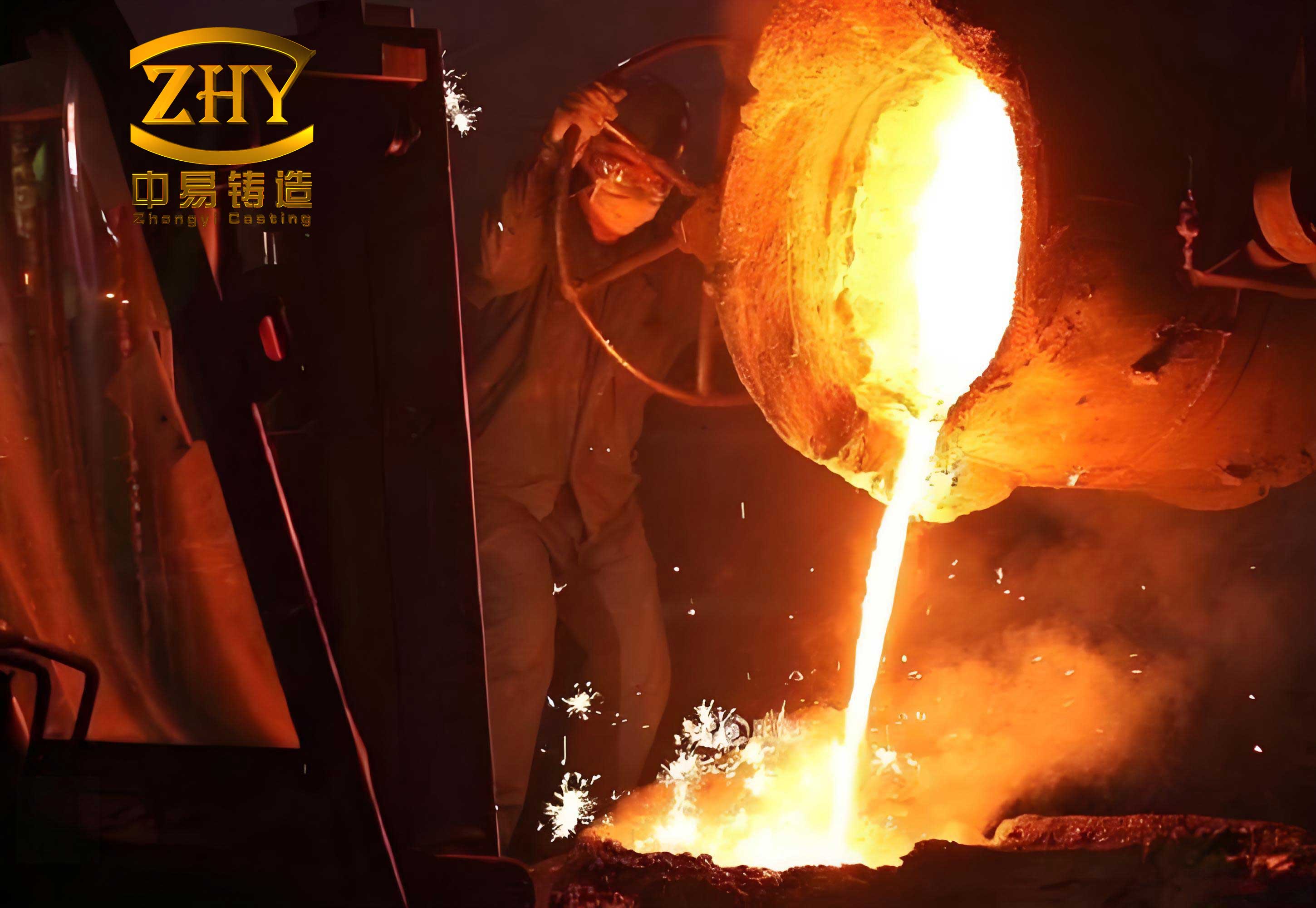
The gating system design is a pivotal element in the lost foam casting process, as it governs the flow of molten metal, temperature distribution, and solidification behavior. For the left end drive housing, a gating system was designed using the cross-sectional area ratio method, which ensures balanced filling and reduces turbulence. The system includes a sprue, runner, and ingates, arranged to facilitate a bottom-up filling approach for this thin-walled component. The dimensions were calculated based on the casting weight and empirical formulas. For instance, the sprue diameter (d) can be derived from the flow rate equation, considering the metal density and fill time. A general formula for sprue area (A_s) in lost foam casting process designs is often expressed as: $$A_s = \frac{W}{\rho \cdot v \cdot t}$$ where W is the casting weight, ρ is the metal density, v is the flow velocity, and t is the filling time. For HT200, with a density of approximately 7.2 g/cm³, and assuming a fill time of 5–10 seconds, the sprue area can be estimated. However, for precision, the cross-sectional ratio method was applied, setting the sprue, runner, and ingate areas in a specific proportion. Based on the design, the sprue diameter was determined to be 17.4 mm with a height of 200 mm; the runner cross-sectional area was 2.04 cm² over a length of 440 mm; and the ingates were divided into two sections with areas of 0.565 cm² and 0.2825 cm², corresponding to lengths of 55 mm and 140 mm, respectively. This asymmetric design accommodates the uneven geometry of the housing, ensuring uniform metal distribution. The gating system is complemented by a funnel-shaped pouring cup to streamline metal entry. Table 2 summarizes the gating system parameters, highlighting the meticulous planning involved in the lost foam casting process.
| Component | Dimension | Value |
|---|---|---|
| Sprue | Diameter | 17.4 mm |
| Sprue | Height | 200 mm |
| Runner | Cross-sectional Area | 2.04 cm² |
| Runner | Length | 440 mm |
| Ingate Section 1 | Cross-sectional Area | 0.565 cm² |
| Ingate Section 1 | Length | 55 mm |
| Ingate Section 2 | Cross-sectional Area | 0.2825 cm² |
| Ingate Section 2 | Length | 140 mm |
In addition to the gating system, the overall casting strategy for this lost foam casting process employs a feederless design, meaning no risers are used. This is feasible due to the relatively uniform wall thickness and the application of negative pressure during pouring, which enhances feeding and reduces shrinkage defects. The lost foam casting process leverages the decomposition of the foam pattern to create a slight pressure differential that aids in metal flow and solidification. The pouring parameters were carefully selected: a pouring temperature range of 1380–1420°C was chosen to ensure adequate fluidity for the thin sections while avoiding excessive thermal stress. Negative pressure, applied at 300–400 mmHg, helps compact the sand mold and remove gases generated from pattern vaporization, critical for defect minimization in the lost foam casting process. The sand handling and compaction are equally important; a three-dimensional vibration table is used with an amplitude of 0.40–0.75 mm and a frequency of 50 Hz to achieve optimal sand densification without distorting the foam pattern. These parameters are summarized in Table 3, illustrating the integrated approach in the lost foam casting process design.
| Parameter | Value or Range |
|---|---|
| Pattern Material | Expanded Polystyrene (EPS) |
| Molding Sand | Ceramsite Sand (宝珠砂) |
| Coating Thickness | ~4 mm |
| Drying Temperature | ~50°C |
| Drying Time | 2–10 hours |
| Vibration Amplitude | 0.40–0.75 mm |
| Vibration Frequency | 50 Hz |
| Pouring Temperature | 1380–1420°C |
| Negative Pressure | 300–400 mmHg |
| Feeder Design | Feederless (No Risers) |
To validate the designed lost foam casting process, solidification simulation was conducted using casting simulation software, specifically a tool analogous to HuaZhu CAE. This step is essential in the lost foam casting process to predict potential defects like shrinkage porosity and hot spots, thereby allowing for adjustments before actual production. The simulation begins with mesh generation, where the casting geometry is discretized into finite elements. For this housing, a mesh size of 4 mm was selected, resulting in approximately 2,937,060 elements—a fine mesh that ensures accurate thermal and fluid flow calculations. The governing equations for solidification in the lost foam casting process include the heat transfer equation: $$\frac{\partial T}{\partial t} = \alpha \nabla^2 T + \frac{L}{c_p} \frac{\partial f_s}{\partial t}$$ where T is temperature, t is time, α is thermal diffusivity, L is latent heat, c_p is specific heat, and f_s is the solid fraction. Additionally, the continuity and momentum equations for fluid flow are considered during the filling phase. The simulation accounts for the unique aspects of the lost foam casting process, such as the endothermic decomposition of the foam pattern, which can be modeled as a heat sink term in the energy equation. By solving these equations numerically, the software predicts temperature distributions, solidification sequences, and defect locations.
The simulation results for this lost foam casting process indicated that the solidification pattern was generally directional, starting from the thinner sections and progressing toward the thicker areas. The highest points of the casting, such as the top surfaces, showed a tendency for shrinkage porosity, as expected due to thermal gradients. However, in the lost foam casting process, the application of negative pressure mitigates this by promoting better metal feeding. The defect distribution map revealed that any potential shrinkage would occur in non-critical areas, primarily on non-load-bearing surfaces that are later machined. This aligns with the feederless design philosophy, where the combination of uniform geometry and process controls in the lost foam casting process minimizes the need for additional feeding. The simulation also provided insights into solidification time, which can be estimated using Chvorinov’s rule: $$t_s = B \left( \frac{V}{A} \right)^n$$ where t_s is solidification time, V is volume, A is surface area, B is a mold constant, and n is an exponent typically around 2. For this housing, with a volume-to-area ratio calculated from its dimensions, the solidification time was predicted to be within an acceptable range, ensuring no premature freezing that could trap gases or cause cold shuts. These analytical outcomes reinforce the robustness of the lost foam casting process design.
Furthermore, the lost foam casting process offers environmental and economic benefits that are worth highlighting. Compared to traditional sand casting, it reduces sand waste and energy consumption due to the dry sand reuse and elimination of core-making steps. The precision of the lost foam casting process also leads to near-net-shape castings, lowering machining costs and material waste. For the left end drive housing, this translates to a more sustainable production cycle, aligning with modern manufacturing trends toward green foundry practices. The integration of simulation tools into the lost foam casting process design not only enhances accuracy but also reduces trial-and-error iterations, saving time and resources. In this case, the simulation confirmed that the designed gating system and pouring parameters would yield a sound casting, validating the feasibility of the lost foam casting process for high-volume production.
In conclusion, the lost foam casting process design for the left end drive housing demonstrates a comprehensive approach that leverages material science, fluid dynamics, and computational modeling. From pattern selection to solidification analysis, each step was meticulously planned to address the component’s structural complexities and performance requirements. The use of EPS patterns, ceramsite sand, and a feederless gating system, combined with optimized pouring parameters, exemplifies the versatility of the lost foam casting process. The solidification simulation provided critical insights, predicting minimal defects and confirming the process viability. This case study underscores the importance of the lost foam casting process in modern foundry operations, particularly for complex thin-walled components where precision and efficiency are paramount. As manufacturing evolves, the lost foam casting process will continue to play a pivotal role in advancing casting technology, offering solutions that balance quality, cost, and environmental impact. Through continuous refinement and integration of advanced tools like simulation, the lost foam casting process can be further optimized for a wide range of applications, driving innovation in the casting industry.