
In this article, I will detail the comprehensive development of the lost foam casting process for producing vacuum wheel rim castings, which are critical safety components in commercial and engineering vehicles. The vacuum wheel rim is characterized by its thin-walled structure with an annular groove on the outer periphery and multiple vent holes and mounting holes on the web. The material specification is QT450-15 nodular iron, with a casting weight of approximately 60 kg and an average wall thickness of 10–15 mm. The primary challenges include ensuring dimensional accuracy, mechanical properties, and internal integrity for safety and performance. After analyzing the castability, I determined that the lost foam casting process is ideal due to its ability to enhance surface quality, maintain wall thickness precision, improve mechanical properties, reduce costs, and minimize cleaning efforts. This process involves creating an expendable polystyrene (EPS) foam pattern, coating it with refractory material, embedding it in unbonded sand under vacuum, and pouring molten metal to replace the pattern. Below, I will elaborate on the process design, implementation, and results, incorporating tables and formulas to summarize key aspects.
The decision to adopt lost foam casting was driven by the structural complexities of the vacuum wheel rim. Traditional methods like green sand molding or resin sand casting require complex cores for the outer annular groove, leading to potential misalignment, increased costs, and surface defects. In contrast, lost foam casting allows for the direct formation of features such as vent holes and the valve stem hole, eliminating machining steps and reducing equipment investment. Additionally, the bolt mounting holes can be cast to near-net shape, minimizing machining allowance and improving efficiency. The vacuum-assisted pouring in lost foam casting enhances mold filling capability, which improves feeding during solidification, resulting in denser microstructure and better外观 quality. Throughout this development, I focused on optimizing each step to leverage the advantages of lost foam casting.
To begin, I designed the EPS foam pattern with consideration for the final casting dimensions. The pattern was produced using a foaming mold to achieve a density of 26–32 g/L, which reduces deformation tendencies, especially at the open rim side. The pattern included all vent holes, valve stem hole, and pre-formed bolt holes to enable near-net shape casting. I reinforced the rim area with cross-shaped glass fiber strips to prevent distortion during coating and handling. The gating system was designed as a top-pouring arrangement with multiple ingates and 6–8 slag traps to ensure smooth metal flow and effective slag removal. The following table summarizes the key parameters for the EPS foam pattern and gating system:
| Parameter | Value | Description |
|---|---|---|
| EPS Pattern Density | 26–32 g/L | Higher density reduces deformation and improves surface finish. |
| Pattern Dimensions | Match casting design | Includes vent holes, valve stem hole, and bolt holes as per final part. |
| Gating System Type | Top-pouring with multiple ingates | Ensures uniform filling and reduces turbulence. |
| Number of Slag Traps | 6–8 | Placed at top locations to collect impurities. |
| Reinforcement | Cross-shaped strips at rim | Prevents pattern warping during processing. |
After pattern assembly, I applied a water-based quartz-silica sand coating via dipping and brushing. The coating serves as a barrier between the foam and molten metal, preventing sand penetration and ensuring surface smoothness. Two coating layers were applied, each dried naturally or at temperatures below 55°C for 8–10 hours. The coating thickness and viscosity are critical; I used the following formula to estimate the ideal coating thickness based on pattern geometry and metal pressure: $$ \delta = k \cdot \sqrt{\frac{P}{\sigma}} $$ where $\delta$ is the coating thickness, $P$ is the metallostatic pressure, $\sigma$ is the coating strength, and $k$ is a material constant. For this application, a thickness of 0.5–1.0 mm was maintained. The table below outlines the coating parameters:
| Coating Parameter | Specification | Purpose |
|---|---|---|
| Coating Type | Water-based quartz-silica | Provides refractory properties and gas permeability. |
| Number of Layers | 2 | Ensures uniform coverage and defect prevention. |
| Drying Temperature | < 55°C | Prevents pattern distortion or melting. |
| Drying Time per Layer | 8–10 hours | Allows complete moisture removal. |
| Target Thickness | 0.5–1.0 mm | Balances strength and gas evolution during pouring. |
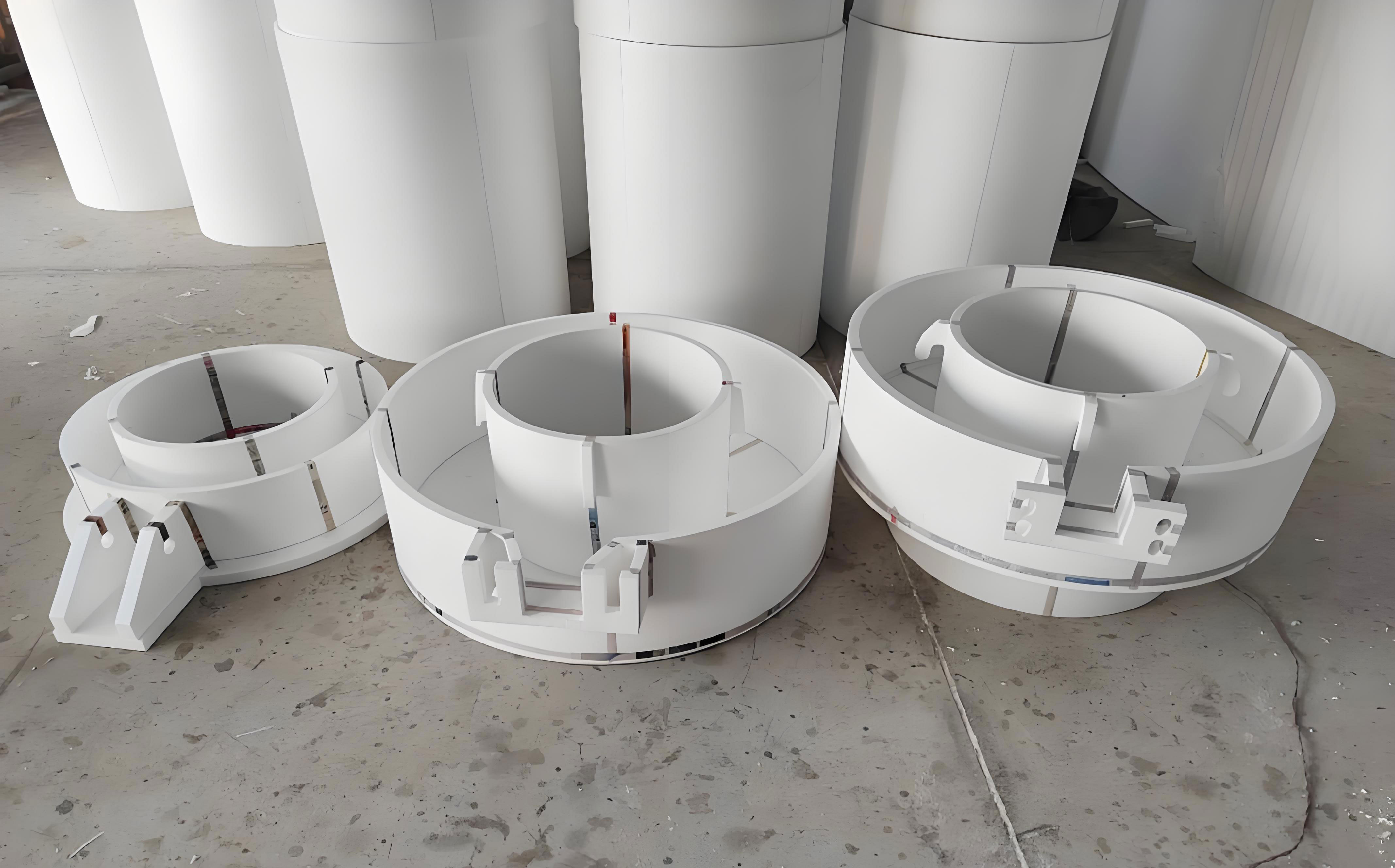
Next, I proceeded with sand filling and molding. The coated pattern was placed in a flask and surrounded by unbonded zircon sand (宝珠砂), which offers high thermal stability and reusability. The sand was vibrated in three dimensions to ensure tight packing around the pattern, especially in intricate areas like the annular groove and holes. A vacuum system was connected to the flask, and a negative pressure of 0.04–0.06 MPa was applied to compact the sand and remove gases generated during pouring. The vacuum-assisted pouring in lost foam casting significantly enhances fluidity and feeding; the pressure difference can be expressed as: $$ \Delta P = P_{\text{atm}} – P_{\text{vac}} $$ where $P_{\text{atm}}$ is atmospheric pressure and $P_{\text{vac}}$ is the vacuum pressure. This $\Delta P$ aids in drawing molten metal into the mold cavity, reducing defects like cold shuts and misruns. The pouring temperature for nodular iron was maintained at 1,350–1,400°C to ensure complete pattern degradation and smooth filling. After pouring, the vacuum was held for 5–10 minutes to support solidification, then released. The casting was allowed to cool in the flask for 2–2.5 hours before shakeout.
The solidification process in lost foam casting is critical for achieving sound microstructure. I used Chvorinov’s rule to estimate the solidification time: $$ t = C \left( \frac{V}{A} \right)^2 $$ where $t$ is the solidification time, $V$ is the casting volume, $A$ is the surface area, and $C$ is a mold constant. For thin-walled sections like the vacuum wheel rim, the high surface-area-to-volume ratio promotes rapid cooling, which refines the graphite nodules in nodular iron. Additionally, the vacuum effect improves feeding efficiency, reducing shrinkage porosity. The following table compares key process parameters between conventional casting and lost foam casting for this application:
| Parameter | Conventional Casting | Lost Foam Casting |
|---|---|---|
| Mold Type | Green sand or resin sand with cores | Unbonded sand with EPS pattern |
| Core Requirement | Needed for annular groove | No cores; pattern defines all features |
| Dimensional Accuracy | Lower due to core misalignment | Higher; pattern replicates exact geometry |
| Surface Finish | May require extensive cleaning | Smoother; less finishing needed |
| Machining Reduction | Limited; holes often machined | Significant; holes cast to near-net shape |
| Vacuum Assistance | Not typically used | Applied at 0.04–0.06 MPa for better filling |
After shakeout, the castings were cleaned by removing the gating system and slag traps, followed by shot blasting to achieve a uniform surface. The vent holes and valve stem hole were inspected and found to meet dimensional requirements without machining, validating the lost foam casting approach. For the bolt holes, slight machining was still required due to cumulative tolerances on pitch circle diameter, but the pre-formed holes reduced machining allowance by over 50%, enhancing productivity. Mechanical testing was conducted on samples from production batches. The results confirmed that the lost foam castings met the QT450-15 specifications, with tensile strength above 450 MPa, elongation over 15%, and nodular graphite structure per ISO 945 standards. The table below summarizes the mechanical properties achieved:
| Property | Requirement (QT450-15) | Measured Value | Remarks |
|---|---|---|---|
| Tensile Strength | ≥ 450 MPa | 460–480 MPa | Meets spec; enhanced by fine microstructure |
| Elongation | ≥ 15% | 16–18% | Good ductility from proper feeding |
| Hardness | 130–180 HB | 140–160 HB | Uniform across sections |
| Graphite Nodularity | ≥ 80% | 85–90% | Spheroidal graphite achieved via inoculation |
| Surface Roughness | ≤ 12.5 µm (Ra) | 6.3–10 µm (Ra) | Smoother than conventional casting |
The success of this lost foam casting process can be attributed to several factors. First, the vacuum adsorption during pouring improves mold filling and feeding, which I modeled using fluid dynamics equations. The metal flow velocity in the gating system can be approximated by: $$ v = \sqrt{2gH + \frac{2 \Delta P}{\rho}} $$ where $v$ is the velocity, $g$ is gravity, $H$ is the head height, $\Delta P$ is the vacuum pressure difference, and $\rho$ is the metal density. This higher velocity ensures complete cavity filling before solidification begins. Second, the use of unbonded sand reduces gas generation and improves collapse of the foam pattern, minimizing defects. Third, the pattern density and reinforcement control deformation, critical for thin-walled components. Overall, the lost foam casting process demonstrated superior performance for the vacuum wheel rim.
In terms of cost and environmental impact, the lost foam casting process offers significant benefits. By eliminating cores and reducing machining, tooling and labor costs are lowered. The unbonded sand is recyclable, reducing waste and making the process more sustainable. Additionally, the improved yield and reduced cleaning time contribute to overall efficiency. I calculated the cost savings using a simple model: $$ C_{\text{savings}} = C_{\text{machining}} + C_{\text{core}} – C_{\text{pattern}} $$ where $C_{\text{machining}}$ is the reduced machining cost, $C_{\text{core}}$ is the eliminated core cost, and $C_{\text{pattern}}$ is the additional pattern cost. For high-volume production, the savings are substantial, making lost foam casting economically viable.
To further optimize the lost foam casting process, I investigated parameter sensitivities through simulation. For instance, the effect of pouring temperature on defect formation can be analyzed using thermal models. The temperature distribution during solidification is governed by the heat conduction equation: $$ \frac{\partial T}{\partial t} = \alpha \nabla^2 T $$ where $T$ is temperature, $t$ is time, and $\alpha$ is thermal diffusivity. By adjusting parameters like coating thickness and vacuum level, I minimized thermal gradients and shrinkage risks. The table below lists optimized process parameters for reproducible quality:
| Optimized Parameter | Range | Effect on Casting Quality |
|---|---|---|
| Pouring Temperature | 1,370–1,390°C | Balances fluidity and pattern degradation |
| Vacuum Pressure | 0.045–0.055 MPa | Enhances filling without causing turbulence |
| Pattern Density | 28–30 g/L | Reduces deformation and improves surface finish |
| Coating Drying Time | 9–10 hours per layer | Ensures complete drying for gas permeability |
| Vibration Time | 2–3 minutes | Achieves uniform sand compaction |
In conclusion, the development of the lost foam casting process for nodular iron vacuum wheel rim castings has proven highly effective. The process leverages vacuum-assisted pouring to achieve excellent mold filling and feeding, resulting in dense microstructure and superior mechanical properties. By casting features like vent holes and the valve stem hole to net shape, machining costs are significantly reduced. The use of reinforced EPS patterns and controlled coating ensures dimensional accuracy and surface quality. This lost foam casting approach not only meets technical requirements but also offers economic and environmental advantages over traditional methods. Future work could focus on automating pattern production and integrating real-time monitoring to further enhance the lost foam casting process for such complex thin-walled components.
Throughout this article, I have emphasized the versatility and benefits of lost foam casting, particularly for automotive safety parts. The integration of tables and formulas provides a clear summary of key parameters and theoretical foundations. As the industry moves towards lightweight and high-performance components, lost foam casting will continue to be a valuable technique, and this case study on vacuum wheel rims underscores its potential. I encourage further exploration of lost foam casting for similar applications to drive innovation in casting technology.