
As a practitioner deeply involved in the development of lost foam casting processes and on-site quality control, I have witnessed firsthand the transformative impact of advanced mold design on the final casting part. Lost foam casting, also known as full mold casting, is a process where a foam pattern—identical to the size and shape of the desired casting part—is cluster-assembled, coated with refractory material, dried, and embedded in dry sand for vibration compaction. Pouring is conducted under a vacuum, causing the foam pattern to vaporize and be replaced by molten metal, which upon solidification forms the final casting part. Compared to traditional methods, this process offers significant advantages for the casting part, including higher dimensional accuracy, smaller machining allowances, superior surface finish, increased production efficiency, and lower cost. The mold, as the critical tooling for pattern production, is the cornerstone of this technology. Its rational and advanced design directly dictates the quality of the foam pattern, the efficiency of the production cycle, and, ultimately, the integrity and performance of the final casting part. Therefore, a deep dive into the essentials and key technologies of lost foam mold design is of paramount practical significance for producing high-quality casting parts.
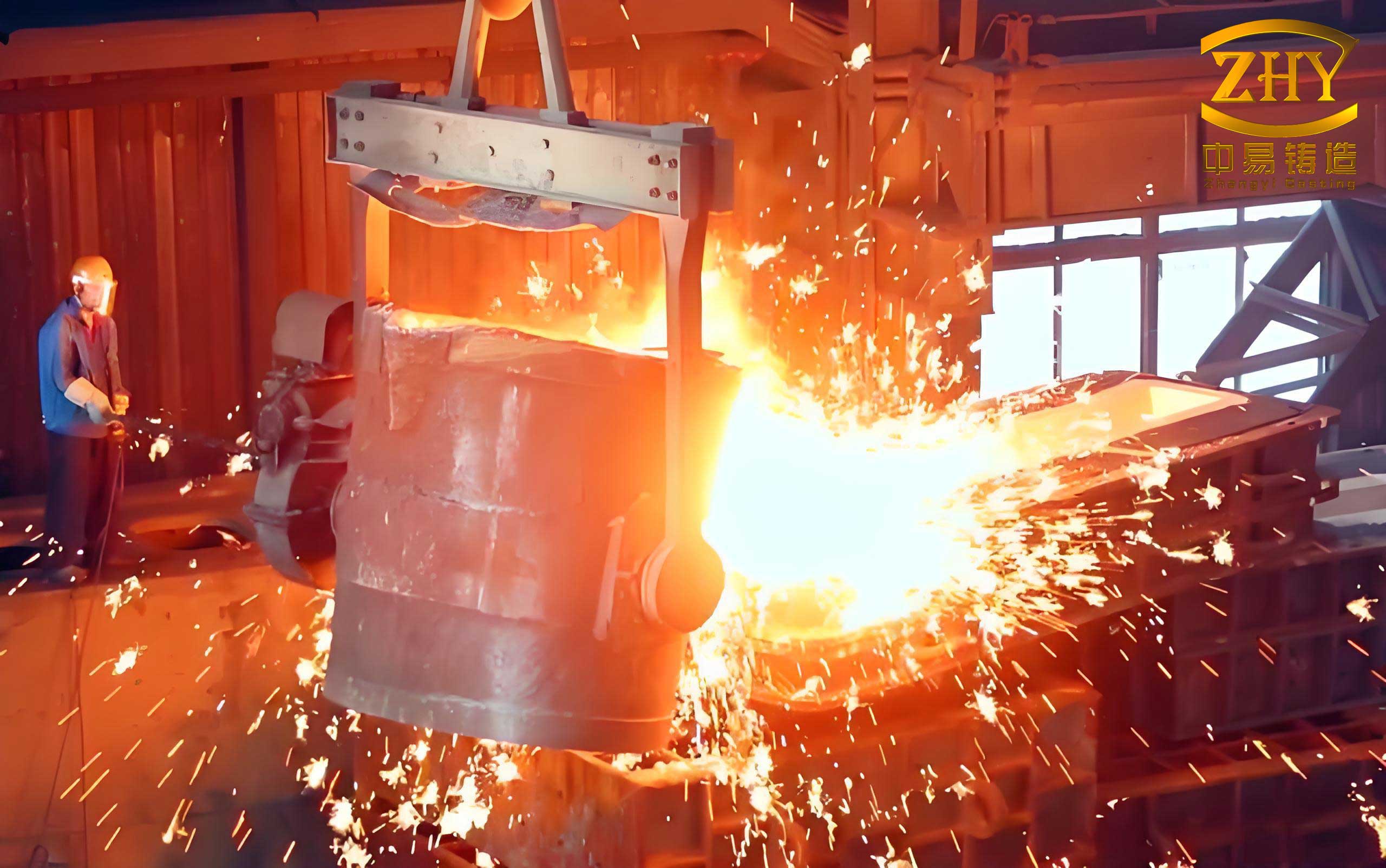
The fundamental principle of pattern formation is relatively straightforward but relies critically on mold performance. Pre-expanded foam beads are filled into a mold cavity. Steam is then introduced, softening the bead surfaces and causing the residual blowing agent inside to vaporize and expand further. This secondary expansion forces the beads to fuse together into a cohesive, solid foam pattern that replicates the cavity. Subsequent cooling with water stabilizes this shape. The efficiency and uniformity of this heating-fusion-cooling cycle are entirely governed by the mold’s design.
Fundamental Mold Design Principles for a Representative Casting Part
Consider a practical example: a bus transmission housing, a classic complex casting part. Its specifications include a material of HT200, outline dimensions of 463 mm × 500 mm × 350 mm, a wall thickness of 8 mm, a mass of 87 kg, and a predominantly hollow, cored structure. Producing the foam pattern for such a casting part requires meticulous mold engineering.
1. Parting Line Selection
For simple casting parts, a flat parting line along the largest contour is standard, facilitating easy mold manufacture and pattern ejection. Complex casting parts with curves, undercuts, or internal features may necessitate stepped parting lines or multi-piece patterns that are later assembled. For this transmission housing, a cylindrical, hollow casting part, the parting line is optimally placed along the plane connecting the centers of the three shaft holes on the front face, dividing the pattern into two halves (A and B). To ensure precise alignment during the subsequent gluing of these halves and to prevent mismatch, interlocking male-female locators (pins and sockets) are incorporated across the parting surface. Strategically placing all male locators on the B-side half simplifies pattern ejection and is more compatible with automated glue application systems.
2. Accounting for Shrinkage
Mold dimensions must compensate for two sequential contractions: foam pattern shrinkage and metal solidification shrinkage. For an HT200 casting part, the metal contraction is typically 0.8–1.0%. The foam pattern shrinkage, dependent on bead type (e.g., EPS), drying, and aging processes, must be empirically determined, often ranging from 0.3% to 0.5% for EPS. The total shrinkage allowance applied to the mold is the sum of these factors. A unified mold shrinkage factor ($$S_m$$) can be expressed as:
$$S_m = S_f + S_c$$
where:
$$S_f$$ = Foam pattern shrinkage factor (e.g., 0.004 for 0.4%)
$$S_c$$ = Metal (casting part) solidification shrinkage factor (e.g., 0.009 for 0.9%)
Thus, $$S_m = 0.004 + 0.009 = 0.013$$ or 1.3%.
The critical mold cavity dimension ($$D_{mold}$$) for a desired final casting part dimension ($$D_{casting}$$) is calculated as:
$$D_{mold} = D_{casting} \times (1 + S_m)$$
3. Machining Allowance and Draft Angles
A uniform machining allowance of 3 mm is typically added to all relevant surfaces of the casting part. Areas prone to dimensional instability or distortion during processing may receive additional allowance. Draft angles are crucial for damage-free pattern ejection. A maximum draft of 1° is standard, but areas susceptible to deformation may require increased angles. For this 8-mm wall thickness housing, the B-side with large unsupported cavity areas was prone to distortion. The solution was integrating internal stabilizing ribs within the foam pattern design, dramatically improving the pattern’s structural stability during handling, which directly benefits the dimensional fidelity of the final casting part.
4. The Evolution from Manual Inserts to Automated Core-Pulling
Manual inserts are removable mold sections used to form undercuts or complex features that prevent simple linear ejection. While cost-effective in mold fabrication, they introduce significant production bottlenecks: high labor intensity, frequent handling errors leading to defective patterns, and larger gaps that cause flash requiring manual trimming. For the initial version of the transmission housing mold, the A-side required manual insertion and removal of 9 separate blocks per pattern cycle.
The transition to automated core-pulling mechanisms represents a major advancement in mold design for complex casting parts. Mechanisms like hydraulic/pneumatic cylinders or angled leader pin/slider assemblies automate the retraction of cores before main mold opening. This eliminates manual handling, ensures consistent positioning, minimizes gaps (reducing flash), and drastically improves cycle times. Implementing core-pulling on the second-generation mold for this casting part eliminated all manual inserts, resulting in a 38% increase in production efficiency and a direct improvement in pattern consistency for the casting part.
| Feature | Manual Insert Design | Automated Core-Pulling Design |
|---|---|---|
| Labor Intensity | Very High (repetitive manual handling) | Low (fully automated sequence) |
| Cycle Time Impact | Significant increase | Minimal impact, often reduced |
| Pattern Consistency / Quality | Prone to errors (misplacement, damage) | High and repeatable |
| Flash Generation | Higher (due to larger clearances) | Lower (tighter, automated fit) |
| Initial Mold Cost | Lower | Higher |
| Long-Term Operational Cost | Higher (labor, scrap, downtime) | Lower |
| Suitability for Complex Casting Parts | Limited, becomes impractical | Excellent, enables complexity |
5. Filling System Design
The design of the filling ports (or gates) is critical for achieving a uniform bead distribution and consistent foam density throughout the pattern, which is essential for the quality of the subsequent casting part. For the transmission housing, two filling ports with an internal diameter of 16 mm were positioned at the ends of the cavity to facilitate smooth, dead-zone-free bead flow. Using automated pneumatic fill guns is standard. Further optimization can involve pressurized filling, which for this casting part reduced the fill time by approximately 8 seconds, contributing directly to higher productivity.
6. Optimizing Mold Wall Thickness
A standard mold wall thickness of 15–20 mm balances strength with thermal conductivity. However, uniform thickness is not always optimal. Strategic local thinning in areas corresponding to thick sections of the foam pattern (and consequently the casting part) can significantly improve thermal management. In the transmission housing, the suspension lug areas were problematic, often resulting in under-cooled, swollen patterns. By reducing the local mold wall thickness from 17.5 mm to 12.5 mm in these specific regions, the heat transfer rate during both heating and cooling phases was enhanced, resolving the swelling issue and improving the dimensional quality of that section of the casting part. The heat transfer rate ($$q$$) is governed by Fourier’s law, simplified for this context:
$$q = -k \cdot A \cdot \frac{\Delta T}{\Delta x}$$
where:
$$k$$ = thermal conductivity of the mold material (e.g., aluminum),
$$A$$ = surface area,
$$\Delta T$$ = temperature difference across the wall,
$$\Delta x$$ = wall thickness.
Reducing $$\Delta x$$ directly increases $$q$$, leading to faster and more effective heating/cooling in targeted zones.
7. Precision Venting with Ejector Pins (Air Vents)
Vents are small holes (typically 0.3–1.0 mm in diameter on the cavity face) that allow air and steam to escape but block foam beads. Their placement and density are crucial. They must be uniformly distributed, with higher density in deep recesses, corners, and thick sections to prevent gas traps that cause short shots or density variations. For this mold, vent pins with a 0.5 mm face orifice were used. The center-to-center distance between vents was kept under 20 mm globally, and under 15 mm in thick sections. The vents must be perfectly flush with the cavity surface (height difference < 0.2 mm) to avoid marking the foam pattern, which would transfer to the casting part surface.
8. Efficient Cooling System Design
Internal water channels are the most effective cooling method. Design priorities include proximity to the cavity surface for fast heat extraction and avoidance of interference with other mold components. Efficient water drainage is equally important to minimize cycle time. While gravity drainage via sloped surfaces on the ejector plates is common, advanced systems employ vacuum-assisted drainage. Applying a vacuum of -0.7 MPa (±0.1 MPa) for 15-20 seconds after cooling ensures all water is evacuated from the channels and the mold surface, preventing water splash upon mold opening and creating a safer, drier working environment. This controlled drying also contributes to more stable pattern dimensions.
9. Mold Layout and Plenum Chamber Optimization
The plenum chamber is the space behind the mold plate that collects steam and air from all the vents before it is exhausted. Its volume must be sufficient to prevent back-pressure during steaming but minimizing its height is key to reducing the overall thermal mass that must be heated and cooled each cycle. An innovative layout change for the transmission housing mold involved moving the pattern ejection cylinders from inside the mold frame to an external position. This modification served dual purposes: it reduced mechanical failures associated with internal cylinders exposed to steam, and it allowed the plenum height to be reduced from 100 mm to 75 mm. This reduction in thermal mass directly translated to faster cycle times without compromising venting efficiency, boosting productivity for this casting part.
10. Automation-Enabling Auxiliary Mechanisms
To eliminate manual handling that can deform the delicate foam pattern or leave fingerprints (which can affect the coating stage), automated pattern removal systems are integrated. A simple yet effective system uses pneumatic suction cups. Upon mold opening and pattern release, the cups engage, lift the pattern, transfer it along a rail to a designated station, and release it gently. This mechanism reduces labor, minimizes pattern damage, and enables one operator to manage multiple machines, aligning with modern lean manufacturing principles for producing casting parts.
Synthesis and Forward Outlook
In conclusion, the journey of designing a lost foam mold for a complex casting part like a transmission housing underscores a fundamental principle: the quality of the final casting part is irrevocably determined at the mold design stage. A holistic approach must integrate part-specific considerations—optimal parting, precise shrinkage compensation, strategic draft and reinforcement—with advanced systemic design: automated core-pulling, optimized filling and venting, tailored thermal management via wall thickness and cooling, and efficient mold layout.
The industry’s trajectory is unmistakably toward greater automation and intelligence in mold function. The replacement of manual inserts with core-pulling, the adoption of automated filling and pattern removal, and the use of vacuum-assisted processes are not merely incremental improvements; they are essential steps toward achieving the consistency, efficiency, and high quality required in competitive markets for precision casting parts. Future developments will likely involve integrated sensors for real-time monitoring of pressure and temperature within the cavity, and data-driven adaptive control of the steaming and cooling cycles, pushing the quality and repeatability of lost foam casting parts to even higher levels.