
In the manufacturing industry, the quality of sand casting parts is paramount, as these components are integral to applications in automotive, aerospace, and machinery sectors. As a researcher focused on optimizing casting processes, I have explored how coatings applied to sand molds and cores play a critical role in separating molten metal from mold walls, thereby influencing surface finish, dimensional accuracy, and internal integrity of sand casting parts. Traditional methods for developing these coatings rely on trial-and-error approaches, which are time-consuming and resource-intensive. To address this, my work leverages machine learning techniques to predict key coating properties, such as suspensibility, enabling more efficient design and production of high-quality sand casting parts. This article details my approach using support vector regression (SVR) and back propagation neural network (BPNN) models, based on a dataset from literature, to achieve accurate predictions that can accelerate innovation in coating formulations for sand casting parts.
The performance of coatings in sand casting directly affects the final quality of sand casting parts, including reduced defects like veining or metal penetration. Suspensibility, defined as the ability of solid particles in a coating to remain uniformly dispersed, is a crucial property because it ensures consistent application and performance during the casting of sand casting parts. Poor suspensibility can lead to segregation, resulting in uneven coating layers that compromise the mold’s protective function, ultimately impacting the durability and precision of sand casting parts. Historically, optimizing suspensibility involved extensive experimental iterations, but with advancements in data science, machine learning offers a paradigm shift. By analyzing historical data, we can build predictive models that guide formulation changes, reducing development cycles and costs for coatings used in sand casting parts. This aligns with the broader trend of materials informatics, where computational tools drive discovery and optimization in industrial processes.
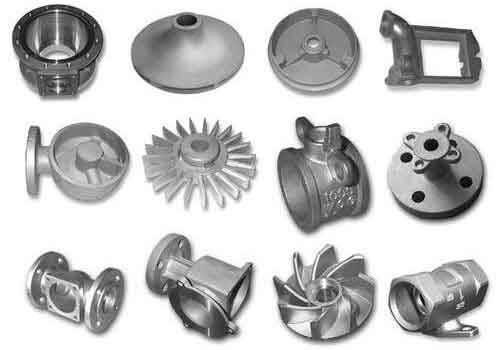
To construct a robust predictive framework, I gathered a dataset from published research on foundry coatings, which included 12 samples with suspensibility values ranging from 93.0% to 99.0%. Each sample was characterized by 14 input variables representing coating components, such as zircon flour, quartz powder, alumina, graphite, and various suspending agents, labeled as X1 through X14. These components are commonly used in coatings for sand casting parts to enhance thermal resistance and reduce defects. The dataset was partitioned into training and test sets to ensure model validity: two samples (approximately 17% of the total) were reserved for external testing, selected to avoid extreme suspensibility values and maintain representativeness. This split facilitates evaluation of model generalizability for unseen formulations aimed at improving sand casting parts. Table 1 summarizes the dataset, highlighting key variables and their ranges.
| Sample ID | Suspensibility (Y, %) | Zircon Flour (X1) | Graphite (X6) | Other Components (X2-X5, X7-X14) |
|---|---|---|---|---|
| 1 | 99.0 | 100 | 0 | Varied |
| 2 | 94.5 | 0 | 0 | Varied |
| 3 | 99.0 | 70 | 0 | Varied |
| 4 | 90.0 | 0 | 20 | Varied |
| 5 | 98.5 | 0 | 60 | Varied |
| 6 | 93.0 | 0 | 25 | Varied |
| 7* | 95.0 | 10 | 0 | Varied |
| 8 | 96.0 | 20 | 0 | Varied |
| 9 | 96.0 | 20 | 0 | Varied |
| 10 | 96.0 | 20 | 0 | Varied |
| 11 | 96.0 | 10 | 0 | Varied |
| 12* | 97.0 | 20 | 0 | Varied |
Note: Samples marked with * are used for external testing. All component values are in relative units, and “Varied” indicates other ingredients present in different proportions, which are critical for coatings applied in sand casting parts production.
Before building the models, I performed variable selection to identify the most influential components for suspensibility prediction, as this reduces dimensionality and enhances model interpretability for coatings in sand casting parts. Using a genetic algorithm (GA) coupled with SVR, I iteratively evaluated feature subsets to minimize prediction error. The GA process, illustrated through an optimization curve, revealed that after 8 iterations, the optimal feature set comprised only two variables: X1 (zircon flour) and X6 (graphite). This outcome suggests that suspensibility in coatings for sand casting parts is predominantly driven by these components, possibly due to their effects on particle density and dispersion stability. The fitness function for GA was based on root mean square error (RMSE), with the search space defined over all 14 variables. The selected features streamline model complexity while maintaining accuracy, which is beneficial for practical applications in designing coatings for sand casting parts.
The core of my methodology involves two machine learning models: support vector regression (SVR) with a radial basis function (RBF) kernel and a back propagation neural network (BPNN). Both are supervised learning techniques well-suited for regression tasks like predicting suspensibility, a key quality metric for sand casting parts. For SVR, the model aims to find a function $f(x)$ that deviates from actual suspensibility values $y_i$ by at most $\epsilon$ while remaining as flat as possible. The optimization problem is formulated as:
$$ \min_{w,b} \frac{1}{2} ||w||^2 + C \sum_{i=1}^{n} (\xi_i + \xi_i^*) $$
subject to:
$$ y_i – (w \cdot \phi(x_i) + b) \leq \epsilon + \xi_i $$
$$ (w \cdot \phi(x_i) + b) – y_i \leq \epsilon + \xi_i^* $$
$$ \xi_i, \xi_i^* \geq 0 $$
where $w$ is the weight vector, $b$ is the bias, $C$ is a regularization parameter, $\xi_i$ and $\xi_i^*$ are slack variables, and $\phi(x_i)$ maps inputs to a higher-dimensional space. The RBF kernel is defined as $K(x_i, x_j) = \exp(-\gamma ||x_i – x_j||^2)$, with $\gamma$ controlling kernel width. I tuned hyperparameters ($C$, $\epsilon$, $\gamma$) via grid search and leave-one-out cross-validation (LOOCV) on the training set, aiming to minimize the mean relative error (MRE). The optimal values were $C=5$, $\epsilon=0.01$, and $\gamma=0.9$, leading to the final SVR model:
$$ f(x) = \sum_{i=1}^{n} (\alpha_i – \alpha_i^*) K(x_i, x) + b $$
where $\alpha_i$ and $\alpha_i^*$ are Lagrange multipliers from the dual optimization. This model effectively captures nonlinear relationships between zircon flour, graphite, and suspensibility in coatings for sand casting parts.
For BPNN, I designed a three-layer network with input nodes corresponding to X1 and X6, one hidden layer with two neurons, and an output node for suspensibility. The activation function in the hidden layer was sigmoidal, and training employed the backpropagation algorithm to minimize mean squared error. The network’s weights were initialized randomly and updated through gradient descent, with learning rate and momentum optimized via cross-validation. BPNN is advantageous for its ability to model complex interactions, which is essential for predicting properties in multifactorial systems like coatings for sand casting parts. Both models were evaluated using RMSE and MRE, defined as:
$$ \text{RMSE} = \sqrt{\frac{1}{n} \sum_{i=1}^{n} (e_i – p_i)^2} $$
$$ \text{MRE} = \frac{1}{n} \sum_{i=1}^{n} \left| \frac{e_i – p_i}{e_i} \right| \times 100\% $$
where $e_i$ and $p_i$ are experimental and predicted suspensibility values, respectively, and $n$ is the sample count. These metrics provide a comprehensive assessment of predictive accuracy for coatings used in sand casting parts.
The results demonstrate that both models achieve high predictive performance for suspensibility, which is crucial for ensuring consistent quality in sand casting parts. For the RBF-SVR model, LOOCV on the training set yielded RMSE = 1.009, correlation coefficient R = 0.931, and coefficient of determination $Q^2$ = 0.858. When applied to the external test set, the model showed RMSE = 0.892, R = 0.959, and $Q^2$ = 0.889, indicating robust generalization. Predictions for test samples (IDs 7 and 12) were close to experimental values, with relative errors below 1.5%. Similarly, the BPNN model excelled, with training RMSE = 0.177, R = 0.998, and $Q^2$ = 0.995, and LOOCV RMSE = 1.634, R = 0.836. External test predictions had even smaller relative errors, underscoring BPNN’s efficacy for this task. Table 2 compares the models’ predictions on the test set, highlighting their accuracy in forecasting suspensibility for coatings aimed at improving sand casting parts.
| Sample ID | Experimental Suspensibility (%) | RBF-SVR Prediction (%) | RBF-SVR Relative Error (%) | BPNN Prediction (%) | BPNN Relative Error (%) |
|---|---|---|---|---|---|
| 7 | 95.0 | 95.134 | -0.902 | 95.244 | -0.787 |
| 12 | 97.0 | 95.911 | -1.123 | 96.087 | -0.941 |
The superior performance of both models can be attributed to the effective variable selection and appropriate algorithmic choices. By focusing on zircon flour and graphite, the models capture essential physicochemical interactions, such as particle size effects and lubricating properties, that influence suspensibility in coatings for sand casting parts. Zircon flour, known for its high refractoriness, may enhance stability, while graphite can affect viscosity and dispersion. These insights align with industrial practices where these components are adjusted to optimize coating behavior for sand casting parts. Moreover, the machine learning approach reduces the need for costly experiments, enabling rapid prototyping of new formulations. For instance, if a manufacturer seeks to develop a coating with 97% suspensibility for high-precision sand casting parts, the models can recommend component ratios, saving time and resources.
To further contextualize the findings, I explored the implications for sand casting parts production. Coatings with predicted suspensibility can lead to more uniform mold surfaces, reducing defects like sand inclusion or rough finishes on sand casting parts. This is particularly important for complex geometries in automotive or aerospace components, where dimensional tolerances are tight. By integrating these models into a digital twin framework, foundries could simulate coating performance before physical trials, enhancing efficiency and sustainability. Additionally, the methodology can be extended to predict other coating properties, such as viscosity or drying time, creating a comprehensive toolbox for optimizing sand casting processes. The use of open-source platforms, like the Online Computation Platform for Materials Data Mining (OCPMDM), facilitates accessibility and collaboration in the sand casting industry.
Despite the promising results, limitations exist. The dataset is relatively small (12 samples), which may affect model robustness for broader formulations used in sand casting parts. Future work should incorporate larger datasets from diverse sources, including industrial trials, to improve generalizability. Also, while zircon flour and graphite were key predictors, other components like suspending agents may play roles in specific contexts; thus, expanding feature sets could refine predictions. Another avenue is to employ deep learning or ensemble methods to capture more complex nonlinearities in coatings for sand casting parts. Furthermore, real-world validation through laboratory experiments is essential to confirm model recommendations for sand casting parts applications.
In conclusion, my research demonstrates the viability of machine learning for predicting suspensibility in sand casting coatings, a critical factor in manufacturing high-quality sand casting parts. By leveraging SVR and BPNN models with genetic algorithm-based variable selection, I achieved accurate predictions that can guide coating design, reduce development cycles, and enhance performance. This approach aligns with Industry 4.0 trends, where data-driven insights drive innovation in traditional sectors like foundry engineering. As demand for precision sand casting parts grows, such predictive tools will become increasingly valuable for optimizing processes and ensuring competitiveness. I encourage further exploration of these methods for other material properties, fostering a more intelligent and efficient future for sand casting parts production.
To illustrate the practical context, consider a typical sand casting part, such as an engine block or gear housing. The coating applied to the sand mold must exhibit consistent suspensibility to prevent defects during metal pouring. With machine learning models, foundries can quickly adjust formulations based on predicted outcomes, ensuring that each sand casting part meets stringent quality standards. This not only improves product reliability but also reduces waste and energy consumption, contributing to sustainable manufacturing. As I continue this work, I aim to integrate real-time data from casting operations, creating adaptive models that evolve with process changes for sand casting parts. The synergy between machine learning and materials science holds great promise for advancing the art and science of sand casting, ultimately delivering better components for critical industries.