
The lost foam casting process has revolutionized the production of complex, near-net-shape components, offering exceptional dimensional accuracy, superior surface finish, and significant weight reduction. However, its application for thin-wall box-type structures, such as automotive clutch housings, presents a formidable challenge: deformation. Throughout the entire production chain—from foam pattern creation to metal pouring—these components are susceptible to warping, twisting, and dimensional instability, often leading to costly scrap rates. This article, drawn from extensive production experience, details a comprehensive methodology for controlling deformation in thin-wall castings produced via the lost foam casting process. We will dissect the critical factors and present systematic solutions, emphasizing structural and procedural optimizations.
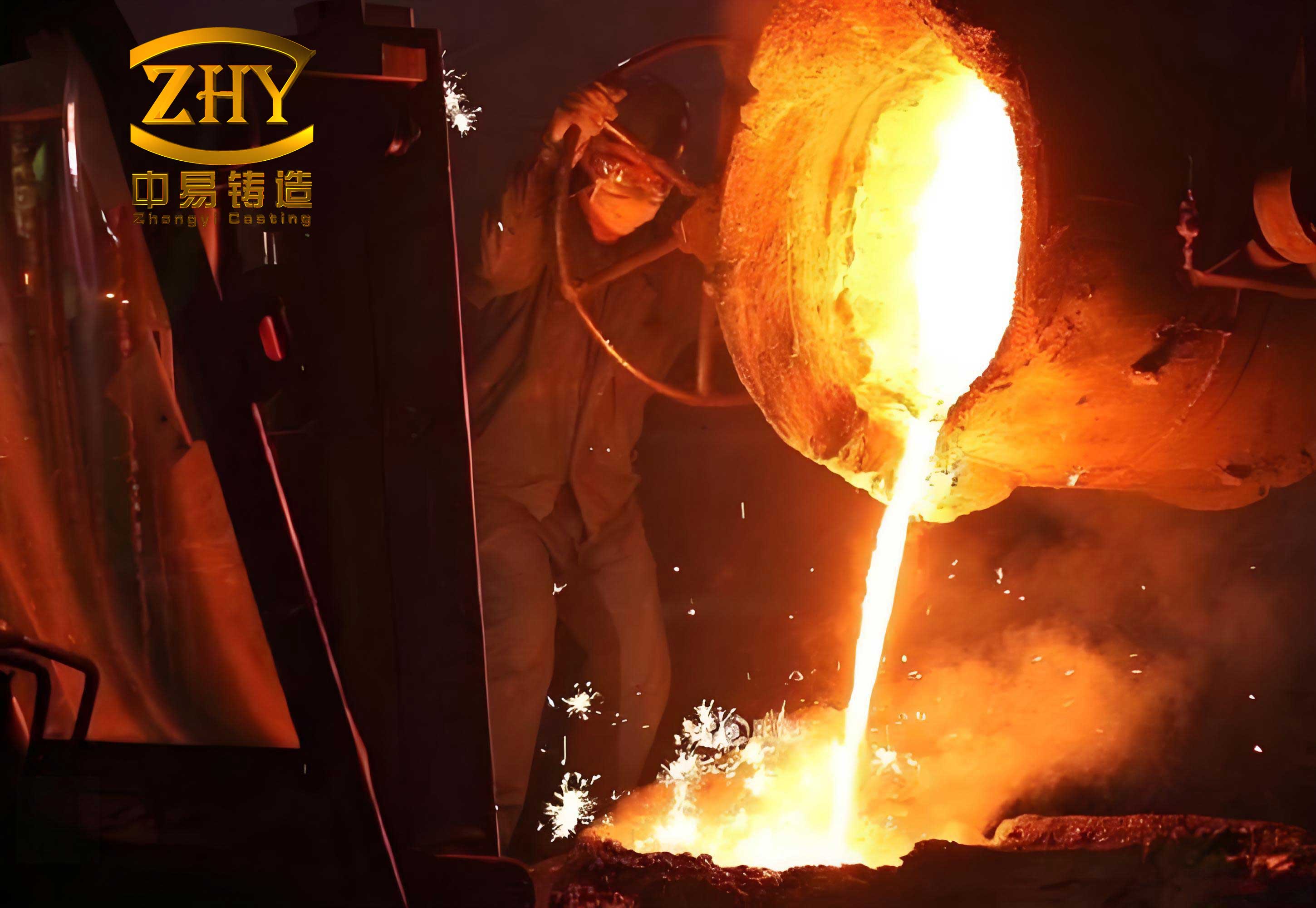
The core issue lies in the low inherent rigidity of the expanded polystyrene (EPS) or similar polymer patterns. For a thin-wall clutch housing with an average wall thickness of approximately 6 mm, a weight of 18 kg, and a major diameter nearing 450 mm, the pattern is vulnerable during handling, coating, sand filling, compaction, and the thermal shock of metal pouring. While every stage influences the final geometry, practical experience consistently identifies the mold filling and compaction stage as the most critical juncture for inducing deformation. Therefore, a successful strategy must focus on reinforcing the pattern to withstand these forces rather than attempting to correct the casting afterward. This philosophy underpins the following multi-stage control approach.
1. Foundational Control: Structural Design Optimization
The battle against deformation begins at the drawing board. A casting design for the lost foam casting process must transcend traditional guidelines by incorporating specific features to combat pattern fragility. The primary goal is to enhance the pattern’s stiffness to resist bending moments during handling and sand compaction.
1.1 Strategic Reinforcement with Ribs and Increased Wall Thickness
The judicious addition of reinforcing ribs, both internally and externally, significantly increases the pattern’s moment of inertia and rigidity. Furthermore, identifying areas subjected to high mechanical stress during sand filling—often unsupported spans or sections adjacent to large openings—and locally increasing the wall thickness in these zones provides targeted reinforcement. This is not a functional requirement but a crucial lost foam casting process allowance.
1.2 Process Allowances and Anti-Deformation Design
A proactive approach involves designing a “pre-warped” pattern. By analyzing the deformation tendency—often a consistent shrinkage or bowing along a specific axis—a reverse distortion, or anti-deformation allowance, can be built into the pattern geometry. For instance, if the final casting tends to contract more along the AB diameter compared to the CD diameter due to differential sand pressure, the pattern can be designed with the AB diameter intentionally oversized by 2-4 mm.
The required compensation (C) can be empirically derived and modeled as:
$$ C = k \cdot \frac{F_{sand} \cdot L^3}{E_{foam} \cdot I} $$
Where:
- $C$ = Compensation/Allowance (mm)
- $k$ = Empirical process constant
- $F_{sand}$ = Estimated sand compaction pressure
- $L$ = Characteristic unsupported length
- $E_{foam}$ = Apparent modulus of elasticity of the coated pattern assembly
- $I$ = Area moment of inertia of the pattern cross-section
This highlights how mechanical properties directly influence the needed design change.
1.3 Designing for Processability
The structure must facilitate the process itself. This includes ensuring the geometry allows for uniform foam bead penetration during pattern molding and, critically, enables unhindered dry sand flow and compaction during mold filling. Areas where sand cannot flow freely create non-uniform density and pressure, directly leading to pattern distortion.
| Strategy | Purpose | Key Consideration |
|---|---|---|
| Addition of Reinforcing Ribs | Increase global stiffness and moment of inertia. | Placement should not hinder sand flow or create thermal hotspots. |
| Local Wall Thickness Increase | Strengthen zones of high mechanical stress during compaction. | Identify stress points via process analysis; minimize excess material to avoid shrinkage issues. |
| Anti-Deformation Allowance | Pre-compensate for predictable, consistent warpage. | Requires accurate historical data on deformation vectors and magnitudes. |
| Design for Sand Flow | Ensure uniform sand compaction pressure. | Avoid internal cavities with narrow inlets; use rounded corners. |
2. Process-Specific Design for Pattern Integrity
The manufacturing sequence for the foam pattern is as critical as its design. Each step must be engineered to preserve dimensional stability.
2.1 Pattern Molding and Handling Protocol
The pattern’s vulnerability begins at demolding. A strict handling protocol is essential. Patterns must be removed from the tooling using two hands with even, supported force to prevent bending or torsional stress. Single-handed lifting is strictly prohibited, as it creates a large bending moment on the thin walls.
$$ M_{bend} = F \cdot d $$
Where $M_{bend}$ is the bending moment, $F$ is the gravitational force, and $d$ is the horizontal distance from the support point to the center of gravity. Minimizing $d$ by using two-handed, balanced support is crucial.
2.2 Pattern Stabilization During Curing and Storage
After molding, patterns undergo shrinkage and remain pliable. Storing them on racks with uneven support points leads to creep deformation over time. The effective solution is to pair patterns face-to-face, securing them with tape, and storing the assembly on a flat, horizontal surface. This symmetric configuration balances internal stresses and provides uniform support.
2.3 The Pivotal Role of Pattern Assembly and Rigging
Pattern assembly (gating system attachment) is the single most important operational step for installing anti-deformation measures. Here, specialized tooling and temporary reinforcements are added.
- Corrective and Stabilizing Tooling: Rigid fixtures or jigs are used to hold the pattern in its correct geometric shape during assembly and subsequent coating. These fixtures counteract any existing minor warpage.
- Internal Bracing (Tie Bars/Cross-bracing): Temporary foam or wooden braces are strategically glued inside the pattern cavity. For a clutch housing, multiple triangular braces connecting opposite walls dramatically increase rigidity against collapsing forces during sand filling. A typical brace thickness (e.g., 8 mm) is sufficient for support and will vaporize cleanly during pouring.
The increase in critical buckling load $P_{cr}$ due to internal bracing can be approximated for simple shapes:
$$ P_{cr} \propto \frac{n \cdot E \cdot I_{brace}}{L^2} $$
Where $n$ is the number of braces, $E$ is the modulus of the brace material, $I_{brace}$ is its moment of inertia, and $L$ is the effective length of the unsupported wall. This shows the quadratic benefit of reducing the unsupported span.
| Process Step | Control Objective | Tool/Action | Target Outcome |
|---|---|---|---|
| Demolding | Minimize initial bending stress | Mandatory two-handed, balanced lift | Zero plastic deformation on removal |
| Storage/Curing | Prevent creep under self-weight | Pair patterns face-to-face on flat surface | Maintain as-molded dimensions |
| Pattern Assembly | Actively correct and reinforce | Use of alignment jigs and internal foam/wood bracing | Pattern assembly with maximum rigidity |
2.4 In-Process Inspection and Quality Gates
Implementing inspection checkpoints after pattern molding and before assembly is vital. The standard method is to place the pattern on a precision surface plate and measure deviation using feeler gauges or height gauges. A clear specification must be set—for example, any deviation exceeding 2 mm results in scrap, while components within tolerance proceed to the assembly stage where corrective jigs can address minor issues. This prevents investing further processing costs in inherently defective patterns.
3. The Protective Shield: Coating Formulation and Drying
The refractory coating applied to the foam pattern serves as the primary barrier during sand compaction and metal pouring. Its mechanical properties are paramount for thin-wall castings in the lost foam casting process.
3.1 Dual-Strength Requirement
The coating must possess two key strengths:
- High Green (Room-Temperature) Strength: This is the coating’s ability to resist abrasion, cracking, and deformation during pattern handling, sand filling, and vibration. It acts as an exoskeleton.
- High High-Temperature Strength: Upon metal entry, the coating must maintain its integrity without spalling or premature collapse to withstand metallostatic pressure and prevent mold wall movement until the metal solidifies.
The coating’s resistance to pressure during pouring can be related to its hot strength ($\sigma_h$) and thickness ($t_c$):
$$ P_{max} \approx \frac{2 \cdot \sigma_h \cdot t_c}{R} $$
Where $P_{max}$ is the maximum sustainable metallostatic pressure, and $R$ is a characteristic radius of the cavity. For thin walls, $R$ is small, requiring high $\sigma_h$ or $t_c$.
3.2 Drying Process Control
Improper drying is a major, yet often overlooked, cause of deformation. Rapid or uneven drying creates differential shrinkage stresses within the coating, warping the underlying foam pattern.
- Temperature and Humidity Control: Drying should occur at moderate temperatures (typically 40-50°C) with adequate air circulation to avoid localized overheating.
- Supported Drying: Patterns must be placed on drying supports that conform to their geometry, and weighted or clamped in susceptible areas to restrict movement as the coating dries and shrinks. The use of flat supports and strategic weights is essential.
The drying stress $\sigma_d$ can be modeled as:
$$ \sigma_d = E_c \cdot \alpha_c \cdot \Delta T \cdot \phi $$
Where $E_c$ is the coating’s dried modulus, $\alpha_c$ is its coefficient of thermal contraction, $\Delta T$ is the temperature drop from drying to room temperature, and $\phi$ is a constraint factor (1 for fully constrained). Minimizing $\Delta T$ and reducing constraint through proper support reduce $\sigma_d$.
| Parameter | Target Property | Influence on Deformation | Control Method |
|---|---|---|---|
| Green Strength | High | Prevents distortion during sand compaction. | Optimize binder type (e.g., latex, inorganic) and content. |
| High-Temperature Strength | High | Prevents mold wall movement during pouring. | Optimize refractory aggregate blend and high-temp binders. |
| Drying Temperature | Moderate & Uniform | Prevents warpage from differential shrinkage. | Use controlled convection ovens with uniform airflow. |
| Drying Support | Conforming & Restrictive | Physically holds pattern in correct geometry. | Use custom fixtures, flat boards, and strategic weights/clamps. |
4. Integrating the Principles into a Cohesive System
Controlling deformation in the lost foam casting process for thin-wall components is not about a single “silver bullet” but the rigorous application of a synergistic system. The sequence and interdependence of these measures are critical. Structural design provides the inherent robustness. The pattern production process must preserve this geometry through careful handling, curing, and proactive reinforcement during assembly. The coating then adds a critical layer of mechanical strength, applied and dried in a manner that does not introduce new stresses. Finally, stringent in-process inspection ensures that only dimensionally sound patterns enter the costly molding and pouring stages.
The effectiveness of this integrated approach can be quantified by the dramatic reduction in scrap rates. By implementing the strategies outlined—from design optimization to controlled drying—it is consistently possible to control overall dimensional distortion in complex thin-wall castings to within 0.5% of critical dimensions. This level of control transforms the lost foam casting process from a risky choice for thin-wall structures into a reliable, high-yield production method capable of meeting the stringent demands of modern automotive components. The continuous refinement of these principles, supported by empirical data and theoretical understanding of the mechanics involved, remains the key to advancing the capabilities of lost foam casting for even more challenging applications.