
The evolution of lost foam casting has traditionally seen its strongest application in the production of complex iron castings, such as engine blocks, housings, and gearboxes for machinery. The processes for gray and ductile iron are now considered mature in many foundries. However, the application of this innovative process to steel castings, particularly low and medium-carbon grades, presents a distinct set of challenges that have limited its widespread adoption. Key issues include surface carbon pick-up, slag defects related to foam decomposition, and the complexity of achieving sound feeding for shrinkage. Successfully navigating these challenges unlocks the significant benefits of lost foam casting—excellent dimensional accuracy, reduced machining allowance, and design flexibility—for steel components.
Our journey into steel lost foam casting began with a firm foundation in high-volume production of iron castings. Building upon this experience, we embarked on the development of a critical load-bearing component: the loader draglink head (drawhead). This project served as a cornerstone, proving the viability of the process for steel and establishing a robust technical foundation for a wider range of future steel casting projects. The following sections detail the comprehensive process parameters and scientific principles we refined to transition from iron to successful steel lost foam casting.
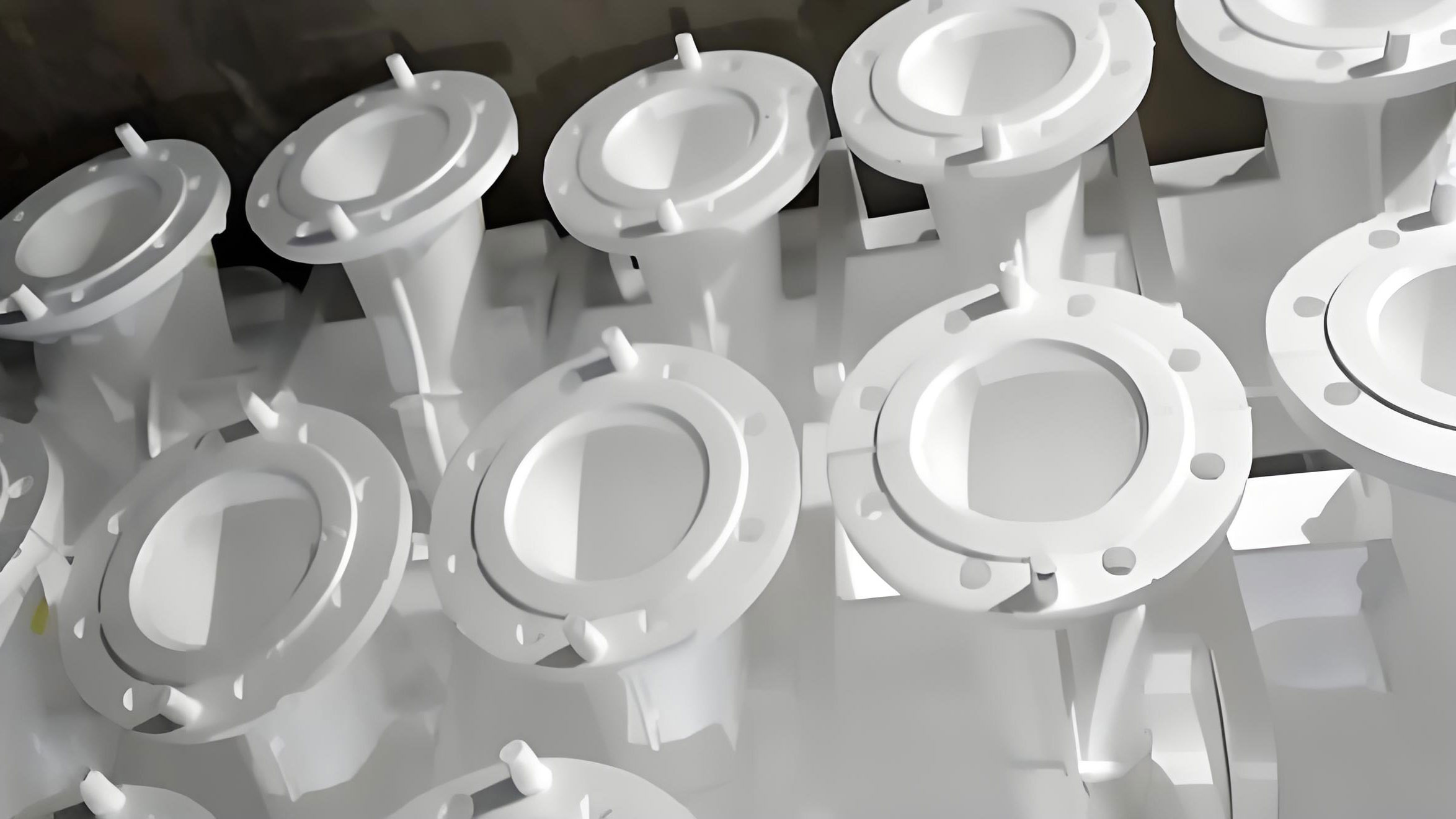
1. The Critical Choice: Foam Bead Material for Steel Castings
The selection of the expendable pattern material is arguably the most decisive first step in lost foam casting of steel, primarily due to the carbon pick-up phenomenon. When molten steel replaces the vaporizing foam, carbon from the decomposing pattern can dissolve into the metal surface, altering its properties.
The two primary bead materials are Expanded Polystyrene (EPS) and its co-polymer variant, STMMA (Styrene-Methyl Methacrylate). Their fundamental difference lies in chemical composition and resulting carbon content. EPS is a hydrocarbon polymer with a very high carbon content (approximately 92% by mass). During decomposition in contact with molten steel (at temperatures exceeding 1500°C), it generates a concentrated carbon-rich atmosphere at the metal front. This leads to significant surface carbon enrichment, often in the range of 0.3-0.5 wt%, which can form hard, brittle carbides, impair machinability, and degrade weldability.
STMMA, a co-polymer of styrene and methyl methacrylate, incorporates oxygen into its molecular chain. Upon pyrolysis, this oxygen facilitates more complete burnout of carbon into gaseous products (CO, CO2) rather than solid carbon soot. The result is a drastic reduction in the available carbon for dissolution into the steel surface. The typical surface carbon increase with STMMA patterns is controlled to ≤0.1 wt%, preserving the base metal’s intended microstructure and properties.
The choice is governed by a simple inequality based on the critical carbon threshold (Ccrit) for the specific steel grade:
$$ \Delta C_{EPS} \approx 0.4\% > C_{crit} \quad \text{(often unacceptable)} $$
$$ \Delta C_{STMMA} \approx 0.1\% \leq C_{crit} \quad \text{(acceptable)} $$
Where ΔC is the surface carbon increment. Therefore, for virtually all low and medium-carbon steel castings where surface properties are critical, STMMA is the mandatory choice for lost foam casting.
| Parameter | EPS (Polystyrene) | STMMA (Co-polymer) | Rationale for Steel Casting |
|---|---|---|---|
| Chemical Formula | (C8H8)n | (C8H8•C5H8O2)n | Oxygen content in STMMA promotes cleaner pyrolysis. |
| Carbon Content | ~92 wt% | ~69.6 wt% | Lower inherent carbon source. |
| Pyrolysis Products | Reduces carbon available for dissolution into steel. | ||
| Typical Surface Carbon Increase (ΔC) | 0.3% – 0.5% | ≤ 0.1% | STMMA keeps surface carbon within acceptable limits for most steels. |
| Primary Application | Iron Castings, Non-critical Steel | Low/Medium Carbon Steel Castings | Essential for maintaining mechanical and machining properties. |
2. Precision in Pattern Making: Pre-expansion and Molding
The quality of the foam pattern is the physical blueprint for the final casting. Controlling its density and integrity is paramount, especially for steel, where excessive foam mass exacerbates gas and slag generation.
2.1 Pre-expansion Density Control
The target pre-expanded bead density (ρpre) is a compromise between pattern strength and gas load. A lower density reduces foam mass and decomposition products but can lead to fragile patterns prone to distortion. A higher density increases strength but also increases the volume of gaseous and liquid decomposition products during pour, raising the risk of defects.
For our steel drawhead, we established an optimal pre-expansion density of:
$$ \rho_{pre} = 18 \pm 0.5 \text{ g/L} $$
This density is achieved through precise control of the pre-expansion environment in a batch-style pre-expander (e.g., Tuebert type). The key parameters are interlinked:
- Temperature (Tpre): 96 – 105°C. Steam is the heating medium. Temperature controls the viscosity of the polymer and the pressure of pentane blowing agent inside the bead.
- Vessel Pressure (Ppre): 3.8×10⁴ – 4.2×10⁴ Pa (0.38 – 0.42 bar). This counter-pressure controls the expansion rate, ensuring uniform cell structure and preventing bead rupture.
- Time (tpre): 70 – 75 s. This is the residence time in the pre-expansion chamber, determined by the desired density and the above parameters.
The relationship can be conceptually described by an expansion kinetics model:
$$ \frac{dV}{dt} \propto \frac{(P_{int} – P_{pre})}{\eta(T)} $$
Where dV/dt is the volumetric expansion rate, Pint is the internal pentane pressure, Ppre is the vessel pressure, and η(T) is the temperature-dependent polymer viscosity. Precise control of these parameters ensures consistent, free-flowing beads of the target density.
2.2 Pattern Molding and Fusion
The goal in the molding press is to transform loose beads into a rigid, dimensionally accurate pattern with excellent bead-to-bead fusion, both internally and on the surface. Poor fusion creates paths for molten metal to penetrate, causing surface folds or “bead marks” on the casting.
We employ a high-pressure molding with pressure-holding strategy:
- Molding Steam Pressure (Pmold): 8.0×10⁴ – 9.0×10⁴ Pa (0.8 – 0.9 bar). Higher pressure ensures steam penetrates quickly to the core of the pattern, promoting uniform heating and fusion.
- Pressure Holding Time (thold): 25 – 30 s. After the steam is cut off, pressure is maintained. This allows the heat to dissipate evenly, solidifying the fused beads without allowing internal voids or shrinkage to form, resulting in a stable, strong pattern with a smooth surface finish.
This process minimizes the residual styrene monomer and moisture content in the pattern, reducing the volatile load during casting and improving the quality of the subsequent coating process.
3. Designing for Solidification: Gating, Feeding, and the Physics of Replacement
The design philosophy for gating and feeding in steel lost foam casting must account for the unique physics of the process, which differ fundamentally from empty-mold processes like green sand.
3.1 The Filling and Feeding Challenge
In lost foam casting, the mold cavity is filled with a solid foam pattern. During pouring, metal progressively replaces the pattern, which undergoes endothermic pyrolysis (decomposition). This creates two critical effects at the advancing metal front:
- Temperature Drop: The energy required to heat and decompose the foam cools the leading edge of the metal. The heat balance can be approximated as:
$$ \dot{Q}_{metal} = \dot{m}_m C_p \Delta T \approx \dot{m}_f \Delta H_f $$
Where $\dot{Q}_{metal}$ is the heat loss rate from the metal, $\dot{m}_m$ is the metal mass flow rate, $C_p$ is metal specific heat, $\Delta T$ is the temperature drop, $\dot{m}_f$ is the foam mass decomposition rate, and $\Delta H_f$ is the total enthalpy of foam decomposition (sensible heat + heat of vaporization). This cooling reduces fluidity and feeding capability.
- Contamination: The metal front is in direct contact with foam decomposition products (liquids and gases), which can become entrapped as slag if not properly floated out.
Consequently, risers in lost foam casting must serve a dual purpose: provide thermal feeding (sequencing solidification) and act as reservoirs to collect contaminated metal and slag. They are typically sized one level larger than in equivalent sand casting. For larger risers, we design them as hollow to reduce the total foam mass (and associated gas/slag generation) in the system while maintaining their thermal mass for feeding.
3.2 Gating System Design Principles
The gating design for our drawhead was guided by multi-objective optimization, balancing fluid dynamics, thermal management, and practicality. The 3D layout (as conceptually shown in the referenced figure) embodies the following principles applied to the cluster design:
- Bottom Gating: Metal is introduced at the lowest point of the draglink head cavity. This promotes non-turbulent, laminar fill, minimizing oxide formation and air entrapment. The velocity of the rising metal front ($v_{front}$) should be controlled to be below a critical threshold that causes turbulence.
- Orientation for Short Flow Paths: The part is oriented so its smaller dimension is vertical, minimizing the distance from the ingate to the top of the riser. This reduces the cooling of metal before it reaches the feeding zone.
- Distribution and Stability: The cross-gates and ingates are designed for even distribution to multiple parts in a cluster. The entire cluster (gating + patterns) must be rigid enough to withstand coating, handling, and sand compaction without distortion.
- Process Integration: The design facilitates easy pattern assembly, coating drainage, placement in the flask, and final cut-off of ingates and risers via mechanized methods.
4. The Protective Barrier: Coating Formulation and Application
The refractory coating is the critical interface between the decomposing foam and the compacted sand mold. For steel lost foam casting, its requirements are elevated due to higher pouring temperatures (≈1550-1600°C for steel vs. ≈1350°C for iron).
4.1 Coating Modification
Starting with a proven iron-based coating, we enhanced its properties for steel:
Increased High-Temperature Strength: Added phenolic resin acts as a high-temperature binder, preventing coating collapse or erosion during the longer exposure to molten steel.
Enhanced Sintering and Permeability: Boron compounds (e.g., boric acid, H3BO3) were introduced. Boric acid melts at ~170°C and flows at coating firing temperatures, promoting particle sintering for strength. More importantly, it creates a glassy phase that seals the coating surface while the interconnected porosity beneath maintains the essential permeability needed for pyrolysis gases to escape into the sand. The optimal permeability ($k_{coat}$) must satisfy:
$$ k_{coat} \gg k_{sand} \quad \text{(to prevent back-pressure)} $$
but also provide adequate structural integrity.
4.2 Application: From Dip to Flow Coating
Our standard dip-coating process was unsuitable for the slender, multi-piece drawhead cluster. The buoyant force ($F_b$) during immersion, given by Archimedes’ principle $F_b = \rho_{slurry} g V_{displaced}$, threatened to break the fragile foam connections between clusters.
The solution was a flow or curtain coating process. A pump circulates the coating slurry, which flows over the stationary cluster held at an angle. This applies the coating via gravitational flow without significant buoyant forces. We employ a two-coat process:
- First Coat: Applied to build a foundational layer. Dried completely.
- Second Coat: Applied to achieve final thickness and seal any micro-cracks from the first drying cycle. This ensures a continuous, defect-free barrier.
The final dry coating thickness ($t_{coat}$) is a key parameter, typically between 0.5 – 1.0 mm, balancing insulation, strength, and gas permeability.
5. Sand Compaction Dynamics: Ensuring Mold Integrity
The process of filling the flask with unbonded sand and compacting it around the coated cluster is delicate. Insufficient compaction leads to mold wall movement or collapse (veining or run-outs). Over-compaction can distort or crush the foam pattern.
We refined the vibration parameters specifically for the delicate steel clusters:
| Parameter | Standard Practice (Iron) | Optimized for Steel Drawhead | Rationale |
|---|---|---|---|
| Initial Sand Fill Height | 150 – 200 mm | 250 mm | Reduces the drop height of the cluster into the flask, minimizing initial impact stress and simplifying placement. |
| Vibration Mode | Often vertical only | Combined Horizontal & Vertical | Multi-directional vibration ensures uniform sand packing around complex geometries and internal cavities, eliminating “dead zones.” |
| Vibration Frequency / Amplitude | Variable | ~2600-3400 RPM (Frequency Control) | Higher frequencies are effective for dry sand compaction. The range allows tuning for different cluster sizes. |
| Total Vibration Time | Not strictly limited | ≤ 130 seconds | Imposes a strict limit to prevent excessive kinetic energy transfer to the foam cluster, avoiding distortion, connection breakage, or coating damage. |
The sand compaction density ($\rho_{sand, compacted}$) achieved must be high enough to resist metallostatic pressure. The required density can be related to the sand’s internal friction angle and the metal pressure head.
6. Finishing: Precision Removal of Feed Metal
Steel’s toughness prohibits the mechanical knocking-off of gates and risers common with brittle iron. Thermal cutting is essential. Manual oxy-fuel cutting can be inconsistent, leaving large, uneven cut surfaces requiring extensive grinding.
Our solution employs mechanized, track-guided oxy-fuel cutting machines. The cutter head follows a pre-programmed or template-guided path around the riser neck. This ensures:
- A clean, planar cut surface.
- Minimal heat-affected zone (HAZ) on the casting.
- Repeatable accuracy, reducing subsequent grinding time and improving final appearance.
For larger riser pads or irregular remnants, we utilize air carbon arc gouging to quickly and cleanly remove excess material down to the desired casting contour.
7. Conclusion: Validation and Future Horizon
The successful development and batch production of the loader draglink head via lost foam casting represents a significant technological milestone. It validates a complete and controlled process chain tailored for low/medium-carbon steel:
- Material Science: Selection of low-carbon STMMA foam.
- Precision Patterning: Controlled density and fusion.
- Advanced Design: Gating and feeding accounting for foam decomposition physics.
- Interfacial Engineering: A modified, robust refractory coating applied via a tailored method.
- Process Control: Precise sand compaction and thermal cutting.
This project has demonstrably expanded the production capacity for steel components using this advanced forming technique. More importantly, it embodies the core advantages of lost foam casting in a demanding application: significant reduction in energy consumption and emissions compared to traditional multi-part molding, dramatic improvement in the working environment by eliminating silica dust, substantial reduction in manual labor, and high productivity through cluster molding. This foundation now enables the exploration of a broader portfolio of complex, high-integrity steel castings, pushing the boundaries of what is possible with lost foam casting technology.