
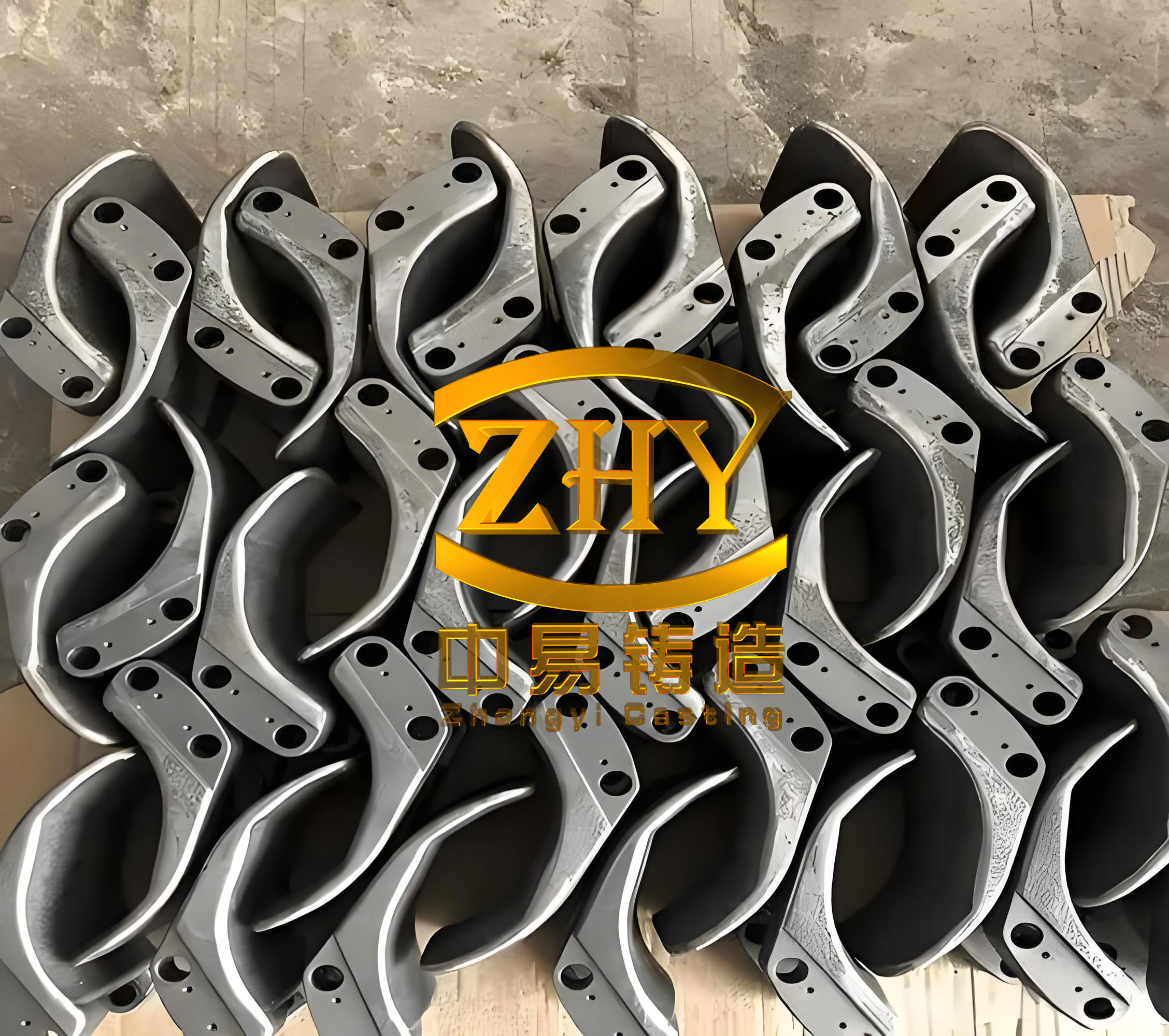
The relentless expansion of global transportation networks, particularly in rail transport, demands materials capable of withstanding extreme environmental conditions. Modern electric locomotives and high-speed trains operate across vast geographical expanses where winter temperatures can plummet to -40°C and below. This operational reality places stringent requirements on the safety-critical components of these vehicles. Ductile iron casting, renowned for its excellent castability, good strength, and cost-effectiveness, is a material of choice for such applications. However, standard grades experience a severe degradation in toughness, specifically impact resistance, as temperatures decrease—a phenomenon known as the ductile-to-brittle transition. Ensuring structural integrity and preventing catastrophic failure under these extreme service conditions necessitates the development and reliable production of ultra-low temperature ductile iron castings with guaranteed impact properties at temperatures as low as -40°C and, as we will explore, even -60°C.
This article details the comprehensive production control strategy developed for -40°C grade ultra-low temperature ductile iron castings, specifically the EN-GJS-400-18LT (QT400-18L) and EN-GJS-500-7LT (QT500-7L) grades. Furthermore, it extends the discussion into fundamental research on achieving consistent properties for ductile iron casting at a challenging -60°C threshold, focusing on the intricate effects of key alloying and tramp elements.
1. Systematic Production Control for -40°C Ductile Iron Castings
The successful mass production of high-integrity, ultra-low temperature ductile iron castings hinges on a meticulously controlled process chain. The target components are typically gearbox housings for rail vehicles, characterized by complex geometries, varying wall thicknesses, and stringent quality requirements for both surface and internal soundness. The mechanical property requirements for these grades are summarized below:
| Material Grade | Tensile Strength, Rm (MPa) | 0.2% Proof Stress, Rp0.2 (MPa) | Elongation, A (%) | Impact Energy, KV2 at -40°C (J) |
|---|---|---|---|---|
| EN-GJS-400-18LT (QT400-18L) | > 400 | > 240 | > 18 | Avg. > 12; Single > 9 |
| EN-GJS-500-7LT (QT500-7L) | > 500 | > 320 | > 7 | Avg. > 4; Single > 3 |
Achieving these properties consistently requires optimization at every stage: casting design, molding, melting, and post-processing.
1.1 Casting Process Design
The primary goals are to achieve a sound, defect-free casting with a uniform microstructure. A key challenge is managing the thermal gradients during solidification to prevent shrinkage porosity and cold shuts, while ensuring the graphite morphology is not degraded by turbulent filling.
- For thin-walled gearboxes (~8-12 mm): A semi-closed gating system is employed. The ratio of choke area (in the ingates) to runner area to sprue area is carefully designed as $$ \sum A_{ingate} : \sum A_{runner} : \sum A_{sprue} = 0.8 : (1.2-1.5) : 1 $$. Making the runner the largest cross-section reduces metal velocity, promoting tranquil filling and minimizing oxide formation and gas entrapment. Simulation is used to optimize the pouring head height (e.g., 200 mm). Risers and chilling plates are strategically placed at thermal centers like bearing bosses and flange intersections to promote directional solidification.
- For heavier, more complex gearboxes (~10-88 mm wall): A bottom-gating system from both sides of the parting plane is utilized. Multiple, thin-and-wide ingates are arranged in two tiers. This design ensures bottom-up filling, allowing gases to escape freely and resulting in a favorable temperature gradient for feeding. Exothermic risers are used on heavy sections, while external chills are applied to adjacent areas to create efficient feeding paths and eliminate shrinkage.
1.2 Molding and Coremaking Process
The mold medium must provide dimensional accuracy, resist metal penetration, and critically, not introduce harmful elements into the ductile iron casting. We use a nitrogen-free, modified furan resin sand system.
| Parameter | Specification |
|---|---|
| Base Sand | High-purity silica sand, >95% SiO2, 40-70 mesh, zero fines. |
| Binder | Low-Nitrogen, Low-Free-Formaldehyde “Wood-Scent” Furan Resin. |
| Resin Addition | 0.9 – 1.1 wt.% of sand weight. |
| Curing Agent | Low-sulfur acid catalyst, added at 30-40% of resin weight. |
| Coatings | Two layers: a primary alumina-based refractory wash followed by a graphite-alcohol top coat. |
This system minimizes the potential for nitrogen pore formation and, most importantly, limits sulfur pick-up from the mold, which is detrimental to low-temperature toughness as will be discussed later.
1.3 Melting and Treatment Process
This is the most critical phase for determining the final metallurgy of the ultra-low temperature ductile iron casting. Control over charge materials, base composition, and treatment parameters is paramount.
| Process Stage | Key Controls & Parameters |
|---|---|
| Charge Make-up | Use of high-purity pig iron (low Ti, V, Sb, etc.), selected steel scrap, and crystalline graphite carburizer. Alloying elements like nickel and copper are added as pure metals or master alloys. |
| Target Base Composition | C: 3.3 – 3.9%; Si: 1.7 – 2.3%; Mn: < 0.2%; P: < 0.035%; S: < 0.02%. Ni addition varies (0.3-1.5%) depending on grade and section size. |
| Melting | Induction melting. Scrap and carburizer melted first. High-temperature hold at 1530-1560°C for slag removal and homogenization. |
| Inoculation & Nodularization | Tundish cover ladle treatment. Nodularizer (1.1-1.3% FeSiMg), inoculant (0.5-0.7%), and cover charge are placed in the ladle well. Two-stage pouring for effective reaction control. |
| Post-Inoculation | Additional ladle inoculation (0.7-0.9%) and stream inoculation during pouring (0.1-0.2%). |
| Pouring & Cooling | Pouring temperature: 1390-1420°C. Controlled cooling in mold until below 300°C before shakeout. |
1.4 Quality Assurance and Results
A standardized, process-controlled approach involving detailed control plans, process FMEAs, work instructions, and strict batch traceability was implemented. Over a multi-year production run encompassing tens of thousands of castings, this system delivered exceptional consistency:
| Metric | Result |
|---|---|
| Magnetic Particle Inspection (MPI) Pass Rate | 100% |
| Radiographic Testing (RT) Pass Rate | > 97% |
| Metallurgical Specification Conformance | > 99.85% |
| Overall Yield (Sound, Conforming Castings) | > 92% |
This demonstrates that robust, high-yield production of -40°C ultra-low temperature ductile iron casting is absolutely achievable with rigorous process control.
2. Advancing the Frontier: Research on -60°C Ductile Iron Castings
Building upon the stable production of -40°C grades, research was undertaken to understand the limits of ductile iron casting and develop guidelines for applications requiring service at -60°C. The focus was on isolating and quantifying the influence of four key elements—Silicon, Manganese, Phosphorus, and Sulfur—on the low-temperature impact toughness.
2.1 Experimental Methodology and Material States
Experiments were conducted on three base material types to understand the effect of matrix structure. All melts were produced in controlled 100 kg induction furnaces, and test bars were cast in resin-bonded sand molds to prevent exogenous contamination.
| Material Designation | Target Matrix | Microstructural State |
|---|---|---|
| QT400-18LT (-60°C Target) | Ferritic (>95% Ferrite) | Fully Annealed |
| QT500-7LT (-60°C Target) | Ferritic-Pearlitic (Ferrite-dominated) | As-Cast |
| QT600-7LT (Reference) | Pearlitic-Ferritic (Pearlite-dominated) | As-Cast |
The common goal for the ultra-low temperature ductile iron casting was to achieve a high nodule count (>100 nodules/mm²), high nodularity (>95%), and a fine graphite size (ASTM 5 or finer).
2.2 Elemental Effects and Metallurgical Analysis
The impact toughness (KV2) was measured at -40°C, -50°C, and -60°C for samples with systematically varied contents of Si, Mn, P, and S.
2.2.1 The Role of Silicon (Si)
Silicon is a essential graphitizer and ferrite promoter, but its role in ultra-low temperature ductile iron casting is double-edged.
- Observation: For ferritic QT400-18LT, impact toughness decreases monotonically with increasing Si. A sharp drop occurs above ~1.9% Si, especially at -60°C. To consistently achieve >12 J at -60°C, Si must be held below 2.0%. For the mixed-matrix QT500-7LT, an optimal Si range of 1.9-2.0% was observed for best -60°C toughness.
- Analysis: The detrimental effect is attributed to equilibrium grain boundary segregation. Silicon lowers the grain boundary energy, driving its preferential segregation to these regions. This segregation embrittles the grain boundaries, making them preferred paths for crack propagation under low-temperature, high-strain-rate conditions. The relationship can be conceptually linked to the reduction in boundary cohesion energy, $\gamma_{gb}$, due to Si segregation:
$$ \Delta \gamma_{gb} \propto – \Gamma_{Si} \cdot \Delta G_{seg} $$
where $\Gamma_{Si}$ is the excess Si concentration at the boundary and $\Delta G_{seg}$ is the segregation free energy. Higher bulk Si increases $\Gamma_{Si}$, leading to greater embrittlement.
2.2.2 The Role of Manganese (Mn)
The findings on Manganese challenge conventional wisdom for this class of ductile iron casting.
- Observation: For the fully annealed ferritic QT400-18LT, impact toughness showed a slight improvement with increasing Mn content (up to ~0.25%).
- Analysis: In the as-cast state, Mn promotes pearlite and can segregate to cell boundaries. However, a full ferritizing anneal dissolves Mn-associated carbides. The primary benefit in an ultra-low temperature ductile iron casting appears to be its strong affinity for Sulfur. Mn forms stable, high-melting-point MnS inclusions:
$$ [Mn] + [S] \rightarrow (MnS) $$
This reaction prevents the formation of low-melting-point, grain-boundary-weakening FeS films. Since S embrittlement is exacerbated at lower temperatures (see Section 2.2.4), Mn’s role in mitigating S becomes critically beneficial at -60°C. Therefore, a moderate Mn content (~0.15-0.25%) can enhance toughness consistency by providing a “sulfur buffer.”
2.2.3 The Role of Phosphorus (P)
Phosphorus exhibits a clear and critical threshold effect in ultra-low temperature ductile iron casting.
- Observation: Impact toughness remains high until a critical P content is reached (~0.07%), after which it plummets rapidly. This threshold effect is stark at -60°C.
- Analysis: P has very low solubility in solid iron, which is further reduced by the presence of C and Si. The solubility limit, $C_{P}^{max}$, in the ferritic matrix can be approximated as being severely restricted. When the bulk P exceeds this limit, it precipitates as a hard, brittle phosphide eutectic (steadite) at the last solidifying regions and grain boundaries. This phase acts as a potent stress concentrator and crack initiator. The transition from ductile to brittle behavior occurs when the volume fraction and continuity of these brittle networks reach a critical level. The requirement is absolute: for reliable -60°C performance, P must be maintained below 0.07%, and preferably lower.
2.2.4 The Role of Sulfur (S)
Sulfur is arguably the most pernicious element for the low-temperature toughness of ductile iron casting.
- Observation: A dramatic decrease in impact energy occurs when S exceeds approximately 0.012%. To maintain KV2 > 12 J at -60°C in ferritic grades, S must be kept ≤ 0.012%.
- Analysis: Residual sulfur after nodularization tends to form FeS, which has virtually no solubility in solid iron and forms liquid films at grain boundaries during solidification. These films solidify last, creating continuous paths of extreme weakness. Even if partially modified by Mn, excessive S content leads to numerous inclusions that facilitate void formation and crack propagation. The sensitivity is extreme at cryogenic temperatures. Controlling S requires a holistic approach: starting with low-S charge materials, efficient desulfurization during melting (if needed), and preventing mold/metal reaction sulfur pick-up by using low-sulfur binders and coatings.
2.3 Synthesis and Guidelines for -60°C Ductile Iron Casting
The research allows us to propose refined compositional windows and principles for producing ductile iron casting for -60°C service. These guidelines are in addition to the standard controls on nodularization and inoculation.
| Element | Mechanism of Effect | Guideline for -60°C Service | Rationale |
|---|---|---|---|
| Silicon (Si) | Grain boundary segregation embrittlement. | Ferritic: ≤ 1.9% Mixed-Matrix: 1.9-2.0% (Optimum) |
Minimize equilibrium segregation to preserve grain boundary cohesion. |
| Manganese (Mn) | Sulfide formation; mitigates S harm. | 0.15% – 0.25% | Use as a controlled “getter” for Sulfur. Requires full annealing for ferritic grades. |
| Phosphorus (P) | Formation of brittle phosphide eutectic network. | < 0.07% (Critical Limit) | Avoid precipitation of continuous brittle phases at boundaries. |
| Sulfur (S) | Formation of FeS films & inclusion clusters. | ≤ 0.012% (Aim for ≤ 0.010%) | Prevent creation of weak, crack-prone interfaces at grain boundaries. |
| Nickel (Ni) | Austenite stabilizer; improves hardenability and low-temperature toughness. | 0.5 – 1.5% (Grade/Section dependent) | Enhances matrix toughness and reduces transition temperature. Essential for heavier sections. |
By integrating these strict compositional controls with the proven production methodology outlined in Section 1, it is feasible to produce ductile iron casting that reliably meets extended property targets: e.g., QT400-18L with KV2 > 12 J (avg.) at -60°C and QT500-7L with KV2 > 4 J (avg.) at -60°C.
3. Conclusion
The journey from standard to ultra-low temperature ductile iron casting is a testament to precision metallurgy and rigorous process engineering. The production of -40°C grade castings with yields exceeding 92% demonstrates that high-integrity manufacturing is not only possible but commercially viable when supported by a systematic control plan encompassing casting design, clean molding technology, and meticulously controlled melting and treatment practices.
Pushing the boundary to -60°C requires a deeper, element-by-element understanding of the physical metallurgy governing low-temperature embrittlement. This research clarifies that the path forward is not merely about lowering element levels, but about optimizing within precise, often narrow, windows. Silicon must be minimized to curb segregation embrittlement. Phosphorus and Sulfur have non-negotiable upper limits—acting as “poisons” beyond critical thresholds—whereas Manganese, when managed correctly, can be a beneficial ally in mitigating sulfur. The successful production of ultra-low temperature ductile iron casting, therefore, lies at the intersection of advanced foundry practice and targeted alloy design, ensuring that this versatile material continues to meet the evolving demands of safety-critical applications in the most extreme environments.