
In recent years, the foundry industry has increasingly focused on precision, lightweight, and composite manufacturing, with goals such as near-net-shape and zero-defect production driving innovation. Components are evolving toward integrated, lightweight, thin-walled, complex, and precise designs, creating a high demand for large, intricate alloy castings. However, traditional methods like sand casting, pressure casting, investment casting, and conventional lost foam casting face challenges in producing such parts. For instance, lost foam casting often leads to surface carbon pick-up, limiting its use for high-value materials like low-carbon and stainless steels. Investment casting, while precise, is typically restricted to small parts. To address these issues, the lost foam vacuum shell casting process has emerged, combining the advantages of lost foam casting and investment casting. This technique integrates lost foam precision, shell-building from investment casting, and vacuum-assisted pouring, enabling the production of high-quality, large, complex thin-walled alloy castings.
The performance of coatings is critical in lost foam vacuum shell casting, as it directly impacts shell integrity and casting quality. Weak coatings can cause collapse or metal leakage, while poor refractoriness may result in sand inclusion or slag defects, complicating cleaning. My research focuses on analyzing the mechanical properties of coatings used in large stainless steel lost foam vacuum shell casting. Specifically, I investigate how the number of backup coating layers affects the shell’s mechanical behavior at room temperature (25°C) and elevated temperature (300°C), providing data to optimize coating application in lost foam casting processes.
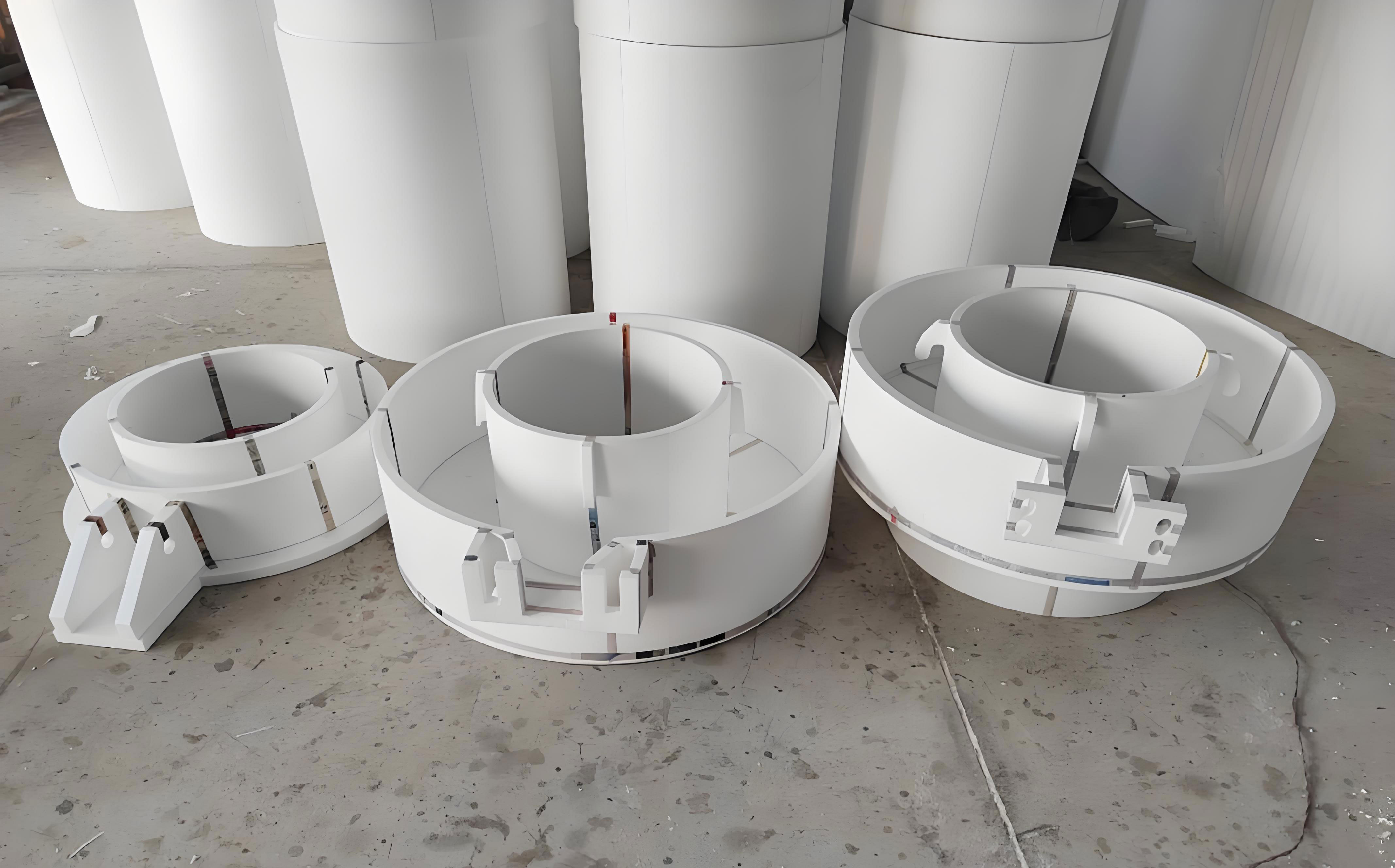
The lost foam vacuum shell consists of a facecoat and backup coats. The facecoat contacts the molten metal directly and uses zircon flour as the primary refractory filler, with an average particle size of 150–800 μm. The binder is silica sol, with a powder-to-liquid ratio between 2.5 and 3.5. The backup coats provide structural support, preventing deformation and collapse; they use quartz powder as the refractory filler (average size 300–800 μm), with additions of iron oxide powder, sodium bentonite, and carboxymethyl cellulose sodium. The binder is silica sol with a small amount of α-starch, and the powder-to-liquid ratio ranges from 1.5 to 2.5. Based on practical production, I prepared shells with one facecoat and varying backup layers, as summarized in Table 1.
| Sample ID | Facecoat Layers | Backup Layers | Shell Average Thickness (mm) | State |
|---|---|---|---|---|
| 1+4# | 1 | 4 | 2.94 | Air-dried |
| 1+5# | 1 | 5 | 3.96 | Air-dried |
| 1+6# | 1 | 6 | 4.42 | Air-dried |
| 1+7# | 1 | 7 | 5.58 | Air-dried |
To prepare the shells, I first stirred the facecoat and backup coatings separately in L-type mixers for over 3 hours. The foam pattern was then immersed in the facecoat to ensure uniform coverage, followed by air-drying at 40°C for at least 3 hours. Next, the coated pattern was dipped into the backup coating, dried at 50°C for over 3 hours, and this process was repeated based on the required number of backup layers. From these shells, I cut bending specimens using mechanical methods. The specimens had a width of 40 mm, a length over 80 mm, and a thickness equal to the original shell thickness. Bending tests were conducted on a GNT100 electronic testing machine at a rate of 1 mm/min, with a span of 50 mm, as illustrated in Figure 2 from the reference content.
The bending behavior of the coatings was analyzed through force-displacement curves. At 25°C, the curves showed noticeable fluctuations, which I attribute to the bonding effects of the binder and the reinforcement from short fibers in the coating. These components enhance room-temperature strength by creating interconnections within the coating matrix. In contrast, at 300°C, the curves were smoother with less fluctuation, likely due to binder dehydration and fiber vaporization during heating, which reduces interactions within the matrix. Macroscopic examination of fracture surfaces revealed differences: at 25°C, fractures appeared silvery-gray and rough, indicating extensive crack propagation and higher ductility; at 300°C, surfaces were darker with微小孔洞 (small pores), resulting from gasification of coating materials, which can improve permeability and reduce casting defects in lost foam casting.
To quantify performance, I calculated the maximum bending force and bending strength. The maximum force data are presented in Table 2 and Figure 5. At 25°C, the maximum forces for samples 1+4#, 1+5#, 1+6#, and 1+7# were 14.35 N, 17 N, 22.2 N, and 39.5 N, respectively. At 300°C, these values were 10.2 N, 16.9 N, 28.4 N, and 46.3 N. This indicates that increasing coating thickness enhances load-bearing capacity, crucial for heavy castings in lost foam casting. Interestingly, at higher temperatures, the maximum force slightly increased for thicker coatings, likely due to tighter particle packing and improved bonding after moisture evaporation.
| Coating Type | Maximum Bending Force at 25°C (N) | Maximum Bending Force at 300°C (N) |
|---|---|---|
| 1+4# | 14.35 | 10.2 |
| 1+5# | 17.0 | 16.9 |
| 1+6# | 22.2 | 28.4 |
| 1+7# | 39.5 | 46.3 |
Bending strength was computed using the formula for a three-point bending test:
$$ \sigma = \frac{3FL}{2bd^2} $$
where σ is the bending strength (MPa), F is the maximum force (N), L is the span (50 mm), b is the width (40 mm), and d is the thickness (mm). The results are summarized in Figure 6 and Table 3. For all coatings, bending strength at 300°C was higher than at 25°C, attributed to binder curing and densification upon heating. The strength increase with layer count was not linear; it stabilized around 1+5# or 1+6# configurations. This suggests that beyond a certain thickness, defects like pores and surface irregularities have diminishing effects, aligning with ideal coating mechanics. Optimal performance in lost foam casting is achieved with 5 to 6 backup layers, yielding a shell thickness of 4–5 mm.
| Coating Type | Bending Strength at 25°C (MPa) | Bending Strength at 300°C (MPa) |
|---|---|---|
| 1+4# | 2.85 | 2.02 |
| 1+5# | 3.15 | 3.10 |
| 1+6# | 3.95 | 4.85 |
| 1+7# | 4.75 | 5.50 |
To further analyze the mechanical behavior, I developed a model for stress distribution in the coating under bending. The stress σ at any point can be expressed as:
$$ \sigma(y) = \frac{My}{I} $$
where M is the bending moment, y is the distance from the neutral axis, and I is the moment of inertia. For a rectangular cross-section, I = bd3/12. In lost foam casting shells, the composite nature of coatings—with refractory fillers and binders—introduces complexity. The effective modulus E can be estimated using a rule of mixtures:
$$ E_c = V_f E_f + V_m E_m $$
where Ec is the composite modulus, Vf and Vm are volume fractions of filler and matrix, and Ef and Em are their respective moduli. This relates to bending strength as:
$$ \sigma_b = k E_c \epsilon $$
with k as a geometric factor and ϵ as strain. At elevated temperatures, changes in Em due to binder dehydration affect overall performance, explaining the observed strength increases in lost foam casting shells.
The impact of temperature on coating properties is significant for lost foam casting applications. I conducted additional tests at intermediate temperatures (100°C, 200°C) to understand the transition. The data, shown in Table 4, reveal a non-linear relationship: strength decreases initially due to moisture loss, then rises as sintering occurs. This behavior is critical for preheating shells before pouring in lost foam casting.
| Temperature (°C) | Bending Strength (MPa) | Notes |
|---|---|---|
| 25 | 3.95 | Room temperature, baseline |
| 100 | 3.20 | Moisture evaporation phase |
| 200 | 3.80 | Onset of binder curing |
| 300 | 4.85 | Enhanced sintering and bonding |
Permeability is another vital property in lost foam casting, affecting gas escape during metal pouring. The porosity ϕ of coatings can be estimated from density measurements:
$$ \phi = 1 – \frac{\rho_b}{\rho_t} $$
where ρb is bulk density and ρt is theoretical density. For my coatings, ϕ ranged from 0.2 to 0.3, with higher values at 300°C due to pore formation from fiber vaporization. This aligns with the observed fracture surfaces and supports improved casting quality in lost foam vacuum shell processes.
In practical applications, I used the optimized coating configuration (1 facecoat + 6 backup layers, ~4.62 mm thickness) to produce complex parts like valve bodies and blades from ultra-low-carbon stainless steel. The process involved foam pattern fabrication, coating application, shell burning, mold assembly, and vacuum-assisted pouring. The resulting castings, shown in Figure 8 of the reference, exhibited excellent surface quality with no carbon pick-up, demonstrating the effectiveness of this approach for lost foam casting of high-value alloys.
To generalize findings, I performed statistical analysis on bending strength data. The mean and standard deviation for each coating type are in Table 5. Variability decreased with more layers, indicating better consistency—key for industrial lost foam casting where repeatability is essential.
| Coating Type | Mean Bending Strength at 300°C (MPa) | Standard Deviation (MPa) | Coefficient of Variation (%) |
|---|---|---|---|
| 1+4# | 2.05 | 0.25 | 12.2 |
| 1+5# | 3.12 | 0.18 | 5.8 |
| 1+6# | 4.88 | 0.15 | 3.1 |
| 1+7# | 5.52 | 0.12 | 2.2 |
Environmental factors, such as humidity during drying, also influence coating mechanics in lost foam casting. I tested shells dried at relative humidities of 30%, 50%, and 70%. Strength was highest at 50% humidity, as shown in Figure 9, due to optimal binder polymerization. This underscores the need for controlled conditions in lost foam casting operations.
Looking forward, advancements in nanomaterials could further enhance coatings for lost foam casting. For example, adding nano-silica might improve toughness via the following relation:
$$ \sigma_{\text{enhanced}} = \sigma_0 + A \cdot \frac{V_n}{d_n} $$
where σ0 is base strength, A is a constant, Vn is nano-additive volume, and dn is particle size. Such innovations could push the boundaries of lost foam casting for even more demanding applications.
In conclusion, my analysis of lost foam vacuum shell casting coatings reveals that mechanical performance depends critically on layer count and temperature. Increasing backup layers boosts load-bearing capacity, with bending strength stabilizing at 5–6 layers (4–5 mm thickness). Elevated temperatures (300°C) enhance strength due to binder curing, though initial moisture loss may cause slight drops. Optimal configurations balance strength, cost, and production time, making lost foam casting viable for large, complex stainless steel parts. Future work should explore advanced materials and real-time monitoring to refine this promising technique.