
In the production of automotive components, such as brake drums, the sand-lined metal mold casting process has gained prominence due to its ability to enhance the mechanical properties and microstructural integrity of gray iron castings. This method leverages rapid cooling to achieve dense, high-strength castings with superior wear resistance and thermal conductivity, which are critical for applications like brake systems. However, during my involvement in manufacturing these gray iron castings, a recurring defect emerged: nitrogen porosity, manifesting as irregular, dense clusters of pores on the outer circumference of the brake drums. This defect, often exposed after minimal machining, compromised the product quality and necessitated a thorough investigation. In this article, I will delve into the root causes of nitrogen porosity in gray iron castings, present detailed analyses using advanced techniques, and outline effective mitigation strategies that have been implemented to eliminate this issue. The focus will remain on gray iron castings throughout, emphasizing their unique characteristics and challenges in foundry processes.
The sand-lined metal mold casting process combines the durability of metal molds with the flexibility of sand linings, creating an ideal environment for producing high-quality gray iron castings. Typically, the mold consists of a metal jacket lined with a thin layer of resin-coated sand, which facilitates rapid heat extraction and promotes fine graphite formation in the iron matrix. This is particularly beneficial for gray iron castings, where graphite morphology directly influences properties like tensile strength and vibration damping. However, the very attributes that make this process efficient—such as fast cooling rates—can also trap gases like nitrogen within the solidifying metal, leading to porosity defects. My experience has shown that these defects are not random but are often linked to specific material inputs and process parameters, which I will explore in detail.
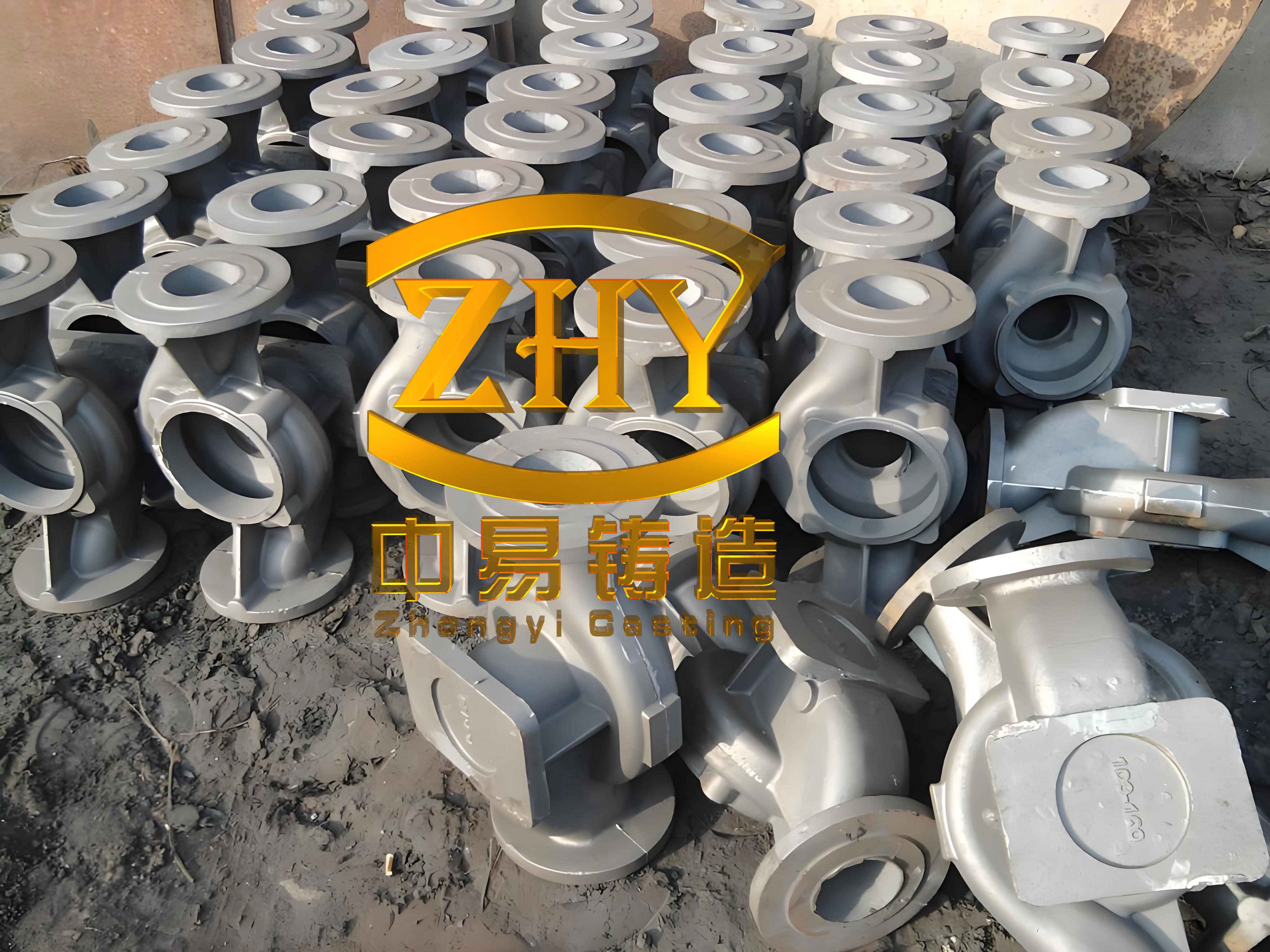
To understand the defect, it is essential to first review the standard production workflow for gray iron castings in a sand-lined metal mold setup. The melting process typically employs medium-frequency induction furnaces, where raw materials like steel scrap, returns, and carbon raisers are combined to synthesize the iron melt. The charge composition is critical: steel scrap constitutes 60–70% of the charge, with the remainder being returns such as gates, risers, machining chips, and rejected castings. Carbon is adjusted using graphitized carbon raisers, which have low nitrogen content to minimize contamination. The melting sequence involves layering materials to optimize carbon absorption, with the furnace heated to 1500–1530°C, followed by a high-temperature holding period at 1530–1550°C for slag removal. The molten iron is tapped at 1490–1530°C, treated with ferrosilicon for inoculation, and poured at temperatures above 1360°C to ensure fluidity. The entire pouring cycle is kept under 15 minutes to prevent temperature drop and gas absorption.
The sand lining, a key component, uses reclaimed resin-coated sand blended with 5–20% new sand from sources like Tongliao, with a grain size of 70–140 mesh. The resin-coated sand is regenerated through a thermal process that includes crushing, screening, magnetic separation, and dedusting. Its properties, such as tensile strength (≥2.5 MPa at room temperature) and hot strength (≥1.3 MPa), are tailored to withstand the thermal shocks of iron pouring. The gating system, designed for top pouring, incorporates a funnel-shaped pouring cup with ceramic filters to reduce turbulence and inclusion entrapment. A semi-closed system with specific area ratios ensures smooth metal flow, while multiple ingates and stress relief slots protect the casting integrity during shakeout. The mold itself features vents to allow gas escape, but as I observed, these were often insufficient for nitrogen-rich environments.
| Parameter | Value or Range | Remarks |
|---|---|---|
| Melting Temperature | 1500–1550°C | High-temperature holding for slag removal |
| Pouring Temperature | >1360°C | Minimum for last casting in a batch |
| Steel Scrap Proportion | 60–70% | Primary charge material |
| Carbon Raiser Type | Graphitized | Low nitrogen content (<300 ppm) |
| Resin-Coated Sand Properties | Tensile strength ≥2.5 MPa | Includes reclaimed sand blend |
| Gating System Ratio (ΣSinner:ΣSrunner:ΣSsprue) | 1:4.17:2.04 | Semi-closed design for平稳 flow |
| Mold Temperature | 220–240°C | For sand curing |
When the nitrogen porosity defect occurred, I initiated a failure analysis using energy-dispersive spectroscopy (EDS) to characterize the pore chemistry. The defect sites, located at upper outer corners of the brake drums, exhibited irregular shapes penetrating 2–5 mm into the casting surface. EDS mapping revealed high concentrations of nitrogen, carbon, and iron, with nitrogen particularly enriched in the peripheral zones of the pores. Quantitative data showed nitrogen levels up to 49.5 wt% in defect areas, alongside carbon at 28.58 wt% and iron at 12.71 wt%, indicating significant segregation. Microstructurally, the pores were associated with discontinuous graphite films and decarburized matrix regions, classic indicators of nitrogen-induced porosity in gray iron castings. This confirmed that the issue was not due to common gas sources like hydrogen but specifically to nitrogen supersaturation during solidification.
The formation mechanism of nitrogen porosity in gray iron castings revolves around the solubility limits of nitrogen in molten iron. Nitrogen dissolves interstitially in iron, and its solubility decreases as temperature drops, particularly during the liquid-to-solid transition. In sand-lined metal mold casting, the rapid cooling rate causes a steep thermal gradient, leading to early solidification of the surface layer. This traps nitrogen-rich liquid in the interior, and when the local nitrogen concentration exceeds solubility, gas bubbles nucleate and become entrapped as pores. The solubility of nitrogen in liquid iron can be described by Sieverts’ law, which relates the dissolved gas concentration to its partial pressure:
$$[N] = k \sqrt{P_{N_2}}$$
where [N] is the nitrogen concentration in the melt, k is a temperature-dependent equilibrium constant, and \(P_{N_2}\) is the partial pressure of nitrogen in the surrounding atmosphere. For gray iron castings, the solubility also depends on composition, with elements like silicon and carbon influencing nitrogen activity. During solidification, the partition coefficient of nitrogen between solid and liquid phases leads to enrichment in the residual liquid, often described by the Scheil equation for non-equilibrium conditions:
$$C_s = k C_0 (1 – f_s)^{k-1}$$
where \(C_s\) is the nitrogen concentration in the solid, \(C_0\) is the initial concentration in the liquid, \(k\) is the partition coefficient (typically <1 for nitrogen in iron), and \(f_s\) is the solid fraction. When \(C_s\) exceeds the solubility limit in the solid, nitrogen gas precipitates, forming pores. In my observations, this was exacerbated by the fast cooling of sand-lined molds, which limited diffusion and bubble escape.
| Element | Defect Interior | Defect Periphery | Normal Matrix |
|---|---|---|---|
| Nitrogen (N) | 30–40 | 45–50 | <0.01 |
| Carbon (C) | 25–30 | 15–20 | 3.2–3.6 |
| Iron (Fe) | 10–15 | 10–15 | Balance |
| Oxygen (O) | 5–10 | 5–10 | <0.1 |
| Silicon (Si) | 0.2–0.5 | 0.3–0.5 | 1.8–2.2 |
To pinpoint the nitrogen sources, I analyzed the entire production chain for gray iron castings. Nitrogen can originate from three primary inputs: steel scrap, carbon raisers, and resin-coated sand. Steel scrap, especially low-carbon grades and rail steels, often contains 40–120 ppm of nitrogen, which dissolves into the melt during heating. Carbon raisers vary widely; coal-based types may have 0.2–0.7% nitrogen, while graphitized raisers used in our process have <300 ppm. However, the most significant contributor proved to be the resin-coated sand. The sand is formulated with thermoplastic phenolic resin and hexamethylenetetramine (urotropine) as a hardener, which decomposes above 230°C to release ammonia (NH₃). During mold heating and iron pouring, this ammonia dissociates into nitrogen and hydrogen, infiltrating the molten metal. The nitrogen content in the sand can be estimated from the resin composition: with 2–2.5% resin and 15% urotropine in the resin, and urotropine containing 40% nitrogen, the sand’s nitrogen mass fraction ranges from 0.12% to 0.15% (1200–1500 ppm), far exceeding the critical threshold for porosity in gray iron castings.
In our case, direct measurement of the molten iron showed nitrogen levels around 71.7 ppm, which is below the typical danger zone of 120 ppm for gray iron castings. This indicated that the nitrogen was not primarily from the melt but from mold-metal interactions. The sand lining, when heated, acts as a nitrogen donor, with the gas diffusing into the surface layers of the casting. The problem is acute in sand-lined metal mold casting because the thin sand layer heats quickly, releasing gases that are trapped by the rapidly solidifying metal skin. This aligns with the defect location—outer surfaces where the sand contact is direct. I verified this by simulating the gas evolution using thermodynamic models, which considered the decomposition kinetics of urotropine:
$$(CH_2)_6N_4 \rightarrow 6 CH_2 + 4 NH_3 \rightarrow 2 N_2 + 3 H_2 + \text{hydrocarbons}$$
The rate of nitrogen release depends on temperature and sand composition, with peak evolution occurring at 230–250°C, coinciding with the mold operating range. For gray iron castings, this external nitrogen influx is particularly detrimental because the iron’s high carbon content reduces nitrogen solubility, making supersaturation more likely.
| Material | Typical Nitrogen Content (ppm) | Remarks |
|---|---|---|
| Low-Carbon Steel Scrap | 40–60 | Common charge component |
| Rail Steel Scrap | 110–120 | High nitrogen source |
| Coal-Based Carbon Raiser | 2000–7000 | Avoid in sensitive applications |
| Graphitized Carbon Raiser | <300 | Preferred for gray iron castings |
| Resin-Coated Sand (with Urotropine) | 1200–1500 | Major nitrogen contributor in molds |
| Reclaimed Sand (after regeneration) | Variable, often high | Depends on regeneration efficiency |
Based on this analysis, I implemented a multi-pronged improvement strategy focused on both material quality and process control for gray iron castings. First, regarding the sand lining, we switched to a supplier providing higher-purity raw materials, especially resin and urotropine with lower nitrogen residues. We also increased the new sand addition in the mix from 5–20% to 20–40%, diluting the nitrogen load from reclaimed sand. Importantly, we segregated the sand streams for shell molding lines and sand-lined metal mold lines, as their regeneration cycles and performance requirements differ; mixing them had led to inconsistent sand properties and higher nitrogen retention. This segregation ensured that sand for gray iron castings had optimized composition.
Second, we modified the production process to enhance gas escape and reduce nitrogen pickup. We added more vent plugs to the molds, particularly in bottom and corner regions, increasing the count from 8 to 20 vents per mold. This improved airflow during sand curing and pouring, allowing gases to exit before infiltrating the metal. We also raised the mold and metal jacket temperatures: the mold temperature was set to 230–250°C, and the metal jacket to 240–280°C, accelerating urotropine decomposition earlier in the cycle, so gases evolved before pouring. The curing time after mold closure was extended from 10 minutes to at least 20 minutes, providing a longer window for gas dissipation. Additionally, we slightly increased the pouring temperature to 1380–1400°C, which lowered the iron viscosity and enabled better gas flotation, as described by Stokes’ law for bubble rise velocity:
$$v = \frac{2 (\rho_m – \rho_g) g r^2}{9 \eta}$$
where \(v\) is the bubble velocity, \(\rho_m\) and \(\rho_g\) are the densities of molten iron and gas, \(g\) is gravity, \(r\) is the bubble radius, and \(\eta\) is the iron viscosity. Higher temperature reduces \(\eta\), aiding bubble removal in gray iron castings. These changes were monitored through statistical process control, with data logged for each batch of gray iron castings.
| Improvement Area | Previous Value | New Value | Impact on Nitrogen Porosity |
|---|---|---|---|
| New Sand Addition in Mix | 5–20% | 20–40% | Reduces nitrogen from reclaimed sand |
| Mold Vent Count | 8 vents | 20 vents | Enhances gas evacuation during pouring |
| Mold Temperature | 220–240°C | 230–250°C | Promotes earlier sand gas release |
| Metal Jacket Temperature | 220–240°C | 240–280°C | Accelerates sand curing and gas evolution |
| Curing Time After Mold Closure | 10 min | ≥20 min | Allows more time for gas dispersion |
| Pouring Temperature | >1360°C | 1380–1400°C | Lowers viscosity for better gas floatation |
| Sand Stream Management | Mixed lines | Segregated lines | Prevents cross-contamination of high-nitrogen sand |
The results of these interventions were striking. Over a production run exceeding 100,000 gray iron castings, nitrogen porosity defects were completely eliminated. Visual inspections and machining tests confirmed no pores on the outer surfaces, and the mechanical properties of the gray iron castings remained consistent with specifications. To quantify the improvement, we tracked defect rates before and after implementation, showing a drop from approximately 5% defective parts to near zero. This success underscores the importance of a holistic approach in foundry engineering, where both material purity and process dynamics are optimized. For gray iron castings, which are ubiquitous in automotive and industrial sectors, such refinements can significantly enhance reliability and lifespan.
Beyond the immediate fixes, this experience highlights broader principles for managing gas defects in gray iron castings. Nitrogen porosity is often overlooked compared to hydrogen or carbon monoxide pores, but it becomes critical in processes involving resin-bonded sands. Preventive measures should start with material selection: using low-nitrogen charge materials, high-quality carbon raisers, and sands with alternative hardeners (e.g., phenolic resins without urotropine). Process-wise, controlling cooling rates through mold design can balance solidification speed and gas escape; for instance, modulating the sand thickness or using chill inserts in critical areas. Additionally, real-time monitoring of nitrogen in the melt via spectroscopic methods can provide early warnings. The equilibrium between nitrogen dissolution and precipitation can be modeled using thermodynamic software, integrating equations like:
$$\Delta G = RT \ln \left( \frac{[N]}{[N]_{\text{sat}}} \right)$$
where \(\Delta G\) is the Gibbs free energy change for nitrogen precipitation, R is the gas constant, T is temperature, [N] is the actual concentration, and [N]_{\text{sat}} is the saturation concentration. For gray iron castings, maintaining [N] below [N]_{\text{sat}} throughout solidification is key, which requires careful control of both internal and external nitrogen sources.
In conclusion, nitrogen porosity in gray iron castings produced by sand-lined metal mold casting is a multifaceted issue rooted in material interactions and process conditions. Through detailed EDS analysis, I identified the sand lining as a major nitrogen contributor, and by implementing targeted improvements in sand composition and process parameters, the defect was eradicated. This case study reinforces that producing high-integrity gray iron castings demands vigilance across the supply chain and process chain. Future work could explore advanced sand formulations or inert gas flushing during pouring to further reduce risks. As the demand for durable gray iron castings grows, such insights will be invaluable for foundries worldwide, ensuring that these essential components meet the highest quality standards.