
The pursuit of lightweight, high-strength, and aesthetically pleasing components continues to drive innovation in automotive and mechanical industries. Among these, aluminum alloy intake manifolds stand out as critical sand casting parts, prized for their excellent combination of low weight, good surface finish, and superior mechanical properties. However, the reliable production of these complex, thin-walled sand casting parts presents significant challenges. Defects such as shrinkage porosity, shrinkage cavities, sand inclusions, and even penetration can frequently occur during the sand casting process, leading to high scrap rates and substantial financial losses for manufacturers. Traditional casting process design relies heavily on empirical knowledge and iterative physical trials, which are both time-consuming and costly.
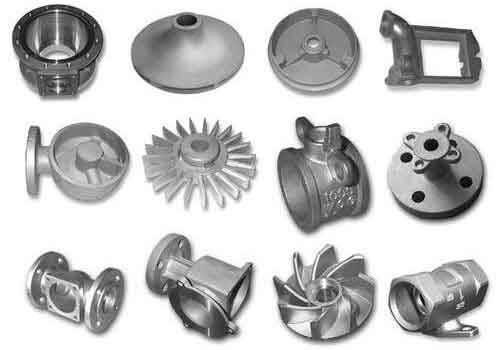
This reliance on trial-and-error underscores a critical need for advanced methodologies in foundry engineering. The integration of numerical simulation technology offers a powerful solution. By utilizing sophisticated software based on finite element methods, it is possible to create virtual prototypes of the entire casting process. These simulations visualize the dynamic flow of molten metal and the subsequent heat transfer during solidification, allowing engineers to predict potential defect locations before a single mold is made. This study focuses on the application of such simulation techniques to optimize the production of a specific aluminum alloy intake manifold, a classic example of a high-value sand casting part. Using the commercial software ProCAST, the complete filling and solidification sequence was analyzed under realistic production boundary conditions, providing actionable insights to enhance the casting yield and quality of these essential components.
The core of any accurate casting simulation lies in its mathematical foundation, which governs the physics of fluid flow, heat transfer, and phase change. The following equations form the essential framework for modeling the behavior of molten aluminum within a sand mold, applicable to a wide range of sand casting parts.
Governing Equations for Casting Simulation
The flow of molten metal is described by the fundamental laws of conservation. The Continuity Equation, representing the conservation of mass, must be satisfied at all times during the filling process. For an incompressible fluid, which is a common assumption for molten metals in casting simulations, it simplifies to:
$$ \nabla \cdot \vec{u} = 0 $$
where $\vec{u}$ is the velocity vector of the fluid. In its general form for a compressible fluid, the equation is:
$$ \frac{\partial \rho}{\partial t} + \nabla \cdot (\rho \vec{u}) = 0 $$
Here, $\rho$ is the fluid density and $t$ is time.
The motion of the viscous molten metal is governed by the Navier-Stokes Equations, derived from Newton’s second law (conservation of momentum). For an incompressible Newtonian fluid with constant viscosity, they are expressed as:
$$ \rho \frac{D\vec{u}}{Dt} = \rho \vec{F} – \nabla p + \mu \nabla^2 \vec{u} $$
where $\frac{D}{Dt}$ is the material derivative, $\vec{F}$ represents body forces (typically gravity, $\vec{g}$), $p$ is the pressure, and $\mu$ is the dynamic viscosity. The term $\mu \nabla^2 \vec{u}$ accounts for the diffusion of momentum due to viscosity.
The evolution of temperature within the casting and the mold is critical for predicting solidification and defects. This is captured by the Energy Conservation Equation, which includes the effects of heat conduction, convection, and the latent heat released during phase change:
$$ \rho c_p \frac{DT}{Dt} = \nabla \cdot (k \nabla T) + \dot{q}_v $$
In this equation, $c_p$ is the specific heat capacity, $T$ is the temperature, $k$ is the thermal conductivity, and $\dot{q}_v$ is a volumetric heat source term, which is crucial for modeling the release of latent heat $L$ during solidification. This release can be modeled using an apparent heat capacity method or an enthalpy method. A common approach is to treat the latent heat effect by modifying the specific heat over the solidification interval ($T_s$ to $T_l$):
$$ c_p^{eff} = c_p – L \frac{\partial f_s}{\partial T} $$
where $f_s$ is the solid fraction, a key variable that tracks the progress of solidification from 0 (fully liquid) to 1 (fully solid).
To predict the formation of shrinkage porosity, a criterion based on local pressure and solidification conditions is often used. The well-known Niyama Criterion is one such predictive tool, defined as:
$$ G / \sqrt{\dot{T}} $$
where $G$ is the temperature gradient and $\dot{T}$ is the cooling rate. Regions where this value falls below a critical threshold are prone to microporosity formation. The local pressure drop in the mushy zone, related to Darcy’s law for flow through a porous medium (the solidifying network), is also calculated:
$$ \vec{u}_l = -\frac{K}{\mu_l f_l} (\nabla p – \rho_l \vec{g}) $$
Here, $\vec{u}_l$ is the liquid velocity in the interdendritic region, $K$ is the permeability (a function of solid fraction $f_s$), $\mu_l$ is the liquid viscosity, $f_l$ is the liquid fraction ($1-f_s$), and $\rho_l$ is the liquid density.
| Conservation Principle | Governing Equation | Key Variables | Role in Simulating Sand Casting Parts |
|---|---|---|---|
| Mass | $\frac{\partial \rho}{\partial t} + \nabla \cdot (\rho \vec{u}) = 0$ | $\rho$: Density, $\vec{u}$: Velocity | Ensures mass balance during mold filling. |
| Momentum | $\rho \frac{D\vec{u}}{Dt} = -\nabla p + \mu \nabla^2 \vec{u} + \rho \vec{g}$ | $p$: Pressure, $\mu$: Viscosity, $\vec{g}$: Gravity | Models molten metal flow dynamics, essential for predicting mistruns, cold shuts, and turbulence. |
| Energy | $\rho c_p^{eff}\frac{DT}{Dt} = \nabla \cdot (k \nabla T)$ | $T$: Temperature, $k$: Conductivity, $c_p^{eff}$: Effective heat capacity (includes latent heat $L$). | Predicts temperature fields, solidification times, and sequence, which is fundamental for defect analysis in sand casting parts. |
| Porosity Prediction | $G / \sqrt{\dot{T}} < \text{Critical Value}$ | $G$: Temp. Gradient, $\dot{T}$: Cooling Rate | Identifies regions susceptible to shrinkage porosity formation. |
The first step in simulating any sand casting part is the creation of an accurate digital twin. For the aluminum intake manifold, the process began with a detailed 3D CAD model of the part itself. This part, characterized as a thin-walled, hollow structure with complex geometry and mounting flanges, was the foundation. The casting process design was then digitally implemented around it. Following standard foundry principles, the orientation was set with the largest flange facing downward to promote soundness in critical machined surfaces. A gating system was designed to ensure smooth, controlled filling. This system comprised a vertical sprue, a horizontal runner, and multiple thin, slot-like gates distributed along the runner to introduce metal gently into the mold cavity, minimizing turbulence and direct impingement on sand cores. Finally, a substantial riser (feeder) was attached to the runner to act as a reservoir of hot metal to compensate for volumetric shrinkage during solidification.
With the complete assembly model (part, gates, runner, sprue, riser, and mold enclosure) prepared, the next critical step is mesh generation. The entire domain was discretized into a finite element mesh, which forms the computational framework for solving the governing equations. Both the casting (metal) and the sand mold were meshed, typically using tetrahedral elements for their flexibility in handling complex shapes common in sand casting parts. Mesh quality parameters such as aspect ratio and minimum dihedral angle were controlled to ensure numerical stability and accuracy. A typical mesh for such a simulation can contain several million elements, with a finer mesh often applied to the casting itself and the gating system to resolve the steep temperature gradients and fluid flow details accurately.
| Category | Parameter / Material | Value / Specification | Remarks |
|---|---|---|---|
| Casting Alloy (A356) | Liquidus Temperature ($T_l$) | 615 °C | Temperature above which the alloy is fully liquid. |
| Solidus Temperature ($T_s$) | 555 °C | Temperature below which the alloy is fully solid. | |
| Latent Heat of Fusion ($L$) | ~430 kJ/kg | Critical for accurate solidification modeling. | |
| Thermal Conductivity ($k$), Density ($\rho$), Specific Heat ($c_p$) | Temperature-dependent functions | Essential input for the energy equation. Data is typically provided via material databases. | |
| Mold Material | Type | Silica Sand | Standard material for sand casting parts molds. |
| Initial Temperature | 25 °C (Ambient) | Typical starting condition for a green sand mold. | |
| Process Conditions | Pouring Temperature | 700 °C | Superheat of ~85°C above $T_l$. |
| Pouring Velocity / Time | Defined by gating system design | Controls the fill rate and fluid dynamics. | |
| Metal-Mold Heat Transfer Coefficient (HTC) | ~1000 W/(m²·K) | An interfacial boundary condition governing heat flow from metal to sand. | |
| Cooling Method | Air Cooling | Natural convection and radiation to the environment. |
The results of the numerical simulation provide a detailed, time-resolved visualization of the casting process. The filling stage simulation shows the progressive advancement of the molten metal front. For a well-designed gating system in sand casting parts, the metal should fill the cavity smoothly from the bottom up, avoiding jetting, excessive turbulence, or air entrapment. The temperature distribution during filling is relatively uniform but shows cooling at the metal front due to contact with the cold sand mold. The total fill time is a direct output, which for a part of this size might be on the order of a few seconds.
The solidification analysis is the most critical phase for defect prediction. The software calculates and displays the temperature field evolution over time. Key outputs include:
Solidification Sequence: The simulation shows which regions of the casting solidify first and which remain liquid longest. An ideal sequence for sand casting parts is directional solidification, where solidification progresses from the extremities of the casting toward the riser(s). This creates a thermal gradient that drives feed metal from the riser into the casting to compensate for shrinkage.
Cooling Curves: Virtual thermocouples can be placed at any location to plot temperature versus time, revealing local solidification times and cooling rates.
Solid Fraction Contours: Displaying the fraction of solid material helps identify the development of isolated liquid pools (“hot spots”) that are cut off from the feeding source, as these are prime locations for shrinkage cavities.
Based on the temperature and pressure fields, the software can post-process the data to predict defect locations. The shrinkage porosity module maps areas where the local thermal conditions (e.g., a low Niyama criterion value) and pressure drop indicate a high probability of pore formation. In a successful design for sand casting parts, these predicted defect zones should be confined entirely to the riser, which is sacrificial and will be removed from the final part. Any predicted porosity within the actual part geometry indicates a need for process modification, such as relocating the riser, adding chills to accelerate local cooling, or adjusting the gating design.
| Simulation Phase | Key Observations | Acceptance Criteria for Quality Sand Casting Parts | Corrective Actions if Criteria Fail |
|---|---|---|---|
| Filling | Fill time, flow front progression, temperature distribution during fill, potential for air entrapment. | Steady, progressive fill without severe turbulence or cold shuts. Uniform front advancement. | Modify gating design (sprue size, runner cross-section, gate number/size/location) to control velocity and fill pattern. |
| Solidification | Temperature field over time, solidification sequence, location of last-to-freeze zones, local solidification times. | Directional solidification toward the riser(s). No large, isolated hot spots within the part body. | Reposition risers, add exothermic riser sleeves, apply chills (metal or sand) to critical areas, modify part geometry (if possible). |
| Defect Prediction | Location and severity of predicted shrinkage porosity/cavities using criteria like Niyama. | All significant predicted porosity is contained within the riser(s). Part body is marked as sound. | Optimize riser size and placement based on feeding distance rules validated by simulation. Consider venting or pressure control. |
In the case of the aluminum intake manifold simulation, the results demonstrated the efficacy of the initial process design. The filling pattern was smooth and complete. The solidification sequence clearly showed a directional progression toward the main riser attached to the gating system. Most importantly, the predicted shrinkage defect module highlighted porosity formation almost exclusively within the volume of the riser, with only minimal, inconsequential indications in very isolated areas of the heavy flange sections. This virtual outcome strongly suggested that the casting process was robust and would yield sound sand casting parts in production.
The application of numerical simulation software like ProCAST represents a paradigm shift in the design and optimization of processes for sand casting parts. By solving the complex, coupled equations of fluid dynamics and heat transfer, it provides an unparalleled window into the physical phenomena occurring inside the mold. This capability allows foundry engineers to move beyond empirical guesswork. They can now virtually test multiple design alternatives—different riser configurations, chill placements, gating systems, and pouring parameters—rapidly and at low cost. The primary benefits are clear: a significant reduction in the time and expense associated with physical prototyping and trial runs, a marked improvement in first-pass yield rates, and the production of higher-quality, more reliable castings. For complex and demanding components like aluminum intake manifolds, numerical simulation is not merely a helpful tool but an essential component of modern, competitive foundry practice, ensuring the efficient and defect-free production of critical sand casting parts.