
Traditional foundry production heavily relies on the empirical knowledge of casting designers, often leading to prolonged product development cycles, high costs, and inconsistent quality. The application of casting simulation software has effectively improved this situation, serving as a crucial auxiliary tool for young foundry engineers who may lack extensive experience. To produce qualified castings, it is essential to effectively control various influencing factors. Utilizing the finite element method for simulation calculations, ProCAST software enables comprehensive analysis including heat transfer, mold filling flow processes, coupled thermal-stress field calculations, microstructure simulation, and prediction of shrinkage porosity and cavities. Therefore, ProCAST is a powerful simulation tool for casting process design. Sand casting, as a traditional method, is suitable for producing castings of various shapes, sizes, and applications. Its process involves steps such as sand mixing, molding, core making, drying, mold assembly, and pouring. Studying the factors affecting the yield rate within this process is of significant importance. This article focuses on the numerical simulation research of the sand casting process for an aluminum alloy suction valve shell. Based on the simulation results, the process is improved, which can serve as a reference for practical production.
The subject of this study is a valve shell, a critical component designed to withstand both positive and negative pressure within its internal cavity during operation, with its flange connection points constrained by mounting bolts. The production of high-integrity shell castings like this presents several challenges. The geometry of such shell castings is often complex, featuring varying wall thicknesses. For this specific shell, the mass is approximately 30.0 kg, with overall envelope dimensions of 721 mm × 352 mm × 352 mm. The wall thickness varies significantly, with the thickest section nearing 30.6 mm and the thinnest around 10.0 mm, resulting in an average wall thickness of 12.2 mm. This variation complicates the solidification pattern. Furthermore, aluminum alloy shell castings are particularly prone to defects such as gas porosity and pinholes. The average wall thickness of 12.2 mm in this casting further increases the risk of casting issues like mistruns and cold shuts. Therefore, the molding sand must be carefully selected, considering properties like sufficient gas evolution, good flowability, and easy compactability to achieve castings with high dimensional accuracy, a smooth surface finish, and high strength.
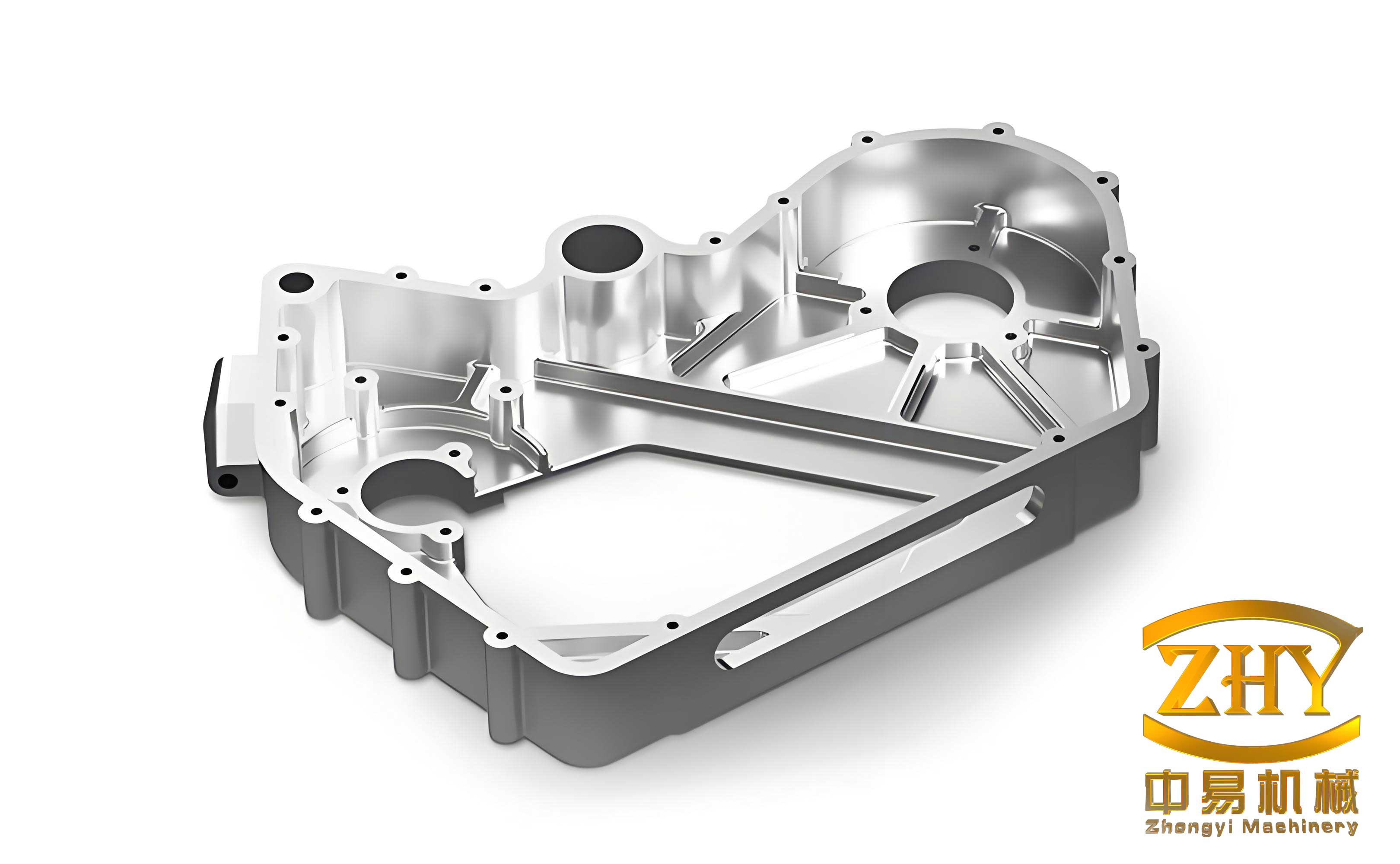
The casting material is ZL114A aluminum alloy, which offers high mechanical properties, including a tensile strength of 310 MPa, elongation greater than 3%, and a Brinell hardness exceeding 95 HBS. Its excellent casting performance, coupled with good oxidation and corrosion resistance, makes it suitable for demanding applications like pressure shell castings. After comprehensive comparison and analysis, alkaline phenolic resin no-bake sand was ultimately selected as the molding material to meet the stringent requirements. The physical properties and chemical composition of ZL114A alloy are summarized in the tables below.
| Alloy Grade | Density (g/cm³) | Solidus and Liquidus Temperature (°C) |
|---|---|---|
| ZL114A | 2.7 | 557 – 613 |
| Element | Si | Ti | Be | Cu | Mg | Zn | Al |
|---|---|---|---|---|---|---|---|
| Content (wt.%) | 6.25 | 0.18 | 0.07 | 0.15 | 0.55 | 0.08 | Bal. |
The casting process design begins with determining the pouring position—the spatial orientation of the casting within the mold during pouring—which significantly impacts solidification. Key considerations include positioning important sections or machined surfaces downward or vertically, orienting large flat surfaces downward, ensuring proper mold filling, and facilitating feeding. The actual solidification process of aluminum alloys is complex and prone to oxidation film formation. This film can aggregate during filling, leading to defects. To enable a calm fill, minimize oxidation, and reduce turbulence, a bottom-gating system was selected for a horizontal pour. Given the relatively complex structure of the valve shell, a one-casting-per-mold scheme was adopted. Targeting a dimensional tolerance grade of CT11-12 per GB/T 6414-1999, the casting dimensional tolerance was determined to be 3.6 mm. The machining allowance grade was set to F-H, resulting in a 5 mm allowance for the flanges. Accounting for the hindered shrinkage typical for aluminum-silicon alloys, a casting shrinkage rate of 1% was applied. A wood pattern was used with the no-bake resin sand, and a draft angle of 0°35′ was specified. Bolt holes smaller than 20 mm in diameter were designed not to be cast but machined later. For core support, a core reinforcement (core bar) was employed due to the core’s size.
The pouring time is a critical parameter affecting the filling process and final casting quality. It can be initially estimated using the following empirical formula:
$$ \tau = s_1 \cdot \sqrt[3]{\delta \cdot G} $$
where $\tau$ is the pouring time (s), $G$ is the total weight of the casting including feeders (kg), $\delta$ is the representative wall thickness of the casting (mm), and $s_1$ is a coefficient dependent on the poured metal. For aluminum alloys, $s_1$ typically ranges from 1.6 to 2.0. Substituting the relevant data for the valve shell casting yields a calculated pouring time of approximately 15 seconds.
Two distinct gating system schemes were designed for simulation comparison. Scheme 1 employs a “vertical molding, horizontal pouring” approach. The gating system is open-type with a cross-sectional area ratio of $ \sum F_{\text{sprue}} : \sum F_{\text{runner}} : \sum F_{\text{ingate}} = 1 : 2 : 3 $. It is configured as a bottom-gating reverse rain system, embedded within the core using a buried pipe molding technique. This design minimizes冲击 on the sand mold, promotes uniform and calm filling, and reduces metal oxidation and splashing. However, as the ingates are located at the bottom, the upper, more distant sections of the casting might be susceptible to cold shuts and mistruns.
Scheme 2 utilizes a “horizontal molding, horizontal pouring” method. The gating system is also an open-type with the same area ratio of $ 1 : 2 : 3 $. It is arranged on the outside of the casting, using a buried pipe for bottom gating. This scheme offers convenience in molding and core setting. Similar to Scheme 1, the upper parts of the casting, being far from the ingates, might risk filling-related defects.
The three-dimensional solid models for the casting, cores, gating systems, and mold were created in UG NX 8.0 and exported in IGES format for meshing within the ProCAST Mesh module. To balance computational accuracy and speed, different element sizes were assigned: a fine 4 mm size for the critical casting, cores, and gating systems, and a coarser 30 mm size for the mold flask. For Scheme 1, this resulted in a mesh containing 218,212 2D elements and 6,094,124 3D elements. Scheme 2 generated a mesh with 147,876 2D elements and 3,951,294 3D elements.
The simulation parameters were set based on material properties and standard foundry practice. The interfacial heat transfer coefficient (IHTC) between the resin sand mold/core and the aluminum casting was set to 300 W/m²·K. The IHTC between the sand mold and the surrounding air was set to 10 W/m²·K. Based on the properties of ZL114A alloy, the pouring temperature was set to 740°C, with a pouring time of 15 seconds, as calculated. Key parameters are consolidated in the table below.
| Parameter | Value | Description / Material |
|---|---|---|
| $\alpha_{\text{metal-sand}}$ | 300 W/m²·K | IHTC (Cast/Mold) |
| $\alpha_{\text{sand-air}}$ | 10 W/m²·K | IHTC (Mold/Air) |
| $T_{\text{pour}}$ | 740 °C | Pouring Temperature |
| $\tau$ | 15 s | Pouring Time |
| Mold Material | Alkaline Phenolic Resin Sand | Mold & Core |
The simulation results for Scheme 1 indicated a total fill time of 16.42 seconds, close to the calculated value. The maximum fluid velocity during filling did not exceed 1.8 m/s, confirming a relatively calm fill process. However, a lag in filling was observed near the third flange, potentially leading to gas entrapment. The defect prediction module highlighted a high probability for shrinkage porosity and cavities on the lower outer surface of the valve shell and a lower probability in the flange connected to the ingate. This pattern arises because these sections solidify directionally from the outside inward. As the alloy exhibits a mushy freezing mode, liquid metal feeding from the interior towards the already solidified outer skin is restricted, leading to internal shrinkage defects—a common challenge in thick sections of shell castings.
For Scheme 2, the simulated fill time was 15.41 seconds. The filling was even calmer, with a maximum velocity below 1.6 m/s. By 6.55 seconds, the bottom of the mold cavity was completely filled. The defect analysis showed a more favorable result compared to Scheme 1, with the major defects concentrated primarily within the thicker flange sections. This localization occurs because the thicker sections remain liquid longer and feed the thinner, quicker-solidifying areas, depleting their own liquid metal reserve and creating localized shrinkage. This focused defect distribution makes Scheme 2 a more suitable candidate for targeted process optimization.
Based on the simulation outcomes, Scheme 2 was selected for optimization due to its overall calmer filling and more concentrated defect location. The primary issue was the shrinkage in the thick flange. The solution involved implementing a feeding mechanism to compensate for the volumetric solidification shrinkage. An open feeder (riser) was designed and placed on top of the problematic flange. A cylindrical-shaped open riser was chosen. This placement not only promotes directional solidification towards the riser but also enhances venting of gases from the mold. The effectiveness of riser design can be evaluated using feeding distance rules and modulus calculations. The modulus (M) of a section, given by its volume (V) to cooling surface area (A) ratio ($ M = V / A $), is a key metric. For effective feeding, the modulus of the riser ($M_r$) should be greater than that of the casting section it feeds ($M_c$), typically $M_r > 1.2 \times M_c$.
The optimized process with the added riser was simulated again. The results confirmed the success of the modification. The internal shrinkage cavity in the thick flange was eliminated as the riser provided the necessary molten metal to compensate for the shrinkage. The predicted shrinkage porosity was successfully relocated upward into the riser itself, which is subsequently removed from the final casting. This demonstrates the practical value of simulation in iteratively designing and validating effective feeding systems for complex shell castings. The tendency for shrinkage porosity can also be assessed quantitatively using criteria like the Niyama criterion ($Ny$), which is a function of the local thermal gradient (G) and cooling rate (R): $ Ny = G / \sqrt{\dot{T}} $, where $\dot{T}$ is the cooling rate. Areas with a Niyama value below a certain threshold are prone to microporosity.
In conclusion, the rational use of numerical simulation software plays a vital supporting role in guiding casting process design. It allows for the approximate analysis of different design schemes, predicting the rationality of a process and identifying potential problems beforehand. Based on results from velocity fields, temperature fields, and stress fields, simulation provides clear directions for process improvement. For intricate shell castings made from aluminum alloys, simulation is indispensable for optimizing gating and feeding systems to achieve sound castings, reduce trial-and-error cycles, and lower production costs. This case study on the aluminum valve shell underscores the methodology of using simulation to compare initial designs, identify defect mechanisms related to filling and solidification, and implement and verify corrective measures like strategic riser placement, thereby ensuring the manufacturability and quality of complex cast components.