
Ensuring the soundness of large and medium-sized castings is a critical challenge in the foundry industry, particularly for materials like nodular cast iron. While the graphite expansion during solidification provides some degree of self-feeding, the characteristic mushy solidification mode and narrow feeding channels often necessitate the use of risers. For these sizable nodular cast iron castings, open risers coupled with exothermic insulating covering agents have become a standard practice to effectively manage shrinkage porosity and defects. My research focuses on the development and validation of a novel covering agent specifically designed to address the unique requirements and challenges associated with feeding nodular cast iron.
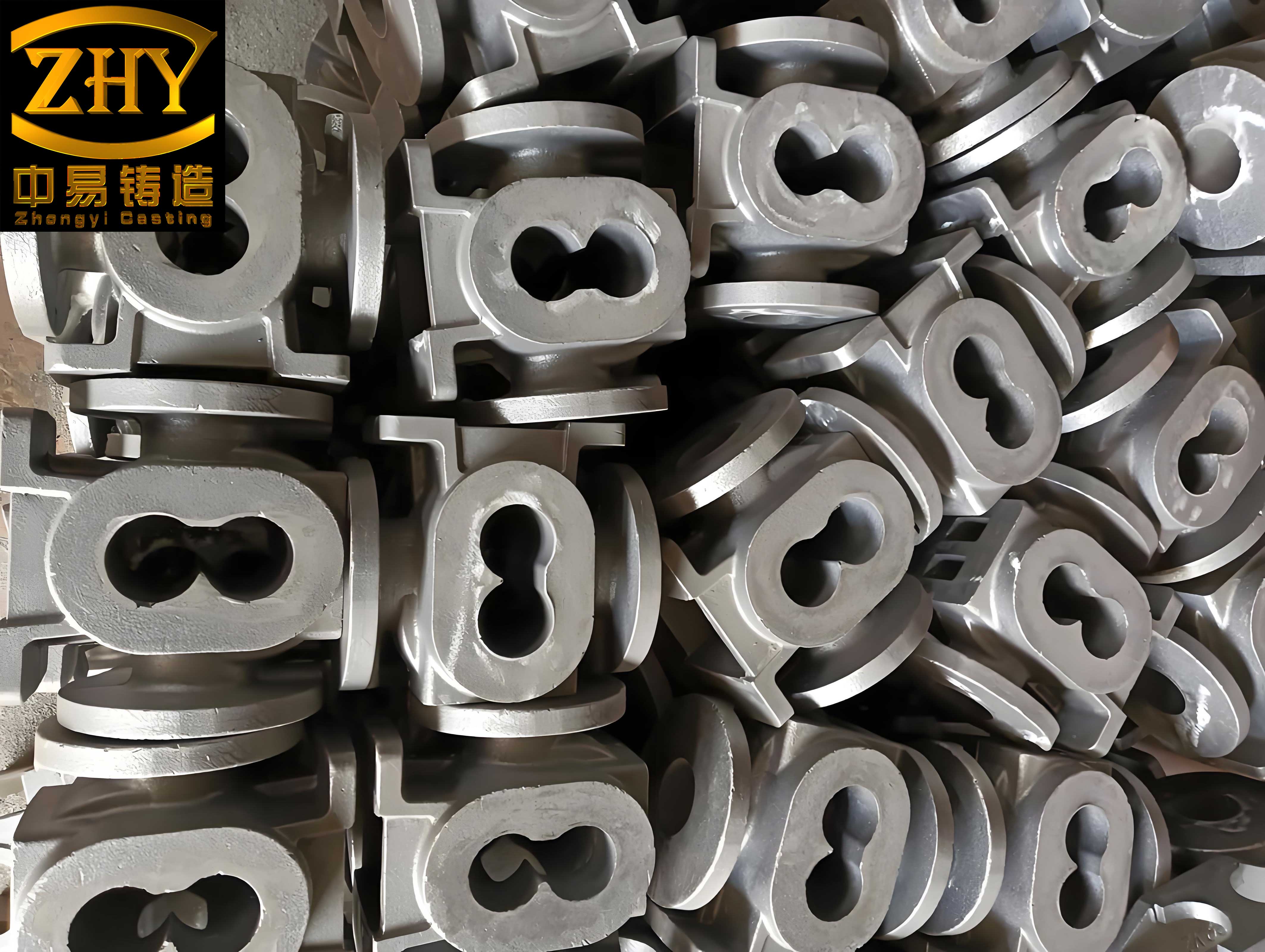
The performance demands for a riser covering agent in nodular cast iron applications are distinct. The pouring temperature is lower than that for steel, and the risers themselves are often smaller due to the graphitic expansion. Consequently, the riser cools rapidly, requiring the covering agent to provide supplemental heat promptly and sustain it throughout the critical feeding period. Traditional agents frequently rely on fluorides like cryolite (Na3AlF6) to catalyze the aluminothermic reaction and act as a flux. However, excessive residual fluorine can lead to degenerate graphite forms, such as coarse or chunky graphite, at the riser-casting interface, severely compromising the mechanical properties of the nodular cast iron. Furthermore, high carbon content in conventional agents, used as an exothermic and insulating aid, contaminates the riser metal, making its remelting and reuse problematic for subsequent nodular cast iron production due to unpredictable carbon pickup.
Driven by the need for higher quality, yield, and environmental sustainability in producing high-end equipment components from nodular cast iron, this study aimed to develop a novel, low-fluorine, low-carbon exothermic insulating covering agent. The formulation strategically balances key parameters: ignition temperature, ignition time, heat release rate, total exothermic value, and cost. Primary insulating materials include cenospheres (a fly ash by-product) and natural perlite. The exothermic system is based on aluminum powder and low-cost industrial iron oxide, with a nitrate-based mixture as the oxidizer. Crucially, the addition of fluoride salts (as a catalyst and flux) is strictly limited to ≤1.0%, and carbonized rice hull (an agricultural by-product) is used sparingly as a supplemental exothermic and insulating aid, keeping the overall carbon content ≤5.5%. The target performance for this agent dedicated to nodular cast iron includes a total exothermic value ≥170 J/g over a temperature range of 300–1000 °C.
To rigorously evaluate the feeding effectiveness of this new agent, a more accurate characterization method was necessary. The traditional metric, riser feeding efficiency (η), is defined as the ratio of the feed metal volume (shrinkage cavity volume, V_feed) to the total riser volume (V_riser):
$$ \eta = \frac{V_{feed}}{V_{riser}} \times 100\% $$
While this metric considers the total volume of shrinkage, it fails to account for the shape of the shrinkage cavity. A deep, narrow pipe is less desirable than a broader, flatter sink because the former leaves less “safe height” – the solid metal column above the casting that ensures pressure is transmitted for feeding. A better agent should maximize both the shrinkage volume and the safe height, allowing for potential riser size reduction.
Therefore, I propose and employ a new metric: Relative Riser Feeding Efficiency (η_relative). This measures the feed metal volume against the volume of only the upper portion of the riser that corresponds to the depth of the shrinkage sink (V_riser_upper), excluding the safe height volume (V_riser_lower).
$$ \eta_{relative} = \frac{V_{feed}}{V_{riser\_upper}} \times 100\% = \frac{V_{feed}}{V_{riser} – V_{riser\_lower}} \times 100\% $$
This metric holistically reflects the combined influence of the total shrinkage volume and its profile (i.e., safe height), offering a more truthful representation of an agent’s actual feeding performance. The testing protocol involved using identical risers on the same casting mold, applying equal amounts of different covering agents at the same point during pouring, and post-cooling measurement of shrinkage cavity volume via sand-fill method and geometric calculation of riser volumes after sectioning.
The novel agent was tested against products from two leading international and domestic companies in real production environments for various nodular cast iron castings. The results are systematically compared below.
Application Performance in Rail Castings
The test casting was a rail component (QT400-15, ~980 kg) with two identical elliptical risers. Both risers used insulating sleeves, with their tops covered by the novel agent and a domestic benchmark agent, respectively.
| Performance Parameter | Novel Covering Agent | Domestic Benchmark Agent |
|---|---|---|
| Total Riser Height (mm) | 270 | 270 |
| Safe Height (mm) | 160 | 175 |
| Max. Shrinkage Depth (mm) | 110 | 95 |
| Shrinkage Cavity Volume (dm³) | 3.55 | 2.96 |
| Upper Riser Volume (dm³) | 7.10 | 6.13 |
| Traditional Efficiency η (%) | 20.4 | 17.0 |
| Relative Efficiency η_relative (%) | 50.0 | 48.3 |
Observations during the process noted that the novel agent ignited faster, expanded more, and spread better, forming a平整 and松散覆盖层. While the traditional efficiency shows a clear advantage for the novel agent, the relative efficiency values are closer, yet still favor the novel agent, aligning with the observed better coverage and thermal performance.
Application Performance in Pad Iron Castings
Tests were conducted on pad iron castings (QT500-7, 730 kg) with multiple risers. The novel agent was compared against a premium international product. A significant finding was the presence of subsurface shrinkage (暗缩孔) in the riser using the international agent, making precise volume calculation difficult. However, comparative profilometry was telling:
| Observation | International Benchmark Agent | Novel Covering Agent |
|---|---|---|
| Top Sink Depth (mm) | 45 (excluding subsurface shrink) | 55 |
| Sink Profile | Irregular, non-flat bottom | Larger volume, relatively flat bottom |
| Inferred Relative Efficiency | Lower | Significantly Higher |
Metallographic examination at the riser neck for both agents showed no evidence of graphite degeneration. The graphite morphology remained predominantly nodular and bull’s-eye, with nodularity between 80-90% and nodule size rating of 6, confirming the low-fluorine design’s effectiveness in preserving the integrity of the nodular cast iron matrix.
Application Performance in Pump Cover Castings
For a pump cover (QT600-3, ~1 ton), the novel agent was again tested against the international benchmark. Process monitoring revealed the novel agent ignited and reached peak exothermic reaction about 1 minute earlier—a critical advantage for the faster-cooling nodular cast iron risers. Post-combustion, the novel agent maintained a thicker, more coherent insulating layer over the riser surface.
| Observation | International Benchmark Agent | Novel Covering Agent |
|---|---|---|
| Post-Combustion Cover | Thin layer, significant red-hot spots | Thick, insulating layer, minimal red spots |
| Safe Height (mm) | 58 | 82 |
| Sink Profile | Irregular shape | Flatter bottom profile |
The larger safe height and superior sink profile directly indicate a higher relative feeding efficiency for the novel covering agent in this nodular cast iron application.
Thermal Analysis and Mechanism Discussion
The superior performance can be attributed to the tailored thermal profile of the novel agent. Differential Scanning Calorimetry (DSC) provides a clear comparison. The novel agent’s formulation generates a sustained, multi-stage exothermic reaction perfectly suited to the solidification dynamics of nodular cast iron.
The DSC curve for the novel agent shows three distinct, well-separated exothermic peaks, providing continuous heat release across a broad temperature range that spans the early to late stages of riser cooling. In contrast, the benchmark domestic agent’s exothermic peaks are less distinct and concentrated in a narrower, later temperature range.
| Exothermic Stage | Temperature Range (°C) | Peak Heat Flow (W/g) | Enthalpy (J/g) | Peak Temp. (°C) |
|---|---|---|---|---|
| Early Stage | 245 – 385 | 0.14 | 21.57 | 280 |
| Mid Stage | 385 – 545 | 0.13 | 25.77 | 475 |
| Late Stage | 545 – 1100 | 0.11 | 122.72 | 690 |
| Total Enthalpy | 170.06 J/g | |||
This staged heat release is crucial. The early-stage heat counteracts the initial rapid heat loss, maintaining metal fluidity when the feeding demand from the casting is highest. The subsequent stages prolong the liquid state in the riser, effectively extending the feeding window. The strategic use of iron oxide (Fe₂O₃) not only serves as an oxidizer for the aluminothermic reaction but also acts as a fluxing agent, promoting the formation of a viscous slag layer that enhances insulation. The strictly controlled low fluoride content (≤1.0%) eliminates the risk of graphite degradation in the critical casting surface layer, a common pitfall when feeding nodular cast iron. The moderate carbon content, primarily from sustainable carbonized rice hull, contributes to the later-stage exothermic reaction and insulation without posing a remelting contamination risk severe enough to affect the high-carbon nodular cast iron chemistry.
Conclusions
1. A novel exothermic insulating covering agent for large and medium-sized nodular cast iron risers was successfully developed. By utilizing industrial by-products and natural minerals, and meticulously balancing the formulation, it achieves an optimal combination of low ignition temperature, rapid ignition, sustained multi-stage heat release (≥170 J/g), and low cost, while being environmentally friendly due to its low-fluorine and managed-carbon design.
2. The low fluoride content (≤1.0%) is proven effective, as metallographic analysis revealed no graphite coarsening or degeneration at the riser neck, preserving the desired microstructure of the nodular cast iron.
3. Comprehensive production trials demonstrate that the novel agent achieves a relative riser feeding efficiency (η_relative) as high as 50%, outperforming comparable products from leading international and domestic suppliers. Its superiority is rooted in its unique thermal profile, evidenced by DSC analysis showing three distinct, well-distributed exothermic peaks providing continuous heat over a wide temperature range, unlike the more concentrated and less effective heat release of benchmark products.
4. The newly established metric, Relative Riser Feeding Efficiency (η_relative), which incorporates both the shrinkage volume and the safety height profile, is demonstrated to be a more accurate and comprehensive indicator of the true feeding capability of a riser system in nodular cast iron casting than the traditional feeding efficiency (η). This agent and the associated evaluation method provide a robust solution for enhancing yield and quality in the production of high-integrity nodular cast iron components for demanding applications.