
In industrial production, ensuring the quality of sand casting products remains a significant challenge. The final integrity and performance of these components are influenced by a complex interplay of process parameters and, critically, the product’s three-dimensional geometry. While structured process data from stages like sand mixing, molding, and melting is often recorded, the non-structured 3D CAD model of the casting itself presents a formidable obstacle for quantitative analysis. This geometric complexity makes it difficult to characterize and establish a definitive relationship between a part’s morphology and the formation of defects such as cold shuts, porosity, sand inclusions, and shrinkage cavities. Consequently, most data-driven quality analysis methods in the industry fail to incorporate geometric analysis, limiting their ability to diagnose why defects occur at specific, complex geometrical features. We posit that fully mining and quantifying these morphological features is key to uncovering the relationship between part geometry and forming quality, ultimately leading to improved product reliability.
1. The Sand Casting Process and Data Landscape for Complex Products
Sand casting is a versatile and dominant manufacturing process, accounting for a substantial majority of cast components globally. Its fundamental characteristics are summarized below:
| Characteristic | Description | |
|---|---|---|
| Wide Applicability | Not limited by size, thickness, or shape; capable of producing parts over 300 tons. | |
| Material Variety | Applicable to any meltable alloy, with widespread use of cast iron, steel, and aluminum. | |
| Good Dimensional Accuracy | Generally offers better accuracy compared to forging or welding for complex shapes. | |
| High Economic Efficiency | Relatively low-cost process for medium to high-volume production. |
A typical green sand casting process involves several key stages: sand preparation and testing, mold and core making, metal melting, and pouring. For high-value, complex sand casting products like steering axles, slewing frames, and axle housings used in heavy machinery, controlling these processes is paramount. These components feature intricate geometries with significant variations even within the same product family, as illustrated below.
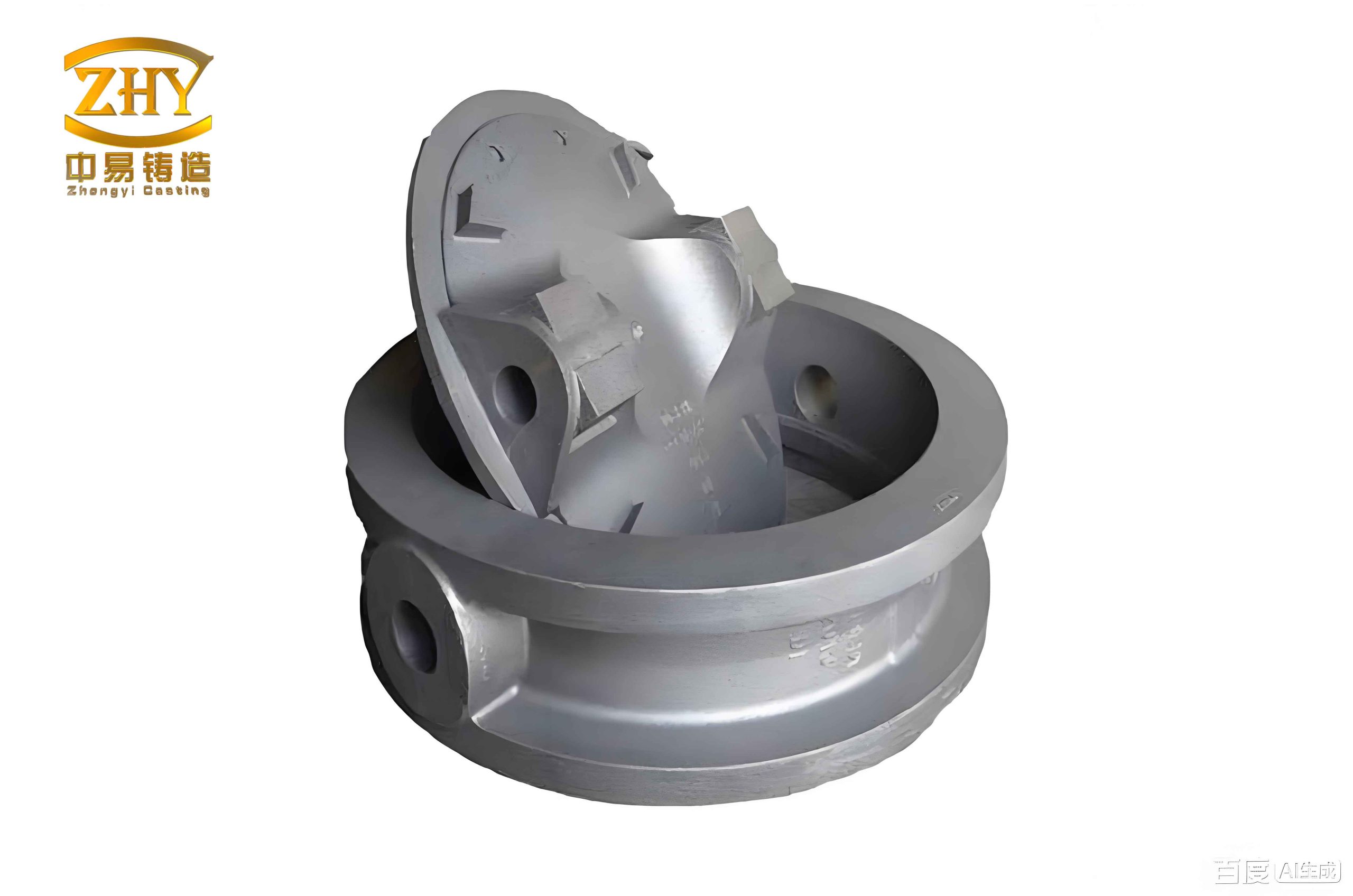
Despite maintaining process parameters within specified ranges, defects persistently occur due to multi-factor coupling effects. To enable root-cause analysis, a per-piece data追溯 strategy is essential. This involves collecting structured process data (e.g., chemical composition, pouring temperature, sand properties) and associating it uniquely with each individual casting and its corresponding 3D model. This creates a multi-source dataset where structured process parameters and unstructured 3D geometry are linked to the quality outcome (defect type) for each sand casting product.
2. Quantifying Complex 3D Geometry via Feature Extraction
The core challenge lies in transforming the complex, non-structured 3D model into a quantitative, low-dimensional feature vector that encapsulates its geometric essence. Traditional linear methods like Principal Component Analysis (PCA) are insufficient for capturing the non-linear geometric relationships present in complex sand casting products. We employ a deep learning approach based on an Auto-Encoder (AE) architecture, which is adept at unsupervised feature learning through data reconstruction.
An Auto-Encoder consists of an encoder that compresses the input into a latent-space representation (the features) and a decoder that reconstructs the input from this representation. The model is trained by minimizing the reconstruction error. The fundamental loss function is:
$$L_{AE}(x, \hat{x}) = ||x – \hat{x}||^2$$
where \(x\) is the original input data and \(\hat{x}\) is the reconstructed output. The latent vector \(h\) from the bottleneck layer serves as the learned feature representation.
To process 3D voxelized data of castings, we construct a 3D Deep Convolutional Auto-Encoder (3D-DCAE). This replaces fully connected layers with 3D convolutional and pooling layers, allowing the network to efficiently capture spatial hierarchies in three dimensions. The encoder uses 3D convolutional kernels to scan the volume, progressively downsampling it to a compact feature vector \(h\). The decoder uses transposed convolutions to upsample \(h\) back to the original voxel dimensions. The architecture is summarized as follows:
| Layer (Encoder) | Operation | Output Shape |
|---|---|---|
| Input | 3D Voxel Grid | (D, H, W, 1) |
| Conv3D + ReLU | 32 filters, 3x3x3 | (D, H, W, 32) |
| MaxPooling3D | 2x2x2 | (D/2, H/2, W/2, 32) |
| Conv3D + ReLU | 64 filters, 3x3x3 | (D/2, H/2, W/2, 64) |
| MaxPooling3D | 2x2x2 | (D/4, H/4, W/4, 64) |
| Flatten & Dense | Bottleneck (Feature Vector h) | (n) |
The decoder mirrors this structure with transposed convolutions. After training, the 3D-DCAE achieved a reconstruction accuracy of 99.76%, demonstrating its superior ability to capture and encode the defining geometric features of complex sand casting products. A comparative analysis with a 2D-DCAE (which treats 3D data as a stack of 2D slices) confirmed the superiority of the native 3D approach, as the 3D convolutional kernels learn spatial correlations across all three dimensions simultaneously, leading to more accurate reconstruction and, by extension, more representative feature extraction.
3. Building a Hybrid Data-Driven Defect Prediction Model
With both structured process data (\(X_{process}\)) and unstructured geometric feature data (\(X_{3D-features}\)) available for each part, we build a unified model for defect prediction. The first step is data preprocessing. Numerical process parameters are normalized to a [0, 1] range to ensure stable and efficient model training:
$$x’_{i} = \frac{x_i – \min(x)}{\max(x) – \min(x)}$$
The categorical defect labels (cold shut, gas pore, sand inclusion, shrinkage) are encoded using One-Hot Encoding. The extracted 3D feature vector \(h\) is concatenated with the normalized process parameter vector to form the complete hybrid input feature set \(X_{hybrid}\) for each sand casting product:
$$X_{hybrid} = [X’_{process} ; h]$$
We construct a neural network model specifically designed for this hybrid data, which we term the Feature-Reinforced Cost-Sensitive Convolutional Neural Network (FR-CS-CNN). Its topology leverages 1D convolutional layers initially to process the concatenated feature vector, capturing local correlations within the combined parameter-geometry space. The model’s topology is structured as follows:
| Layer | Operation / Description | Activation |
|---|---|---|
| Input | Concatenated Vector \(X_{hybrid}\) | – |
| Conv1D | 64 filters, kernel_size=3 | ReLU |
| Conv1D | 128 filters, kernel_size=3 | ReLU |
| MaxPooling1D | Pool_size=2 | – |
| Flatten | Converts output to 1D vector | – |
| Dense | 128 neurons | ReLU |
| Dropout | Rate = 0.5 (for regularization) | – |
| Output | 4 neurons (one per defect class) | Softmax |
Recognizing the imbalanced nature of defect data in real production, we employ a cost-sensitive cross-entropy loss function during training. This penalizes misclassifications of minority defect classes more heavily, improving the model’s overall sensitivity:
$$L_{total} = -\frac{1}{N} \sum_{i=1}^{N} \sum_{c=1}^{C} w_c \cdot y_{i,c} \log(\hat{y}_{i,c})$$
where \(N\) is the batch size, \(C\) is the number of defect classes, \(y_{i,c}\) is the true label, \(\hat{y}_{i,c}\) is the predicted probability, and \(w_c\) is the class-dependent weight, typically set inversely proportional to the class frequency.
The model is trained using a mini-batch gradient descent algorithm (Adam optimizer) with the following key parameters:
| Parameter | Value / Setting |
|---|---|
| Training/Test Split | 80% / 20% |
| Initial Learning Rate | 0.01 |
| Batch Size | 64 |
| Epochs | 80 |
| Loss Function | Cost-Sensitive Categorical Cross-Entropy |
4. Model Performance and Industrial Significance
The performance of the proposed FR-CS-CNN model was rigorously evaluated and compared against traditional models. The inclusion of 3D geometric features extracted by the 3D-DCAE proved to be a decisive factor. The results are summarized below:
| Model | Training Accuracy | Test Accuracy | Key Limitation |
|---|---|---|---|
| Traditional Multi-Layer Perceptron (MLP) | 92.6% | 86.1% | Struggles with complex feature interactions; no geometry data. |
| Standard Convolutional Neural Network (CNN) | 93.9% | 90.7% | Processes only structured data; lacks 3D shape context. |
| Proposed FR-CS-CNN | 96.5% | 93.7% | N/A – incorporates both data types. |
The significant improvement in test accuracy (93.7%) demonstrates the model’s strong generalization capability and validates the hypothesis that 3D geometry is a critical factor in defect formation for complex sand casting products. The model can now predict not just *if* a defect is likely, but also *what type* of defect is associated with a specific combination of process parameters and part geometry. This provides actionable insights for process engineers. For instance, the model might reveal that a particular thin-walled, intricate section (quantified by the 3D features) is highly susceptible to cold shuts when the pouring temperature falls below a certain threshold, even if that temperature is within the general specification.
5. Conclusion
This research addresses the critical challenge of quality prediction for complex sand casting products by proposing a comprehensive, multi-source heterogeneous data-driven framework. The main contributions are threefold. First, we established a methodology for integrated data collection, linking structured single-piece process data with the corresponding unstructured 3D CAD model. Second, we developed and validated a 3D Deep Convolutional Auto-Encoder (3D-DCAE) capable of effectively quantifying the complex geometry of castings into a compact, informative feature vector. Third, by fusing these 3D morphological features with traditional process parameters, we constructed a hybrid defect prediction model (FR-CS-CNN) that demonstrates superior accuracy compared to models using only one data type.
This approach moves beyond traditional statistical process control by explicitly incorporating the “DNA” of the part—its 3D shape—into the quality analysis loop. It provides a powerful tool for foundries to transition from reactive defect correction to proactive quality prediction and prevention, enabling more robust process design for increasingly complex sand casting products and fostering the advancement of intelligent foundry operations.