
High-pressure valve body castings for wellhead equipment demand exceptional structural integrity to withstand extreme operating conditions. Traditional sand casting methods using water glass quartz sand frequently resulted in sand inclusion defects, surface irregularities, and micro-cracks detected during non-destructive testing. Subsequent adoption of insulating risers with furan resin sand improved dimensional accuracy but introduced new challenges: oversized risers reduced yield rates and prolonged solidification, while excessive heat transfer to cores generated subsurface gas shrinkage porosity. These limitations necessitated an advanced approach to achieve defect-free valve body casting production.
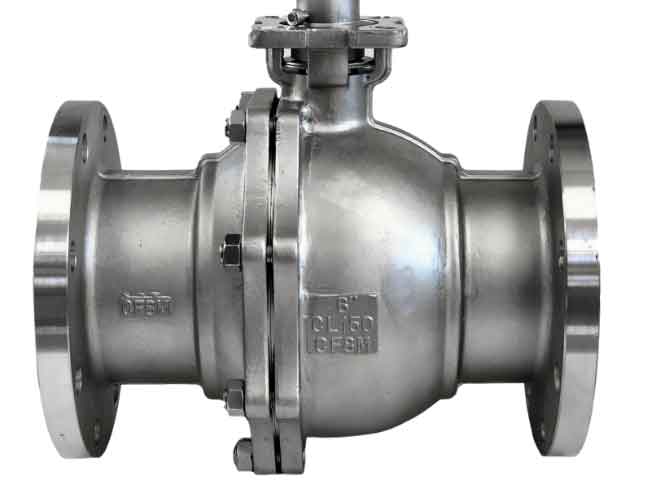
Three conventional valve body casting processes were systematically evaluated with performance metrics quantified below:
| Process | Riser Type | Yield Rate (%) | Defect Frequency | Core Removal Difficulty |
|---|---|---|---|---|
| Water Glass Quartz Sand | Conventional | 52 | High (Sand Inclusions/Cracks) | Severe |
| Top Riser with Insulation | Insulating Sleeve | 65 | Moderate (Gas Shrinkage) | High |
| Furan Resin with Insulation | Insulating Sleeve | 68 | Moderate-High (Subsurface Porosity) | Moderate |
The fundamental limitation stems from riser efficiency, defined as:
$$ \eta = \frac{W_c}{W_c + W_r} \times 100\% $$
where $\eta$ is yield rate, $W_c$ is valve body casting weight, and $W_r$ is riser weight. Traditional methods required oversized $W_r$ due to poor thermal properties, suppressing $\eta$. Exothermic riser technology revolutionized this dynamic through controlled thermochemical reactions. The energy release mechanism follows:
$$ Q = m_e \left( C_p \Delta T + \Delta H_c \right) $$
where $Q$ is total energy, $m_e$ is exothermic compound mass, $C_p$ is specific heat, $\Delta T$ is temperature differential, and $\Delta H_c$ is combustion enthalpy. This extends the thermal gradient ($\nabla T$) critical for directional solidification:
$$ \nabla T = \frac{\partial T}{\partial x} \geq \frac{G}{R} $$
where $G$ is temperature gradient and $R$ is solidification rate. Implementation involved strategic placement of exothermic risers at flange junctions combined with chill plates at the valve seat and tail sections. This configuration achieved optimal thermal management:
| Parameter | Traditional Riser | Exothermic Riser | Improvement |
|---|---|---|---|
| Riser Volume Reduction | Baseline | 42-48% | Significant |
| Yield Rate ($\eta$) | 65-68% | 78-80% | +15% |
| Soundness Rate | 70-75% | >92% | +22% |
| Solidification Time | $t_s$ | 0.65$t_s$ | -35% |
For ZG15Cr9Mo valve body casting production, the thermal reduction factor ($\alpha$) at the core interface demonstrates the superiority of exothermic systems:
$$ \alpha = \frac{k_{exo}}{k_{insul}} = \frac{0.28}{0.11} \approx 2.55 $$
where $k_{exo}$ and $k_{insul}$ are thermal conductivities of exothermic and insulating materials respectively. This 155% increase in heat dissipation prevents core gas generation, eliminating subsurface defects. Production data from 3,000 valve body castings confirms consistent quality with radiographic inspection showing complete elimination of shrinkage porosity in critical sections.
Economic analysis reveals transformative impacts: yield improvement reduces molten metal consumption per valve body casting by 18-22%, while reduced riser dimensions decrease oxygen cutting time by 40%. The combined effect lowers total production cost by approximately 30% per unit while simultaneously enhancing pressure-test pass rates to near 100% at 70MPa hydrostatic testing. These advancements establish exothermic risers as essential for high-integrity valve body casting manufacturing where performance reliability is non-negotiable.