
In the field of turbomachinery, impellers play a critical role as rotating components that convert mechanical energy into fluid kinetic and pressure energy, enabling power output in devices such as centrifugal pumps. The complex, streamlined profiles of impeller blades are challenging to achieve through mechanical machining but can be efficiently produced using precision casting methods, particularly investment casting. This approach not only forms near-net-shape components but also avoids stress concentrations induced by machining, thereby enhancing mechanical properties. However, defects like shrinkage porosity and gas holes remain significant challenges in the precision casting of small to medium-sized impellers. This article details the optimization of the investment casting process for a duplex stainless steel closed impeller, utilizing numerical simulation to address these issues and improve production efficiency and yield.
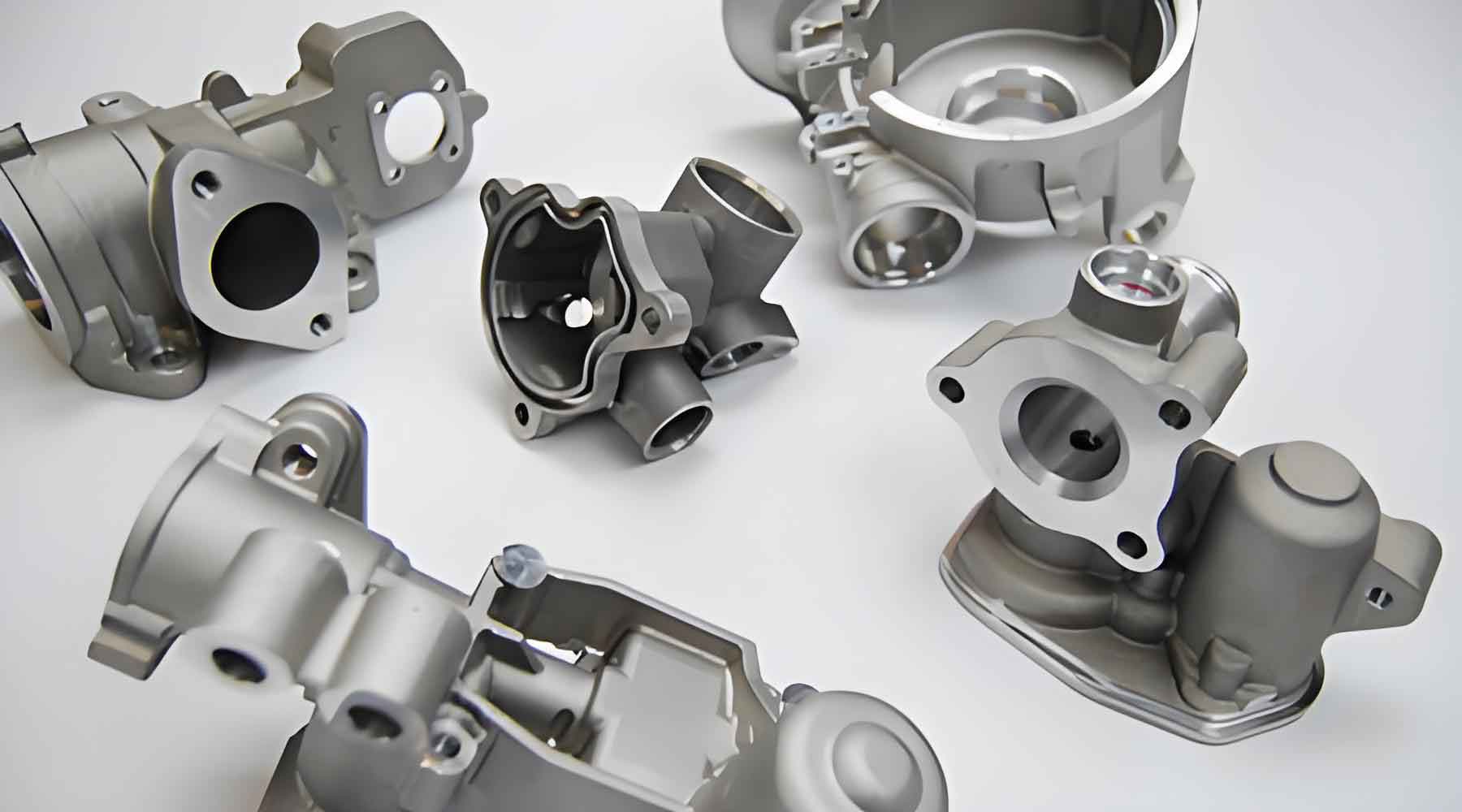
The closed impeller under discussion is a single-suction, six-channel design fabricated from ASTM A890 3A duplex stainless steel, with a weight of 122 kg. Key dimensions of the impeller are summarized in Table 1, highlighting variations in wall thickness that contribute to potential defects. Precision casting, specifically investment casting, is employed to manufacture such components due to its ability to produce intricate geometries with high dimensional accuracy. The initial casting process positioned the impeller with the caliber ring facing upward, incorporating a top-pouring system with a central sprue and three side gates to facilitate feeding, venting, and wax removal. Despite these measures, numerical simulations revealed shrinkage defects in critical areas, necessitating process refinements.
| Parameter | Value (mm) |
|---|---|
| Hub Diameter | 110 |
| Flow Channel Width | 110 |
| Caliber Ring Diameter | 495 |
| Impeller Diameter | 611 |
| Blade Thickness Range | 8.5–10 |
Numerical simulation using ProCAST software was integral to analyzing the solidification behavior and identifying defect-prone zones. The governing equation for heat transfer during solidification is expressed as:
$$ \rho c_p \frac{\partial T}{\partial t} = \nabla \cdot (k \nabla T) + L \frac{\partial f_s}{\partial t} $$
where \( \rho \) is density, \( c_p \) is specific heat, \( T \) is temperature, \( t \) is time, \( k \) is thermal conductivity, \( L \) is latent heat, and \( f_s \) is the solid fraction. The simulation parameters, detailed in Table 2, were configured to model the investment casting process accurately. The initial setup involved a pouring temperature of 1,620°C, a mold preheat temperature of 650°C, and a pouring rate of 7 kg/s, with heat transfer coefficients defined for metal-mold and mold-air interfaces.
| Parameter | Value |
|---|---|
| Pouring Temperature | 1,620°C |
| Mold Preheat Temperature | 650°C |
| Pouring Rate | 7 kg/s |
| Metal-Mold Heat Transfer Coefficient | 500 W/(m²·K) |
| Riser Top-Air Heat Transfer Coefficient | 100 W/(m²·K) |
| Mold-Air Heat Transfer Coefficient | 45 W/(m²·K) |
Simulation results for the initial process indicated shrinkage porosity in the hub and caliber ring regions, with a critical shrinkage criterion set at 2.3% based on the material’s contraction characteristics. The solid fraction field at various time steps demonstrated inadequate feeding from the side gates, leading to isolated hot spots. The temperature distribution revealed premature solidification at the riser roots due to excessive heat loss, exacerbating shrinkage in the hub. To quantify shrinkage, the following relation is used:
$$ \text{Shrinkage Volume} = V_{\text{liquid}} \times \left(1 – \frac{\rho_{\text{solid}}}{\rho_{\text{liquid}}}\right) $$
where \( V_{\text{liquid}} \) is the volume of liquid metal, and \( \rho_{\text{solid}} \) and \( \rho_{\text{liquid}} \) are the densities of solid and liquid phases, respectively. This emphasizes the importance of controlled solidification in investment casting to minimize defects.
Optimization of the gating and feeding systems involved increasing the number of side gates from three to six, ensuring comprehensive feeding of all hot spots in the caliber ring. Additionally, the riser design was modified to a hexagonal-top configuration with a base diameter of 170 mm, enhancing its modulus and feeding efficiency. The revised layout promoted directional solidification, critical for defect-free precision casting. The effectiveness of these changes was evaluated through simulation, which showed a significant reduction in shrinkage porosity. The solid fraction evolution confirmed improved feeding, with the side gates effectively compensating for volumetric shrinkage.
Further refinement addressed the pouring method. Initially, metal was introduced centrally, causing continuous impingement on the hub base and creating a heat accumulation zone. This was altered to a side-pouring approach, where metal enters along the sprue wall, reducing thermal impact and promoting uniform cooling. The temperature field analysis post-optimization indicated elimination of the hub’s hot spot, with solidification proceeding evenly. The final simulation confirmed the absence of shrinkage defects, validating the optimized investment casting process.
Production trials based on the optimized parameters successfully yielded high-quality impellers, free from defects in critical areas. The steps involved assembly, shell molding, pouring, and finishing, with machining verification confirming the integrity of the hub and caliber ring. This case underscores the value of numerical simulation in enhancing investment casting processes, leading to higher yields and efficiency. The principles applied here can be extended to similar precision casting projects, ensuring reliable production of complex components.
In conclusion, the integration of ProCAST simulations enabled precise optimization of the investment casting process for duplex stainless steel closed impellers. Key modifications included augmenting the gating system and altering the pouring method, which collectively mitigated shrinkage defects. The success of this approach highlights the importance of systematic process design in precision casting, offering a replicable framework for analogous applications. Future work could explore advanced alloy systems or further refinements in simulation accuracy to push the boundaries of investment casting capabilities.