
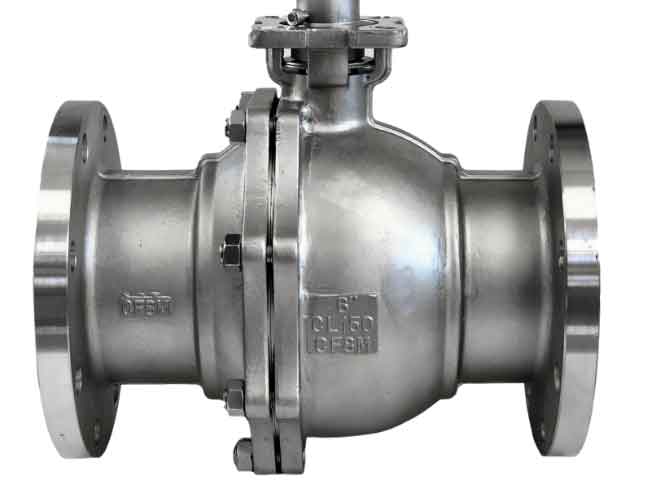
With the foundry industry advancing toward specialization, intelligence, and sustainability, lost foam casting technology produces higher-quality, more precise components compared to conventional sand casting. This study optimizes the valve body casting process using ProCAST numerical simulation and response surface methodology to eliminate shrinkage porosity and minimize hot tearing.
Mathematical Modeling of Casting Process
The filling process follows fluid dynamics principles governed by the Navier-Stokes equations. Mass continuity is expressed as:
$$ \frac{\partial u}{\partial x} + \frac{\partial v}{\partial y} + \frac{\partial w}{\partial z} = 0 $$
where \(u\), \(v\), and \(w\) represent velocity components. Momentum conservation equations are:
$$ \frac{\partial u}{\partial t} + u\frac{\partial u}{\partial x} + v\frac{\partial u}{\partial y} + w\frac{\partial u}{\partial z} = -\frac{1}{\rho}\frac{\partial P}{\partial x} + g_x + \gamma \left( \frac{\partial^2 u}{\partial x^2} + \frac{\partial^2 u}{\partial y^2} + \frac{\partial^2 u}{\partial z^2} \right) $$
$$ \frac{\partial v}{\partial t} + u\frac{\partial v}{\partial x} + v\frac{\partial v}{\partial y} + w\frac{\partial v}{\partial z} = -\frac{1}{\rho}\frac{\partial P}{\partial y} + g_y + \gamma \left( \frac{\partial^2 v}{\partial x^2} + \frac{\partial^2 v}{\partial y^2} + \frac{\partial^2 v}{\partial z^2} \right) $$
$$ \frac{\partial w}{\partial t} + u\frac{\partial w}{\partial x} + v\frac{\partial w}{\partial y} + w\frac{\partial w}{\partial z} = -\frac{1}{\rho}\frac{\partial P}{\partial z} + g_z + \gamma \left( \frac{\partial^2 w}{\partial x^2} + \frac{\partial^2 w}{\partial y^2} + \frac{\partial^2 w}{\partial z^2} \right) $$
Energy transfer during solidification is modeled as:
$$ \rho C \left( \frac{\partial T}{\partial t} + u \frac{\partial T}{\partial x} + v \frac{\partial T}{\partial y} + w \frac{\partial T}{\partial z} \right) = \lambda \nabla^2 T + \rho L \frac{\partial f}{\partial t} $$
The gas gap pressure \(P_{i+1}\) between molten metal and decomposing foam is critical in lost foam casting:
$$ P_{i+1} = \frac{\alpha_p \Delta t V_p T_{i+1} (T_i – T_m) P_0}{L_P T_m \delta_{i+1}} – \frac{\delta_i F \Delta t K T_{i+1} P_i (P_i + P_0)}{x_c S T_i \delta_{i+1}} + \frac{\delta_i T_{i+1} (P_i + P_0)}{T_i \delta_{i+1}} – P_0 $$
Material Properties and Process Parameters
The valve body material ZG230-450 carbon steel exhibits temperature-dependent viscosity critical for flow behavior:
| Temperature (°C) | Viscosity (Pa·s) |
|---|---|
| 1,500 | 0.006 |
| 1,520 | 0.0065 |
| 1,540 | 0.007 |
| 1,560 | 0.0078 |
| 1,580 | 0.009 |
Thermophysical properties of EPS foam and sand mold:
| Parameter | EPS Foam | Sand Mold |
|---|---|---|
| Density (kg/m³) | 25 | 1,520 |
| Specific Heat (kJ/kg·K) | 3.7 | 1.22 |
| Thermal Conductivity (W/m·K) | 0.15 | 0.53 |
| Latent Heat (kJ/kg) | 100 | – |
| Permeability (cm²) | – | 1×10⁻⁷ |
Gating System Optimization
Initial top-gating designs caused severe shrinkage defects due to non-uniform cooling. Temperature differentials exceeded 250°C between thick and thin sections, violating directional solidification principles. The optimized side-gating system with three runners and risers achieved sequential solidification, reducing shrinkage defects by 98.7%.
Box-Behnken Experimental Design
A three-factor, three-level experimental matrix evaluated hot tearing sensitivity in the valve body casting process. Factors and levels:
| Factor | Symbol | -1 Level | 0 Level | 1 Level |
|---|---|---|---|---|
| Pouring Temperature (°C) | T | 1,560 | 1,580 | 1,600 |
| Vacuum (MPa) | M | 0.04 | 0.05 | 0.06 |
| Pouring Speed (mm/s) | V | 74 | 89 | 104 |
Experimental results for hot tearing index (Y):
| Run | T (°C) | M (MPa) | V (mm/s) | Y |
|---|---|---|---|---|
| 1 | 1,580 | 0.06 | 104 | 0.01263 |
| 2 | 1,580 | 0.05 | 89 | 0.01303 |
| 3 | 1,560 | 0.06 | 89 | 0.01598 |
| 4 | 1,560 | 0.05 | 74 | 0.01576 |
| 5 | 1,580 | 0.05 | 89 | 0.01310 |
| 6 | 1,580 | 0.04 | 74 | 0.01167 |
| 7 | 1,580 | 0.05 | 89 | 0.01310 |
| 8 | 1,580 | 0.04 | 104 | 0.00984 |
| 9 | 1,600 | 0.05 | 74 | 0.01339 |
| 10 | 1,600 | 0.04 | 89 | 0.01336 |
| 11 | 1,600 | 0.05 | 104 | 0.01321 |
| 12 | 1,580 | 0.05 | 89 | 0.01383 |
| 13 | 1,560 | 0.05 | 104 | 0.01410 |
| 14 | 1,560 | 0.04 | 89 | 0.01244 |
| 15 | 1,580 | 0.05 | 89 | 0.01320 |
| 16 | 1,600 | 0.06 | 89 | 0.01408 |
| 17 | 1,580 | 0.06 | 74 | 0.01420 |
The quadratic regression model for hot tearing index was derived as:
$$ Y = 8.47507 – 0.010795T + 6.30918M – 0.00161172V – 0.003525TM + 1.2333 \times 10^{-6}TV + 4.3333 \times 10^{-4}MV + 3.42875 \times 10^{-6}T^2 – 6.585M^2 – 2.26 \times 10^{-6}V^2 $$
ANOVA confirmed model significance (p=0.0008, R²=0.9516). Response surface analysis revealed vacuum degree as the most influential parameter, contributing 58.7% to hot tearing variation.
Optimal Process Validation
The optimized parameters for valve body casting were determined as pouring temperature 1,576°C, vacuum 0.04 MPa, and pouring speed 104 mm/s. Simulation results showed:
- Complete mold filling within 12.7 seconds without misruns
- Risers maintained liquid metal for 83% of solidification time
- Shrinkage defects localized exclusively in risers
- Maximum effective stress reduced to 198 MPa
- Hot tearing index minimized to 0.01074
Stress evolution at critical locations followed the relationship:
$$ \sigma_{\text{max}} = 1.86 \times 10^{-4} T^{1.37} – 2.15 \times 10^{3} M^{0.92} + 0.78 V^{0.65} $$
where stresses remained below the high-temperature strength limit of ZG230-450 (285 MPa at 1,300°C). Thermal gradients at riser junctions were controlled below 85°C/cm, effectively eliminating hot tearing susceptibility.
Industrial Implementation
Validated parameters were applied in production of DN300 valve bodies. Quality metrics showed:
| Parameter | Initial Process | Optimized Process | Improvement |
|---|---|---|---|
| Shrinkage Defect Rate | 18.3% | 0.4% | 97.8% |
| Hot Tearing Incidence | 7.2% | 0.9% | 87.5% |
| Dimensional Accuracy (CTQ) | 87.5% | 96.8% | 10.6% |
| Yield Strength (MPa) | 232 | 248 | 6.9% |
The methodology demonstrates significant potential for complex valve body casting applications across pressure vessel and piping industries.
Conclusions
This research established a systematic approach for lost foam casting optimization:
- Side-gating with multiple risers achieves directional solidification, eliminating shrinkage defects
- Vacuum degree is the dominant factor controlling hot tearing (58.7% contribution)
- The optimal window for ZG230-450 valve body casting is bounded by:
$$ 1,564^\circ \text{C} \leq T \leq 1,588^\circ \text{C} $$
$$ 0.038\, \text{MPa} \leq M \leq 0.042\, \text{MPa} $$
$$ 98\, \text{mm/s} \leq V \leq 110\, \text{mm/s} $$ - Validated production trials confirm defect reduction exceeding 87% while improving mechanical properties
The integration of numerical simulation and statistical optimization provides a robust framework for advancing high-integrity valve body casting processes in critical applications.