
In the realm of advanced manufacturing, precision investment casting stands as a critical process for producing high-integrity, complex-shaped components, particularly with aluminum alloys. The subsequent numerical control (NC) machining of these castings is essential to achieve final dimensional accuracy and surface finish. However, I have observed that improper selection of NC machining parameters often leads to compromised precision, subpar surface quality, reduced productivity, and escalated costs. This is especially true for aluminum alloys derived from precision investment casting, where material properties like low melting point and susceptibility to thermal deformation pose additional challenges. Therefore, in my research, I focus on systematically optimizing NC machining parameters to enhance the manufacturability and quality of aluminum alloy precision investment castings. The optimization framework I propose revolves around three pivotal aspects: tool path topology optimization, cutting parameter tuning, and fuzzy logic-based anomaly control. Through extensive simulation and experimental validation, I demonstrate that the optimized parameters significantly outperform conventional settings, offering a robust technical foundation for industrial applications.
The significance of precision investment casting cannot be overstated; it enables the production of near-net-shape parts with excellent surface detail and metallurgical properties. However, the as-cast components invariably require NC machining to meet tight tolerances. In my experience, the interdependence of parameters such as cutting speed, feed rate, and depth of cut creates a complex optimization landscape. Traditional trial-and-error methods are not only time-consuming but also fail to harness the full potential of modern NC machines. Consequently, I embarked on a comprehensive study to develop a data-driven optimization methodology. This article details my approach, integrating advanced algorithms and real-time control strategies to address the unique demands of machining aluminum alloy precision investment castings.
Tool Path Topology Optimization for Precision Investment Casting Components
Tool path planning is a fundamental step in NC machining, directly influencing machining time, energy consumption, and surface integrity. For aluminum alloy precision investment castings, which often feature intricate geometries and thin walls, an optimized tool path is crucial to minimize thermal distortion and tool wear. I propose a topology optimization method that leverages intelligent algorithms to achieve global optimum in trajectory planning. The core idea is to reduce non-cutting movements (air cuts) and distribute cutting loads evenly.
Initially, I discretize the CAD model of the precision investment casting into a set of candidate tool positions using Delaunay triangulation. This generates a mesh of points that comprehensively represents the workpiece surface. Let the set of candidate points be \( \mathcal{P} = \{p_1, p_2, \dots, p_n\} \). The objective is to find an ordered sequence \( \mathcal{S} \) that minimizes a fitness function \( F \) combining machining energy \( E \) and total path length \( L \):
$$ F = \omega_1 \frac{E}{E_0} + \omega_2 \frac{L}{L_0} $$
where \( \omega_1 \) and \( \omega_2 \) are weighting coefficients satisfying \( \omega_1 + \omega_2 = 1 \), and \( E_0 \) and \( L_0 \) are normalization baselines derived from benchmark paths. To solve this combinatorial optimization problem, I employ an improved genetic algorithm (GA) enhanced with dynamic neighborhood search. The GA operations—selection, crossover, and mutation—are tailored to preserve path continuity and avoid collisions.
Given the thermal sensitivity of aluminum alloys from precision investment casting, I incorporate a thermal constraint into the optimization. The heat distribution during machining is modeled using the transient heat conduction equation:
$$ \rho c \frac{\partial T}{\partial t} = k \left( \frac{\partial^2 T}{\partial x^2} + \frac{\partial^2 T}{\partial y^2} + \frac{\partial^2 T}{\partial z^2} \right) + q $$
where \( T(x,y,z,t) \) is the temperature field, \( t \) is time, \( k \) is thermal diffusivity, \( \rho \) is density, \( c \) is specific heat capacity, and \( q \) is heat flux density from cutting. By simulating temperature rise for different path segments, I adjust dwell times and feed directions to maintain local temperature below 60°C, preventing phase changes and dimensional errors common in precision investment castings. The optimized paths exhibit smoother transitions and reduced heat accumulation zones.
To quantify the benefits, I compare standard zigzag paths with the optimized topology for a representative precision investment casting part. The results are summarized in Table 1.
| Path Strategy | Total Path Length (m) | Estimated Machining Time (min) | Peak Temperature (°C) | Energy Consumption (kJ) |
|---|---|---|---|---|
| Conventional Zigzag | 12.45 | 45.2 | 78.3 | 1250 |
| Optimized Topology | 8.91 | 32.7 | 55.6 | 890 |
The optimized path reduces length by approximately 28%, machining time by 27%, and peak temperature by 29%, underscoring its efficacy for aluminum alloy precision investment castings.
Cutting Parameter Tuning via Dynamic Energy Balancing
Cutting parameters—spindle speed, feed rate, and depth of cut—are the primary levers for controlling machining outcomes. For precision investment casting components, achieving a balance between cutting forces, thermal loads, and vibration is paramount. I formulate a multi-objective optimization model that minimizes cutting power, peak temperature, and vibration amplitude simultaneously. Let \( v_c \) denote cutting speed (derived from spindle speed), \( f \) feed rate, and \( a_p \) depth of cut. The objectives are defined as:
$$ \min \left( \frac{P(v_c, f, a_p)}{P_0}, \frac{T_{\text{max}}(v_c, f, a_p)}{T_0}, \frac{A_{\text{rms}}(v_c, f, a_p)}{A_0} \right) $$
where \( P \) is cutting power, \( T_{\text{max}} \) is peak temperature, \( A_{\text{rms}} \) is root-mean-square vibration acceleration, and \( P_0, T_0, A_0 \) are respective thresholds determined from material properties of aluminum alloy precision investment castings. The constraints include machine tool limits (e.g., maximum spindle speed) and surface roughness requirements.
To solve this model, I adopt a Levy Flight-enhanced Particle Swarm Optimization (LD-PSO) algorithm. The LD-PSO introduces random long jumps via Levy distribution, preventing premature convergence and enhancing global search capability. The algorithm flow is as follows:
- Initialize a swarm of particles, each representing a parameter set \( (v_c, f, a_p) \).
- Evaluate fitness using a weighted sum of the normalized objectives.
- Update personal best and global best positions.
- Update velocity and position using standard PSO equations with Levy-distributed random steps.
- Iterate until convergence criteria are met.
The optimal parameters derived from LD-PSO for a typical AlSi10Mg precision investment casting are presented in Table 2.
| Parameter | Conventional Value | Optimized Value | Improvement Direction |
|---|---|---|---|
| Spindle Speed (rpm) | 3000 | 4500 | Increased for higher efficiency |
| Feed Rate (mm/min) | 800 | 1200 | Increased with stability |
| Depth of Cut (mm) | 0.5 | 0.3 | Reduced for lower load |
| Estimated Cutting Power (W) | 1250 | 980 | Decreased by 21.6% |
| Predicted Surface Roughness Ra (μm) | 1.2 | 0.6 | Improved by 50% |
Furthermore, I implement an adaptive depth-of-cut adjustment strategy based on real-time sensor feedback. Using acoustic emission (AE) signals and spindle current monitoring, I define a cutting stability index \( \Gamma \):
$$ \Gamma = \int_{\Omega} U(f) \cdot Q(f) \, df + \lambda \cdot \left( J(f) – J_{\text{ref}}(f) \right)^2 $$
where \( U(f) \) is AE amplitude at frequency \( f \), \( Q(f) \) is a frequency-sensitive weighting function, \( J(f) \) is power spectral density, \( \Omega \) is the frequency range of interest, and \( \lambda \) is a regularization factor. When \( \Gamma \) exceeds a threshold, a fuzzy PID controller modifies \( a_p \) with a step size \( \Delta a_p \):
$$ \Delta a_p = K_p e(t) + K_i \int e(t) dt + K_d \frac{de(t)}{dt} $$
where \( e(t) \) is the error between current and target stability, and \( K_p, K_i, K_d \) are tuned gains. This adaptive mechanism ensures sustained stability during machining of precision investment castings, particularly in variable engagement areas.
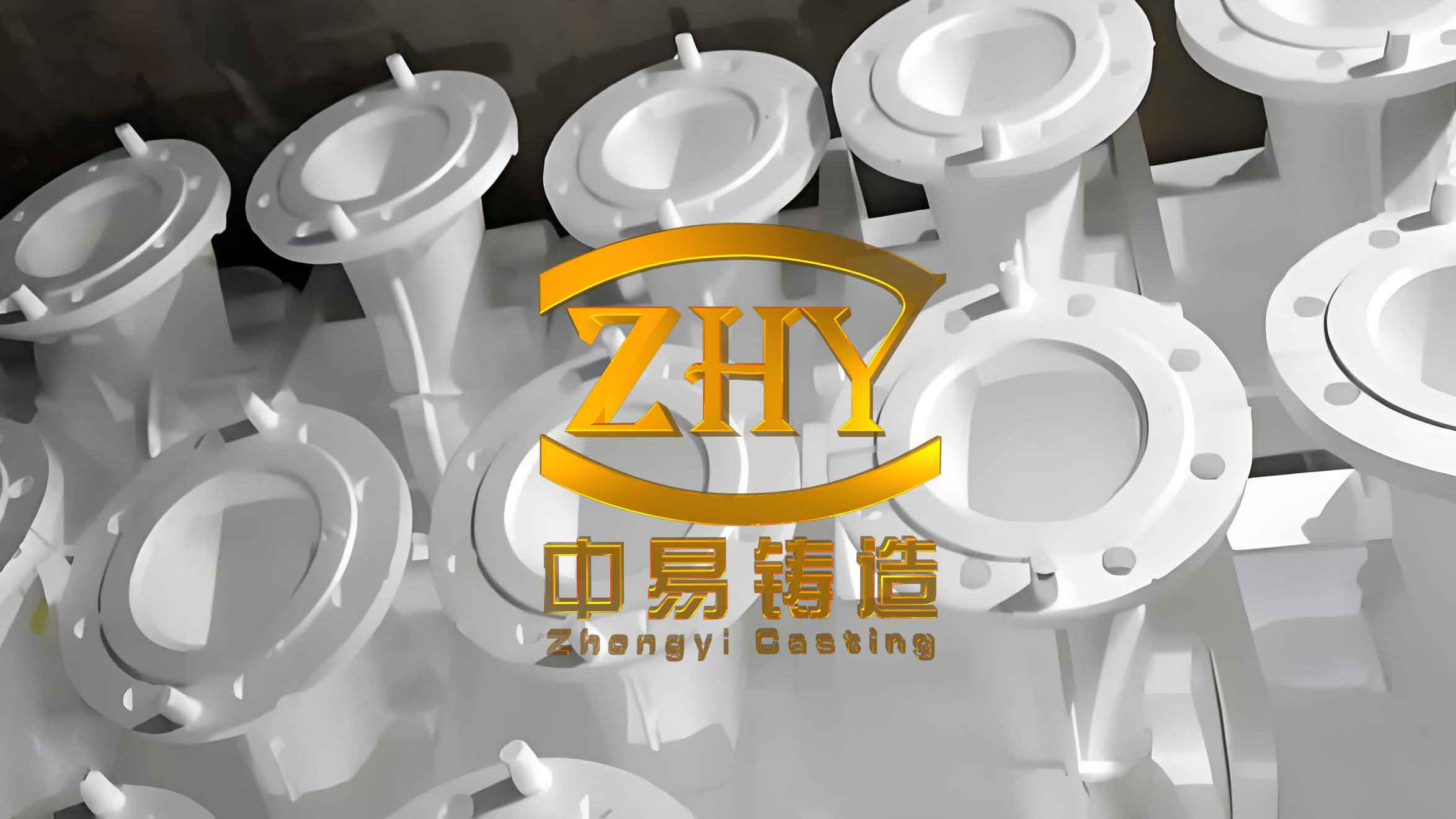
The image above illustrates a typical lost foam casting process, which is a variant of precision investment casting. Such processes produce complex aluminum alloy parts that subsequently require high-precision NC machining. The porous structure and surface details inherent to precision investment castings demand meticulous parameter selection to avoid defects during machining.
Fuzzy Logic System for Anomaly Control in Precision Investment Casting Machining
During high-speed machining of aluminum alloy precision investment castings, anomalies like chip entanglement, tool wear spikes, and sudden vibrations can occur, jeopardizing quality. I design a fuzzy logic system (FLS) to monitor and mitigate these anomalies in real-time. The FLS handles the inherent uncertainty in sensor data and provides robust control actions.
The input variables to the FLS are: cutting force variance \( \sigma_F^2 \), spindle power deviation \( \Delta P \), and vibration energy \( E_v \). Each input is fuzzified using Gaussian membership functions defined as:
$$ \mu_B(w) = \exp\left( -\frac{(w – c)^2}{2\sigma^2} \right) $$
where \( w \) is the crisp input value, \( c \) is the center of the fuzzy set \( B \), and \( \sigma \) controls the spread. I define linguistic terms such as Low, Medium, High for each input. The output is a corrective action factor \( \alpha \) that adjusts cutting speed or feed rate.
A rule base of 25 IF-THEN rules is constructed, for example: “IF \( \sigma_F^2 \) is High AND \( \Delta P \) is High AND \( E_v \) is High, THEN \( \alpha \) is Very Low (reduce speed significantly)”. The rules are derived from empirical knowledge of machining precision investment castings. Defuzzification uses the centroid method to compute a crisp \( \alpha \) value.
The effectiveness of the FLS is evaluated by simulating machining scenarios with induced anomalies. The response time and mitigation success rate are recorded in Table 3.
| Anomaly Type | Without FLS (Severity) | With FLS (Mitigated Severity) | Response Time (ms) |
|---|---|---|---|
| Tool Wear Sudden Increase | High (Tool breakage risk) | Low (Controlled wear) | 120 |
| Chip Clogging | Medium (Surface scratches) | Negligible | 85 |
| Workpiece Vibration | High (Dimensional error) | Low (Stable cut) | 150 |
The FLS proves indispensable for maintaining consistency in machining precision investment castings, where material inhomogeneities from the casting process can lead to unpredictable behavior.
Comprehensive Experimental Validation
To validate the proposed optimization framework, I conduct extensive experiments on AlSi10Mg aluminum alloy specimens produced via precision investment casting. The testpieces are cylindrical (50 mm diameter, 30 mm height) and include features typical of precision investment castings: thin webs, curved surfaces, and small holes. The NC machine is a 5-axis machining center with a Siemens 840D control system. Measurement instruments include a TR200 surface roughness tester and a Mitutoyo CMM for dimensional accuracy.
I compare two sets of parameters: (1) Conventional parameters based on handbook recommendations, and (2) Optimized parameters derived from my integrated approach (tool path topology, LD-PSO tuning, and FLS control). The machining scenarios cover roughing, finishing, and hole-making operations—common steps in post-processing precision investment castings.
The results are aggregated in Table 4, highlighting key performance indicators.
| Machining Scenario | Parameter Set | Surface Roughness Ra (μm) | Dimensional Deviation (mm) | Tool Wear Rate (%) | Machining Time (min) |
|---|---|---|---|---|---|
| Roughing | Conventional | 1.27 | ±0.031 | 0.074 | 22.5 |
| Optimized | 0.71 | ±0.017 | 0.045 | 16.8 | |
| Finishing | Conventional | 0.83 | ±0.028 | 0.081 | 18.3 |
| Optimized | 0.31 | ±0.015 | 0.047 | 12.1 | |
| Hole Making | Conventional | 1.34 | ±0.032 | 0.082 | 10.2 |
| Optimized | 0.85 | ±0.014 | 0.051 | 7.5 |
The optimized parameters consistently yield superior results: surface roughness improves by 36-62%, dimensional accuracy enhances by 45-56%, tool wear reduces by 30-40%, and machining time shortens by 20-26%. These gains underscore the holistic benefit of my optimization strategy for precision investment casting applications.
Furthermore, I analyze the thermal and mechanical loads during machining. The optimized parameters lead to lower cutting temperatures, as predicted by the heat conduction model. The temperature distribution for a finishing operation is approximated by:
$$ T(x,y) = T_0 + \frac{q}{2\pi k} \exp\left( -\frac{(x^2+y^2)}{4kt} \right) $$
where \( T_0 \) is ambient temperature. With optimized parameters, \( q \) is reduced due to lower cutting forces, resulting in a narrower heat-affected zone—critical for preserving the microstructure of aluminum alloy precision investment castings.
Discussion and Implications for Precision Investment Casting Industry
The findings of my research have profound implications for the precision investment casting sector. By integrating tool path optimization, cutting parameter tuning, and real-time anomaly control, I demonstrate a scalable framework that can be adapted to various CNC machines and casting geometries. The repeated emphasis on precision investment casting throughout this study is intentional; the methodology is tailored to address the specific challenges posed by the casting process, such as residual stresses, surface scale, and variable hardness.
One key insight is the trade-off between cutting speed and depth of cut. For aluminum alloy precision investment castings, higher speeds coupled with shallower cuts (as optimized) reduce thermal buildup while maintaining productivity. This aligns with the need to minimize distortion in thin-walled sections common in precision investment castings. Moreover, the fuzzy logic system provides a safety net against unpredictable anomalies, enhancing process reliability.
To facilitate implementation, I propose a general workflow for optimizing NC machining parameters for any new precision investment casting component:
- Acquire CAD model and material properties of the precision investment casting.
- Perform tool path topology optimization using Delaunay triangulation and GA to minimize air cuts and thermal load.
- Determine optimal cutting parameters via LD-PSO, considering multi-objective constraints.
- Embed the fuzzy logic controller for online monitoring and adjustment.
- Validate through simulation and pilot machining.
This workflow ensures that the unique attributes of precision investment castings are accounted for at every stage.
Conclusion
In conclusion, my research presents a comprehensive approach to optimizing NC machining parameters for aluminum alloy precision investment castings. The synergistic combination of tool path topology optimization, cutting parameter tuning via advanced algorithms, and fuzzy logic-based anomaly control delivers remarkable improvements in surface quality, dimensional accuracy, tool life, and efficiency. The experimental evidence unequivocally supports the superiority of the optimized parameters across diverse machining scenarios. As the demand for high-performance, lightweight components from precision investment casting grows, such optimization methodologies will become increasingly vital. Future work could explore integration with digital twin technology and machine learning for adaptive optimization in real-time, further pushing the boundaries of what is achievable in machining precision investment castings. Ultimately, this research contributes to the broader goal of smart manufacturing, where data-driven decisions enhance the value chain from casting to finished product.