
In my extensive experience with marine component manufacturing, I have frequently encountered challenges in producing high-integrity sand casting parts, particularly for hydraulic systems. This study focuses on a critical sand casting part: a special-shaped triple valve body used in seawater piping systems for ships. Originally designed with tin bronze ZCuSn10Zn2, this sand casting part exhibited unacceptably high leakage rates during hydraulic testing at 4.5 MPa, often exceeding 60%. Through rigorous analysis and process innovation, I identified silicon brass ZCuZn16Si4 as a superior material and developed an optimized sand casting process, successfully reducing leakage to below 8% in mass production. The following sections detail my methodological approach, theoretical reasoning, and practical implementations for enhancing the quality of such demanding sand casting parts.
The valve body in question is a geometrically complex sand casting part featuring three flanges with starkly contrasting wall thicknesses. This inherent design poses significant challenges for achieving soundness and pressure tightness in sand casting parts. The conical flange, with an outer diameter of 230 mm and a thickness of 34 mm, connects to a thin-walled pipe section of only 6 mm and the main valve body of 10 mm, creating a thickness ratio exceeding 4:1. Similarly, a triangular block connecting the square and small circular flanges can reach up to 40 mm in thickness. These abrupt transitions are prime locations for shrinkage porosity and hot tearing in sand casting parts, especially when using alloys with poor feeding characteristics.
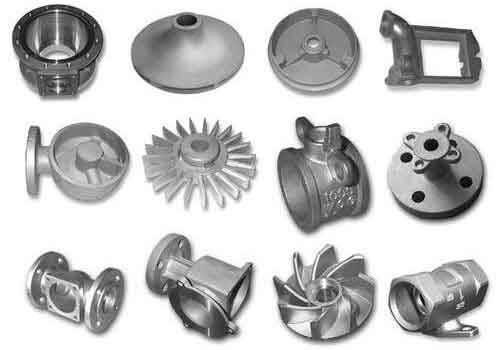
The selection of material is paramount for the performance of sand casting parts under high pressure. My investigation began with a comparative analysis of ZCuSn10Zn2 tin bronze and ZCuZn16Si4 silicon brass. Tin bronze, while historically favored for marine applications due to perceived superior corrosion resistance, has a wide freezing range leading to pasty solidification. This mode solidification promotes microporosity and segregation, making it inherently unsuited for pressure-tight sand casting parts, particularly those with uneven sections. In contrast, silicon brass solidifies with a more directional characteristic, offering better feedability and denser microstructure, which is crucial for sand casting parts subjected to hydraulic pressure.
To quantify this, I compiled and analyzed the standard compositional and mechanical properties of both alloys, relevant for sand casting parts.
| Property / Alloy | ZCuSn10Zn2 (Tin Bronze) | ZCuZn16Si4 (Silicon Brass) |
|---|---|---|
| Primary Composition (%) | Sn: 9.0-11.0, Zn: 1.0-3.0, Cu: Bal. | Cu: 79.0-81.0, Si: 2.5-4.5, Zn: Bal. |
| Tensile Strength, Rm (MPa) | ≥ 240 | ≥ 345 |
| Yield Strength, Rp0.2 (MPa) | ≥ 120 | Not Specified (Typically ~150) |
| Elongation, A (%) | ≥ 12 | ≥ 15 |
| Brinell Hardness, HB | ~70 | ~90 |
| Typical Freezing Range | Wide (Pasty Solidification) | Narrower (Directional Solidification) |
The data clearly shows that ZCuZn16Si4 offers superior mechanical strength, which directly translates to a higher potential pressure-bearing capacity for sand casting parts. The corrosion resistance in seawater was a major concern for designers. While direct data for ZCuZn16Si4 is scarce, the corrosion rate in seawater for copper alloys can be empirically related to zinc content. For many brass alloys, the corrosion rate (CR) in mm/year tends to increase with zinc content. A generalized approximation can be made using a linear relationship derived from handbook data for similar alloys:
$$ CR \approx k \cdot [Zn\%] + C $$
Where \(k\) and \(C\) are constants. For typical marine brass alloys, using reference points like ZCuZn38 (CR ~0.258 mm/year) and ZCuZn40Pb2 (CR ~0.0148 mm/year), one can infer that the lower zinc content of ZCuZn16Si4 (~16.5% Zn) results in a corrosion rate likely below 0.015 mm/year. This is negligible for sand casting parts with minimum wall thicknesses of 8-10 mm over a service life of decades. The perceived advantage of tin bronze in corrosion resistance is thus outweighed by its poor casting integrity for this specific application. The fundamental requirement for sand casting parts in hydraulic systems is leak-tightness, which silicon brass reliably provides.
My process design for the silicon brass valve body aimed to address three core issues: 1) Effective feeding of heavy sections to eliminate shrinkage, 2) Minimization of thermal stress to prevent hot tears, and 3) Reduction of oxide inclusions to ensure metal purity. The process was based on horizontal pouring in a green sand mold with chromite sand cores for enhanced chilling.
Pattern and Mold Design: Machining allowances were carefully assigned: 6 mm on the conical face of the large flange, 4-5 mm on other flange faces and peripheries. To account for differential contraction between the green sand mold and the denser chromite core, different patternmaker’s shrinkages were applied. The external pattern used a contraction rule of 1.5%, while the core box used 0.8%. This is a critical consideration for achieving dimensional accuracy in intricate sand casting parts.
Gating and Feeding System: A pressurized, bottom-up gating system was employed to ensure calm mold filling. The key innovation was the integration of a ceramic filter within the runner system to trap oxides. The system comprised a sprue (Ø30 mm), an enlarged horizontal runner housing the filter, and three side risers. The filter was placed vertically in the runner, and the cross-sectional area around it was increased by a factor of 2.5 to 3 to maintain metal fluency. This is vital for copper alloys which have lower fluidity than ferrous metals. The risers were strategically placed:
- A dark riser (Ø100 mm × 160 mm) adjacent to the conical flange with suitable padding.
- A dark riser (Ø80 mm × 120 mm) adjacent to the small circular flange.
- An open riser (140 mm × 45 mm × 160 mm) atop the square flange.
The total casting weight was 27 kg, with a riser weight of 21 kg and a pouring weight of 52 kg, yielding a casting yield of approximately 52%. The use of multiple risers ensures balanced solidification and feeding for this complex sand casting part. The efficacy of a feeding riser can be modeled using Chvorinov’s rule and the modulus concept. The required riser volume \(V_r\) to feed a casting section of volume \(V_c\) is related to their freezing times. For a cylindrical riser, the minimum diameter \(D_r\) to avoid premature freezing can be estimated by:
$$ \frac{V_r}{A_r} \geq 1.2 \times \frac{V_c}{A_c} $$
Where \(A_r\) and \(A_c\) are the surface areas of the riser and casting section, respectively. Applying this principle guided the sizing of the risers for the heavy flange sections.
Use of Chills: To further control solidification and prevent shrinkage in the thick sections, graphite chills were extensively used. Their placement and dimensions are summarized below:
| Location | Chill Description | Purpose |
|---|---|---|
| Conical Flange Outer Perimeter | Full ring, 25 mm thick (4 segments) | To accelerate cooling of the thick flange, promoting directional solidification towards the riser. |
| Square Flange (Lower Half) | Plate, 15 mm thick | To eliminate shrinkage in the flange body. |
| Valve Interior (Square Flange inlet) | Full ring, 25 mm thick (2 segments, 50 mm long) | To chill the interior hot spot near the triangular block connection. |
| Valve Interior (Small Flange inlet) | Plate, 12 mm thick (2 segments, 50 mm long) | To chill the region beneath the triangular block. |
The combined action of risers and chills ensures a controlled thermal gradient, which is essential for producing sound sand casting parts. The heat extraction rate of a chill can be approximated by considering it as a heat sink. The initial heat flux \(q\) from the solidifying metal into the chill is governed by:
$$ q = h \cdot (T_m – T_c) $$
where \(h\) is the interfacial heat transfer coefficient, \(T_m\) is the metal temperature, and \(T_c\) is the chill temperature. Graphite’s high thermal conductivity makes it an excellent chill material for copper alloy sand casting parts.
Pouring Parameters and Metal Treatment: For a sand casting part of this section thickness, the pouring temperature was maintained between 960°C and 980°C. Excessive superheat can increase shrinkage and gas dissolution, while too low a temperature risks mistruns. Silicon brass is prone to gas absorption and oxidation. Therefore, proper melt degassing and fluxing are mandatory. The quality of the melt was assessed using a reduced pressure test (or a simple fracture test for silicon brass), where a concave fracture surface indicates acceptable gas levels. The use of the ceramic filter in the runner is a final, critical step to capture any suspended oxides, a common defect source in brass sand casting parts.
Shakeout and Cooling: To enhance surface densification and minimize residual stress, the sand casting part was shaken out from the mold while still at a dark red heat (approximately 600-700°C) and allowed to cool in air. This practice helps in developing a fine-grained, leak-tight surface layer on the sand casting part.
The implementation of this optimized process in production over several years has yielded consistently excellent results. Batch production of dozens of valve bodies demonstrated a dramatic improvement. The leakage rate during the 4.5 MPa hydraulic pressure test dropped from over 60% with the original tin bronze process to a stable rate below 8% with the silicon brass process. This confirms the robustness of the designed sand casting process for complex, high-pressure sand casting parts. The success hinges on the synergistic combination of material substitution and meticulous process engineering.
From a theoretical standpoint, the superiority of silicon brass for this application can be further explained by its solidification behavior. The solidification morphology influences shrinkage porosity formation. The porosity volume fraction \(f_p\) can be related to the solidification temperature range \(\Delta T_f\) and the local cooling rate \(\dot{T}\) through semi-empirical models often used for sand casting parts:
$$ f_p \propto \frac{\Delta T_f}{\sqrt{\dot{T}}} $$
Tin bronze has a large \(\Delta T_f\), promoting interdendritic feeding difficulties and high \(f_p\). Silicon brass has a narrower \(\Delta T_f\) and, with the application of chills, a higher local \(\dot{T}\) in critical areas, both factors reducing \(f_p\). Furthermore, the hot tearing susceptibility index \(I_{HT}\) for alloys can be qualitatively assessed based on cohesion temperature range and grain structure. The directional solidification promoted by the chills and risers in my design minimizes thermal stresses that cause hot tears in sand casting parts at vulnerable junctions.
In conclusion, my comprehensive study demonstrates that for demanding marine applications where high pressure integrity is non-negotiable, material selection must prioritize castability alongside corrosion resistance. For thin-and-thick walled sand casting parts like the triple valve body, silicon brass ZCuZn16Si4 is a far more reliable choice than tin bronze ZCuSn10Zn2 under sand casting conditions. The developed sand casting process—featuring a filtered gating system, strategically sized risers, extensive use of graphite chills, and controlled pouring—provides a reliable blueprint for manufacturing high-quality, pressure-tight sand casting parts. The principles elucidated here, from material science to thermal management during solidification, are broadly applicable to the enhancement of various complex sand casting parts across industries. The continuous pursuit of such optimized processes is essential for advancing the reliability and performance of sand casting parts in critical engineering applications.