
In my research on lost foam castings, I focused on optimizing the coating formulation specifically for steel castings produced via the lost foam process. The coating in lost foam castings serves multiple critical functions: it prevents molten metal penetration into the sand mold, enhances the strength and rigidity of the foam pattern, and facilitates the smooth removal of decomposition products during pouring. Unlike conventional sand casting coatings that are applied to the mold cavity, the coating in lost foam castings is directly applied to the foam pattern. This unique requirement demands careful selection of refractory fillers, binders, suspending agents, and additives to achieve a balance between workability and processability.
I conducted a systematic investigation using a five-factor, four-level orthogonal experimental design to evaluate the effects of key components on both the working properties and processing properties of the coating. The five factors were sodium bentonite (as a thickener), carboxymethyl cellulose sodium (CMC, as a suspending agent), silica sol (as a high-temperature binder), phenolic resin (as a low-temperature binder), and 801 glue (an oil-soluble binder chosen to improve the release of oily pyrolysis products from the foam pattern and reduce carbon pick-up in lost foam castings). The base refractory was a mixture of 80% quartz powder and 20% zircon powder, with water as the carrier. Small amounts of surfactant, defoamer, and preservative were also added.
Experimental Materials and Methods
To systematically optimize the coating for lost foam castings, I designed orthogonal experiments with the factors and levels shown in Table 1. The amount of water was fixed at 200 g for each trial.
| Level | Sodium bentonite (g) | CMC (g) | Silica sol (g) | Phenolic resin (g) | 801 glue (g) |
|---|---|---|---|---|---|
| 1 | 4 | 4 | 6 | 2 | 2 |
| 2 | 6 | 6 | 8 | 4 | 4 |
| 3 | 8 | 8 | 10 | 6 | 6 |
| 4 | 10 | 10 | 12 | 8 | 8 |
Working Properties of the Coating
The working properties I evaluated included air permeability (both at room temperature and at high temperature), surface strength, and high-temperature strength. These properties directly influence the performance of the coating during pouring of lost foam castings.
Air Permeability
I measured the air permeability of the coating both at room temperature and at 900 °C. Standard cylindrical sand specimens (50 mm × 50 mm) were prepared using sodium silicate sand. One end of each specimen was coated with the test coating, dried, and then the permeability was measured using a standard permeability tester. For high-temperature permeability, the coated specimen was placed in a furnace at 900 °C for 2 minutes before measurement. The permeability values were recorded in cm³·g⁻¹·min⁻¹.
Surface Strength
I assessed the surface strength using the sand blasting method. Standard quartz sand with a particle size of 0.212 mm was allowed to fall continuously from a height of 500 mm onto the dried coating surface until a hole of 1 mm diameter was formed. The mass of sand that fell before the hole appeared was recorded as the surface strength value (in grams).
High-Temperature Strength
To evaluate the high-temperature strength, I coated a standard sand specimen with the test coating, dried it, and then placed it in a furnace at 900 °C for 2 minutes. After removal, I inspected the coating for cracks. I classified the results into three levels: Level 1 (no cracks, assigned a value of 3), Level 2 (very fine cracks, assigned 2), and Level 3 (some cracks, assigned 1).
The measured working property data for all 16 experimental runs are presented in Table 2.
| Run | Room-temp permeability (cm³·g⁻¹·min⁻¹) | High-temp permeability (cm³·g⁻¹·min⁻¹) | Surface strength (g) | High-temp strength (grade) |
|---|---|---|---|---|
| 1 | 1285 | 3216 | 407 | 1 |
| 2 | 1680 | 2821 | 745 | 2 |
| 3 | 1556 | 2215 | 1865 | 3 |
| 4 | 1048 | 3062 | 2512 | 1 |
| 5 | 955 | 1994 | 565 | 2 |
| 6 | 853 | 1452 | 803 | 2 |
| 7 | 1041 | 1917 | 1803 | 1 |
| 8 | 662 | 1802 | 2480 | 3 |
| 9 | 1893 | 2811 | 457 | 2 |
| 10 | 2146 | 3506 | 817 | 1 |
| 11 | 863 | 2498 | 2057 | 2 |
| 12 | 1105 | 3495 | 3250 | 2 |
| 13 | 1231 | 3651 | 343 | 1 |
| 14 | 859 | 3157 | 1315 | 3 |
| 15 | 967 | 3753 | 1965 | 2 |
| 16 | 1392 | 4048 | 2996 | 1 |
I calculated the range (maximum difference between average values at different levels) for each factor to identify the primary influencing factors. The results are summarized in Table 3.
| Property | Sodium bentonite | CMC | Silica sol | Phenolic resin | 801 glue |
|---|---|---|---|---|---|
| Room-temp permeability (cm³·g⁻¹·min⁻¹) | 624.00 | 377.75 | 268.25 | 439.75 | 570.25 |
| High-temp permeability (cm³·g⁻¹·min⁻¹) | 1861.00 | 506.00 | 537.75 | 253.25 | 391.50 |
| Surface strength (g) | 272.5 | 2366.5 | 262.5 | 287.5 | 195.0 |
| High-temp strength | 0.25 | 0.50 | 1.75 | 0.25 | 0.50 |
From Table 3, I observed that sodium bentonite had the greatest influence on both room-temperature and high-temperature permeability, with ranges of 624 and 1861, respectively. For surface strength, CMC was the dominant factor (range 2366.5), while silica sol most significantly affected high-temperature strength (range 1.75). These findings guided my subsequent selection of optimal levels for each material in developing improved coatings for lost foam castings.
Processing Properties of the Coating
In addition to working properties, the processing behavior of the coating is crucial for its practical application in lost foam castings. I evaluated the following processing properties: coating ability (wettability), dripping rate, suspension stability, leveling property, and viscosity.
Coating Ability
I immersed a foam plastic sheet into the coating and observed whether the coating uniformly covered all immersed surfaces. The uniformity was graded as: 1 (very uniform, value 3), 2 (slight ripples, value 2), and 3 (ripples present, value 1).
Dripping Rate
I determined the dripping rate by weighing a stainless steel plate (40 mm × 40 mm) before and after dipping. After dipping, the plate was suspended for 30 seconds, and the mass of dripped coating was collected. The dripping rate was calculated as:
$$\eta = \frac{G_3}{G_3 + G} \times 100\%$$
where \(G\) is the mass of coating adhering to the plate and \(G_3\) is the mass of dripped coating. A lower dripping rate indicates better anti-drip behavior.
Suspension Stability
I used the graduated cylinder method. The prepared coating was slowly poured into a 100 mL graduated cylinder and allowed to stand for 24 hours. The volume percentage of settled solids was recorded as the suspension rate.
Leveling Property
I placed a paper with concentric circles (spaced 5 mm apart, up to 200 mm diameter) on a level table, covered with a glass plate. A funnel with a 50 mm diameter was positioned over the center, filled with coating, and the coating was allowed to flow freely. The diameter of the final wetted circle indicated the leveling ability.
Viscosity
Viscosity was measured using a digital rotational viscometer (NDJ-9S) with rotor No. 2 at 12 rpm. The average of three readings was taken.
All coatings exhibited 100% suspension stability, and viscosity remained around 667 Pa·s. Therefore, I tabulated only the coating ability, dripping rate, and leveling diameter in Table 4.
| Run | Coating ability (grade) | Dripping rate (%) | Leveling diameter (mm) |
|---|---|---|---|
| 1 | 1 | 55.95 | 100.53 |
| 2 | 3 | 47.18 | 92.15 |
| 3 | 2 | 37.81 | 87.03 |
| 4 | 1 | 31.39 | 84.26 |
| 5 | 2 | 46.28 | 94.03 |
| 6 | 2 | 58.00 | 103.88 |
| 7 | 1 | 53.06 | 99.38 |
| 8 | 1 | 41.01 | 103.13 |
| 9 | 3 | 21.48 | 89.16 |
| 10 | 3 | 15.74 | 88.19 |
| 11 | 2 | 45.99 | 88.44 |
| 12 | 1 | 35.94 | 80.81 |
| 13 | 3 | 39.11 | 92.13 |
| 14 | 3 | 60.23 | 89.56 |
| 15 | 2 | 49.36 | 82.06 |
| 16 | 2 | 27.49 | 84.19 |
I performed range analysis on the processing properties (Table 5).
| Property | Sodium bentonite | CMC | Silica sol | Phenolic resin | 801 glue |
|---|---|---|---|---|---|
| Coating ability | 1.0 | 1.5 | 0.75 | 0.75 | 0.5 |
| Dripping rate (%) | 19.80 | 14.77 | 12.03 | 19.47 | 8.67 |
| Leveling diameter (mm) | 13.46 | 5.87 | 7.00 | 5.60 | 4.41 |
The range analysis revealed that CMC had the strongest influence on coating ability (range 1.5). For dripping rate, 801 glue exhibited the smallest range (8.67%), indicating it was the least influential factor, while sodium bentonite and phenolic resin had larger effects. Leveling diameter was most affected by sodium bentonite (range 13.46 mm). These results helped me understand how each additive contributes to the processing behavior of coatings for lost foam castings.
Optimal Formulation Determination
Considering both working and processing properties, I selected the following optimal levels: sodium bentonite at level 4 (10 g), CMC at level 3 (8 g), silica sol at level 3 (10 g), phenolic resin at level 3 (6 g), and 801 glue at level 4 (8 g). I prepared a coating with this formulation and tested its performance. The results are shown in Table 6.
| Property | Value |
|---|---|
| Room-temp permeability (cm³·g⁻¹·min⁻¹) | 1106 |
| High-temp permeability (cm³·g⁻¹·min⁻¹) | 3364 |
| Surface strength (g) | 3057 |
| High-temp strength | Excellent (grade 3) |
| Coating ability | Excellent (grade 3) |
| Dripping rate (%) | 25.19 |
| Suspension rate (%) | 100 |
| Leveling diameter (mm) | 95.32 |
| Viscosity (Pa·s) | 668 |
The optimized coating exhibited balanced properties: high permeability to allow gas escape, strong surface and high-temperature strength to resist metal erosion, excellent coating ability, low dripping, and good leveling. This formulation significantly improved the overall performance compared to any single trial in the orthogonal array.
Industrial Validation
I then applied the optimized coating in a foundry producing high-manganese steel liners (e.g., for crusher wear parts) using the lost foam process. The foam patterns were coated by dipping, and the coating dried uniformly without cracking or peeling. During pouring, the coating effectively prevented sand adhesion and allowed smooth decomposition gas evolution. After casting, the surface quality of the steel parts was excellent—free from porosity, slag inclusions, and other defects commonly encountered in lost foam castings.
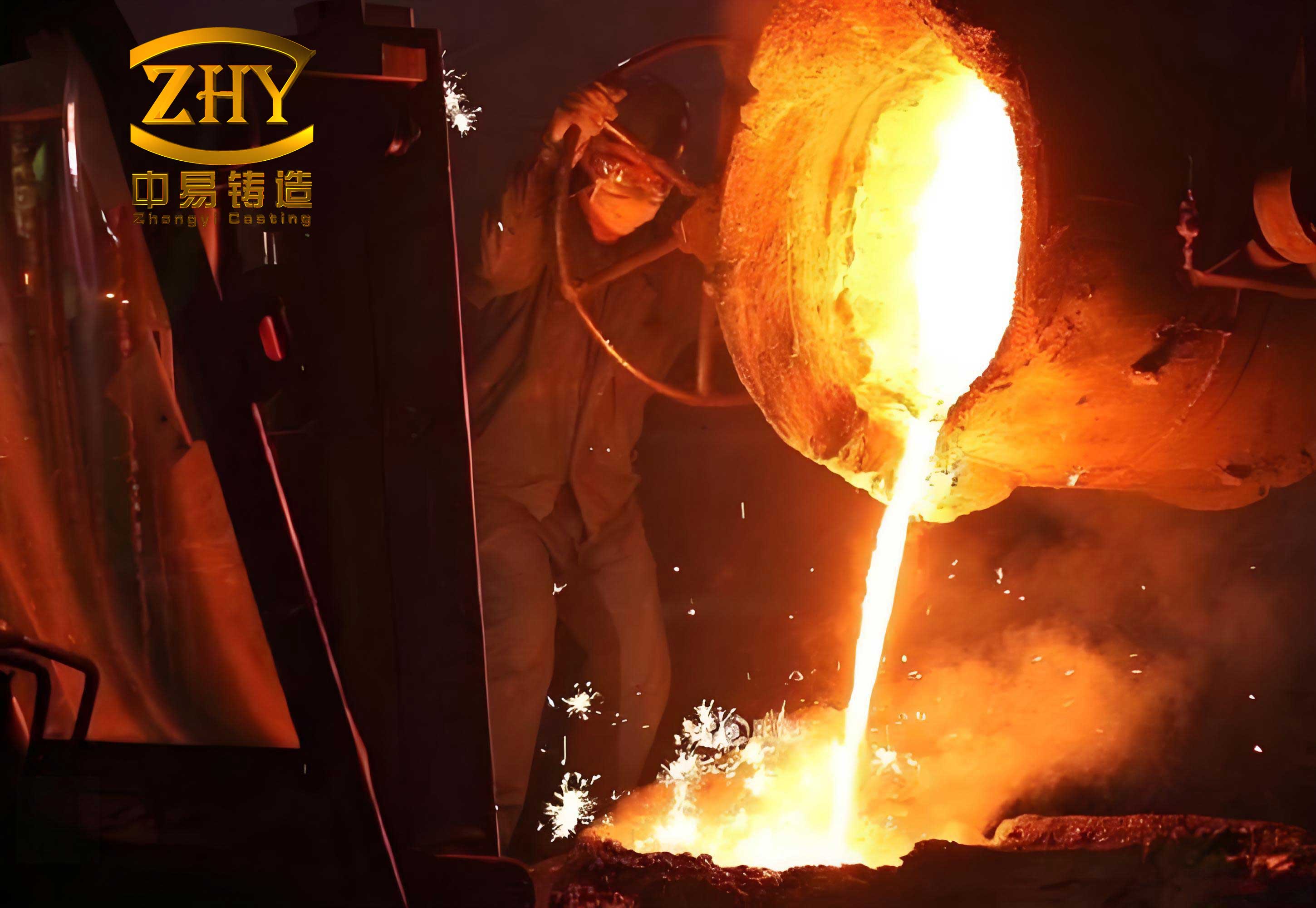
The image above illustrates a typical lost foam casting production run where the optimized coating was used. The castings exhibited smooth surfaces and dimensional accuracy, confirming the practical viability of the formulation.
Conclusions
Through systematic orthogonal experiments and statistical analysis, I successfully optimized a coating formulation for steel lost foam castings. The key findings are:
- For working properties: sodium bentonite dominates air permeability; CMC controls surface strength; silica sol governs high-temperature strength.
- For processing properties: CMC is most critical for coating ability; sodium bentonite and phenolic resin strongly affect dripping rate; sodium bentonite also determines leveling.
- The optimal formulation uses 10 g sodium bentonite, 8 g CMC, 10 g silica sol, 6 g phenolic resin, and 8 g 801 glue per 200 g water.
- The optimized coating provides excellent permeability, strength, and application characteristics, leading to defect-free steel castings in lost foam castings.
This work demonstrates that careful selection and balance of binders, thickeners, and suspending agents can significantly improve the performance of coatings for lost foam castings, ultimately enhancing casting quality and process reliability.