
In the pursuit of high-integrity, cost-effective production of magnesium alloy components, sand casting remains a predominant and versatile manufacturing process. The performance of the sand mold or core is fundamentally dictated by the chemical binder system employed. This study delves into the intricate effects of various additive ratios within a furan resin-bonded sand system, specifically tailored for magnesium alloy sand casting. Our primary objective is to establish a formulation that guarantees sufficient mold strength while simultaneously minimizing casting defects such as porosity, enhancing high-temperature stability, and ultimately reducing the production cost of sand casting parts.
The allure of magnesium alloys for industries ranging from aerospace to automotive electronics is well-founded, stemming from their exceptional strength-to-weight ratio and good impact resistance. However, their casting presents unique challenges, primarily due to high reactivity and a propensity for defects like gas porosity and shrinkage. Within the broad spectrum of foundry techniques, sand casting stands out for its adaptability, productivity, and economic viability. The evolution from traditional clay-bonded sands to chemical binder systems, notably self-setting furan resin sands, has marked a significant leap forward. This process offers superior dimensional accuracy, excellent surface finish on the resulting sand casting parts, and drastically reduced cleaning efforts post-casting. Nevertheless, the improper use of resins and their catalysts can introduce environmental concerns and casting imperfections. Therefore, a meticulous optimization of the sand mixture—balancing resin, catalyst, flame retardants, and performance enhancers like silanes—is critical for the sustainable and quality-conscious production of magnesium sand casting parts.
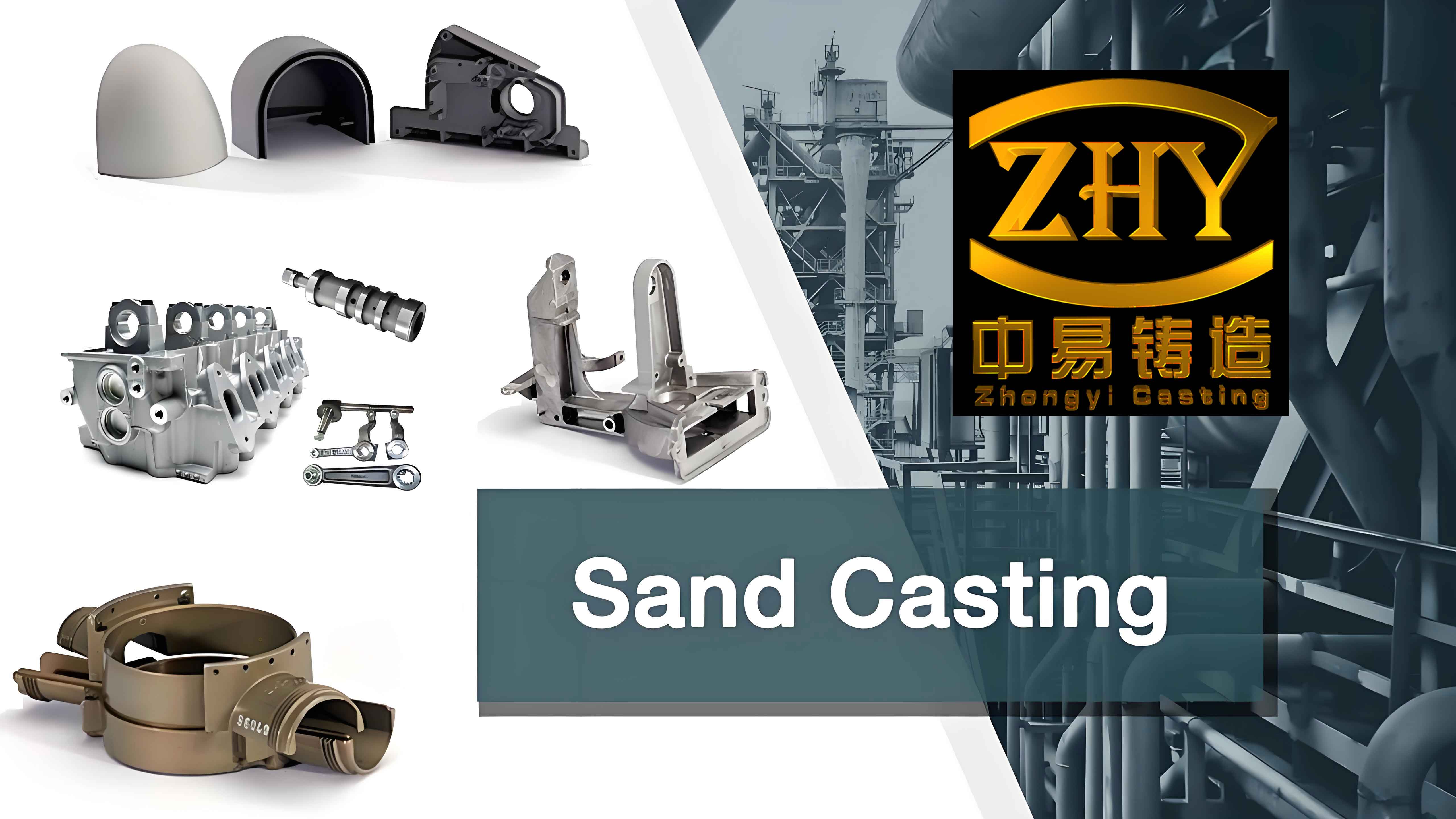
The core material system under investigation is a no-bake furan resin sand. Its essential components and their functional roles are summarized below:
| Component | Primary Role | Key Considerations |
|---|---|---|
| Silica Sand | Refractory base aggregate; provides the mold shape and thermal stability. | Grain size distribution, purity (SiO2 content), and acid demand value significantly impact final strength and surface finish of sand casting parts. |
| Furan Resin | Primary organic binder; coats sand grains and polymerizes to create cohesive strength. | Amount directly correlates with strength but also with gas evolution and potential for porosity in sand casting parts. Minimization is a key goal. |
| Acid Catalyst (Curing Agent) | Initiates and accelerates the polymerization (cross-linking) of the resin. | Ratio to resin controls work time (bench life) and strip time. Excess can lead to poor humidity resistance and brittleness. |
| Flame Retardant (e.g., Boric Acid) | Suppresses the vigorous reaction of molten magnesium with silica sand by forming a protective layer. | Essential for magnesium alloys. Dosage is critical; too little risks violent reaction, too much can severely weaken the mold. |
| Silane Coupling Agent | Acts as a molecular bridge at the organic (resin)-inorganic (sand) interface. | Improves bond strength, thermal shock resistance, and can reduce required resin content for a given strength target in sand casting molds. |
The experimental methodology was designed to quantify the influence of additive ratios on critical process parameters. A standard silica sand was used as the base. The furan resin, sulfonic acid-based catalyst, powdered boric acid as a flame retardant, and an amino-functional silane were the variables. The mixing sequence was rigorously controlled: sand and flame retardant were mixed first, followed by the catalyst, and finally the resin and silane. This sequence ensures proper distribution before the rapid curing reaction begins.
The performance of the sand mixtures was evaluated through three paramount metrics:
- Workable Time (Bench Life): The period after mixing during which the sand remains pliable enough to form a proper mold without significant strength loss. It is conventionally defined as the time for the sand to reach a compressive strength of 0.07 MPa.
- Strip Time: The time required after molding for the sand to develop sufficient strength (conventionally 0.14 MPa in compression) to allow the pattern or core box to be removed without damaging the mold geometry.
- Tensile & Compressive Strength: The ultimate strength of the cured sand, measured at 24 hours, indicating the mold’s ability to withstand handling and metallostatic pressure during pouring. Hourly strength development was also tracked.
Specimens were prepared using standard “dog-bone” tensile molds and cylindrical compressive strength molds. Strength measurements were taken at intervals (e.g., 30 min, 1 h, 2 h, 4 h, 24 h) using a universal strength testing machine to plot hardening curves.
A foundational experiment established a baseline. The following table outlines a typical starting formulation and the tested ranges for key variables per 100 kg of sand:
| Component | Baseline Mass (kg) | Tested Range (kg) |
|---|---|---|
| Silica Sand | 100.0 | Constant (100.0) |
| Furan Resin | 1.5 | 0.8 – 2.0 |
| Acid Catalyst | 0.6 (40% of resin) | 25% – 50% of resin mass |
| Flame Retardant | 2.0 | 1.0 – 3.0 |
| Silane Coupling Agent | 0.0 | 0.0 – 0.3% of resin mass |
The data from the hardening tests revealed clear, quantifiable trends. The relationship between workable time (T_w), strip time (T_s), and the additive ratios can be modeled. A simplified empirical model for the system can be expressed as:
$$ T_w \propto \frac{1}{[Catalyst] \times k_1} $$
$$ T_s \propto \frac{1}{[Catalyst] \times k_2} $$
where $k_1$ and $k_2$ are rate constants influenced by temperature and resin reactivity. The 24-hour tensile strength ($\sigma_t$) showed a strong, approximately linear correlation with resin content ($R$) up to a point, but diminishing returns were observed at higher levels, partly due to brittle fracture mechanisms:
$$ \sigma_t \approx \alpha R – \beta R^2 \quad \text{(for a given catalyst ratio)} $$
where $\alpha$ and $\beta$ are material-dependent coefficients.
The most significant findings are synthesized in the table below, comparing the performance of a standard high-resin mix versus an optimized low-resin mix with a silane additive:
| Performance Parameter | Standard Formulation (High Resin) | Optimized Formulation (Low Resin + Silane) | Impact on Sand Casting Parts & Process |
|---|---|---|---|
| Resin Content | 2.0% | 1.1% | Direct 45% reduction in binder cost and gas-forming potential. |
| Catalyst Ratio | 50% of resin | 30% of resin | Longer workable time, reduced acid gas emission. |
| 24-hr Tensile Strength | 1.25 MPa | 1.15 MPa | Marginal decrease (<8%), but fully sufficient for handling and casting most sand casting parts. |
| Workable Time (to 0.07 MPa) | ~25 min | ~40 min | 60% increase, allowing for more complex core assembly and reducing sand waste. |
| Strip Time (to 0.14 MPa) | ~45 min | ~60 min | Moderate increase; requires production planning adjustment but improves mold integrity during stripping. |
| High-Temperature Stability (subjective) | Prone to surface friability | Improved surface cohesion | Reduces metal penetration and improves the surface finish of the final sand casting parts. |
The incorporation of the silane coupling agent was pivotal. Its mechanism involves hydrolyzing to form silanols, which then condense with hydroxyl groups on the silica sand surface, while their organic functional group co-polymerizes with the furan resin. This creates a robust covalent interface. The effect on strength, especially at elevated temperatures, can be conceptualized by enhancing the effective bonding area and energy. The improved thermal stability reduces mold wall movement and erosion during the pour, leading to more dimensionally accurate sand casting parts.
The reduction in resin and catalyst directly addresses the primary source of gas porosity in furan sand casting parts. The gas generation potential ($G$) of a mold can be approximated as a function of resin mass ($R$) and its nitrogen content ($N$):
$$ G \propto R \times N $$
By lowering $R$, the total gas volume available to invade the solidifying magnesium alloy is minimized. Furthermore, a slower, more controlled cure from a lower catalyst ratio may lead to a more uniform pore structure within the sand mold, facilitating venting.
Based on the experimental data and analysis, a multi-variable optimization approach is recommended. The goal is to maximize a composite Performance Index ($PI$) for producing magnesium sand casting parts:
$$ PI = w_1 \cdot \sigma_t + w_2 \cdot T_w – w_3 \cdot C – w_4 \cdot G $$
Where:
- $\sigma_t$ = Normalized tensile strength
- $T_w$ = Normalized workable time
- $C$ = Normalized raw material cost (resin + catalyst + additives)
- $G$ = Normalized gas generation potential
- $w_1, w_2, w_3, w_4$ = Weighting factors based on specific foundry priorities (e.g., $w_3$ and $w_4$ are high for cost-sensitive, porosity-prone sand casting parts).
For the production of high-quality magnesium sand casting parts, the following formulated guidelines are proposed:
- Resin Minimization: Use the lowest resin percentage (typically between 1.0% and 1.3%) that consistently meets the required strip and handling strength for the specific sand casting parts being produced.
- Catalyst Optimization: Employ a catalyst ratio between 25% and 35% of the resin mass. This extends work time and reduces acid gas, while still achieving a practical strip time.
- Silane Inclusion: Incorporate a silane coupling agent at 0.1-0.2% of the resin mass. This is a low-cost addition that pays dividends in strength retention, thermal performance, and potentially allows for further resin reduction.
- Flame Retardant Precision: Strictly control the flame retardant addition based on the section thickness and geometry of the sand casting parts. Use just enough to ensure safety (typically 1.5-2.0%). Excess severely weakens the mold.
- Process Control: Maintain strict control over sand temperature, mixing time, and ambient humidity, as these factors interact strongly with the chemical kinetics of the optimized, lower-catalyst system.
This investigation conclusively demonstrates that a systematic, science-based approach to additive formulation in furan resin sand systems yields substantial benefits for magnesium alloy foundries. The key outcomes are:
- Significant reductions in resin and catalyst usage are achievable without compromising the mechanical integrity necessary for producing sound sand casting parts. This leads to direct material cost savings and a smaller environmental footprint.
- The strategic use of interface modifiers like silane coupling agents enhances the high-temperature performance of the sand mold, contributing to improved surface quality and dimensional accuracy of the castings.
- Optimizing for a longer workable time enhances production flexibility and reduces waste, while a controlled strip time ensures mold durability.
- The overall reduction in gaseous decomposition products from the binder system is a critical factor in minimizing gas porosity defects in magnesium sand casting parts.
The findings provide a practical framework and technical support for foundries aiming to improve the quality, consistency, and economics of their magnesium sand casting operations. Future work could involve dynamic gas evolution measurements during pouring and the development of more sophisticated multi-objective optimization models tailored to specific classes of sand casting parts.