
As a seasoned foundry engineer with decades of hands-on experience, I have dedicated my career to refining the casting processes for gray cast iron components. Gray cast iron, renowned for its excellent machinability, damping capacity, and cost-effectiveness, is a cornerstone material in industrial manufacturing. However, achieving defect-free castings, especially for parts requiring full machining, has long been a formidable challenge. Through iterative practice and systematic analysis, I have come to fundamentally reassess several entrenched principles, particularly concerning pouring temperature and gating system design. This article shares my journey and the empirical insights gained, aiming to provide a comprehensive guide that leverages data, formulas, and structured methodologies to elevate the quality of gray cast iron castings.
For many years, the prevailing wisdom in our foundry—and indeed, in numerous handbooks—was that the pouring temperature for gray cast iron should be inversely proportional to the section thickness of the casting. The rationale seemed sound: thicker sections cool slower, so a lower temperature would minimize shrinkage defects and metal-mold reactions. This led to the widespread adoption of a “low-temperature, fast-pour” strategy. We routinely poured gray cast iron at temperatures around 1300–1320°C for medium to heavy sections, believing it to be optimal. However, persistent quality issues forced a reevaluation. The defects were not subtle; they were catastrophic for precision parts: gas holes, slag inclusions, sand erosion, and subsurface shrinkage porosity became unacceptably common. The financial toll was significant, with scrap rates for certain critical components soaring above 30%. It became clear that the conventional approach was flawed, prompting a series of experiments and a complete overhaul of our process philosophy for gray cast iron.
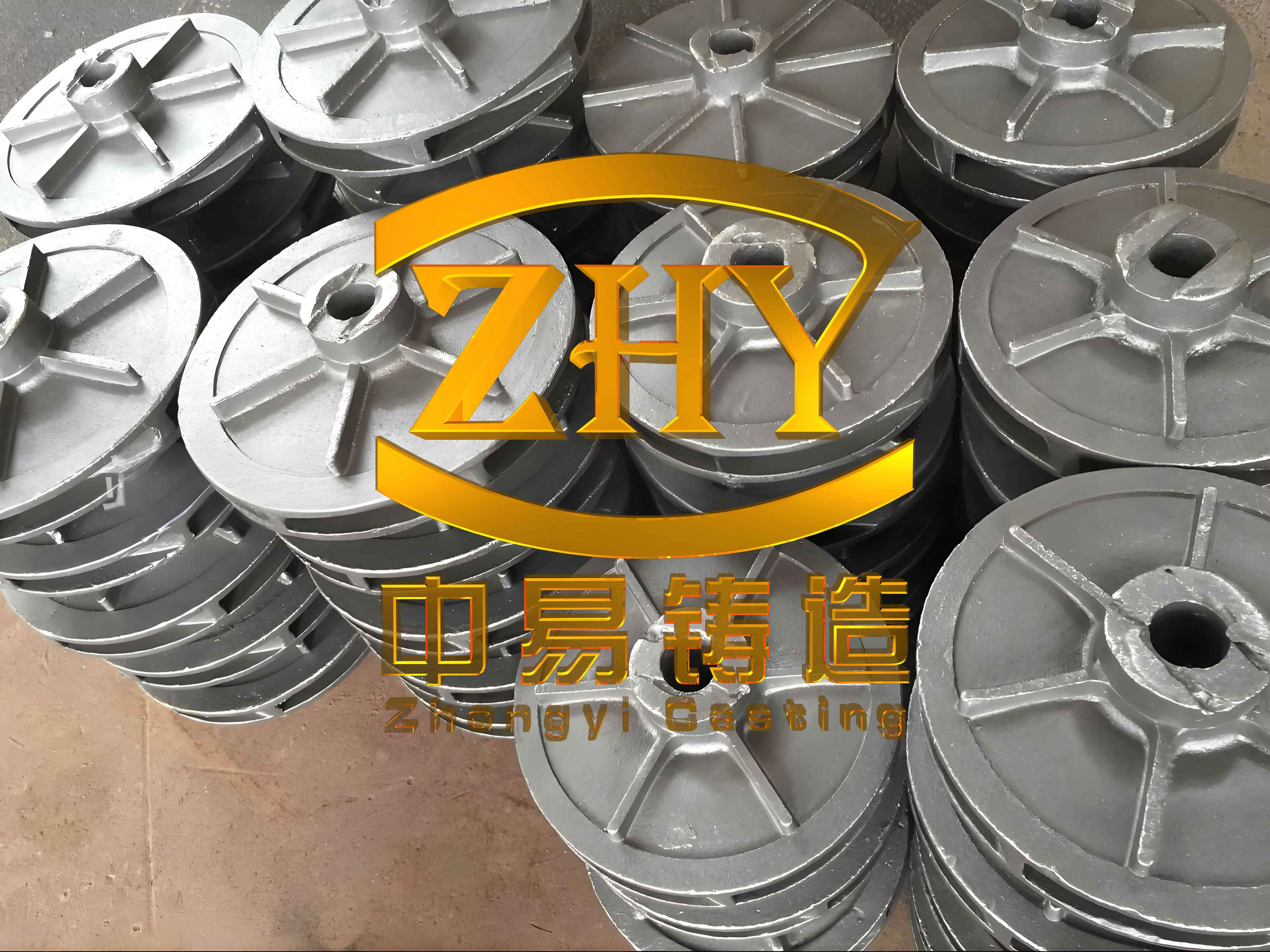
The core failure of the “low-temperature, fast-pour” method lies in its fluid dynamics and solidification characteristics. When gray cast iron at a relatively low temperature is forced into the mold cavity at high velocity, several detrimental phenomena occur. Firstly, severe turbulence is inevitable. This turbulence entrains air and slag particles that cannot float out before the metal begins to solidify, leading to the formation of gas porosity and dross defects. Secondly, while the rapid fill and the chilling effect of the sand mold do promote the rapid formation of a thin solidified shell (or a mushy semi-solid layer), this is a double-edged sword. The turbulent flow itself can erode mold surfaces, causing sand inclusions. Most critically, the thermal regime established is suboptimal for feeding. The fast pour leads to a near-simultaneous temperature distribution, and the subsequent graphite expansion—a key self-feeding mechanism in gray cast iron—becomes localized and inefficient. It cannot adequately compensate for the concentrated liquid contraction occurring in the thermal centers of the casting. Consequently, shrinkage cavities and micro-porosity often form, particularly at junctions between the casting and the ingates or in heavy sections.
To quantify the problem, let’s consider a representative case: a pressure cover made of grade HT250 gray cast iron, weighing approximately 40 kg. The original process used a pouring temperature of 1300–1320°C with a conventional gating system designed for rapid fill. The scrap rate over a sustained period was consistently above 25%, with defects primarily being gas holes and slag, but closer inspection also revealed shrinkage porosity at the ingate connections. The economic and production schedule impact was severe. This component became our testbed for a new methodology focused on controlled, higher-temperature pouring and scientifically designed feeding systems. The results were transformative, reducing internal scrap to nearly zero for a batch of over 50 castings and dramatically improving machinability.
The revised process for the gray cast iron pressure cover involved several key changes, which can be generalized into a set of universal design principles for robust gray cast iron casting.
Principle 1: Elevated and Controlled Pouring Temperature
Contrary to old beliefs, I now advocate for a higher, precisely controlled pouring temperature range for most gray cast iron castings, typically between 1350°C and 1370°C. This range is crucial for several reasons. Higher temperature improves fluidity, allowing the metal to fill the mold smoothly with less turbulence. It also provides a longer “fluid life,” enabling better degassing and slag floatation before solidification begins. Perhaps most importantly, it establishes a more favorable temperature gradient between the casting and the feeding system (risers), which is essential for directional solidification and effective feeding. The relationship between section thickness (T, in mm) and the recommended pouring temperature (θ, in °C) can be expressed by an empirical formula derived from our practice:
$$ \theta_{pour} = 1400 – A \cdot \ln(T) + B $$
Where \(A\) and \(B\) are material-specific constants. For typical flake graphite gray cast iron like HT200-HT300, \(A \approx 15\) and \(B \approx -10\). This yields higher temperatures for moderate sections than the old linear inverse rule suggested. For example, a section of 30mm would recommend a temperature around 1365°C. The following table summarizes the shift in paradigm:
| Section Thickness (mm) | Old Practice Pouring Temp. (°C) | Revised Practice Pouring Temp. (°C) | Observed Defect Reduction (%) |
|---|---|---|---|
| 10-20 | 1380-1400 | 1370-1390 | ~15 |
| 20-40 | 1320-1350 | 1350-1370 | ~60 |
| 40-60 | 1280-1310 | 1340-1360 | ~70 |
| >60 | 1250-1280 | 1330-1350 | ~55 |
This table illustrates that the most significant benefit for gray cast iron occurs in medium-to-heavy sections, where the temperature increase is most pronounced relative to old methods.
Principle 2: Strategic Use of Side Riser (Feeder) Design
Merely raising the temperature is insufficient without a complementary feeding strategy. For gray cast iron, which benefits from graphite expansion, the goal is to use risers not as the primary source of liquid metal but as “pressure reservoirs” that aid and modulate the self-feeding process. I have found that side risers, and in some cases knife-edge (or pressurer) risers, are exceptionally effective when placed strategically and poured through. The key is to create a thermal link where the riser remains liquid longer than the casting section it feeds, yet its size is minimized by harnessing the expansion.
The design follows the “hot-spot circle” proportional method. The riser neck is the critical controller. Its dimensions must allow feed metal to flow into the casting during the liquid contraction phase but solidify soon after to isolate the casting from the riser before the graphite expansion phase reverses the flow. For a side riser feeding a gray cast iron casting, the neck cross-sectional area \(A_{neck}\) and length \(L_{neck}\) are determined as follows:
$$ A_{neck} = C \cdot d_h^2 $$
$$ L_{neck} = (0.8 \text{ to } 1.2) \cdot \sqrt{A_{neck}} $$
Where \(d_h\) is the diameter of the thermal hot-spot (in cm), and \(C\) is a coefficient typically between 0.6 and 0.9 for gray cast iron, depending on the carbon equivalent and molding medium. The riser body itself, often cylindrical, has a diameter \(D_r\) given by:
$$ D_r = k \cdot d_h $$
With \(k\) ranging from 1.2 to 1.5. The height of the riser \(H_r\) is usually \(1.5 \times D_r\) but may be increased by 10-20% for higher-strength gray cast iron grades to ensure adequate metallostatic pressure. This systematic approach ensures the riser performs its function efficiently without being wastefully large, a crucial economy in gray cast iron production.
Principle 3: Gating System Design for Laminar Flow and Filtration
A high pouring temperature demands a gating system that promotes calm, laminar filling. Turbulence is the enemy of quality in gray cast iron casting. To achieve this, I incorporate a choke section in the runner bar. This choke acts as a flow regulator and a slag trap. Its cross-sectional area is deliberately designed to be the smallest in the system, even smaller than the total ingate area or the riser neck area. This ensures the system remains pressurized, preventing air aspiration, and forces the metal to slow down and flow smoothly into the mold cavity. The relationship is:
$$ A_{choke} < \sum A_{ingate} \text{ and } A_{choke} < A_{neck} $$
The typical ratio used is \( A_{choke} : \sum A_{ingate} : A_{sprue\_base} = 1 : 1.1 : 1.2 \). Furthermore, the ingates are often attached to the riser itself (pouring through the riser) or to the casting in a tangential manner to minimize impingement. This design drastically reduces reoxidation, slag entrainment, and sand erosion, which are common defect sources in gray cast iron.
The application of these principles to the HT250 pressure cover was methodical. We increased the pouring temperature to 1350-1370°C. We redesigned the gating to incorporate a single, generously sized side riser placed at the heaviest thermal center, with the metal flowing through the riser into the casting. The riser neck was calculated using the hot-spot method. A choke was placed in the horizontal runner. The result was a dramatic elimination of gas and slag defects and the complete absence of shrinkage at the feed paths. The mechanical properties of the gray cast iron were also more consistent, as measured by hardness and tensile tests on coupons.
This methodology extends beyond complex castings. Simple, chunky gray cast iron parts like clamping blocks or tool holders, which are fully machined, are equally susceptible to hidden shrinkage and porosity if poorly designed. For instance, a simple mold handle counterweight (similar to the “模柄压块” mentioned) weighing under 20 kg, made of HT200 gray cast iron, was experiencing intermittent shrinkage in its massive core. By applying the same principles—raising the pour temperature to 1360°C and using a small, carefully calculated knife-edge riser—the defect was eliminated. The table below contrasts the process parameters for such simple, heavy-section gray cast iron castings before and after optimization:
| Process Parameter | Traditional Approach | Optimized Approach | Rationale |
|---|---|---|---|
| Pouring Temperature | 1280-1300 °C | 1350-1370 °C | Enhances fluidity, improves feeding gradient. |
| Riser Type | Top open riser, often oversized. | Side or knife-edge riser, poured through. | Directs heat, utilizes graphite expansion efficiently. |
| Riser Neck Design | Large, unrestricted. | Calculated area & length for timed closure. | Prevents expansion reflux, minimizes riser size. |
| Gating Style | Direct, unrestricted pour. | Choked runner, tangential ingates. | Ensures laminar flow, reduces turbulence defects. |
| Typical Scrap Rate | 15-25% | < 3% | Cumulative effect of all improvements. |
The scientific basis for these improvements in gray cast iron casting is deeply rooted in solidification theory. Gray cast iron solidifies through a eutectic reaction where graphite precipitates, causing a volume expansion. This expansion can compensate for the initial liquid shrinkage. However, this self-feeding is only effective if the casting is in a state of “graphitic expansion pressure” and if liquid metal pathways are open to transfer this pressure. The old low-temperature practice caused a rapid loss of fluidity, isolating sections before expansion could act. The new practice maintains thermal pathways open longer. The efficiency of feeding \( \eta_f \) in gray cast iron can be modeled as a function of temperature gradient \(G\) and solidification rate \(R\):
$$ \eta_f = \alpha \cdot \frac{G}{\sqrt{R}} – \beta \cdot \Delta T_{subcool} $$
Where \( \alpha \) and \( \beta \) are constants, and \( \Delta T_{subcool} \) is the degree of undercooling. A higher pouring temperature increases \(G\) and decreases effective undercooling, thereby raising \( \eta_f \). The controlled riser neck acts as a thermal valve, modulating \(R\) at the critical junction.
Furthermore, the quality of gray cast iron is not solely about defects; it’s about achieving the desired microstructure. Higher pouring temperatures, if excessive, can promote coarse graphite and ferrite, reducing strength. Therefore, the 1350-1370°C window is a balance. It is high enough to avoid mistruns and turbulence defects but not so high as to severely degrade the matrix structure of the gray cast iron. Coupled with appropriate inoculation practices—a topic for another detailed discussion—this temperature range yields a fine, type A graphite distribution in a pearlitic matrix, ideal for most engineering applications of gray cast iron.
Implementing these changes required a cultural shift in the foundry. It involved training personnel to trust thermocouple readings over ingrained habits, recalibrating pouring ladles, and adjusting pattern equipment. The investment was returned manifold through reduced scrap, lower machining costs (fewer broken tools on hard spots or pores), and improved customer satisfaction. For any foundry specializing in gray cast iron, I cannot overstate the importance of a data-driven approach. Log every pour: temperature, weight, section thickness, and defect type. Analyze the data to refine the coefficients in the formulas provided. Gray cast iron is forgiving, but it rewards precision.
In conclusion, the journey from high scrap rates to consistent quality in gray cast iron casting taught me that dogma must be challenged with evidence. The triad of elevated pouring temperature, scientifically designed side risers with controlled necks, and laminar-flow gating with chokes forms a robust foundation. This approach leverages the inherent properties of gray cast iron—its graphite expansion and good fluidity—rather than fighting them. Whether casting intricate valve bodies or simple counterweights, the principles hold. Gray cast iron remains a vital engineering material, and by optimizing its casting process through these detailed methodologies, we can unlock its full potential, producing components that are sound, durable, and economically viable. The continuous pursuit of perfection in gray cast iron casting is a testament to the synergy between empirical foundry craft and applied metallurgical science.
To further illustrate the interconnectedness of these parameters, consider the following holistic formula for estimating the theoretical soundness yield \(Y_s\) for a gray cast iron casting based on key process variables:
$$ Y_s = \frac{ (T_{pour} – 1330) \cdot k_T + (V_{riser}/V_{casting})^{-1} \cdot k_V + (L_{neck}/\sqrt{A_{neck}}) \cdot k_L }{ \Phi_{turb} \cdot \ln(1+ \Delta P) } $$
Where:
– \(T_{pour}\) is the pouring temperature in °C.
– \(V_{riser}/V_{casting}\) is the riser-to-casting volume ratio (aiming for a minimized value).
– \(L_{neck}\) and \(A_{neck}\) are the riser neck length and area.
– \(\Phi_{turb}\) is a turbulence factor (lower is better, achieved through choked gating).
– \(\Delta P\) is the pressure drop across the gating system.
– \(k_T, k_V, k_L\) are calibration constants specific to the foundry’s gray cast iron grade and molding practice.
Maximizing \(Y_s\) requires balancing the numerator terms (beneficial factors) against the denominator (detrimental factors). This encapsulates the entire philosophy: raise temperature, optimize riser design for efficiency, ensure laminar fill. Every gray cast iron component we produce now is a validation of this equation, moving us closer to the ideal of zero-defect manufacturing.