
The widespread adoption of CNC machine tools in mold manufacturing has fundamentally transformed production capabilities. This technological shift presents a significant opportunity; companies that strategically invest in advanced equipment and cultivate skilled personnel are poised to secure a more prominent role within the global manufacturing landscape. In this competitive environment, the key to success lies not just in possessing advanced machinery, but in mastering its application. For mold makers, particularly those specializing in sand casting molds, this mastery is epitomized by the development of optimal NC programming and machining strategies. The primary objective is twofold: to drastically shorten the manufacturing lead time while simultaneously minimizing production costs. This article chronicles my first-hand experience in tackling this challenge through the optimization of the NC programming and machining process for a complex sand casting mold, specifically for a timing gear housing used in a diesel engine. This part exemplifies the intricate nature of sand casting parts, where functional requirements are met only after subsequent machining of the rough casting.
The design philosophy for sand casting molds diverges significantly from that of injection molds. While injection molding prioritizes high precision and mass-production of finished components, sand casting is inherently a process for creating near-net-shape rough blanks. Consequently, the design of a sand casting mold is governed first and foremost by foundry engineering principles. The mold must facilitate proper metal flow, solidification, and sand removal. Critical design parameters extend beyond simple material shrinkage rates. A designer must meticulously incorporate machining allowances tailored to different functional surfaces of the final part, apply appropriate draft angles for pattern extraction, and specify casting radii to reduce stress concentrations. Often, intricate features intended for final machining must be filled or simplified in the mold cavity itself, to be later created during the post-casting machining operations. This inherent complexity makes the machining of the sand casting mold a critical and demanding phase.
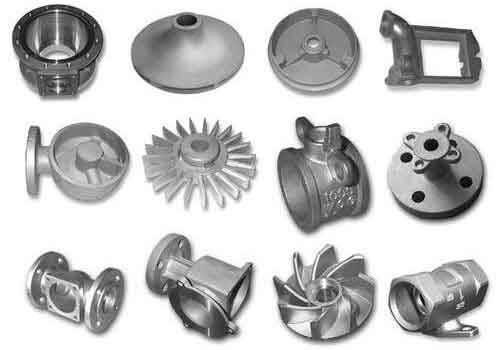
The project commenced with the creation of a precise 3D model based on the 2D drawings and all specified casting requirements for the timing gear housing. This digital model served as the master geometry from which the mold components were derived. Utilizing the specialized “Mold Cavity” modules within modern CAD software, I designed the parting surface to strategically split the sand mold into upper and lower cope and drag halves. From these sand mold halves, the corresponding metal mold inserts (the actual tooling to be machined) were designed. These core and cavity inserts, machined from metal, are what impress the final shape into the sand to produce the casting. The following table summarizes the key distinctions between designing for sand casting parts versus injection molded parts:
| Design Consideration | Sand Casting Mold | Injection Mold |
|---|---|---|
| Primary Objective | Produce a rough casting (blank) for subsequent machining. | Produce a finished, net-shape part. |
| Critical Parameters | Machining allowance, draft, casting radii, gating system. | Dimensional accuracy, surface finish, ejection, cooling channels. |
| Part Complexity | Often requires simplification of fine features. | Can achieve very high detail and complexity. |
| Material Flow | Molten metal poured into sand cavity. | Molten plastic injected under high pressure. |
The task then evolved into machining the mold inserts from solid blocks of material. The selected material was GG25 (cast iron). Wooden patterns were first created to cast the approximate mold blanks, incorporating the standard shrinkage factor. These rough cast iron blanks were then pre-machined on a gantry mill to establish clean, square datum faces. The intricate contour machining of the forming surfaces was delegated to a 3-axis vertical machining center (VMC), guided by meticulously optimized NC programs.
Process Planning and Strategic Analysis
Effective machining begins with a thorough analysis of the part geometry. The lower mold (cavity insert) featured a complex concave form with numerous thin, deep ribs and pockets. The upper mold (core insert) was a corresponding convex shape with tall, slender features. The central challenge for both was identical: machining deep, narrow regions necessitating the use of small-diameter tools with long overhangs, creating a high risk of tool deflection and breakage. A generalized equation for tool deflection (δ) highlights the challenge:
$$
\delta \propto \frac{F \cdot L^3}{E \cdot I}
$$
Where \(F\) is the cutting force, \(L\) is the overhang length, \(E\) is the modulus of elasticity of the tool material, and \(I\) is the area moment of inertia of the tool’s cross-section. For a cylindrical tool, \(I = \frac{\pi \cdot d^4}{64}\), where \(d\) is the tool diameter. This shows that deflection is inversely proportional to the fourth power of the diameter. Reducing the tool diameter from 10mm to 4mm increases potential deflection by a factor of \((10/4)^4 \approx 39\) for the same overhang and force! Therefore, strategy is paramount.
My process plan was structured to maximize efficiency and tool safety:
- Primary Setup on Gantry Mill: The raw block’s external dimensions and the bottom reference face were rough and finish machined. The parting surface area was also roughed out, leaving a uniform stock allowance (e.g., 1.0 mm) around the intricate contours for the VMC to finish.
- Secondary Setup & Datum Establishment on VMC: The pre-milled block was transferred to the VMC. Using the machined parting surface and pre-milled edges, I established a precise workpiece coordinate system (WCS). This involved indicating the block, setting X0, Y0 at a defined corner or center, and setting Z0 on the finished parting surface plane for the cavity insert. For the core insert, Z0 was offset upward from the parting surface.
- Staged Machining Strategy on VMC:
- Step 1: Finish machining the critical parting surface to final dimension using a large face mill.
- Step 2: Bulk roughing of the forming surfaces using the largest possible flat-end mill (e.g., Ø16mm or Ø20mm) to remove the majority of material.
- Step 3: Secondary and tertiary roughing of restricted areas (ribs, corners, deep pockets) using progressively smaller tools (e.g., Ø10mm, Ø6mm, Ø4mm).
- Step 4: Semi-finishing and finishing of all 3D contours using ball-nose end mills.
- Step 5: Drilling and reaming of guide pin holes.
The following table summarizes the staged tooling strategy employed to machine the lower cavity insert, a common representative for complex sand casting parts molds:
| Machining Stage | Tool Type & Diameter | Primary Objective | Key Strategy/Parameter Focus |
|---|---|---|---|
| Facing | Face Mill, Ø50-80mm | Establish final Z-height of parting surface. | Multiple step-overs to avoid clamps; high feed, low depth. |
| Volume Roughing | Flat End Mill, Ø16-20mm | Remove >80% of excess material. | High step-over (40-50% of diameter), adaptive clearing paths. |
| Local Roughing | Flat End Mill, Ø6-10mm | Clear material from ribs & narrow areas. | Restrict machining zone to toolpath; use trochoidal milling; reduce feed. |
| Corner Clearing | Flat End Mill, Ø3-4mm | Clear remaining material in sharp corners. | Very restricted zone; helical plunge; low RPM and feed; minimal axial depth of cut (e.g., 0.5-1mm per pass). |
| Finishing | Ball End Mill, Ø8-10mm | Achieve final form and surface finish on main surfaces. | Scallop height control; constant step-over; optimized feed. |
| Detail Finishing | Ball End Mill, Ø3-4mm | Finish small radii and steep walls. | Very fine step-over; may use high-speed machining (HSM) strategies. |
NC Programming, Simulation, and Optimization
To generate efficient and collision-free toolpaths, I employed a professional CAM software. The 3D CAD models of the mold inserts were imported, and the previously defined WCS was replicated within the CAM environment. The power of CAM lies in its ability to automate path generation based on parameters that directly influence machining time, tool life, and surface quality.
For the critical roughing operations with small-diameter tools, parameter optimization was essential to prevent tool failure. Let’s consider the example of using a Ø4mm flat end mill for clearing a deep rib. The key parameters and their rationales were:
- Helical Ramp Entry: Absolutely mandatory. A direct vertical plunge would instantly break the tool. The helical path allows gradual engagement.
- Axial Depth of Cut (ADOC): Severely limited. For a 30mm deep pocket with a 4mm tool, I used an ADOC of 0.5-0.8mm. While this increases the number of passes, it drastically reduces cutting force \(F\). From the deflection formula, reducing \(F\) linearly reduces deflection \(\delta\).
- Radial Depth of Cut (RDOC) / Stepover: Set conservatively to 20-25% of tool diameter (0.8-1.0mm) to limit lateral load.
- Cutting Speed (Vc) and Feed per Tooth (fz): Chosen from conservative material charts for cast iron, then slightly reduced. The calculation for spindle speed (S) and feed rate (F) is standard:
$$ S = \frac{V_c \cdot 1000}{\pi \cdot d} $$
$$ F = S \cdot z \cdot f_z $$
Where \(d\) is tool diameter and \(z\) is number of flutes. For a Ø4mm, 2-flute tool, with \(V_c = 60\) m/min and \(f_z = 0.03\) mm/tooth: \(S \approx 4775\) RPM, \(F \approx 286\) mm/min.
The CAM software’s material removal simulation was indispensable. After generating each toolpath, I ran a simulation to verify there were no uncut material (gouges) left for the subsequent, smaller tool, and to check for collisions. This virtual verification prevents catastrophic errors on the machine. Furthermore, the “rest milling” function was used extensively. This function automatically calculates the remaining volume of material after a larger tool has been used, ensuring that the smaller tool only machines where it is physically necessary, eliminating wasteful air-cutting moves.
For finishing operations, the “scallop height” or “step-over” is the governing parameter for surface quality. The maximum cusp height \(h\) is related to the step-over \(s\) and tool radius \(R\) (for a ball-nose end mill) by the approximate formula for shallow slopes:
$$
h \approx R – \sqrt{R^2 – \left(\frac{s}{2}\right)^2}
$$
For a required surface finish, one can solve for the necessary step-over. For instance, to achieve a cusp height of 0.01mm with an R5 ball-nose mill:
$$
0.01 \approx 5 – \sqrt{25 – (s/2)^2} \implies s \approx 0.63 \text{ mm}
$$
This fine step-over results in long machining times but is essential for high-quality sand casting parts molds to ensure accurate castings and easy release from the sand.
Machining Implementation and Results
On the shop floor, the validated NC programs were loaded into the VMC’s controller. The pre-machined mold block was meticulously indicated and secured using clamps positioned in areas that would not interfere with any toolpath—a crucial step verified earlier in the CAM simulation. Tool length and diameter offsets were carefully measured and entered into the tool table.
The machining sequence proceeded as planned. The initial facing and volume roughing operations were uneventful, removing material efficiently. The transition to the Ø6mm and Ø4mm tools for local roughing was the most critical phase. By adhering to the optimized parameters—specifically the shallow depth of cut, helical entry, and reduced feed rates—these tools performed reliably without breakage, successfully clearing the deep, narrow ribs characteristic of this sand casting parts mold. The sound of the cut was stable, without the harsh chatter that often precedes tool failure.
After roughing and semi-finishing, the surface was left with a uniform stock of about 0.15mm for the finishing pass. The finishing operation with the Ø8mm ball-nose end mill produced an excellent surface finish, accurately reproducing the 3D contours. Finally, the guide pin holes were drilled, bored, and reamed to achieve the required positional accuracy and surface finish for reliable mold assembly.
The successful completion of both mold inserts validated the optimization approach. The table below contrasts the key performance indicators between a conventional programming approach and the optimized strategy employed for this sand casting mold project:
| Performance Indicator | Conventional Approach | Optimized Strategy (This Project) |
|---|---|---|
| Total Machining Time (VMC) | Estimated 35-40 hours | Actual ~24 hours |
| Tool Breakage Incidents | High probability (3-5 expected) | Zero |
| Surface Finish Consistency | Variable, hand-blending often required | Consistently good, minimal post-polish |
| Program Safety / Collisions | Relies on machine-operator vigilance | Validated via full CAM simulation |
| Material Utilization (Toolpaths) | Inefficient, excess air-cutting | Efficient, using rest milling & zone restriction |
Conclusion
The optimization of NC programming for manufacturing sand casting molds is a multi-faceted engineering challenge that extends far beyond simple code generation. It requires a deep understanding of the unique design constraints of sand casting parts, the limitations of cutting tools and machine tools, and the powerful capabilities of modern CAM software. This project demonstrated that a systematic, analysis-driven approach yields substantial benefits. By strategically planning the machining stages, aggressively optimizing cutting parameters for small tools (focusing on reduced axial depth of cut, helical entry, and conservative feeds/speeds), and leveraging CAM software for simulation and rest material calculation, it is possible to achieve significant reductions in machining time while completely eliminating costly and disruptive tool failures.
The success of this methodology translates directly into enhanced competitiveness for mold shops. Shorter lead times allow for faster response to client demands, and lower production costs improve profit margins. As the demand for complex sand casting parts continues in industries like automotive, aerospace, and heavy machinery, the ability to efficiently and reliably machine their corresponding molds becomes a core competency. The strategies outlined here—from initial geometric analysis to final parameter tuning—provide a robust framework for tackling these complex machining projects, ensuring that manufacturers can meet the challenges of producing high-quality tooling for the next generation of sand cast components.