
The pursuit of enhanced wear resistance and service life for critical components in mining, cement, and material handling industries remains a central challenge in materials engineering. Austenitic manganese steels, particularly the ZGMn13 and ZGMn17 grades, have long been the material of choice for applications such as grinding mill liners, crusher jaws, and excavator teeth due to their exceptional work-hardening capacity, high toughness, and good impact resistance. However, their legendary performance is intrinsically linked to a critical post-casting heat treatment known as water toughening. This process is designed to dissolve detrimental carbide networks formed during solidification and produce a homogeneous, single-phase austenitic structure, which is essential for achieving the desired combination of high initial toughness and subsequent surface hardening under impact.
While the fundamentals of water toughening are well-established, the optimal processing parameters are highly sensitive to the specific casting method, section size, and precise chemical composition of the part. Lost foam casting, as an advanced near-net-shape manufacturing technique, introduces unique solidification characteristics compared to conventional sand casting. The pyrolysis of the foam pattern and the associated thermal conditions can influence microsegregation, carbide morphology, and grain size in the as-cast state. Consequently, a tailored water toughening regimen is imperative to unlock the full performance potential of components produced via lost foam casting. This study systematically investigates the effects of varying water toughening temperatures and holding times on the microstructure evolution and resulting hardness of ZGMn13 and ZGMn17 steel liners manufactured using the lost foam casting process. The goal is to define an optimized heat treatment protocol that ensures complete carbide dissolution, prevents grain coarsening, and delivers a consistent and superior property profile.
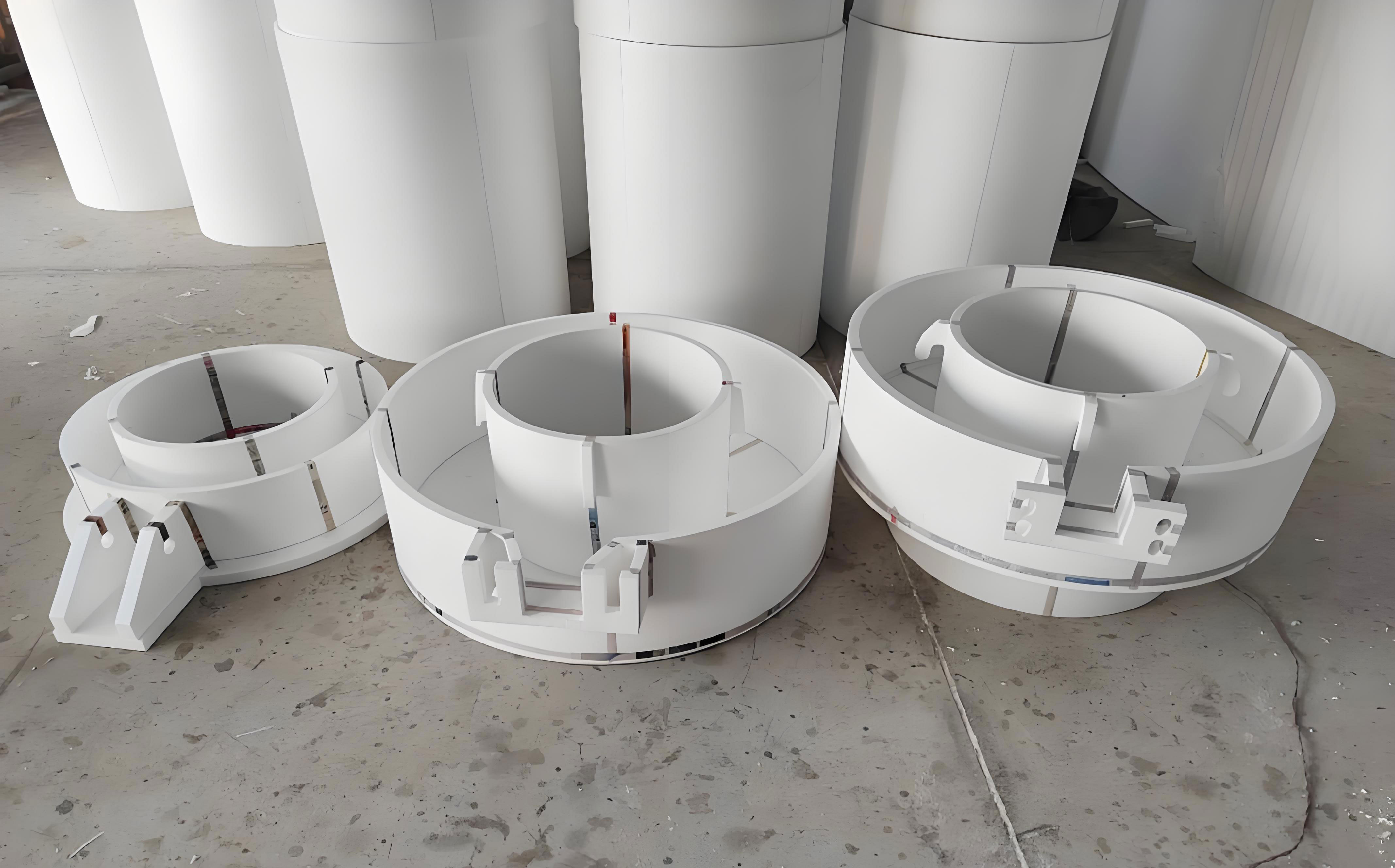
The lost foam casting process offers distinct advantages for producing complex-shaped wear parts like mill liners, including excellent dimensional accuracy, reduced machining needs, and the ability to create intricate internal geometries. In this study, the liners were fabricated using expandable polystyrene (EPS) patterns coated with a refractory slurry. These patterns were assembled into clusters, embedded in unbonded silica sand within a flask, and subjected to vibration for compaction. Molten steel of the specified compositions was then poured directly into the foam cluster, causing the polystyrene to vaporize and degrade, allowing the metal to replace the pattern cavity precisely. This methodology, central to lost foam casting, results in a clean casting surface but imposes a specific thermal history on the solidifying metal.
The chemical compositions of the investigated steels are detailed in Table 1. The key distinction lies in the manganese content, with ZGMn17 being an “ultra-high” manganese grade. Carbon content is crucial for hardness and carbide formation, while silicon aids in deoxidation. Strict control of sulfur and phosphorus is maintained to ensure good toughness.
| Alloy Designation | C | Mn | Si | S (max) | P (max) | Fe |
|---|---|---|---|---|---|---|
| ZGMn13 | 0.90-1.20 | ~13.00 | 0.30-0.80 | 0.05 | 0.05 | Bal. |
| ZGMn17 | 0.90-1.50 | ~17.00 | 0.30-1.00 | 0.05 | 0.05 | Bal. |
The as-cast liners from the lost foam casting process were sectioned to obtain representative samples for heat treatment and analysis. A series of water toughening treatments were designed, as outlined in Table 2. The principle is to heat the steel above the Acm temperature to dissolve carbides into the austenitic matrix, hold for a sufficient time to achieve homogeneity, and then quench rapidly in water to suppress the re-precipitation of carbides and retain a supersaturated single-phase austenite structure at room temperature. The selected temperatures (1050°C, 1080°C, 1130°C) bracket the typical range, allowing observation of under-heating, optimal solution, and over-heating/ grain growth regimes. Two holding times (1h and 2h) were used to assess the effect of time at temperature.
| Sample Code | Solution Temperature (°C) | Holding Time (h) | Quenching Medium |
|---|---|---|---|
| WT-1050-1 | 1050 | 1 | Water |
| WT-1050-2 | 1050 | 2 | Water |
| WT-1080-1 | 1080 | 1 | Water |
| WT-1080-2 | 1080 | 2 | Water |
| WT-1130-1 | 1130 | 1 | Water |
| WT-1130-2 | 1130 | 2 | Water |
Microstructural characterization was performed using optical microscopy on samples prepared by standard metallographic techniques and etched with 4% nital. Microhardness measurements were taken using a Vickers indenter with a 2 N load, reporting the average of multiple readings. The analysis focused on quantifying the dissolution of interdendritic and grain boundary carbides, assessing austenite grain size, and correlating these features with the measured hardness.
The microstructures of the as-cast liners, direct from the lost foam casting process, reveal the inherent challenge. Both ZGMn13 and ZGMn17 exhibit a coarse austenitic matrix. However, along the grain boundaries and within interdendritic regions, a continuous or semi-continuous network of carbide precipitates is evident. These carbides are primarily of the (Fe, Mn)3C type. In the ZGMn17 alloy, this carbide network is more pronounced and coarser, attributed to the higher manganese content, which shifts the eutectic point and promotes the formation of larger secondary carbides during non-equilibrium solidification typical of lost foam casting. The presence of this brittle, interconnected carbide phase severely compromises ductility and impact toughness, making the as-cast condition unsuitable for service. The driving force for water toughening can be described by the solubility of carbon in austenite as a function of temperature, approximated by:
$$ C_{\gamma}(T) \approx C_0 \exp\left(-\frac{Q_s}{RT}\right) $$
where $C_{\gamma}(T)$ is the solubility at temperature T, $C_0$ is a constant, $Q_s$ is the activation energy for solution, and R is the gas constant. Heating above the Acm line increases $C_{\gamma}(T)$, allowing the carbides to dissolve.
The efficacy of the water toughening process is immediately apparent. For both steel grades, increasing the solution temperature progressively dissolves the carbide network. At 1050°C with a 1-hour hold, significant dissolution has occurred, but remnants of carbide films are often visible along prior austenite grain boundaries, indicating incomplete solutionizing. This state represents an under-treated condition. The 1080°C treatment, particularly with a 1-hour hold, produces the most desirable microstructure: a uniform, single-phase austenitic matrix with no visible carbide precipitates at the optical microscope level. The grain boundaries appear clean and distinct.
Extending the holding time to 2 hours at a given temperature generally leads to austenite grain growth, which can be modeled by the classical grain growth equation:
$$ d^n – d_0^n = K t $$
where $d$ is the final grain size, $d_0$ is the initial grain size, $K$ is a temperature-dependent rate constant, $t$ is time, and $n$ is the grain growth exponent. While longer times may ensure complete chemical homogeneity, excessive grain growth can reduce yield strength according to the Hall-Petch relationship and may negatively impact toughness. At the highest temperature of 1130°C, even with a 1-hour hold, noticeable grain coarsening is observed. Furthermore, incipient melting or severe overheating can occur at grain boundaries, leading to the formation of undesirable phases or voids upon quenching, degrading mechanical properties. This highlights a critical trade-off in optimizing the lost foam casting heat treatment: sufficient temperature and time for complete carbide solution versus the risk of grain coarsening and associated property deterioration.
The microhardness results provide a quantitative measure of the microstructural changes induced by water toughening following lost foam casting. The data is summarized in Table 3. A clear trend is observable. The as-cast material possesses the highest hardness due to the substantial presence of hard carbide phases. After water toughening, hardness decreases as these carbides dissolve into the matrix, solid solution strengthening being a less potent hardening mechanism than discrete hard particles in this context.
| Condition / Treatment | ZGMn13 Hardness (HV) | ZGMn17 Hardness (HV) |
|---|---|---|
| As-Cast (Lost Foam) | ~230 | ~246 |
| 1050°C, 1h, WQ | 213 | 223 |
| 1050°C, 2h, WQ | 208 | 218 |
| 1080°C, 1h, WQ | 210 | 220 |
| 1080°C, 2h, WQ | 205 | 215 |
| 1130°C, 1h, WQ | 198 | 208 |
| 1130°C, 2h, WQ | 192 | 202 |
The hardness for the 1-hour treatments shows a peak at 1050°C, corresponding to the residual carbides still present. The hardness then slightly decreases at 1080°C as solution becomes more complete, and drops further at 1130°C due to grain coarsening. For a fixed temperature, the 2-hour holds consistently result in slightly lower hardness than the 1-hour holds, attributable to grain growth. The relationship between hardness ($H_v$), carbide volume fraction ($f_c$), and grain size ($d$) can be conceptually described by a combined strengthening model:
$$ H_v = H_0 + \alpha f_c^{1/2} + k_H d^{-1/2} $$
where $H_0$ is the base hardness of the solid solution, $\alpha$ is a constant related to carbide hardening, and $k_H$ is the Hall-Petch slope for hardness. Water toughening drastically reduces $f_c$, hence the overall hardness drop from the as-cast state. The subsequent variations are then governed by the $d^{-1/2}$ term.
For components produced by lost foam casting, the 1080°C for 1-hour water quench treatment emerges as the optimal compromise. It achieves the primary goal of complete carbide dissolution, thereby maximizing future toughness and work-hardening capability, while maintaining a sufficiently fine austenite grain structure to preserve adequate strength and resistance to crack initiation. Although the hardness at 1050°C/1h is marginally higher, the persistence of carbide networks poses a significant risk of brittle fracture under impact loading, which is the primary service condition for mill liners.
The success of this regimen is rooted in the kinetics of carbide dissolution and austenite homogenization. The process can be described by a diffusion-controlled kinetic equation. The time $t$ required to dissolve a carbide particle of a given size is proportional to the square of its radius and inversely proportional to the diffusion coefficient:
$$ t \propto \frac{r_0^2}{D} $$
where $r_0$ is the initial carbide particle radius and $D$ is the diffusion coefficient of carbon in austenite, which itself follows an Arrhenius relationship: $D = D_0 \exp(-Q_D / RT)$. The higher manganese content in ZGMn17 may slightly alter the diffusivity and the thermodynamic stability of carbides, but the 1080°C temperature appears sufficient for both grades within the 1-hour window for the specific carbide sizes resulting from lost foam casting solidification.
Rapid quenching is the non-negotiable final step. The objective is to bypass the nose of the Time-Temperature-Transformation (TTT) curve for carbide precipitation. The critical cooling rate $V_{crit}$ must satisfy:
$$ V_{crit} > \frac{(T_s – T_n)}{\tau_n} $$
where $T_s$ is the solution temperature, $T_n$ is the temperature at the nose of the TTT curve, and $\tau_n$ is the time to the nose. Water quenching provides a cooling rate high enough to suppress the diffusion-controlled re-precipitation of carbides at grain boundaries, “freezing-in” the supersaturated austenite. Any delay in transferring the workpiece from the furnace to the quench tank, or the use of an insufficiently vigorous quenchant, can result in the reformation of grain boundary films during cooling, nullifying the benefits of the high-temperature solution treatment. This is a universal requirement but is especially critical for ensuring the consistency of heat-treated lost foam casting products.
In conclusion, this investigation into the heat treatment of lost foam casting manganese steel liners underscores the critical importance of precisely tailored water toughening parameters. The as-cast microstructure from the lost foam casting process contains deleterious carbide networks that must be eliminated. Through systematic variation of temperature and time, it was determined that a solution treatment at 1080°C for 1 hour, followed by rapid water quenching, provides the optimal microstructure for both ZGMn13 and ZGMn17 grades. This protocol successfully dissolves the carbide networks to produce a homogeneous, single-phase austenitic structure with a fine grain size, thereby establishing the necessary precondition for superior in-service performance—namely, high impact toughness and the capacity for extreme surface hardening under repeated impact. This optimized heat treatment practice is therefore recommended as a standard for maximizing the service life and reliability of wear-resistant components manufactured via the lost foam casting technique.