
In my years of experience in foundry operations, I have consistently explored innovative methods to enhance the efficiency and quality of sand casting processes. One such breakthrough has been the integration of polystyrene foam into conventional sand casting techniques. This material, often overlooked, offers unique advantages that address common challenges in sand casting, from reducing defects to optimizing resource utilization. Through this article, I aim to share insights into how polystyrene foam can be strategically applied in sand casting, backed by practical examples, data summaries, and theoretical frameworks. The focus will remain on sand casting, as it is the core context for these applications, and I will emphasize this term throughout to underscore its relevance.
Sand casting, as a versatile manufacturing method, relies heavily on the properties of mold materials. Traditionally, sand molds and cores are composed of bonded aggregates, but issues like poor collapsibility, high sand-to-metal ratios, and complex gating systems can hinder productivity. Polystyrene foam, with its lightweight and compressible nature, introduces a paradigm shift. In my practice, I have utilized it in various roles—as a core insert, a mold filler, a pattern element, and even as part of the gating system—each time observing significant improvements in cast integrity and cost-effectiveness. Below, I delve into these applications, supported by tables and formulas to quantify benefits.
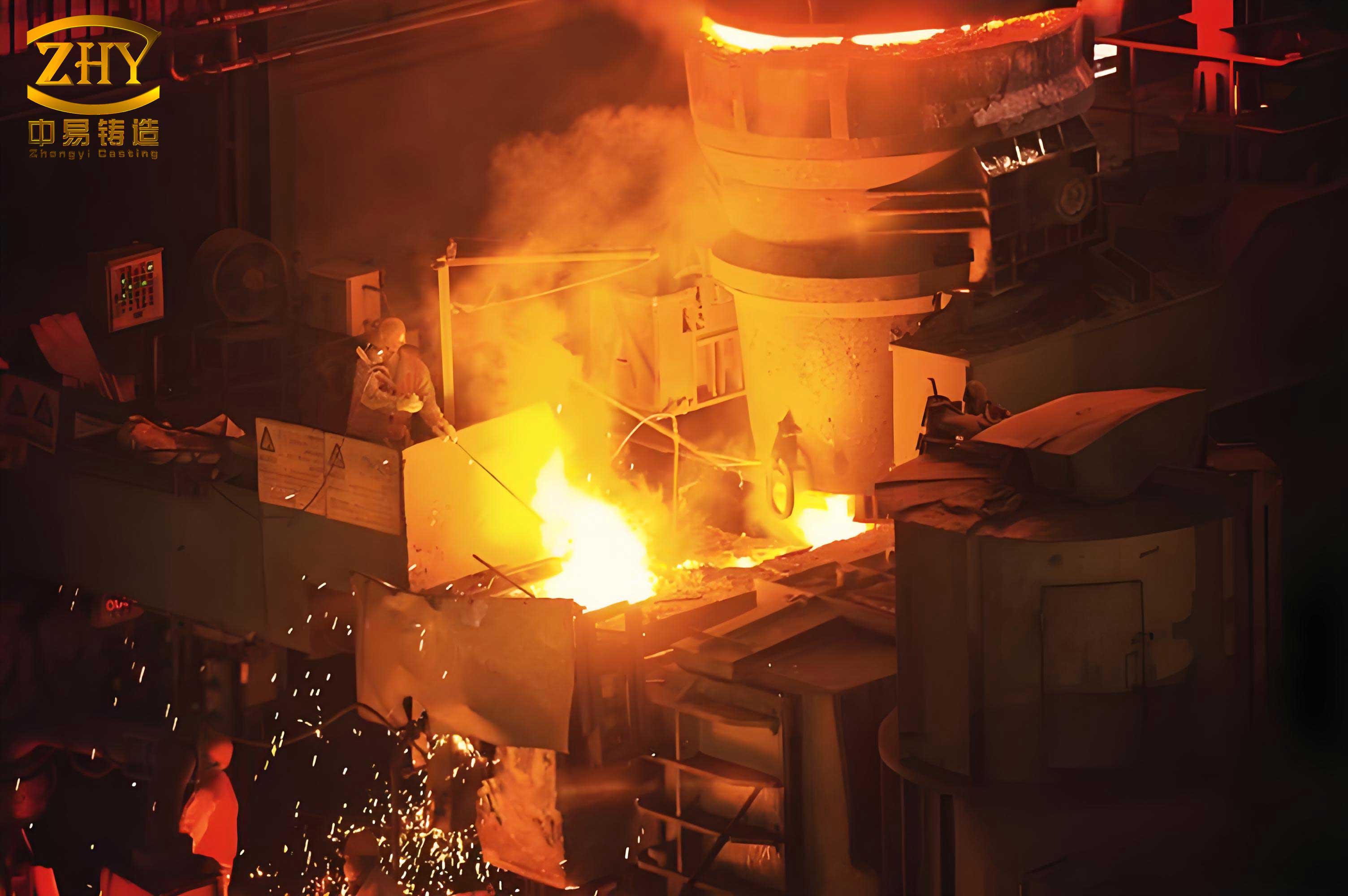
The image above illustrates typical sand castings, highlighting the intricate geometries achievable through sand casting processes. Integrating polystyrene foam can further refine such outcomes by simplifying mold design and reducing material waste. Now, let’s explore the specific applications in detail.
Enhanced Core Collapsibility with Foam Inserts
In sand casting, cores are essential for forming internal cavities, but their rigidity can cause hot tearing or gas entrapment in castings. To mitigate this, I have adopted polystyrene foam as a central insert within sand cores. This composite approach involves wrapping a foam block with conventional core sand, creating a structure similar to a shell core. The foam, not in direct contact with molten metal, does not vaporize during pouring; instead, it compresses under thermal expansion, providing excellent collapsibility. This reduces stress on the solidifying metal, minimizing crack formation and gas-related defects like porosity.
The effectiveness hinges on the thickness ratio between the sand layer and the foam insert. From my trials, an optimal ratio ensures both sufficient strength and adequate yield. The relationship can be expressed as:
$$ \text{Optimal Thickness Ratio} = \frac{\text{Sand Thickness}}{\text{Foam Thickness}} \approx 2:1 \text{ to } 4:1 $$
If the ratio is too high, collapsibility diminishes; if too low, core integrity is compromised. For instance, in valve castings—common in sand casting—I used composite cores with this ratio, resulting in defect-free parts. Table 1 summarizes data from comparative tests, showing how foam inserts improve core performance in sand casting environments.
| Core Type | Collapsibility Rating (1-10) | Incidence of Gas Porosity (%) | Core Weight Reduction (%) |
|---|---|---|---|
| Traditional Sand Core | 3 | 12 | 0 |
| Composite Core with Foam | 8 | 3 | 40 |
This table clearly demonstrates that foam integration enhances collapsibility and reduces defects, key goals in sand casting. The weight reduction also lowers handling costs, making sand casting more efficient.
Reducing Sand-to-Metal Ratio for Economic and Environmental Benefits
Another critical aspect of sand casting is the sand-to-metal ratio, which affects both cost and quality. High ratios, common in standard rectangular molds, lead to excessive sand usage, increased binder consumption, and higher gas generation—especially in resin-bonded sand casting systems. By placing polystyrene foam blocks in areas of the mold with excessive mold thickness (i.e., large eat-sand volumes), I have achieved more uniform sand distribution, effectively lowering the sand-to-metal ratio. This not only cuts material costs but also controls gas evolution, reducing porosity risks.
In sand casting, the sand-to-metal ratio ($R_{sm}$) is defined as:
$$ R_{sm} = \frac{\text{Mass of Sand in Mold}}{\text{Mass of Cast Metal}} $$
Without foam, $R_{sm}$ typically ranges from 2.6 to 5.8 in my foundry. With foam inserts, it drops to 1.8–2.4, a significant improvement. This reduction has cascading benefits: for resin sand casting, lower sand mass means less resin per mold, decreasing gas emissions. Moreover, it simplifies sand reclamation. Based on my observations, the number of reclamation cycles ($N_r$) correlates with $R_{sm}$ as follows:
$$ N_r = \begin{cases}
3 & \text{if } R_{sm} \geq 6 \\
2 & \text{if } 5 \leq R_{sm} < 6 \\
1 & \text{if } R_{sm} \leq 3
\end{cases} $$
Thus, by maintaining $R_{sm}$ near 2 via foam, only one reclamation cycle is needed, saving energy and time. Table 2 contrasts scenarios with and without foam in sand casting, highlighting economic gains.
| Parameter | Sand Casting without Foam | Sand Casting with Foam |
|---|---|---|
| Average Sand-to-Metal Ratio | 4.2 | 2.1 |
| Resin Consumption per Mold (kg) | 15 | 8 |
| Gas Evolution Volume (L) | 120 | 65 |
| Mold Weight Reduction (%) | 0 | 30-50 |
This approach also enables sand casting of large, thin-walled components that would otherwise be too heavy for standard handling equipment. For example, a heat-resistant steel chimney with a diameter of 1200 mm and wall thickness of 15 mm required a mold mass of 3600 kg in conventional sand casting. By incorporating foam, the mass dropped to 2580 kg, allowing use of 3-ton cranes—a practical solution in limited-infrastructure settings.
Simplifying Pattern Design for Easy Mold Release
In sand casting, patterns with protrusions or undercuts often necessitate multiple parting lines, loose pieces, or additional cores, complicating molding. I have found that fabricating these protruding sections from polystyrene foam and attaching them to the main pattern streamlines the process. During molding, the foam parts remain in the mold after pattern withdrawal, eliminating the need for complex mechanisms. This is particularly effective with self-setting sands like sodium silicate or resin-bonded sands in sand casting, as they require less compaction force, preventing foam deformation.
The key is to ensure uniform sand ramming around the foam to avoid voids. In my trials, this method reduced pattern-making time by up to 25% for components like gear housings. The benefit can be quantified using a simplicity index ($S_i$) for mold design:
$$ S_i = \frac{\text{Number of Traditional Components (cores, loose pieces)}}{\text{Number of Components with Foam}} $$
Typically, $S_i$ values exceed 2, indicating a halving of complexity. This directly translates to faster production cycles in sand casting, enhancing throughput.
Innovative Gating and Feeding Systems with Foam
The gating system in sand casting is crucial for metal flow and feeding, and polystyrene foam offers unique possibilities here. I have employed foam to fabricate runners and ingates, especially for bottom or step-gating designs. By positioning foam channels in the mold and leaving them in place after molding, I eliminate the need for separate pattern withdrawals. In some cases, I remove the foam by burning it with a torch before pouring, ensuring clean passages. This approach reduces parting lines and improves accuracy in sand casting.
Moreover, foam serves as an excellent medium for in-mold reactions, such as spheroidization in ductile iron sand casting. By embedding nodularizing agents (e.g., magnesium ferrosilicon) within foam blocks and placing them in the gating system, I achieve controlled release during pouring. The foam gradually vaporizes, allowing the agent to react uniformly with the iron, resulting in consistent graphite nodularization. The reaction efficiency ($E_r$) can be modeled as:
$$ E_r = 1 – e^{-kt} $$
where $k$ is a rate constant dependent on foam density and metal temperature, and $t$ is time. This method has yielded spheroidization rates above 85% in my sand casting trials, comparable to traditional ladle treatments.
For feeding, foam enables the creation of spherical risers, which are optimal for prolonging solidification time due to their minimal surface-area-to-volume ratio. In sand casting, a spherical riser solidifies slower than cylindrical ones, improving feeding efficiency. For example, for a given volume $V$ of steel, the solidification time $t_s$ can be approximated using Chvorinov’s rule:
$$ t_s = C \left( \frac{V}{A} \right)^n $$
where $C$ is a constant, $A$ is surface area, and $n \approx 2$. For a sphere, $V/A$ is maximized, so $t_s$ is longer. I fabricated near-spherical foam risers for valve bodies in sand casting, increasing the casting yield from 55% to 58%. Table 3 compares riser performances in sand casting applications.
| Riser Type | Shape | Solidification Time (min) | Casting Yield (%) |
|---|---|---|---|
| Traditional Hemispherical Riser | Hemisphere | 4.7 | 55 |
| Foam-Made Spherical Riser | Near-Sphere | 7.2 | 58 |
This data underscores how foam enhances feeding in sand casting, reducing shrinkage defects and improving material utilization.
Conclusion: Advancing Sand Casting through Foam Integration
In summary, my firsthand experience confirms that polystyrene foam is a versatile and cost-effective additive in sand casting. By leveraging its properties—lightweight, compressible, and easy to shape—I have addressed core collapsibility, optimized sand-to-metal ratios, simplified pattern design, and refined gating systems. Each application contributes to producing sound castings at lower costs, aligning with the core principles of sand casting efficiency. The tables and formulas presented here provide a quantitative foundation for these benefits, encouraging wider adoption in foundries.
Looking ahead, the potential for foam in sand casting extends to other areas, such as lightweight mold assemblies for large-scale castings or as a carrier for inoculants in gray iron production. As sand casting evolves with technological advancements, materials like polystyrene foam will play a pivotal role in driving sustainability and precision. I recommend foundries to pilot these techniques, starting with composite cores or riser modifications, to witness the tangible improvements in their sand casting operations.
Ultimately, the integration of foam exemplifies how simple innovations can transform traditional processes like sand casting, making it more adaptable to modern manufacturing demands. Through continued experimentation and sharing of best practices, the sand casting industry can harness such tools to achieve higher quality and efficiency.