
In my experience within the foundry industry, the application of gray cast iron has traditionally been centered on heavy-section components for agricultural machinery, textile equipment, and machine tools. However, with evolving industrial demands, there is a growing and significant shift towards the widespread use of high-strength, thin-walled gray cast iron castings. These components, such as automotive steering pumps, present unique metallurgical challenges, primarily concerning the control of graphite morphology to achieve desired mechanical properties. The transition from thick to thin sections exacerbates the tendency for undercooled graphite formations, which can severely compromise tensile strength and machinability. This article, drawn from my firsthand involvement in process optimization, delves into the methodologies for effectively producing high-integrity thin-walled gray cast iron, with a persistent focus on promoting the formation of desirable Type A graphite.
The specific challenge encountered was the production of an automotive steering pump casting, specified under the grade HT300. The critical requirement was that at the thin-walled sections, approximately 12 mm in thickness, the microstructure must exhibit over 80% Type A graphite, coupled with a hardness range of 190 to 230 HB. This combination is essential for ensuring both the strength and the fatigue resistance necessary for such dynamic automotive applications. The initial production runs, following conventional wisdom for high-strength gray cast iron, yielded unsatisfactory microstructural results, prompting a detailed investigation and process refinement.
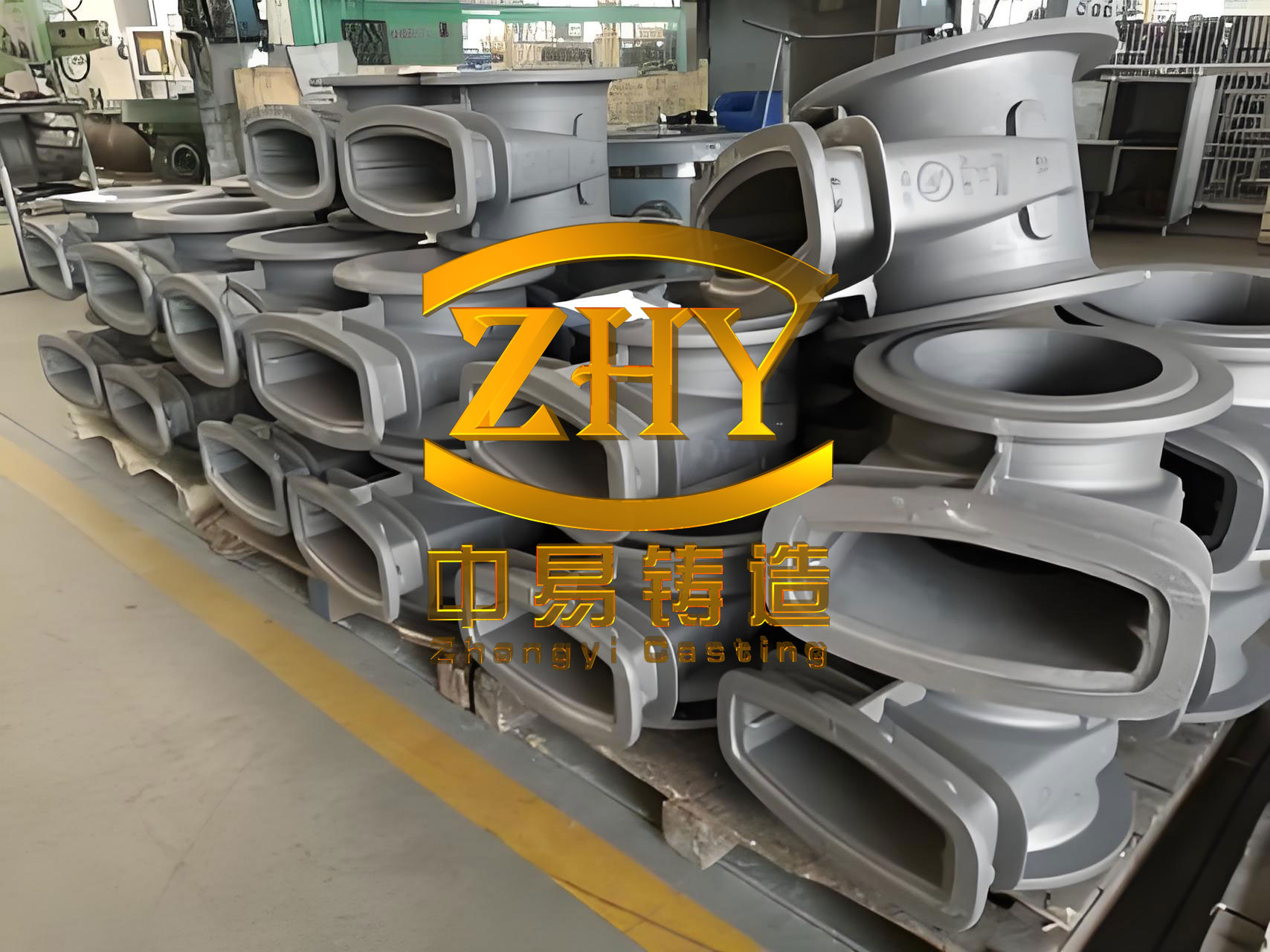
The foundational production setup utilized modern equipment to ensure consistency. Melting was conducted in an Inductotherm medium-frequency induction furnace (a one-master-two-satellite system), which provides excellent temperature control and melt homogeneity. For analysis, a fully imported German Spectro spark spectrometer was used for precise chemical composition checks, a Leica microscope for metallographic examination, and a steel research NCS tensile testing machine for evaluating mechanical properties. The initial chemical composition control, based on historical data for standard gray cast iron grades, is summarized in Table 1.
| Element | Target at Furnace | Final Target |
|---|---|---|
| C | 3.05 – 3.15 | 2.95 – 3.10 |
| Si | 1.5 – 1.6 | 1.9 – 2.0 |
| Mn | 0.8 – 1.0 | 0.8 – 1.0 |
| P | <0.05 | <0.05 |
| S | 0.08 – 0.10 | 0.08 – 0.10 |
| Cu | 0.3 – 0.4 | 0.3 – 0.4 |
The pouring temperature was maintained between 1380°C and 1420°C, and separately cast test bars were poured for evaluation. The results from this initial工艺 were revealing: the test bar exhibited a tensile strength of 330 MPa and a hardness of 192 HB, which met the grade’s nominal strength requirement. However, the metallographic analysis of the casting itself at the thin-wall section was problematic. The graphite structure consisted of only about 30% Type A, with the remainder being undercooled Types D and E. The graphite lengths were short, and while the matrix was 98% pearlite, the prevalence of undercooled graphite is detrimental to overall performance and reliability in gray cast iron components.
A deep mechanistic analysis was undertaken to understand the root cause. Undercooled graphite (Type D and Type E) forms under conditions of high cooling rate and large undercooling, which are inherently prevalent in thin sections of gray cast iron. These graphite types are characterized by a fine, branched, and interdendritic growth pattern. Type D graphite forms in the interstices of austenite dendrites, appearing as a random, scattered distribution of fine graphite clusters. Type E graphite forms under similar but more severe conditions of lower carbon equivalent and greater undercooling, leading to a more directional alignment along the austenite dendrite boundaries. The fundamental issue is that these graphite morphologies create microstructural inhomogeneity. The non-uniform distribution of graphite and the associated ferrite that often surrounds them act as stress concentrators, reducing the effective load-bearing area and thus degrading the tensile strength and elastic modulus of the gray cast iron. The relationship between undercooling (ΔT) and graphite nucleation can be conceptually described by classical solidification theory. The growth velocity of graphite, v, is influenced by undercooling, often approximated by a relationship like:
$$ v \propto \Delta T^n $$
where n is a constant. For gray cast iron, excessive undercooling shifts the growth kinetics from the stable flake (Type A) to the metastable undercooled forms.
The key factors promoting undercooled graphite in our case were identified as an excessively low Carbon Equivalent (CE) and a non-optimal silicon-to-carbon ratio. The Carbon Equivalent is a paramount parameter for predicting the solidification behavior and graphite morphology in gray cast iron. It is calculated using a formula that accounts for the graphitizing influence of silicon and phosphorus:
$$ CE = C + \frac{1}{3}(Si + P) $$
In our initial composition, the CE ranged approximately from 3.57 to 3.72 for the final target (using midpoint values: C=3.025%, Si=1.95%, P=0.025%), which was evidently insufficient to counteract the high cooling rate of the thin wall. A higher CE promotes a shallower eutectic plateau, reducing undercooling and favoring the formation of larger, well-distributed Type A graphite flakes. Furthermore, the silicon-to-carbon ratio (Si/C) plays a critical role. Silicon is a strong graphitizer and also strengthens the ferrite phase. Increasing the Si/C ratio enhances the volume of primary austenite dendrites, which can provide more favorable sites for graphite growth, and solid-solution strengthens the matrix. This can be expressed as aiming for a target ratio:
$$ \text{Target Si/C Ratio} = \frac{w_{Si}}{w_{C}} > 0.6 $$
for many high-strength gray cast iron grades to ensure adequate graphitization potential.
Manganese content also required scrutiny. Manganese interacts with sulfur to form MnS inclusions. While these can act as heterogeneous nucleation sites for graphite, excessive manganese, especially in low-sulfur melts, tends to segregate at austenite grain boundaries and stabilizes pearlite but can also increase the hardenability and promote carbide formation. An empirical relationship often used when sulfur content is below 0.2% is:
$$ w_{Mn} = 1.73 \times w_{S} + 0.3\% $$
Given our sulfur level of ~0.09%, the calculated optimal manganese would be around 0.456%, suggesting our initial range of 0.8-1.0% was potentially excessive for this specific thin-section gray cast iron application. To maintain the required high pearlite content (for strength and hardness) while increasing CE, a small addition of tin (Sn) was considered. Tin is a potent pearlite promoter, segregating at the solidification front and inhibiting the transformation of austenite to ferrite, thereby ensuring a fully pearlitic matrix even with a higher graphitizing potential. The efficiency of a pearlite promoter like tin can be related to its segregation coefficient, k, and its effect on the eutectoid transformation temperature.
Perhaps the most crucial adjustment for thin-walled gray cast iron is the inoculation practice. Inoculation is the late addition of small amounts of materials (like ferrosilicon containing active elements) to the melt to provide nucleation sites for graphite. For thin sections where cooling rates are high, a powerful inoculant containing strontium (Sr) is highly effective. Strontium has a strong affinity for oxygen and sulfur, forming compounds that are excellent substrates for graphite nucleation. It significantly increases the number of graphite nuclei, reducing undercooling and promoting the growth of Type A graphite. The effectiveness of an inoculant can be modeled in terms of the number of nuclei per unit volume, N, which is a function of inoculant type, addition rate, and holding time:
$$ N = f(\text{[Sr]}, t_{\text{hold}}, T) $$
A high N value directly correlates with a finer, more uniform distribution of Type A graphite in gray cast iron.
Based on this analysis, a comprehensive调整 strategy was implemented. The chemical composition targets were revised as detailed in Table 2. The Carbon Equivalent was intentionally increased, primarily by raising both carbon and silicon levels, and the silicon-to-carbon ratio was improved. Manganese was significantly reduced to a level more consistent with the sulfur content, and a trace addition of tin was introduced to safeguard the pearlitic matrix. Concurrently, the post-inoculation practice was overhauled by switching to a specialized high-potency Si-Sr-Zr based inoculant with a fine granularity of 0.2-0.7 mm, added in the stream during pouring.
| Element | Target at Furnace | Final Target |
|---|---|---|
| C | 3.20 – 3.30 | 3.10 – 3.25 |
| Si | 1.7 – 1.8 | 2.1 – 2.2 |
| Mn | 0.5 – 0.7 | 0.5 – 0.7 |
| P | <0.05 | <0.05 |
| S | 0.08 – 0.10 | 0.08 – 0.10 |
| Cu | 0.3 – 0.4 | 0.3 – 0.4 |
| Sn | – | 0.02 – 0.03 |
The pouring temperature range was kept identical (1380-1420°C) to isolate the effects of the compositional and inoculation changes. After casting, cooling, and finishing, the components and test bars were evaluated. The results demonstrated a marked improvement. The separately cast test bar showed a tensile strength of 337 MPa and a hardness of 202 HB, maintaining the required mechanical property benchmarks for this grade of gray cast iron. Most importantly, the metallographic examination of the thin-walled section of the actual casting revealed a microstructure exceeding the specification: the content of Type A graphite was now above 85%, with a graphite length rating of 4 to 5 (according to standard charts), and the matrix remained predominantly pearlite at 98%. This successful transformation underscores the precision required in metallurgical control for advanced gray cast iron components.
To generalize these findings and provide a broader perspective, the interplay between key process variables and the resulting graphite morphology in gray cast iron can be summarized using a conceptual model. The tendency to form Type A graphite versus undercooled graphite is a function of the dimensionless ratio between the graphitization potential (GP) and the cooling intensity (CI). We can propose:
$$ \text{Graphite Type Index} = \frac{GP}{CI} $$
where GP is a function of CE, Si/C ratio, and inoculant potency (e.g., Sr content), and CI is a function of section thickness (d) and pouring temperature (T_pour). A higher index favors Type A graphite. For thin-walled gray cast iron, CI is inherently high, so GP must be proportionally increased through the levers we adjusted. This holistic view is critical for process engineers working with diverse gray cast iron casting geometries.
The significance of mastering these parameters extends beyond a single component. The automotive industry, in particular, is increasingly leveraging thin-walled gray cast iron designs for weight reduction without sacrificing performance. Engine blocks, cylinder heads, brake calipers, and differential cases are all potential applications where these principles apply. The economic implications are substantial: improved graphite morphology enhances machinability, reduces tool wear, and improves yield rates, contributing to lower overall manufacturing costs for gray cast iron parts. Furthermore, the consistency in microstructure translates to better predictability in mechanical behavior, which is paramount for finite element analysis (FEA) and design optimization in safety-critical applications.
In conclusion, the production of high-strength, thin-walled gray cast iron components demands a deliberate departure from conventional practices tailored for heavier sections. The core insight from this work is twofold. First, a judicious increase in the Carbon Equivalent and the silicon-to-carbon ratio is fundamental to enhancing the inherent graphitization potential of the iron, thereby counteracting the high undercooling inherent in thin sections. This must be carefully balanced with the use of pearlite-stabilizing elements like tin to preserve the required matrix hardness and strength. Second, and equally critical, is the implementation of a powerful, late-stage inoculation treatment using strontium-bearing inoculants. Strontium’s exceptional ability to nucleate graphite flakes is the key to reliably achieving a high percentage of Type A graphite in challenging thin-walled gray cast iron castings. These combined measures—precise chemical tailoring and optimized inoculation—form a robust methodology for consistently meeting the stringent microstructural and mechanical property specifications demanded by modern engineering applications of gray cast iron.
The journey of optimizing gray cast iron for thin walls is a testament to the intricate science behind this classic material. As we push the boundaries of light weighting and performance, the fundamental understanding of graphite nucleation and growth becomes ever more critical. Future explorations may involve the use of advanced computational thermodynamics to predict microstructure, or the development of novel inoculant blends with even greater potency and fade resistance. Regardless of the tools, the objective remains: to harness the unique properties of gray cast iron—its excellent damping capacity, thermal conductivity, and castability—in ever more demanding and geometrically complex components, ensuring its continued relevance in the advanced manufacturing landscape.