
In my extensive work with high-performance engine components, the gray iron casting for cylinder heads consistently presents one of the most significant challenges. This component is subjected to complex thermomechanical loads during operation, demanding high rigidity and strength. Consequently, the specification for the casting’s本体 properties is stringent, necessitating a carefully engineered alloy composition. Typical targets include chromium (0.20%–0.40%), copper (0.80%–1.00%), and sometimes molybdenum, nickel, or tin to promote a high, refined pearlite content in the matrix, thereby enhancing tensile strength. However, the intricate geometry of a cylinder head—characterized by significant variations in wall thickness—creates a fundamental conflict. To ensure adequate castability and pressure tightness, a high carbon equivalent (CE) is often targeted, which inherently tends to reduce strength. This report details my investigation and implementation of process modifications, specifically focusing on charge makeup and inoculation practice, to resolve this conflict and achieve the required本体 properties in a demanding gray iron casting.
The subject component was a cylinder head for a domestic high-end engine. The material specification was HT300 gray iron, with a casting weight of 176 kg. The geometry was exceptionally complex, with wall thicknesses ranging from a maximum of 57 mm to a minimum of 6.5 mm, and a predominant “control” wall thickness of 10 mm. The molding process employed a core assembly method, which inherently leads to relatively slow and uneven cooling across the casting. The key requirements were a本体 tensile strength (UTS) of ≥300 MPa and a本体 hardness between 220 and 280 HB.
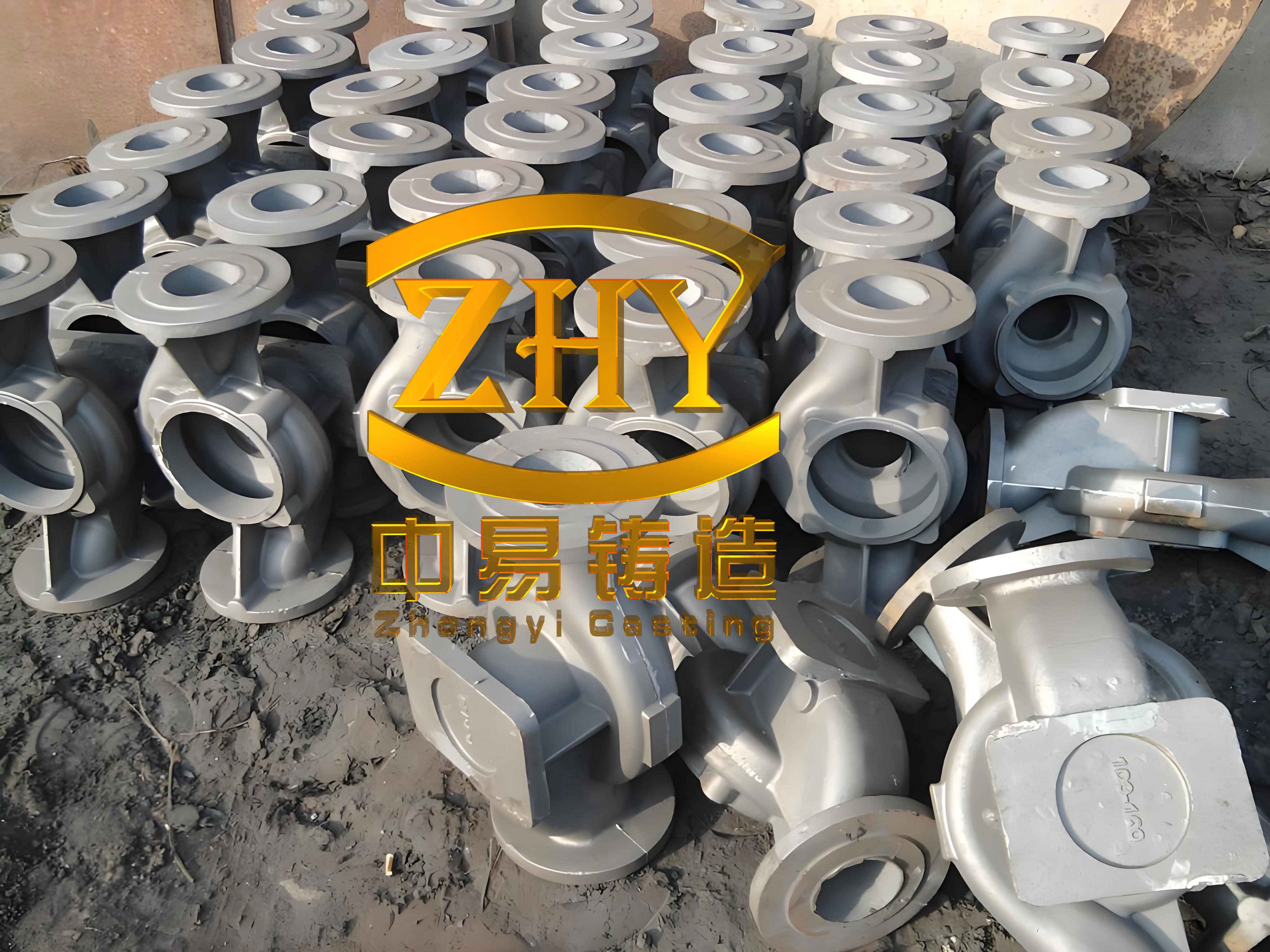
The melting was conducted in a 4-ton medium-frequency induction furnace. The target pouring temperature range was 1380–1400°C. The base chemical composition control for the iron is summarized in Table 1.
| C | Si | Mn | S | Cu | Cr | Mo | Ni |
|---|---|---|---|---|---|---|---|
| 3.35–3.45 | 1.80–1.90 | 0.80–0.90 | 0.08–0.12 | 0.80–1.00 | 0.30–0.40 | 0.25–0.35 | 0.45–0.55 |
The initial process parameters for charge makeup and inoculation are listed in Table 2.
| Charge Component | Percentage | Primary Inoculant | Secondary (Stream) Inoculant |
|---|---|---|---|
| Steel Scrap | 60% | 0.50% FeSiBa | None |
| Returns | 30% | ||
| Pig Iron | 10% |
Despite maintaining chemistry within the specified ranges, the initial production runs revealed a critical issue upon本体 testing. Samples were taken from different locations (A and B) with nominally similar section thicknesses but different thermal histories within the mold. The results were starkly different, as shown in Table 3.
| Location | UTS (MPa) | Hardness (HB) | Graphite Morphology | Pearlite Content |
|---|---|---|---|---|
| A | 311 | 234 | 100% Type A (A4) | ~100% |
| B | 287 | 212 | 60% Type D/E (A4/D8) | ~90% (Some Ferrite) |
Location B failed to meet the 300 MPa UTS requirement. The metallographic analysis pointed to the root causes: the presence of undercooled (Type D/E) graphite and a pearlite matrix diluted with ferrite. This became the central problem to solve in this gray iron casting project.
Analysis of the Problem: Undercooled Graphite and Ferrite Formation
The performance of any gray iron casting is fundamentally governed by its microstructure, which is a result of the solidification and subsequent phase transformation kinetics. The formation of Type D graphite is a classic symptom of excessive undercooling during eutectic solidification. This occurs when the number of potent石墨 nucleation sites is insufficient relative to the prevailing cooling rate. The graphite forms within the interdendritic spaces of the primary austenite, resulting in a fine, interconnected, and branched network. While fine graphite can be beneficial, the associated undercooling often destabilizes the subsequent eutectoid transformation.
The critical temperature regimes governing a gray iron casting‘s structure are:
1. The Eutectic Range (~1150°C): Governs graphite nucleation and growth morphology.
2. The Eutectoid Range (~750°C): Governs the final matrix structure (pearlite vs. ferrite).
Fine, undercooled graphite (Type D) provides an extensive network of interfaces that can act as preferential sites for ferrite formation during the eutectoid transformation, as described by the classic model for the austenite-to-pearlite/ferrite transformation influenced by graphite spacing. The driving force $\Delta G$ for ferrite nucleation at a graphite/austenite interface can be conceptually related to the interfacial energy and undercooling:
$$
\Delta G \propto -\Delta T + \frac{\gamma}{\lambda}
$$
where $\Delta T$ is the undercooling below the eutectoid temperature, $\gamma$ is the interfacial energy, and $\lambda$ is the inter-flake spacing of the graphite. A finer graphite structure (smaller $\lambda$) can reduce the energy barrier for ferrite nucleation. Solidification simulation and thermal analysis of Location B indicated a thermal history with rapid cooling through the eutectic range (promoting Type D graphite) followed by slower cooling through the eutectoid range (providing time for ferrite growth). This dual effect explained the substandard microstructure and properties.
Strategic Improvement Pathways
To correct the microstructure in the problematic zones of the gray iron casting, I focused on three interdependent strategies aimed at enhancing石墨 nucleation and stabilizing pearlite.
1. Enhanced Inoculation Practice: The absence of a secondary (stream) inoculation was a significant drawback. Secondary inoculation introduces fresh, active nucleation sites immediately before solidification begins, counteracting nucleation site fade (衰退). This practice effectively increases the number of eutectic cells (共晶团数), $N$, which is a primary factor in controlling graphite size and distribution. The relationship between the number of nuclei, cooling rate ($\dot{T}$), and final graphite morphology is critical. The goal was to shift the solidification mode from undercooled (D/E) to cooperative growth (A-type). Implementing stream inoculation was a direct method to increase $N$.
2. Optimization of Charge Makeup: The use of 10% pig iron introduced a potential for “inheritance” of undesirable graphite structures. Pig iron contains coarse, primary graphite flakes. While these graphite particles may partially dissolve during induction melting, they can survive as heterogeneous substrates. During solidification of the gray iron casting, these substrates can act as potent but often coarse nucleation sites, leading to inconsistent graphite size distribution. Furthermore, a high pig iron content elevates the baseline carbon content, making it harder to achieve a lower carbon equivalent for higher strength. I hypothesized that reducing pig iron and increasing steel scrap would refine the overall microstructure by reducing the carbon content and eliminating the inherited coarse nuclei.
3. Employing a Potent Inoculant: The standard FeSiBa inoculant was effective for general purposes but might not have been optimal for suppressing undercooling in this specific, slow-cooling yet section-sensitive gray iron casting. Rare earth (RE) containing inoculants, such as FeSiRE, offer a powerful alternative. Rare earth elements (e.g., Ce, La) have a high affinity for sulfur and oxygen. Their action can be described thermodynamically. For instance, the desulfurization reaction:
$$
2Ce_{(in Fe)} + FeS \rightarrow Ce_2S_{3(s)} + Fe_{(l)}
$$
The standard Gibbs free energy change $\Delta G^\circ$ for such reactions is highly negative, indicating strong spontaneity. The products, such as $Ce_2S_3$, $CeS$, and $Ce_2O_3$, are high-melting-point, non-metallic compounds with densities close to that of liquid iron. They remain finely dispersed throughout the melt, acting as excellent, stable heterogeneous nucleation sites for graphite. This dual action—purification and enhanced nucleation—makes RE inoculants particularly effective at suppressing undercooling, even at lower addition rates. This was key to improving the gray iron casting quality.
Experimental Trials and Comprehensive Results
I designed and implemented three distinct trial plans, building upon the baseline, to systematically evaluate the impact of each strategy. The plans are detailed in Table 4.
| Plan | Charge Makeup (Steel/Returns/Pig Iron) | Primary Inoculant (Ladle) | Secondary Inoculant (Stream) | Key Variable Tested |
|---|---|---|---|---|
| Plan 1 | 60%/30%/10% | 0.50% FeSiBa | 0.10% FeSiBa | Addition of Stream Inoculation |
| Plan 2 | 70%/25%/5% | 0.50% FeSiBa | 0.10% FeSiBa | Charge Makeup Optimization |
| Plan 3 | 70%/25%/5% | 0.40% FeSiRE | 0.10% FeSiBa | Potent (RE) Primary Inoculant |
The chemical composition was held constant within the ranges specified in Table 1 for all trials. The本体 samples were taken from the previously problematic Location B. The results, including tensile strength, hardness, and detailed metallographic evaluation, are consolidated in Table 5.
| Plan | UTS (MPa) | Hardness (HB) | Graphite Morphology | Pearlite Content | Status vs. Spec |
|---|---|---|---|---|---|
| Plan 1 | 274 | 195 | 60% D/E Type, 40% A (A4) | ~90% (Ferrite present) | Fail (UTS < 300 MPa) |
| Plan 2 | 309 | 204 | 98% A Type (A4), 2% D/E | ~100% | Pass (Meets min. spec) |
| Plan 3 | 322 | 216 | 100% A Type (A4/A5) | ~100% | Pass (Best performance) |
In-Depth Discussion and Technical Synthesis
The results clearly demonstrate the hierarchical effectiveness of the implemented strategies for this gray iron casting.
Plan 1 (Stream Inoculation Only): The addition of 0.10% FeSiBa stream inoculant was insufficient to overcome the inherent limitations of the process. While it likely provided some marginal increase in nucleation sites, it did not counteract the negative influence of the high pig iron content and the relatively low potency of the primary inoculant. The persistence of D/E graphite and ferrite confirmed that undercooling was not adequately suppressed. The tensile strength remained below the 300 MPa threshold, proving that a single tactical change was inadequate.
Plan 2 (Optimized Charge + FeSiBa): This plan yielded a significant improvement. Reducing pig iron to 5% and increasing steel scrap to 70% served multiple purposes. First, it lowered the carbon equivalent slightly, inherently favoring a stronger matrix. More importantly, it drastically reduced the “遗传性” or inheritance effect of coarse graphite substrates from the pig iron. This allowed the FeSiBa inoculant to work on a “cleaner” melt with fewer competing, undesirable nuclei. The result was a near-complete transition to Type A graphite and a fully pearlitic matrix. The tensile strength of 309 MPa met the specification, validating the charge makeup optimization as a highly effective strategy for improving gray iron casting quality.
Plan 3 (Optimized Charge + FeSiRE): This combination produced the optimal outcome. The foundation of an optimized charge (70/25/5) was enhanced by the superior nucleation capability of the rare earth inoculant. The mechanism of RE elements can be further elaborated. Beyond simple desulfurization, the formation of complex (RE)xSyOz compounds provides a spectrum of nucleation substrates with excellent lattice matching to graphite. The effectiveness of a nucleating particle can be assessed by the disregistry $\delta$ between its lattice parameter and that of graphite. RE sulfides/oxides often exhibit low disregistry values, promoting efficient heterogeneous nucleation. The increased number of potent nuclei, $N_{RE} > N_{Ba}$, shifts the solidification curve, reducing the eutectic undercooling $\Delta T_E$. This relationship can be modeled as a function of nucleation potency and cooling rate:
$$
\Delta T_E \approx f(\dot{T}, N^{-1/3})
$$
A higher $N$, as provided by the RE inoculant, directly reduces $\Delta T_E$, favoring the growth of Type A graphite over Type D. Furthermore, the refined and uniformly distributed A-type graphite created a matrix that fully transformed to pearlite during the eutectoid reaction. The resultant tensile strength of 322 MPa and hardness of 216 HB were not only within specification but represented the most robust and reliable outcome for the gray iron casting.
Generalized Learnings and Process Formulae
This investigation reinforces several fundamental principles for producing high-integrity gray iron castings, particularly for complex, section-sensitive components like cylinder heads. The findings can be summarized into actionable guidelines and conceptual models.
1. Carbon Equivalent (CE) and Strength: While a higher CE improves castability, it is detrimental to strength. The balance must be managed. The classic formula for Carbon Equivalent is:
$$
CE = C + \frac{1}{3}(Si + P)
$$
For high-strength grades like HT300, aiming for the lower end of the CE range for the given section size is crucial. Reducing pig iron and increasing steel scrap is a direct method to lower CE while maintaining other elements via targeted alloy additions.
2. The Role of Inoculation: Inoculation is not a single-step operation but a system. A two-stage approach is highly recommended:
- Primary (Ladle): To establish a baseline level of nucleation and facilitate fade recovery.
- Secondary (Stream): To provide a maximum number of active nuclei at the precise moment of solidification, defined by an addition time $t_{add}$ very close to pouring. The efficiency $\eta$ of stream inoculation decreases rapidly with time after addition: $\eta \propto e^{-kt}$.
3. Graphite Morphology Control: The transition from desirable (A-type) to undesirable (D/E-type) graphite is governed by nucleation and cooling conditions. A simplified criterion for avoiding excessive undercooling can be stated as ensuring a sufficiently high “Nucleation Potential” ($NP$) relative to the “Cooling Severity” ($CS$) of the mold/metal system:
$$
NP (Charge, Inoculant) > CS (Section, Mold)
$$
Where $NP$ is a function of charge purity and inoculant potency/amount, and $CS$ is related to the casting modulus and mold material.
4. Matrix Control: Achieving a fully pearlitic matrix in a gray iron casting, especially in slower-cooling sections, requires:
- Alloying elements (Cu, Sn, Cr) to increase the pearlite nose time in the TTT diagram.
- Favorable graphite morphology (A-type) that does not excessively promote ferrite halo formation.
- Adequate cooling rate through the eutectoid transformation to kinetically favor pearlite over ferrite.
Conclusion
Through systematic analysis and experimentation, the quality issue in this high-demand gray iron casting was successfully resolved. The problem of low本体 tensile strength in specific locations was traced to the formation of undercooled (Type D/E) graphite and associated ferrite in the matrix. Implementing a stream inoculation step alone was insufficient. The most effective solution combined a strategic adjustment to the furnace charge—significantly reducing pig iron content to minimize structural inheritance and increasing steel scrap—with the application of a high-potency rare earth-bearing primary inoculant. This dual approach maximized the number of effective石墨 nucleation sites, suppressed eutectic undercooling, promoted the formation of uniform Type A graphite, and ensured a fully pearlitic matrix after the eutectoid transformation. Consequently, the本体 tensile strength consistently exceeded the 300 MPa requirement, with Plan 3 yielding the most superior and reliable results. This case underscores that optimizing a gray iron casting process requires a holistic view, integrating charge design, advanced inoculation technology, and a deep understanding of solidification and phase transformation kinetics.