
The global foundry industry stands as a cornerstone of modern manufacturing, with sand casting accounting for over 70% of all cast metal components produced worldwide. The sheer volume of sand casting parts—from intricate engine blocks to massive machine frames—is a testament to the versatility and economic viability of this process. However, this scale brings a significant environmental burden. For every ton of sound sand casting parts produced, approximately 1 to 1.3 tons of waste foundry sand is generated. The direct disposal of this immense quantity of used sand represents not only a substantial waste of valuable silica resources but also a serious threat to soil and groundwater due to potential leaching of residual binders and additives. Consequently, the reclamation and reuse of foundry return sand has transitioned from a technical consideration to an urgent industrial and environmental imperative for the sustainable future of producing sand casting parts.
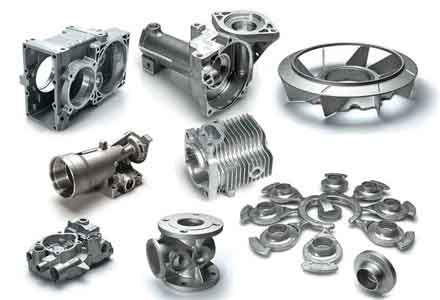
My examination of the current landscape reveals significant progress, particularly in dedicated binder systems. Reclamation is now an integral part of the production cycle for many binder-specific sands. The most widespread success story is with resin-bonded sands. For furan and phenolic urethane no-bake sands, dry mechanical reclamation methods—utilizing principles of impact, attrition, and friction—are almost universally employed. These systems efficiently remove the brittle, spent resin film, allowing 90-95% of the sand to be recycled back into the same molding process for manufacturing new sand casting parts. The economics here are compelling, making in-line reclamation standard practice. Similarly, for core sands like cold-box, hot-box, and shell (Croning) sands, thermal reclamation is the method of choice. This involves heating the sand to between 700°C and 800°C in a controlled atmosphere to combust the organic binders completely. The resulting sand is not merely “close to new”; it often exhibits superior characteristics, such as reduced thermal expansion and lower gas evolution, making it excellent for recirculation within its original system for producing high-quality sand casting parts.
The technical approach varies fundamentally with the binder chemistry. Sodium silicate-bonded sands, notorious for poor knock-out and reclamation difficulties, employ different strategies. Wet washing can reduce residual Na₂O to around 0.15%, producing high-quality sand suitable for face molds, but at the cost of high water consumption and wastewater treatment. Dry mechanical methods are simpler but less effective, leaving about 0.5% Na₂O, limiting the sand’s reuse potential. The overarching goal in all these dedicated systems is to restore the sand’s properties to a state where it can reliably replace a portion of new sand in the specific binder system from which it came, thereby reducing raw material costs for sand casting parts.
However, these successes address only a fraction of the total waste stream. The most voluminous and challenging category is clay-bonded green sand, especially when it is contaminated with broken-down resin-bonded cores from complex molds—a common scenario in high-production facilities making engine castings and other sophisticated sand casting parts. Here, the sand matrix contains a complex mixture of dead clay coatings, carbonaceous materials (from coal dust), and residues from various resin systems. Simple dry scrubbing is insufficient, and direct thermal treatment risks sintering the clay coating into a hard, ceramic-like “vitrified” layer that is nearly impossible to remove mechanically and severely impairs the sand’s ability to bond with new binders.
The breakthrough for this mixed-waste stream lies in a carefully calibrated combination of thermal and mechanical processing, often termed thermal-mechanical reclamation. The key is precise thermal control. The sand must be heated to a temperature high enough to degrade organic contaminants and weaken the clay coating’s bond to the silica grain, but not so high as to cause complete sintering or vitrification. Research and industrial practice indicate an optimal “moderate temperature” range, typically between 600°C and 750°C. This controlled heating burns off organics and dehydrates the clay, making it brittle. The subsequent mechanical stage—involving vigorous scrubbing, attrition, and impact—then effectively removes the loosened coatings. The process flow can be summarized by the following conceptual equation, where the quality of Reclaimed Sand (R) is a function of thermal (T) and mechanical (M) energy inputs, bounded by the initial contaminant load (C):
$$ R = \int_{t_1}^{t_2} f(T(t), M(t), C) \, dt $$
Subject to: $$ T_{min} \leq T(t) \leq T_{max} $$
Successful application of this principle, as seen in advanced reclamation plants, demonstrates that sand from mixed green sand systems can be regenerated to a quality exceeding that of virgin sand for use in core-making. This is not a theoretical maximum of “close to new sand,” but a practical achievement of “better than new sand” for specific applications crucial for sand casting parts.
The properties of this thermally-mechanically reclaimed sand are transformative for its application potential. The following table contrasts typical properties of high-quality virgin silica sand with those of reclaimed sand from a mixed green sand system:
| Property | Typical Virgin Silica Sand | Reclaimed Green Sand (Thermal-Mechanical) | Implication for Core Making |
|---|---|---|---|
| SiO₂ Content (%) | ≥ 95 | 85 – 97 (Often increased) | High purity maintained or improved. |
| LOI (Loss on Ignition) (%) | < 0.5 | < 0.2 | Drastically reduced gas potential. |
| Acid Demand Value (mL) | ~1-5 | < 1.0 (Often <0.1) | Minimal alkali interference with acid-curing resins. |
| Clay/Silt Content (<0.02 mm) (%) | < 0.5 | < 0.3 | Very low, maximizes binder efficiency. |
| Moisture Content (%) | < 0.5 | < 0.2 | Eliminates water-related curing issues. |
| Thermal Expansion (1000°C) (%) | ~1.5 – 1.7 | ~0.6 – 1.0 | Greatly reduced, minimizing veining/expansion defects in sand casting parts. |
| Particle Shape | Angular to Sub-Angular | Rounded | Improved flowability and packing density. |
The performance benefits are quantifiable. The reduction in LOI and moisture directly translates to lower gas generation during metal pouring, a primary cause of porosity defects in sand casting parts. The reduced thermal expansion directly addresses the root cause of veining and fin defects. The lower acid demand value and clay content mean resin binders coat cleaner grains more effectively, which can lead to significant reductions in binder requirement—often 10-20%—while maintaining or even increasing tensile strength. This strength-to-binder ratio can be modeled as:
$$ S_{reclaimed} = k \cdot \frac{B}{1 + \alpha \cdot (LOI + \beta \cdot Clay)} $$
Where \(S\) is strength, \(B\) is binder addition, \(LOI\) and \(Clay\) are residual contents, and \(k\), \(\alpha\), \(\beta\) are constants. For reclaimed sand, the denominator term is minimized, leading to higher efficiency.
Therefore, the application prospects for high-quality reclaimed sand are exceptionally bright, moving beyond simple reuse in clay systems. Two primary solution pathways emerge for using reclaimed green sand as core-making sand:
Pathway 1: Direct Replacement for Virgin Sand in Core Shops. Reclaimed sand meeting the specifications in the table above can fully replace premium-grade virgin silica sand in the production of cold-box, hot-box, and shell cores. This creates a circular economy within a regional foundry cluster, where waste from green sand molding lines becomes a premium raw material for the core-making department, ultimately contributing to more robust and reliable sand casting parts.
Pathway 2: Commercialized Reclaimed Sand Product. Dedicated reclamation facilities can process mixed waste sand from multiple foundries, producing a standardized, high-performance “reborn” sand product. This product competes directly with mined and processed virgin sand, often at a lower cost and with a demonstrably lower carbon footprint, supplying both foundries and independent core-shops.
The economic equation is compelling. While the capital investment for a thermal-mechanical reclamation system is significant, the operating cost per ton is competitive with the delivered cost of high-quality virgin sand, especially when environmental disposal costs are factored in. The true cost of waste sand (\(C_w\)) includes not just disposal fees (\(F_d\)), but also transportation (\(C_t\)), space (\(C_s\)), and potential liability (\(L\)). Reclamation cost (\(C_r\)) offsets this and the cost of new sand (\(C_n\)):
$$ \text{Net Savings} = (C_w + C_n) – C_r = (F_d + C_t + C_s + L + C_n) – C_r $$
For a medium-to-large foundry, this sum often justifies the investment, making reclamation a financially sound strategy for producing sand casting parts.
In conclusion, the journey from viewing spent foundry sand as a waste to valuing it as a critical resource is well underway. The technology for reclaiming binder-specific sands is mature, while the advanced thermal-mechanical processing of mixed green sand represents the new frontier, with proven commercial success. The resulting reclaimed sand is not a inferior substitute but a superior engineering material for core production, offering enhanced properties that directly translate to higher quality and yield in sand casting parts. The path forward requires continued standardization of reclaimed sand properties, the strategic development of centralized reclamation facilities, and the innovative utilization of the minimal solid residues from the process itself. Embracing comprehensive sand reclamation is no longer just an option for the foundry industry; it is an essential strategy for ensuring sustainable, cost-effective, and environmentally responsible manufacturing of the sand casting parts that underpin our industrial world.