
In my extensive experience within the foundry industry, I have consistently observed that the precision and reliability of sand casting parts are fundamentally dependent on the rigorous application of standardized practices in mold design, manufacturing, and inspection. The mold, often referred to as the pattern, is the heart of the sand casting process. Its quality directly dictates the dimensional accuracy, surface finish, and overall integrity of the final sand casting parts. This article synthesizes my professional insights and the critical reference standards that govern this domain. My aim is to provide a comprehensive guide that underscores the importance of these standards in achieving consistency, reducing production cycles, and enhancing the competitive edge of manufacturing enterprises specializing in sand casting parts.
The design phase is the foundational step where the blueprint for the sand casting parts is created. Adherence to established technical conditions ensures that the pattern will yield castings that meet specified requirements. For wooden patterns and core boxes, the technical specifications are outlined in standards equivalent to JB/T7699. This covers aspects like material selection, construction methods, and tolerance allowances specific to patterns used for sand casting parts.
A critical design parameter is the draft angle or taper, essential for facilitating the removal of the pattern from the sand mold without damage. The standard reference for this is analogous to JB/T5105. Insufficient draft can lead to mold erosion and defective sand casting parts. The required draft angle often depends on the pattern material, depth of the draw, and the molding method. It can be expressed as a linear dimension or an angle. For a pattern height \( H \) and a specified draft angle \( \alpha \), the taper \( T \) per side can be calculated as:
$$ T = H \times \tan(\alpha) $$
This simple formula ensures uniformity across different pattern geometries for sand casting parts.
Another vital design consideration is the machining allowance. Since most sand casting parts require subsequent machining to achieve final dimensions and surface finish, extra material must be added to the pattern. This is governed by standards comparable to GB/T11350, which must be used in conjunction with casting dimensional tolerance standards like GB6414. The allowance varies based on the casting alloy, size of the sand casting part, and the casting position. The following table summarizes key design standards and their primary focus for sand casting parts:
| Standard Area | Reference Standard (Equivalent) | Key Parameters for Sand Casting Parts |
|---|---|---|
| Wooden Pattern & Core Box Tech | JB/T7699 Series | Material grade, joint strength, moisture content, construction precision. |
| Draft Angle | JB/T5105 Series | Angle or linear taper per side, based on pattern material and feature depth. |
| Core Print Dimensions | JB/T5106 Series | Size, clearance, and taper of prints to locate and secure cores. |
| Machining Allowance | GB/T11350 with GB6414 | Extra material thickness added to surfaces to be machined. |
| Pattern Shrinkage | JB4022 Series | Alloy-specific contraction allowance applied to pattern dimensions. |
| Geometric Tolerancing | GB1182 (Ctl. 6-7) | Default tolerances for straightness, flatness, etc., when not specified. |
| Pattern Material Standards | Various (e.g., GB/T1173, GB9439) | Specifications for wood, aluminum, cast iron, and steel pattern materials. |
The pattern shrinkage allowance is perhaps the most crucial design calculation. Different metals and alloys contract at different rates upon solidification and cooling. To compensate, the pattern must be made oversize. Standard JB4022 provides recommended shrinkage rates for various alloys. If \( L_p \) is the pattern dimension and \( L_c \) is the desired casting dimension, the shrinkage allowance \( S_a \) is applied as:
$$ L_p = L_c \times (1 + S_a) $$
Where \( S_a \) is the decimal form of the percentage shrinkage (e.g., 2% = 0.02). For common sand casting parts made from gray iron, \( S_a \) might be 0.010 to 0.013, while for aluminum alloys it can range from 0.013 to 0.016. Accurate application of this allowance is non-negotiable for dimensionally correct sand casting parts.
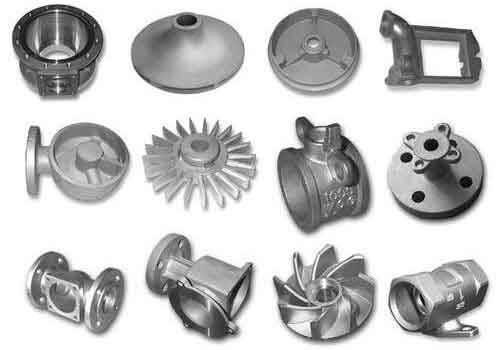
The manufacturing of the pattern, whether from wood, metal, or plastic, must follow precise machining and assembly protocols to realize the design intent. The process begins with marking out the raw stock, guided by standards similar to JB/Z307.12, which ensures layout accuracy and proper datum establishment. Subsequent machining operations—turning, milling, drilling, and finishing—each have their own generic process guidelines, akin to the JB/Z307 series. For instance, during milling of a complex contour for a sand casting part pattern, feed rates, cutter selection, and clamping methods are standardized to prevent vibration and ensure profile fidelity.
In my practice, I have found that the assembly of pattern components, including core boxes and mounting plates, is where many errors can creep in. The assembly standard, analogous to JB/T5994, provides guidelines for fitting, fastening, and alignment. A key aspect is ensuring that parting surfaces are perfectly flat and that guide pins and bushes are accurately fitted to guarantee precise mold closure during molding, which is essential for the integrity of the sand casting parts. The table below outlines critical manufacturing standards and their application stages:
| Manufacturing Stage | Governed Standard (Equivalent) | Objective for Sand Casting Mold Production |
|---|---|---|
| Marking/ Layout | JB/Z307.12 Series | Accurate transfer of design dimensions onto raw material with correct tolerances. |
| Turning Operations | JB/Z307.12 (Machining) | Precision machining of cylindrical pattern components to required diameters and finishes. |
| Milling Operations | JB/Z307.13 Series | Contouring, slotting, and surface generation for complex pattern geometries. |
| Benchwork / Fitting | JB/Z307.13 (钳工) | Filing, scraping, and hand-fitting of components to achieve tight joints. |
| Final Assembly | JB/T5994 Series | Systematic assembly of all pattern parts, ensuring rigidity and operational reliability. |
Dimensional control during manufacturing is paramount. The use of calibrated measuring instruments, themselves traceable to national standards, is mandatory. For example, when verifying the distance between two critical features on a pattern for an engine block sand casting part, a vernier height gauge (standard akin to JB1565) used on a Grade 0 surface plate (standard akin to GB34986) provides the necessary accuracy. The uncertainty in measurement must be a fraction of the pattern’s tolerance to ensure the sand casting parts will be within specification.
The final and arguably most critical phase is the inspection and validation of the completed mold or pattern. This phase ensures that the design and manufacturing standards have been successfully embodied in the physical tool. Inspection is not a single activity but a comprehensive process covering surface texture, dimensional accuracy, geometric conformity, and functional performance.
Surface roughness of the pattern directly transfers to the sand mold and, consequently, affects the surface finish of the sand casting parts. Standards provide physical comparators for assessment. For wooden patterns, a roughness comparison sample standard equivalent to GB/T14495 is used. For metal patterns, machined surface comparison blocks per a standard like GB6060.2 are employed. The inspector visually and tactually compares the pattern surface to these masters. A pattern that is too rough can cause sand adhesion, leading to poor surface finish on the sand casting parts, while one that is overly polished may be unnecessary and costly.
Dimensional inspection requires a suite of precision tools. Each tool has its own accuracy standard that must be respected. For instance, a vernier caliper (standard like GB1214) is suitable for general dimensions, but for critical tolerances on large sand casting part patterns, tools like dial indicators or coordinate measuring machines may be needed. The flatness of parting surfaces is checked with a precision straightedge (standard akin to GB2214) and feeler gauges (standard like GB8060). The acceptability criteria are often derived from the pattern’s designated quality grade, as detailed in technical manuals for patternmakers.
Functional validation, often called “first article inspection” or “proving the pattern,” is crucial. This involves creating actual sand molds and castings from the new pattern. The standard procedure for this, similar to JB/Z283.5, outlines how to conduct a mold trial, measure the resulting prototype sand casting parts, and compare them to the product drawing. Any dimensional deviations are analyzed to determine if they are within the allocated tolerance stack-up, which includes pattern shrinkage, molding variation, and casting distortion. This iterative process may lead to fine-tuning the pattern. The key inspection and validation standards are consolidated in the following table:
| Inspection Category | Reference Standard / Tool Standard (Equivalent) | Purpose in Ensuring Quality of Sand Casting Parts |
|---|---|---|
| Surface Roughness | GB/T14495 (Wood), GB6060.2 (Metal) | Control mold surface texture to achieve desired casting finish and avoid sand burn-on. |
| Dimensional Verification | Various Tool Standards (e.g., GB9056, GB1214, GB6315) | Measure all critical pattern dimensions to confirm conformity with design drawings. |
| Geometric Verification | Tools per GB6092 (Square), GB9054 (Radius), GB2214 (Straightedge) | Check angles, radii, flatness, and straightness of pattern features. |
| Assembly & Function Check | JB/T5994 (Assembly), JB/Z283.5 (Trial Procedure) | Verify pattern assembly integrity and performance in actual molding trials. |
| Documentation & Guidance | JB/Z187 (Operation Card) | Provide clear instructions for foundry personnel on proper pattern use and handling. |
The economic impact of standardized mold engineering is profound. By applying these reference standards systematically, foundries can achieve first-pass success more frequently, dramatically reducing the time and cost associated with rework and pattern modification. This efficiency is vital in today’s market, where lead times for sand casting parts are constantly being compressed. Furthermore, standardized patterns produce consistent sand casting parts, reducing scrap rates and ensuring reliable performance in the end-user’s assembly. From my perspective, the standards serve as a common language between design, tooling, and production teams, minimizing ambiguities and clearly defining responsibilities at each stage of creating tools for sand casting parts.
In conclusion, the journey from a component drawing to a high-quality sand casting part is paved with technical standards. The design standards ensure the pattern accounts for all metallurgical and process variables. The manufacturing standards translate that design into a precise, durable physical tool. Finally, the inspection standards provide the objective means to verify the tool’s correctness before it enters production. This tripartite framework—design, manufacture, inspect—when diligently followed, creates a robust system for excellence. It empowers foundries to not only meet specifications but to do so predictably and efficiently. As the demand for complex, high-integrity sand casting parts grows in sectors like automotive, aerospace, and heavy machinery, the role of these standardized practices becomes ever more critical. They are not merely recommendations but the essential pillars supporting quality, productivity, and innovation in the sand casting industry.