
In modern foundry practice, the demand for high-quality, dimensionally precise, and cost-effective components has driven the adoption of advanced casting techniques. Among these, the sand-faced permanent mold casting process, often referred to as iron mold with sand lining or sand-faced permanent iron molding, has emerged as a particularly suitable method for producing grey iron castings with thin-walled geometries. This process combines the durability and thermal stability of metal molds with the flexibility and surface finish benefits of a sand lining, enabling the mass production of complex parts that require excellent surface detail and tight tolerances. In this article, I will delve into the application of this technology specifically for grey iron castings, focusing on the intricate design parameters, operational nuances, and the significant advantages it offers over conventional sand casting methods. The emphasis will be on how this process addresses the unique challenges posed by thin-section constructions in grey iron, a material known for its good castability but also for its susceptibility to issues like chill formation and shrinkage in thin walls.
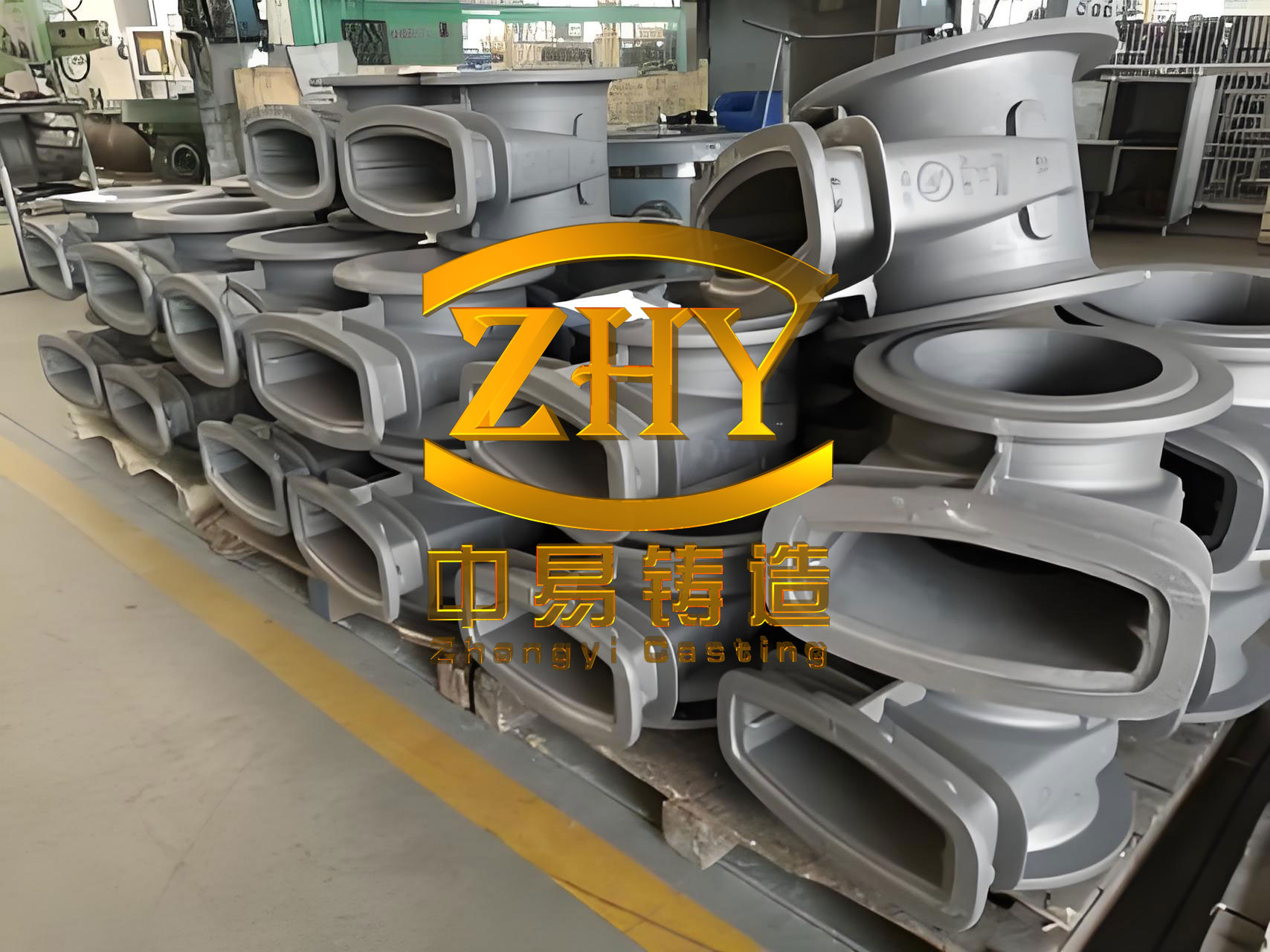
The core principle of sand-faced permanent mold casting involves using a reusable iron or steel mold (the permanent mold) whose cavity is lined with a thin, precisely formed layer of resin-bonded sand. This sand layer is typically created by blowing or shooting sand mixed with a binder into the preheated metal mold, where it cures to form a rigid shell. The metal mold provides structural support and rapid heat dissipation, while the sand lining allows for complex geometries, easy release, and a smooth casting surface. For grey iron castings, especially those with thin walls, this hybrid approach mitigates the rapid cooling rates associated with pure metal molds, which can lead to excessive white iron formation (chill) and poor fluidity. The process is highly repeatable and efficient, making it ideal for batch and mass production. My discussion will center on optimizing this process for grey iron castings, where the interplay between thermal management, mold design, and metallurgy is critical.
Producing thin-wall grey iron castings via this method presents distinct challenges. Grey iron, primarily an iron-carbon-silicon alloy with graphite flakes, has lower fluidity compared to ductile iron or some non-ferrous alloys. When combined with thin sections, often defined as walls less than 6 mm, the molten metal front cools rapidly, increasing the risk of mistruns, cold shuts, and incomplete filling. Furthermore, the high thermal conductivity of the iron mold accelerates solidification, which can promote carbidic (white) structures at the surface, degrading machinability and mechanical properties. The geometry of thin-wall castings, such as housings, brackets, or enclosures, often includes internal cavities and sharp features that require precise replication. The mold must allow for proper ejection without damage, and the casting’s contraction must be accommodated to prevent hot tearing or cracking, especially when internal metal cores (part of the permanent mold) restrict shrinkage. Therefore, the process design must carefully balance gating, venting, sand layer thickness, and thermal parameters to ensure sound castings.
From a design perspective, several key parameters govern the success of sand-faced permanent mold casting for grey iron castings. The thickness of the sand lining and the iron mold wall are paramount. The sand layer acts as an insulating barrier, slowing heat transfer and reducing chilling. Its thickness can be varied locally to control cooling rates. The iron mold thickness provides mechanical strength and thermal mass. A general relationship for designing these thicknesses can be derived from heat transfer considerations. The rate of heat extraction from the solidifying casting is influenced by the combined thermal resistance of the sand layer and the mold. An approximate formula for the initial heat flux, \( q \), at the mold-casting interface can be expressed as:
$$ q = \frac{T_{\text{melt}} – T_{\text{mold, outer}}}{\frac{d_{\text{sand}}}{k_{\text{sand}}} + \frac{d_{\text{iron}}}{k_{\text{iron}}}} $$
where \( T_{\text{melt}} \) is the pouring temperature, \( T_{\text{mold, outer}} \) is the external mold temperature, \( d_{\text{sand}} \) and \( d_{\text{iron}} \) are the thicknesses of the sand lining and iron mold respectively, and \( k_{\text{sand}} \) and \( k_{\text{iron}} \) are their thermal conductivities. For grey iron castings with thin walls, increasing \( d_{\text{sand}} \) and reducing \( d_{\text{iron}} \) within practical limits decreases \( q \), allowing more time for filling and reducing chill risk. Typical ranges used in production for thin-wall grey iron castings are summarized in Table 1.
| Parameter | Typical Range for Thin-Wall Grey Iron Castings | Influence on Casting Quality |
|---|---|---|
| Sand Lining Thickness | 5 – 20 mm | Insulation, controls cooling rate, affects surface finish. |
| Iron Mold Wall Thickness | 10 – 25 mm | Provides structural integrity and thermal mass. |
| Pouring Temperature | 1320 – 1380 °C | Critical for fluidity; higher temps reduce mistruns but increase shrinkage. |
| Mold Preheating Temperature | 150 – 250 °C | Reduces thermal shock, improves sand curing, and aids filling. |
| Sand Grain Size | AFS 70 – 100 (fine) | Finer grains yield smoother cavity surface, reducing fluid resistance. |
The gating system design is another critical element. For thin-wall grey iron castings, a fast, non-turbulent fill is essential to prevent premature solidification. A semi-pressurized or pressurized gating system is often employed to ensure rapid metal entry. The area ratios of the channels are crucial. A common design uses a choke at the sprue base to control flow and minimize aspiration. The ratio of sprue base area (\(A_{\text{sprue}}\)), total runner area (\(A_{\text{runner}}\)), and total ingate area (\(A_{\text{ingate}}\)) is typically set around \( A_{\text{sprue}} : A_{\text{runner}} : A_{\text{ingate}} = 1.2 : 1.5 : 1.0 \). This promotes a slight back-pressure in the system, reducing turbulence and ensuring a more coherent metal front. The number and placement of ingates must direct flow coherently across thin sections. Computational fluid dynamics (CFD) simulations can optimize this, but a rule of thumb is to place ingates to achieve a near-simultaneous fill of all cavity extremities. The filling time, \( t_f \), can be estimated using Bernoulli’s principle modified for foundry applications:
$$ t_f \approx \frac{V_{\text{cavity}}}{A_{\text{ingate}} \cdot v_{\text{ingate}}} $$
where \( V_{\text{cavity}} \) is the cavity volume, and \( v_{\text{ingate}} \) is the average velocity at the ingates, which depends on the effective metallostatic head. For the aforementioned thin-wall grey iron castings, a fill time of 5-10 seconds is often targeted to prevent cold shuts.
Venting and air evacuation are equally vital. During sand shooting, air must escape to allow complete cavity formation. During pouring, displaced air and gases from the sand binder must exit quickly to prevent back-pressure that can impede filling or cause gas defects. Vent channels are integrated into the metal mold, often connecting to the atmosphere via permeable plugs or fine channels in the sand layer itself. The required vent area, \( A_{\text{vent}} \), can be related to the volumetric air displacement rate. A simplified approach suggests:
$$ A_{\text{vent}} \geq \frac{\dot{V}_{\text{metal}}}{\alpha} $$
where \( \dot{V}_{\text{metal}} \) is the volumetric flow rate of molten metal into the cavity, and \( \alpha \) is an empirical factor accounting for gas permeability and pressure drop (typically between 0.5 and 2 m/s for air flow velocity). Proper venting ensures that the thin, fast-moving metal front does not encapsulate air, which is especially problematic in the intricate corners of thin-wall grey iron castings.
Moving to production operations, a systematic procedure ensures consistency and quality for these grey iron castings. The cycle begins with mold preparation. The permanent iron mold halves are cleaned and preheated to the specified temperature, usually between 150°C and 250°C. Preheating is crucial for two reasons: it ensures proper curing of the resin-bonded sand and reduces the thermal shock when molten grey iron is poured, which helps maintain mold life and dimensional stability. Next, the sand lining is formed. A mixture of fine silica sand (AFS 70-100) and a thermosetting resin (e.g., phenolic or furan) is blown into the cavity under pressure. The heat from the mold cures the resin, forming a hard, accurate shell. The use of fine sand is particularly beneficial for grey iron castings as it produces a very smooth mold surface, minimizing friction for the flowing metal and yielding an excellent as-cast finish. After curing, the pattern or model is withdrawn. For deep-draw or complex thin-wall geometries, a robust release agent application is essential. I recommend spraying a diluted silicone-based release agent and, for severe undercuts, applying a paste-like mold release to specific areas to facilitate clean stripping without damaging the delicate sand lining.
| Step | Action | Technical Rationale for Grey Iron Castings |
|---|---|---|
| 1. Mold Preheating | Heat iron mold to 150-250°C. | Ensures sand binder cure; reduces thermal gradient, improving fluidity for thin sections. |
| 2. Sand Shooting & Curing | Blow resin-sand mix; allow full cure. | Creates precise, smooth insulating layer critical for surface quality of grey iron castings. |
| 3. Pattern Removal | Withdraw model promptly after sand cure. | Prevents sand sticking; maintains cavity integrity for thin-wall features. |
| 4. Mold Assembly & Clamping | Assemble mold halves; apply sufficient clamping force. | Prevents flash formation on thin walls, ensuring dimensional accuracy. |
| 5. Pouring | Pour grey iron at ≥1320°C; aim for fast fill (e.g., 7s). | High temperature and speed counteract rapid heat loss in thin-wall grey iron castings. |
| 6. Solidification & Shakeout | Allow short solidification (5-10 min); open mold. | Minimizes restricted contraction time, reducing stress and cracking risk in constrained thin sections. |
| 7. Casting Removal & Cleaning | Remove casting; perform minimal fettling. | Grey iron castings often require little cleanup due to good surface finish. |
Once the mold is assembled and clamped, pouring is conducted with strict control. For thin-wall grey iron castings, I cannot overstate the importance of maintaining a high pouring temperature—typically above 1320°C, and often closer to 1350°C—combined with a rapid pour to achieve the target fill time. The high temperature improves the superheat and fluidity of the grey iron, while the fast fill ensures the metal reaches all extremities before losing too much heat. The thermal dynamics during solidification are complex. The grey iron undergoes graphitization expansion, which can compensate for shrinkage to some degree, but in thin sections, the rapid cooling may suppress this. The sand-faced mold’s variable cooling rate can be harnessed to promote directional solidification from the thin walls towards feeders or thicker sections, though many thin-wall grey iron castings are designed to be naturally fed without explicit risers due to their uniform wall thickness.
After pouring, the mold is allowed to cool for a brief period, typically 5 to 10 minutes, before shakeout. Early mold opening is beneficial for thin-wall grey iron castings as it reduces the time during which the contracting casting is mechanically constrained by the mold and internal cores, thereby lowering the likelihood of hot tears or cracks. The castings are then ejected, and the sand lining, being a thin shell, often breaks away easily. The iron mold is then cleaned, cooled if necessary, and prepared for the next cycle, making the process highly efficient with cycle times often under 15 minutes.
The application of this process yields remarkable results for grey iron castings. In high-volume production scenarios, such as for automotive components, machinery bases, or electrical enclosures, the benefits are multifold. Firstly, dimensional accuracy and consistency are exceptional. The rigid metal mold minimizes mold wall movement, allowing grey iron castings to hold tight tolerances, often within Grade CT8 per ISO 8062 (equivalent to GB6414-86 CT8). For thin-wall parts, wall thickness variation can be controlled to within ±0.5 mm, which is crucial for weight reduction and performance. Secondly, surface finish is superior to conventional green sand casting. The fine sand lining produces a smooth, glossy surface on the grey iron castings, often eliminating the need for cosmetic machining or extensive grinding. Features like sharp corners, fillets, and logos are reproduced with high definition.
From an economic and environmental standpoint, the process excels. The metal mold is durable, lasting for tens of thousands of cycles with proper maintenance, drastically reducing sand consumption compared to disposable mold processes. The sand-to-metal ratio can be as low as 1:1, meaning for every kilogram of grey iron casting produced, only about one kilogram of sand is used and reclaimed. This is a significant reduction compared to green sand casting, where the ratio can be 10:1 or higher. Moreover, the improved yield is notable. With optimized gating and the absence of massive sand molds, the pouring weight can be minimized. For instance, a component originally weighing 9 kg in a conventional process might be reduced to 7 kg in the sand-faced permanent mold process, representing direct savings in raw material and melting energy. The formula for yield \( Y \) is:
$$ Y = \frac{W_{\text{casting}}}{W_{\text{poured}}} \times 100\% $$
where \( W_{\text{casting}} \) is the final casting weight and \( W_{\text{poured}} \) is the total metal poured (including gating and risers). Yields of 85-90% are commonly achieved for well-designed thin-wall grey iron castings with this process, compared to 50-70% in some sand casting methods.
Quality metrics also show improvement. Defect rates for thin-wall grey iron castings, such as mistruns, cold shuts, and shrinkage porosity, can be held below 2% with proper process control. The incidence of chill or white iron at the surface is minimized by the insulating sand layer, preserving the machinability of the grey iron castings. Mechanical properties like tensile strength and hardness meet specifications for grades like HT200 or ASTM A48 Class 30, as the controlled cooling can promote a fine pearlitic matrix with well-distributed graphite flakes.
To further illustrate the thermal advantages, consider the solidification time, \( t_s \), for a thin wall. Chvorinov’s rule can be adapted, though with caution due to the composite mold nature. A modified form is:
$$ t_s = B \cdot \left( \frac{V}{A} \right)^n $$
where \( V \) is the casting volume, \( A \) is its surface area, \( n \) is an exponent (often near 2), and \( B \) is a mold constant that incorporates the thermal properties of the sand and iron. For a sand-faced permanent mold, \( B \) is higher than for a pure metal mold but lower than for a thick sand mold, resulting in an intermediate solidification time ideal for grey iron castings—fast enough for productivity but slow enough to avoid excessive chilling in thin sections.
In conclusion, the sand-faced permanent mold casting process is a highly capable and efficient method for manufacturing thin-wall grey iron castings. By intelligently designing the sand lining thickness, iron mold dimensions, gating, and venting systems, and by adhering to precise operational protocols involving mold temperature, pouring parameters, and cycle timing, foundries can achieve high-volume production of complex, lightweight, and high-quality grey iron components. The process delivers exceptional dimensional accuracy, superior surface finish, significant material and energy savings, and low scrap rates. As industries continue to demand lighter and more precise cast components, the adoption of this hybrid molding technique for grey iron castings is poised to grow, offering a compelling alternative to both traditional sand casting and fully metallic permanent mold casting. Future developments may involve further integration of simulation tools to optimize thermal management and the use of advanced binders to enhance sand layer performance, continually pushing the boundaries of what is possible in the production of thin-wall grey iron castings.