
In the expansive field of metal casting, the pursuit of efficient, high-quality, and environmentally conscious manufacturing processes is perpetual. Among the various techniques, Sand-Lined Metal Mold (SLMM) casting has emerged as a significant process, particularly lauded for its application in high-volume production of iron castings, such as automotive components. Its benefits are well-documented: significant energy and material savings, superior casting quality due to rapid cooling, and enhanced environmental performance from reduced sand usage. However, the application of this promising technology to steel castings presents a distinct and formidable set of challenges, making it a less common and more specialized practice. This article delves deeply into the intricacies of adapting SLMM casting for steel castings, exploring the fundamental material challenges, detailing specific consumable requirements, and illustrating the entire process through a rigorous case study. The transition from铸铁 to铸钢 in this context is not trivial; it demands a meticulous re-evaluation of every aspect of the process chain.
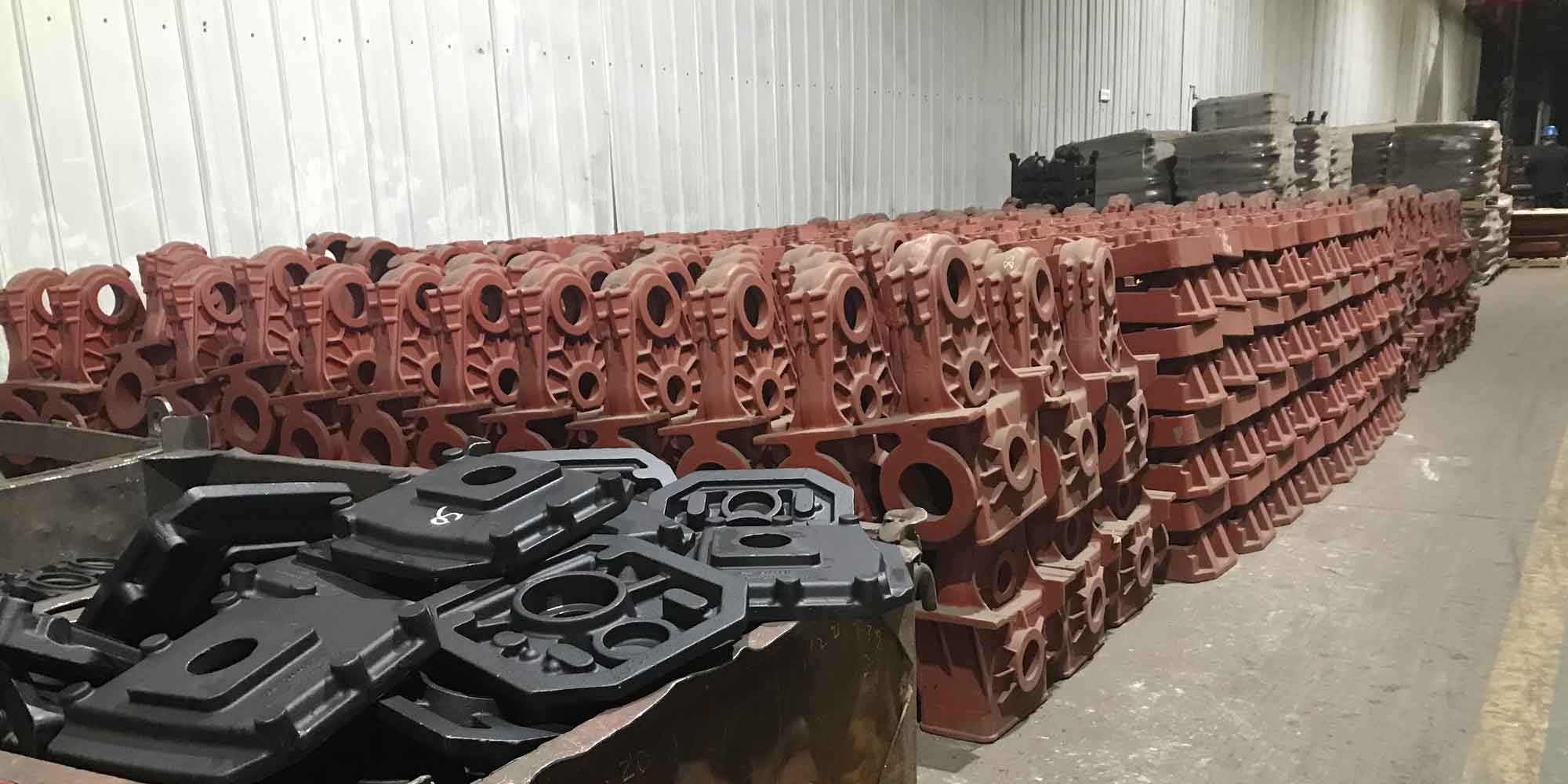
The core principle of SLMM casting involves creating a thin, precise shell of resin-coated sand (typically 3-15 mm) against a heated, reusable metal mold (the “iron type”). This composite mold combines the benefits of a sand mold’s flexibility in shape-making and gas permeability with the dimensional stability, rapid heat extraction, and durability of a permanent metal mold. For steel castings, this rapid cooling is a double-edged sword, fundamentally shaping the required technical approach.
1. Foundry Characteristics of Steel Castings and SLMM Process Challenges
Compared to their iron counterparts, steel castings are chosen for their superior mechanical properties, including higher strength, toughness, and ductility. However, these desirable properties come at the cost of significantly more challenging foundry characteristics. When processed via SLMM, these inherent challenges are amplified, necessitating sophisticated countermeasures.
| Characteristic | Implication for General Steel Casting | Amplified Challenge in SLMM | Key Process Countermeasures |
|---|---|---|---|
| High Melting Point ~1450-1550°C |
Severe metal-mold interactions; tendency for burn-on/penetration and surface defects. | Intense thermal shock on the thin sand lining; risk of localized “burning” of the resin binder, leading to mold wall collapse and rough casting surfaces (“orange peel” defect). | Use of ultra-high-refractoriness sand. Precise control of metal mold and pouring temperatures. Optimization of sand lining thickness in hot spots. |
| Poor Fluidity Lower than cast iron |
Prone to misruns and cold shuts, especially in thin sections. | Rapid heat loss to the metal mold further reduces fluidity lifespan, exacerbating filling problems. | Enlarged gating system cross-sections. Simplified, short flow paths. Strategic increase in pouring temperature within strict limits. |
| High Solidification Shrinkage Liquid ~2%, Linear ~2% |
Pronounced tendency for shrinkage porosity and cavities. High stress during solidification. | The rigid metal mold offers zero mechanical yield, severely hindering free contraction and promoting hot tearing and residual stresses. | Forced sequential solidification using risers, chills (adjusted sand thickness), and pads. Increased sand lining thickness or hollow cores in constrained areas to provide yield. |
| Oxidation & Gas Absorption | Susceptibility to oxide inclusions and gas porosity (hydrogen, nitrogen). | The impermeable metal mold traps all gases generated from the sand lining, increasing back-pressure and porosity risk. | Use of very low-gas-evolving sand binders. Effective venting through vents and permeable sand cores. Proper degassing of molten steel. |
The thermal interaction is perhaps the most critical. The heat flux ($q$) from the solidifying steel casting into the mold is extremely high and can be conceptually described by:
$$ q = h \cdot (T_{steel} – T_{mold}) $$
where $h$ is the interfacial heat transfer coefficient, and $T$ represents temperature. The high $T_{steel}$ and the conductive metal mold create a steep thermal gradient, demanding that the thin sand lining maintain its integrity under extreme conditions. Failure leads to sand penetration, where liquid metal invades the spaces between degenerated sand grains, causing a rough, fused surface.
2. Coated Sand for Steel Castings in SLMM
The standard phenolic resin-coated sand used for iron castings is wholly inadequate for steel castings. The sand lining must be engineered to withstand a more aggressive thermal environment while maintaining low gas generation. The key properties and their governing factors are summarized below:
| Property | Critical Requirement for Steel SLMM | Primary Governing Factor | Typical Specification / Note |
|---|---|---|---|
| Refractoriness | Exceptionally High | SiO₂ Content & Purity of Base Sand | >97% SiO₂ content (vs. >90% for iron). Use of high-purity silica or alternative sands like zircon. |
| Gas Evolution | Minimized | Resin Content & Additives | Low-resin formulations (1.8-2.2%). Use of “low-gas” resin systems and additives that suppress gas formation. |
| Hot Strength | Adequate, not maximum | Resin Content & Curing | Must resist metal static pressure and erosion during fill, but lower strength aids collapsibility. A delicate balance is sought. |
| Collapsibility | Excellent | Resin Type & Additives | Critical for easy shakeout from the reusable metal mold. Enhanced by controlled resin levels and breakdown additives. |
| Thermal Expansion | Low | Base Sand Mineralogy | Zircon sand offers lower expansion than silica, reducing risk of veining or mold wall movement. |
The selection is an optimization problem. Strength ($\sigma$) generally increases with resin content ($R_c$), but so does gas evolution ($G$):
$$ \sigma \propto f(R_c), \quad G \propto g(R_c) $$
The goal for steel castings is to find the minimum $R_c$ that provides sufficient handling and casting strength while keeping $G$ below a critical threshold to prevent gas defects. Furthermore, the high-temperature performance is paramount. The sand must retain structural integrity long enough for a metal skin to form, a requirement that can be quantified by a “heat endurance time” at a specific temperature (e.g., 1550°C).
3. In-Depth Case Study: Brake Shoe Holder (B级 Steel)
To translate theory into practice, the production of a railroad brake shoe holder via SLMM is analyzed. This component is a safety-critical part with complex geometry, internal cavities, and stringent dimensional and integrity requirements.
3.1. Product and Process Design
The casting’s intricate shape necessitates a two-part mold with internal cores. The primary design driver is enforcing sequential solidification, where the feeder (riser) remains liquid longest to feed shrinkage in the casting. Key design parameters are established:
- Pattern Layout: 6 castings per mold plate (860×580 mm), grouped in pairs sharing a common riser.
- Gating System: A bottom-fed system where metal enters the riser first, then flows into the casting cavity. This promotes thermal gradient and cleaner metal into the casting.
$$ A_{choke} : A_{runner} : \Sigma A_{gate} \approx 1 : 1.5 : 1.2 $$
(The areas are larger than for an equivalent iron casting). - Risering: Open-top risers are used for ease of filling observation and enhanced pressure head. Riser volume is designed using the modulus method: $M_{riser} = k \cdot M_{casting}$, where $M = V/A$ (Volume/Cooling Surface Area), and $k > 1$ (typically 1.1-1.2).
- Sand Lining Strategy: Variable thickness is the primary tool to control local cooling rates (acting as an adjustable chill).
- General casting wall: 8 mm
- Hot spots (thick sections): 4-6 mm (accelerates cooling)
- Gates and riser necks: 10-12 mm (retards cooling to keep feed paths open)
- Areas prone to hot tearing: 10-12 mm (increases yield)
- Linear Shrinkage Allowance: Set at 2.0% for this carbon steel.
3.2. Computational Modeling and Analysis
Numerical simulation is indispensable for validating the design before costly trials. The process involves solving the coupled equations of fluid flow, heat transfer, and stress development:
Filling Simulation (Navier-Stokes & Energy Eqs.):
$$ \frac{\partial \rho}{\partial t} + \nabla \cdot (\rho \vec{v}) = 0 $$
$$ \frac{\partial (\rho \vec{v})}{\partial t} + \nabla \cdot (\rho \vec{v} \vec{v}) = -\nabla p + \nabla \cdot \vec{\tau} + \rho \vec{g} $$
The simulation confirmed a tranquil fill. Metal rose steadily in the cavity without turbulence or air entrapment, minimizing oxide formation.
Solidification & Feeding Analysis (Heat Transfer & Porosity Models):
The thermal field is solved via:
$$ \rho c_p \frac{\partial T}{\partial t} = \nabla \cdot (k \nabla T) + \rho L \frac{\partial f_s}{\partial t} $$
where $f_s$ is the solid fraction and $L$ is latent heat. The solidification sequence clearly showed the casting sections freezing first, followed by the gates, and finally the risers, confirming a sequential pattern.
Porosity prediction used the Niyama criterion ($N_y$), a local thermal parameter:
$$ N_y = \frac{G}{\sqrt{\dot{T}}} $$
where $G$ is the temperature gradient and $\dot{T}$ is the cooling rate. Regions where $N_y$ falls below a critical threshold (e.g., 0.7 °C1/2 min1/2/cm for steel) are prone to microporosity. The simulation showed $N_y$ values within the casting body were all above the threshold, indicating soundness. Predicted shrinkage was confined to the risers, as intended.
| Judgment Criterion | Principle | Result for Casting Body | Interpretation |
|---|---|---|---|
| Niyama Criterion | Evaluates local feeding capacity based on thermal parameters $G$ and $\dot{T}$. | All values > Critical Threshold (0.7) | No predicted micro-shrinkage porosity. |
| Porosity Percentage | Direct volumetric prediction of void fraction based on mass continuity. | 0% in defined casting region | Predicted internal soundness. |
| Solidification Sequence | Visual tracking of liquid fraction over time. | Clear directional solidification from casting extremities to risers. | Feeding paths remain open until final solidification. |
3.3. Production Parameters and Outcome
Based on the validated design, production was initiated:
- Coated Sand: A high-temperature grade (ND-type) with enhanced hot strength and low gas evolution was used.
- Melting & Pouring: 1-ton medium-frequency furnace. Pouring temperature tightly controlled between 1540-1490°C to balance fluidity and grain structure.
$$ T_{pour} \approx T_{liquidus} + (100 \text{ to } 150)^\circ\text{C} $$ - Mold Process: Metal mold temperature was regulated before coating to ensure proper sand curing and consistent initial conditions.
The resulting steel castings exhibited excellent surface finish, sharp contours, and dimensional accuracy (CT9 overall, CT4 on critical features). Radiographic and destructive testing confirmed the absence of shrinkage cavities, porosity, and hot tears. The process yield (casting weight / total poured weight) achieved an impressive 65.7% for these complex steel castings.
4. Generalized Process Guidelines and Conclusions
The successful application of SLMM casting to steel castings hinges on a systemic approach that addresses the unique material properties of steel. The following guidelines are synthesized from the analysis:
- Feasibility Assessment: Not all steel casting geometries are suitable. Parts with uniform wall thickness, minimal extreme thermal gradients, and designs amendable to directional solidification are the best candidates.
- Material-Centric Sand Selection: The coated sand is not a commodity but a critical engineered material. For steel castings, prioritize very high refractoriness (SiO₂ >97% or zircon) and ultralow gas evolution over sheer tensile strength.
- Thermal Management as a Design Tool: Exploit the variable sand lining thickness as a primary mechanism to direct solidification. Thinner linings act as chills, thicker ones as insulators. This is crucial for achieving feeding and controlling stresses.
- Rigorous Simulation is Non-Negotiable: Given the high cost of steel and tooling, numerical simulation for filling and solidification analysis is essential to de-risk the process, optimize riser and gating design, and predict potential defects before first pour.
- Process Control Windows are Narrower: Parameters like metal mold temperature, pouring temperature, and sand curing must be controlled with greater precision than for iron castings to ensure consistent lining integrity and casting quality.
In conclusion, while presenting significant challenges, the Sand-Lined Metal Mold process is a viable and highly advantageous technology for the production of suitable steel castings. Its successful implementation demands a deep understanding of steel solidification phenomena, the selection of specialized high-performance foundry sands, and the intelligent use of computational tools for process design. When applied correctly, it delivers the compelling benefits of improved yield, superior dimensional consistency and surface quality, and enhanced production efficiency for batch-manufactured steel castings, opening a valuable pathway for advanced manufacturing in this sector.