
In my years of experience in the foundry industry, I have consistently observed that the surface quality of sand casting parts is a critical factor influencing their performance, aesthetics, and post-processing costs. One of the most pervasive and troublesome defects encountered in sand casting parts, particularly for cast steel and cast iron components, is sand adhesion, commonly referred to as “burn-on” or “metal penetration.” This defect severely deteriorates the surface finish of sand casting parts, making cleaning and machining operations not only labor-intensive but also hazardous due to the generation of dust and debris. Historically, the prevailing notion was that sand adhesion resulted from the formation of a glassy phase at the metal-mold interface, which could be easily separated upon cooling. However, recent advancements have solidified the “oxidation theory” as a more accurate explanation for this phenomenon in sand casting parts. This theory posits that the interaction of iron oxide, silica sand, and atmospheric gases under high temperatures leads to the formation of low-melting-point phases that penetrate the mold, causing adherence. In this comprehensive discussion, I will delve into the mechanisms of sand adhesion, explore preventive strategies, and emphasize the role of coatings and mold materials in enhancing the surface integrity of sand casting parts.
The oxidation theory fundamentally reshapes our understanding of sand adhesion in sand casting parts. When molten metal is poured into a sand mold, the intense heat causes the metal surface to oxidize, forming iron oxide (FeO). This oxide then reacts with the silica (SiO₂) in the mold sand and ambient oxygen, producing ferrous silicate (FeSiO₃) and other complex silicates. These reaction products have melting points lower than the metal pouring temperature, creating a viscous liquid phase that infiltrates the pores of the mold. The depth and severity of penetration depend on factors such as sand composition, metal temperature, and mold density. Mathematically, the penetration depth ($$P_d$$) can be approximated by the following relation, derived from Darcy’s law for flow through porous media: $$P_d = \sqrt{\frac{2 \gamma \cos \theta \cdot t}{\mu \cdot \phi}}$$ where $$\gamma$$ is the surface tension of the metal-oxide melt, $$\theta$$ is the contact angle, $$t$$ is the time available for penetration, $$\mu$$ is the viscosity of the melt, and $$\phi$$ is the porosity of the mold. This equation highlights that reducing mold porosity and increasing melt viscosity are key to minimizing penetration in sand casting parts.
The adherence strength of the sand layer after cooling is largely determined by the thickness of the iron oxide layer and the extent of vein-like formations. If the oxide layer reaches a critical thickness—typically around 100 µm—it develops significant internal stresses due to differential thermal contraction. Upon cooling, these stresses exceed the tensile strength of the oxide, causing it to crack and allowing the sand layer to slide off easily. This is often termed “self-peeling” sand adhesion. However, if the oxide layer is too thin, as often seen in uncoated sodium silicate sand molds for cast iron, the sand bonds firmly to the metal surface, making removal arduous. For sand casting parts made of cast steel, the oxide layer plays a decisive role in facilitating separation, as confirmed by numerous studies. Thus, controlling oxide formation is paramount for achieving clean surfaces in sand casting parts.
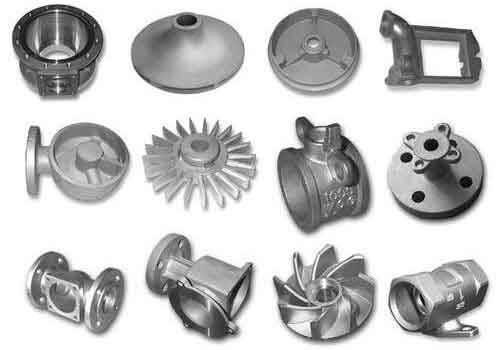
To produce sand casting parts with smooth, defect-free surfaces, several strategic measures must be implemented. These measures aim to mitigate the factors contributing to sand adhesion, and I have categorized them into four primary approaches, as summarized in the table below.
| Measure | Objective | Key Methods |
|---|---|---|
| 1. Pore Sealing | Prevent metal penetration into mold | Use of fine-grained sands, mold densification, coatings |
| 2. Chemical Inertness | Minimize reactions at interface | Additives like carbonaceous materials, refractory coatings |
| 3. Thermal Stability | Avoid mold softening or spalling | High-refractoriness sands, binders, heat-resistant coatings |
| 4. Directed Gas Venting | Rapidly remove gases from interface | Proper mold ventilation, permeable coatings, vent design |
Firstly, sealing the pores of the mold surface is essential to block metal infiltration. This can be achieved by using sands with a narrow grain size distribution or by applying dense coatings. The effectiveness of pore sealing correlates with the sand’s specific surface area, which can be calculated using the formula: $$S = \frac{6}{\rho \cdot d}$$ where $$S$$ is the specific surface area (m²/kg), $$\rho$$ is the sand density (kg/m³), and $$d$$ is the average grain diameter (m). A higher $$S$$ indicates finer grains and better pore-filling potential, crucial for sand casting parts requiring high surface finish.
Secondly, ensuring chemical inertness at the metal-mold interface prevents the formation of low-melting compounds. Historically, carbonaceous additives like coal dust, pitch, or bitumen were thought to create a reducing atmosphere that inhibits metal oxidation. Modern insights reveal that these materials decompose under heat, releasing “lustrous carbon”—a form of pyrolytic carbon with high oxidation stability. This carbon layer acts as a barrier, preventing direct contact between iron and silica, thereby reducing sand adhesion in sand casting parts. The reaction can be simplified as: $$\text{C}_n\text{H}_m \xrightarrow{\Delta} \text{C}(s) + \text{H}_2(g)$$ where the solid carbon deposits on the mold surface. The efficiency of this barrier depends on the additive’s volatile content and decomposition temperature, which I often optimize through trials for specific sand casting parts.
Thirdly, thermal stability ensures the mold surface does not soften or erode upon contact with molten metal. This involves using sands with high silica content or alternative refractories like zircon, chromite, or olivine. The thermal shock resistance can be quantified by the R parameter: $$R = \frac{\sigma_f (1-\nu)}{\alpha E}$$ where $$\sigma_f$$ is the fracture strength, $$\nu$$ is Poisson’s ratio, $$\alpha$$ is the thermal expansion coefficient, and $$E$$ is Young’s modulus. Higher $$R$$ values indicate better resistance to cracking, which is vital for maintaining mold integrity in sand casting parts subjected to rapid heating.
Fourthly, directed gas venting removes gases generated at the interface, preventing gas-backed penetration. This requires molds with adequate permeability, often achieved through controlled sand compaction or vent channels. The gas flow rate ($$Q$$) can be estimated using: $$Q = \frac{k \cdot A \cdot \Delta P}{\mu \cdot L}$$ where $$k$$ is permeability, $$A$$ is cross-sectional area, $$\Delta P$$ is pressure difference, $$\mu$$ is gas viscosity, and $$L$$ is flow path length. Proper venting reduces gas pressure, minimizing metal penetration into pores in sand casting parts.
Among these measures, the application of anti-adhesion coatings is perhaps the most effective and widely adopted method for high-quality sand casting parts. Coatings serve as a protective layer, addressing multiple issues simultaneously: they seal pores, provide chemical inertness, enhance thermal stability, and allow gas transmission. The performance of a coating depends on its technical properties, such as suspension stability, applicability, adhesion strength, low hygroscopicity, and minimal gas evolution. In my practice, I have evaluated numerous coating formulations for sand casting parts, and key findings are summarized below.
The suspension stability of a coating is crucial for uniform application. It is often governed by the presence of thickening agents. While substances like methyl hydroxypropyl cellulose (MHPC) or methyl cellulose (MC) have low surface tension, they lack sufficient stabilizing power. Instead, polymers containing hydroxyl and carboxyl functional groups—such as polyvinyl alcohol (PVA), carboxymethyl cellulose (CMC), or sodium alginate—exhibit better thickening and stabilization. Sodium alginate, in particular, forms thixotropic gels in the presence of sodium ions, enhancing suspension. The stability can be modeled using the Stokes’ law modified for colloidal systems: $$v = \frac{2 g r^2 (\rho_p – \rho_f)}{9 \mu} \cdot f(\phi)$$ where $$v$$ is settling velocity, $$r$$ is particle radius, $$\rho_p$$ and $$\rho_f$$ are densities of particle and fluid, $$\mu$$ is viscosity, and $$f(\phi)$$ is a function of particle volume fraction $$\phi$$. A lower $$v$$ indicates better suspension, critical for coatings used in sand casting parts.
Applicability involves two key rheological properties: viscosity and static shear stress. Viscosity determines the coating’s penetration into the mold surface, while static shear stress influences leveling and coating thickness. For optimal performance, the penetration depth should be about 1.3 to 1.6 times the average sand grain size. This ensures strong adhesion without excessive consumption. The relationship between optimal viscosity ($$\eta_{opt}$$) and sand grain size ($$d$$) is empirical and can be represented by a power-law equation: $$\eta_{opt} = k \cdot d^n$$ where $$k$$ and $$n$$ are constants derived from experimental data. For typical foundry sands, $$n$$ ranges from -0.5 to -0.8, indicating that finer sands require higher viscosity coatings for sand casting parts. The table below illustrates this for common sand types.
| Sand Type | Average Grain Size (mm) | Optimal Coating Viscosity (cP) |
|---|---|---|
| Fine Silica | 0.1-0.2 | 300-500 |
| Medium Silica | 0.3-0.4 | 200-300 |
| Coarse Silica | 0.5-0.6 | 100-200 |
| Zircon | 0.15-0.25 | 400-600 |
Static shear stress, primarily determined by filler content, affects the coating layer thickness. As filler (e.g., zircon, sillimanite, graphite) increases, both thickness and shear stress rise. For sand casting parts with wall thicknesses of 40-50 mm, a coating layer of 0.4-0.5 mm is usually sufficient to prevent sand adhesion. Typical static shear stress values are 7-10 dyne/cm² for zircon coatings, 5-7 dyne/cm² for sillimanite, and 4-6 dyne/cm² for graphite-based coatings. The thickness ($$T$$) can be related to static shear stress ($$\tau_s$$) by: $$T = C \cdot \tau_s^m$$ where $$C$$ and $$m$$ are material-dependent constants, with $$m$$ typically around 0.5 for water-based coatings used in sand casting parts.
The adhesion strength of the coating to the mold surface under thermal exposure is dictated by the binder. Organic binders like sulfite-yeast extract (SYF), urea-formaldehyde resins, or furan resins are suitable for sand casting parts with wall thicknesses up to 50 mm, where temperatures at the interface may reach 600-650°C. At these temperatures, adhesion strength can be around 0.15 kg/cm². However, for larger, thick-walled sand casting parts, where surface temperatures exceed 1000°C, inorganic binders are preferred due to their higher thermal stability and lower gas evolution. Examples include aluminum sulfate, magnesium sulfate, and sodium polyphosphate. Their thermal decomposition reactions, such as: $$\text{Al}_2(\text{SO}_4)_3 \xrightarrow{\Delta} \text{Al}_2\text{O}_3 + 3\text{SO}_3$$ produce refractory oxides that enhance coating integrity. The maximum service temperatures for these binders are: 1100-1200°C for aluminum sulfate, 1000-1050°C for magnesium sulfate, and 950-1000°C for sodium polyphosphate. To improve suspension and applicability, additives like sodium bentonite (up to 2%) or polymers (PVA, CMC) are incorporated, though care must be taken to avoid coagulation in the presence of ions like Al³⁺ or SO₄²⁻.
For quick-drying coatings, polyvinyl butyral (PVB) alcohol-based systems are common. PVB acts as a binder, thickener, and thermoplastic polymer. However, its adhesion strength drops sharply above 200°C, necessitating secondary binders like OF-1 resin for high-temperature applications in sand casting parts. The overall adhesion strength ($$\sigma_a$$) as a function of temperature ($$T$$) can be expressed as: $$\sigma_a = \sigma_0 \cdot e^{-E_a / RT}$$ where $$\sigma_0$$ is initial strength, $$E_a$$ is activation energy for degradation, and $$R$$ is the gas constant. This underscores the need for tailored binder selection based on the thermal regime of sand casting parts.
In addition to coatings, mold sand quality plays a pivotal role. Using high-purity silica sands with low impurity content reduces the formation of low-melting phases. The chemical composition of sand can be analyzed via X-ray fluorescence, and I often aim for SiO₂ content above 95% for critical sand casting parts. Furthermore, mold uniformity—achieved through proper mixing and compaction—enhances thermal resistance. The thermal conductivity ($$k_m$$) of the mold affects cooling rates and stress development, modeled by Fourier’s law: $$q = -k_m \frac{dT}{dx}$$ where $$q$$ is heat flux. A balanced $$k_m$$ ensures gradual cooling, reducing thermal shocks that exacerbate sand adhesion in sand casting parts.
To encapsulate the interplay of factors, I propose a holistic quality index ($$Q_I$$) for sand casting parts surface finish: $$Q_I = \frac{A \cdot B \cdot C}{D}$$ where $$A$$ represents mold porosity factor (0-1, with 1 being fully sealed), $$B$$ is chemical inertness factor (0-1, based on additive efficacy), $$C$$ is thermal stability factor (0-1, from refractoriness), and $$D$$ is gas pressure factor (≥1, from venting efficiency). Higher $$Q_I$$ values correlate with better surface quality in sand casting parts. This index can guide process optimization in foundries.
Throughout this discussion, the recurring theme is that achieving superior surface quality in sand casting parts requires a multifaceted approach rooted in understanding the oxidation mechanism. By integrating pore sealing, chemical barriers, thermal management, and gas control, foundries can significantly reduce sand adhesion. Coatings, with their tailored rheology and binder chemistry, serve as a frontline defense. As technologies advance, innovations like nano-coated sands or environmentally friendly binders may further enhance the surface integrity of sand casting parts. In my ongoing work, I continue to explore these avenues, always with the goal of producing cleaner, more reliable sand casting parts for diverse industrial applications. The journey toward defect-free sand casting parts is complex, but with systematic measures and continuous improvement, it is undoubtedly achievable.