
In the production of ductile cast iron, maintaining consistent and high-quality mechanical properties is a paramount concern. One significant challenge that often arises is the formation of a surface deterioration layer, commonly referred to as a degenerate layer, which consists of flake or vermicular graphite. This layer can severely compromise the fatigue strength and service life of cast components, posing substantial safety risks. The presence of such deterioration is particularly problematic in ductile cast iron parts, where uniform microstructure is crucial for performance. In this comprehensive study, we investigate the influence of three primary factors on the surface deterioration layer in ductile cast iron: sulfur content, high-humidity environments, and casting design along with processing parameters. Through controlled experiments and analysis, we aim to elucidate the mechanisms behind this phenomenon and provide actionable insights for mitigating its effects.
Ductile cast iron, known for its excellent combination of strength and ductility, is widely used in critical applications such as automotive components, machinery parts, and infrastructure. However, the stability of its properties can be undermined by surface defects. The deterioration layer typically forms due to the depletion of magnesium (Mg) at the casting surface, leading to graphite degeneration. This depletion is often catalyzed by external factors like sulfur intrusion or moisture. Our research delves into these aspects systematically, employing quantitative methods to assess the relationships. We begin by exploring the role of sulfur, a common element in foundry binders and coatings, which can react with magnesium to form compounds like MgS, thereby reducing the effective residual magnesium needed for spheroidal graphite formation.
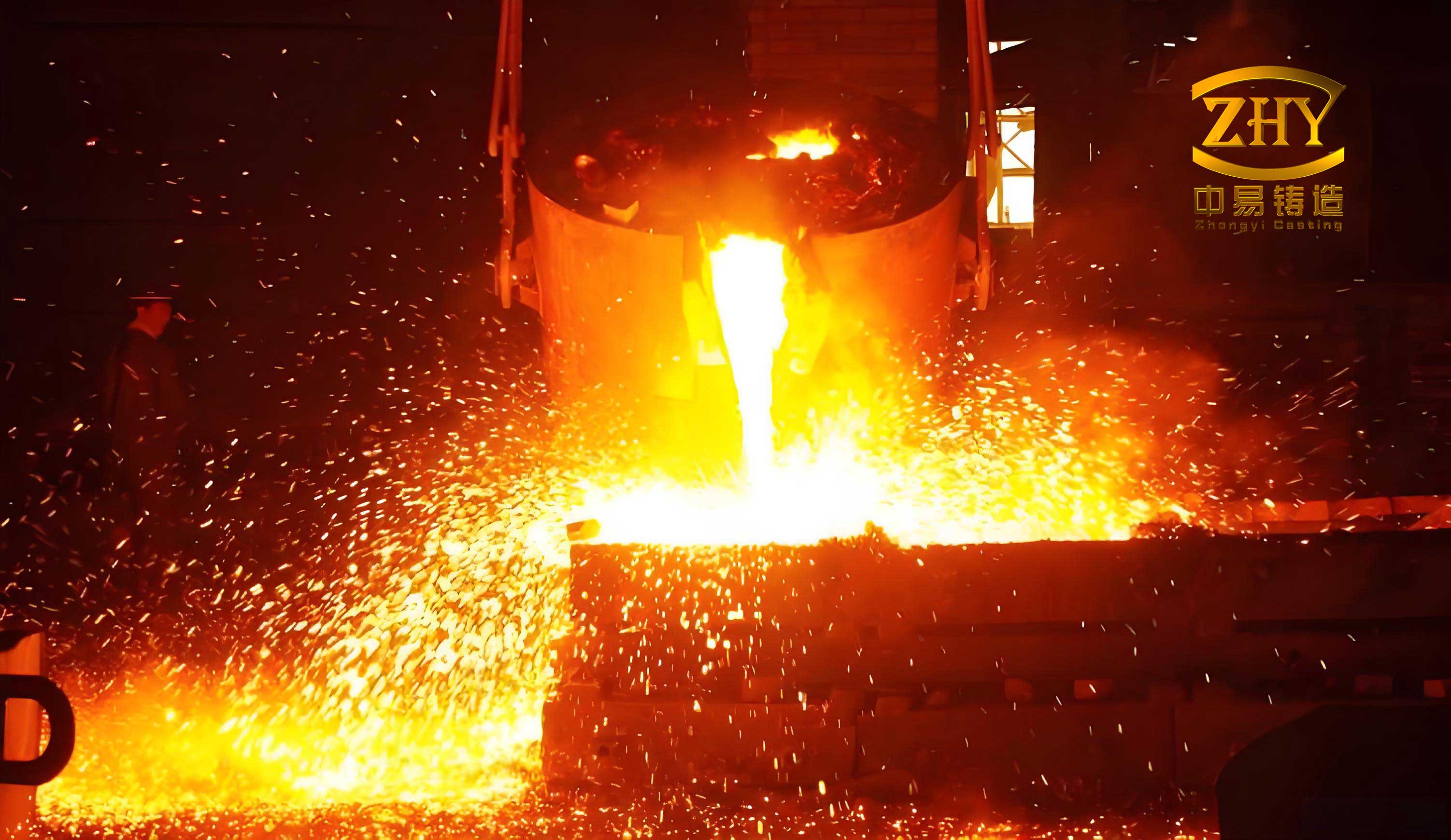
The image above illustrates a typical ductile cast iron component, highlighting the importance of surface integrity. To understand the sulfur effect, we conducted experiments where sulfur was intentionally added to coatings applied on mold surfaces. The base material was QT450-10 ductile cast iron, melted in a medium-frequency induction furnace at 1,510 °C ± 10 °C and poured at 1,400 °C ± 10 °C. The chemical composition was controlled within specified ranges, as summarized in Table 1. The mold was made using sulfur-free furan resin sand, and alcohol-based alumina coatings were modified with pure sulfur powder at varying concentrations.
| Element | Range |
|---|---|
| C | 3.60–3.80 |
| Si | 2.70–2.90 |
| Mn | 0.20–0.30 |
| S | ≤0.15 |
| P | ≤0.25 |
| Mg | 0.03–0.05 |
| RE | 0.5–0.7 |
For the sulfur content study, coatings with sulfur additions of 0.5%, 1.0%, and 1.5% by weight were applied to Y-block sand molds. Each configuration was poured in triplicate to ensure statistical reliability. After solidification, the castings were sectioned, and the deterioration layer depth was measured at consistent locations. The results, presented in Table 2, reveal a clear trend: higher sulfur content leads to a thicker deterioration layer. Moreover, the layer becomes increasingly non-uniform with elevated sulfur levels, indicating localized reactions. The average depth \( d \) (in mm) can be modeled as a function of sulfur content \( S \) (in wt.%) using a linear relationship derived from the data:
$$ d = \alpha \cdot S + \beta $$
where \( \alpha \) and \( \beta \) are constants. From our measurements, we estimate \( \alpha \approx 1.8 \) and \( \beta \approx 1.5 \) for the range tested. This formula underscores the direct proportionality between sulfur intrusion and deterioration severity. Additionally, the use of coatings without sulfur significantly reduces the layer depth, highlighting the protective role of barriers against sulfur diffusion. The graphite morphology in the deteriorated zones shifted from spheroidal to predominantly D-type and E-type graphite, as observed under microscopy. This transition correlates with the decrease in effective magnesium, which can be expressed by the following equilibrium reaction during casting:
$$ \text{Mg (in iron)} + \text{S (from environment)} \rightarrow \text{MgS (slag)} $$
The rate of this reaction likely follows first-order kinetics with respect to sulfur concentration, contributing to the non-uniform thickness when sulfur distribution is uneven.
| Coating Sulfur Content (wt.%) | Maximum Depth (mm) | Minimum Depth (mm) | Average Depth (mm) |
|---|---|---|---|
| 0 (no coating) | 2.3 | 1.2 | 1.7 |
| 0.5 | 3.1 | 2.3 | 2.7 |
| 1.0 | 4.2 | 2.7 | 3.5 |
| 1.5 | 7.0 | 2.5 | 3.6 |
Moving to the second factor, we examined the impact of high-humidity environments on surface deterioration in ductile cast iron. Moisture can infiltrate sand molds, especially when using organic binders like phenolic resin, and participate in reactions that degrade the surface. For this experiment, we utilized shell molds made from phenolic resin-coated sand (no sulfur-containing additives) to isolate the humidity effect. The molds were dried at 200 °C for 2 hours to remove initial moisture, then conditioned in a chamber at 30 °C and 95% relative humidity for varying durations: 12, 24, and 36 hours. Subsequently, they were poured with the same QT450-10 ductile cast iron alloy.
The results, summarized in Table 3, demonstrate that longer exposure to humidity correlates with deeper deterioration layers. Unlike the sulfur-induced layers, these were notably uniform in thickness, suggesting a more homogeneous interaction. The depth \( h \) (in mm) as a function of exposure time \( t \) (in hours) can be approximated by a power-law equation:
$$ h = k \cdot t^n $$
where \( k \) and \( n \) are constants. From our data, \( k \approx 0.1 \) and \( n \approx 0.6 \), indicating a sub-linear growth. This behavior may be attributed to moisture diffusion through the mold, which follows Fick’s law. The diffusion coefficient \( D \) for water vapor in the sand matrix can be estimated, and the concentration profile \( C(x,t) \) at depth \( x \) and time \( t \) is given by:
$$ C(x,t) = C_0 \cdot \text{erfc}\left( \frac{x}{2\sqrt{Dt}} \right) $$
where \( C_0 \) is the surface concentration. The moisture likely reacts with magnesium or catalyzes oxidation, leading to graphite degeneration. This underscores the importance of controlling mold storage conditions in ductile cast iron production.
| Exposure Time (hours) | Maximum Depth (mm) | Minimum Depth (mm) | Average Depth (mm) |
|---|---|---|---|
| 0 (dry) | 0 | 0 | 0 |
| 12 | 0.27 | 0.25 | 0.26 |
| 24 | 0.7 | 0.25 | 0.48 |
| 36 | 1.5 | 1.2 | 1.35 |
The third factor involves casting design and process parameters, which can inadvertently promote deterioration through turbulence and metal flow issues. We analyzed a case study of a ductile cast iron component (material QT500-7) used in braking systems, which exhibited fatigue cracks at specific locations. Metallographic examination revealed a deep, sometimes fully penetrating, deterioration layer at these sites. Through simulation of the filling and solidification processes, we identified that these areas corresponded to regions where molten iron streams converged, causing turbulence and air entrainment.
In ductile cast iron casting, the front end of the molten metal is particularly susceptible to oxidation and magnesium loss due to exposure to air or mold gases. When two streams meet, the entrapped air and prolonged exposure can exacerbate magnesium depletion. The effective residual magnesium content \( [Mg]_{\text{eff}} \) at the surface can be modeled as a function of time and turbulence intensity \( I \):
$$ [Mg]_{\text{eff}} = [Mg]_0 \cdot e^{-(\lambda t + \gamma I)} $$
where \( [Mg]_0 \) is the initial magnesium content, \( \lambda \) is a decay constant, and \( \gamma \) is a turbulence coefficient. If \( [Mg]_{\text{eff}} \) falls below a critical threshold (typically around 0.02–0.03 wt.%), spheroidal graphite formation is hindered, leading to deterioration. To prevent this, gating systems should be designed to ensure laminar flow and avoid confluence in critical sections. For instance, a bottom-gating system can direct the initial iron away from part surfaces and into risers, minimizing deterioration risk.
Building on these individual factors, we must consider their interactions. In practice, ductile cast iron castings may face combined effects of sulfur, humidity, and poor design. For example, a mold with high sulfur content stored in a humid environment could exhibit synergistic deterioration. The overall depth \( D_{\text{total}} \) might be approximated by a superposition model:
$$ D_{\text{total}} = \sqrt{d^2 + h^2 + f^2} $$
where \( d \) is sulfur-related depth, \( h \) is humidity-related depth, and \( f \) is flow-related depth. This empirical formula highlights the need for holistic process control. Additionally, the kinetics of magnesium loss can be further described using diffusion-reaction equations. The flux \( J \) of sulfur or oxygen to the surface is given by:
$$ J = -D \frac{\partial C}{\partial x} $$
and the reaction rate \( R \) with magnesium follows an Arrhenius-type expression:
$$ R = A \cdot e^{-E_a/(RT)} \cdot [Mg] \cdot [S] $$
where \( A \) is a pre-exponential factor, \( E_a \) is activation energy, \( R \) is the gas constant, and \( T \) is temperature. Integrating these aspects helps in predicting and mitigating deterioration in ductile cast iron.
To provide a broader perspective, we also reviewed common industrial practices for reducing surface deterioration in ductile cast iron. These include using low-sulfur binders, applying protective coatings, controlling mold humidity, and optimizing pouring techniques. Coatings, in particular, serve as a barrier not only against sulfur but also against moisture. The effectiveness of a coating can be quantified by its permeability \( P \), which should be minimized. A simple relation for deterioration depth reduction due to coating is:
$$ \Delta d = d_0 \cdot (1 – e^{-P_0 / P}) $$
where \( d_0 \) is the depth without coating, and \( P_0 \) is a reference permeability. Furthermore, post-casting treatments like shot peening or heat treatment can sometimes ameliorate surface layers, but prevention during casting is more cost-effective.
In terms of material science, the graphite morphology in ductile cast iron is sensitive to minor changes in composition and cooling conditions. The deterioration layer often exhibits a transition zone where graphite degenerates gradually. We can characterize this using a gradient model, where the spheroidization ratio \( \sigma \) (ratio of spheroidal graphite to total graphite) decreases from the interior to the surface. This ratio can be expressed as:
$$ \sigma(x) = \sigma_0 \cdot \left(1 – \frac{x}{L}\right)^m $$
where \( x \) is distance from the surface, \( L \) is the total depth of affected zone, \( \sigma_0 \) is the interior spheroidization ratio (near 1 for good ductile cast iron), and \( m \) is an exponent reflecting the severity of degeneration. This model aligns with our microstructural observations.
Another aspect worth exploring is the effect of alloying elements in ductile cast iron. Elements like cerium (from rare earth additions) can influence sulfur sensitivity. The residual rare earth content can complex with sulfur, reducing its availability to react with magnesium. This interaction can be represented by a stability constant \( K \) for rare earth sulfides:
$$ K = \frac{[RE][S]}{[RES]} $$
Higher \( K \) values indicate stronger sulfide formation, potentially protecting magnesium. Thus, optimizing rare earth additions is crucial for mitigating sulfur-induced deterioration in ductile cast iron.
Regarding humidity effects, the role of mold materials is pivotal. Different sands (e.g., silica, chromite, zircon) have varying hygroscopicities. The moisture uptake \( M \) over time \( t \) can be modeled with a Langmuir-type adsorption equation:
$$ M = M_{\text{sat}} \cdot \frac{k t}{1 + k t} $$
where \( M_{\text{sat}} \) is saturation moisture content and \( k \) is a rate constant. Using low-hygroscopic sands or applying desiccants can help control this factor in ductile cast iron casting.
For casting design, computational fluid dynamics (CFD) simulations are invaluable. They can predict flow patterns, temperature gradients, and potential defect sites. A key parameter is the Reynolds number \( Re \) for molten iron flow:
$$ Re = \frac{\rho v L}{\mu} $$
where \( \rho \) is density, \( v \) is velocity, \( L \) is characteristic length, and \( \mu \) is viscosity. Maintaining \( Re \) below critical thresholds (typically < 2000 for laminar flow) reduces turbulence and air entrainment, preserving magnesium at the surface of ductile cast iron castings.
In summary, our investigation into the surface deterioration of ductile cast iron reveals multifaceted dependencies. Sulfur content, humidity exposure, and casting design each play significant roles, often interacting in complex ways. To encapsulate the findings, we propose a comprehensive formula for estimating the deterioration layer depth \( D \) in mm:
$$ D = \alpha S + \beta t^n + \gamma I + \delta $$
where \( \alpha, \beta, \gamma, \delta \) are material and process constants, \( S \) is sulfur content in wt.%, \( t \) is humidity exposure time in hours, \( n \) is an exponent (~0.6), and \( I \) is a turbulence index. This equation, while empirical, provides a framework for quality control in ductile cast iron production.
To aid foundry engineers, we have compiled best practices in Table 4, which summarizes recommendations for minimizing surface deterioration in ductile cast iron components. Adhering to these guidelines can enhance the consistency and reliability of ductile cast iron products.
| Factor | Practice | Expected Benefit |
|---|---|---|
| Sulfur Control | Use low-sulfur binders and coatings; apply sulfur-barrier coatings | Reduce deterioration depth by up to 50% |
| Humidity Management | Store molds in dry conditions; limit exposure to <24 hours | Prevent uniform deterioration layer formation |
| Casting Design | Employ bottom gating; avoid flow convergence in critical areas | Eliminate penetrating deterioration layers |
| Process Optimization | Control pouring temperature and speed; use simulation tools | Minimize turbulence and magnesium loss |
| Material Selection | Optimize rare earth and magnesium additions | Enhance sulfur resistance and graphite stability |
In conclusion, the surface deterioration of ductile cast iron is a critical issue that demands attention in manufacturing. Our study underscores the importance of controlling sulfur sources, managing environmental humidity, and designing casting processes to promote laminar flow. By integrating these measures, producers can significantly improve the surface quality and performance of ductile cast iron parts. Future work could explore advanced coatings, real-time monitoring of mold conditions, and machine learning models for predicting deterioration based on process parameters. Ultimately, a deep understanding of these factors will lead to more robust and reliable ductile cast iron components across industries.
As a final note, the ductile cast iron industry continues to evolve, with innovations in binders, coatings, and simulation technologies offering new avenues for defect reduction. Embracing these advancements while adhering to fundamental principles will ensure that ductile cast iron remains a material of choice for demanding applications. We hope this research contributes to that ongoing effort, providing both theoretical insights and practical solutions for combating surface deterioration in ductile cast iron castings.